Εμφάνιση αναρτήσεων με ετικέτα New Martyrs. Εμφάνιση όλων των αναρτήσεων

Πέμπτη 19 Ιουνίου 2025

Γιελουάτα (Νιγηρία): 200 άνθρωποι πυροβολήθηκαν, μαχαιρώθηκαν μέχρι θανάτου ή κάηκαν ζωντανοί!...

ΜΙΑ ΣΗΜΑΙΑ ΠΟΥ ΚΑΝΕΙΣ ΔΕΝ ΘΑ ΥΨΩΣΕΙ 


Του Κώστα Χατζηαντωνίου

ΠΕΡΑ ΑΠΟ ΤΟ ΑΤΟΜΟ 

Η Νιγηρία έγινε το θέατρο μιας νέας μαζικής σφαγής τη νύχτα της 13ης προς 14η Ιουνίου στη Γιελουάτα, στην πολιτεία Μπενούε. Οι δράστες επιτέθηκαν στην αγορά όπου είχαν καταφύγει εκατοντάδες εκτοπισμένες οικογένειες. Μπήκαν στο χωριό φωνάζοντας «Αλλάχ Άκμπαρ», σκοτώνοντας περισσότερους από 200 ανθρώπους, σύμφωνα με το Ίδρυμα Δικαιοσύνης, Ανάπτυξης και Ειρήνης της Επισκοπής Μακούρντι, το οποίο επικαλείται η οργάνωση Aid to the Church in Need (ACN). Τα θύματα πυροβολήθηκαν, μαχαιρώθηκαν μέχρι θανάτου ή κάηκαν ζωντανά. 
Ο πατήρ Ουκούμα Τζόναθαν Ανγκμπιανμπί, τοπικός ιερέας, κατέθεσε ότι είδε απανθρακωμένα σώματα, συμπεριλαμβανομένων παιδιών και βρεφών. Το χωριό, που κάποτε θεωρούνταν καταφύγιο, είναι πλέον σχεδόν άδειο. Η επίθεση στόχευε έναν χριστιανικό πληθυσμό που ήδη υποφέρει επί χρόνια παρόμοια γεγονότα βίας στην περιοχή. 
Η εκκωφαντική σιωπή των μέσων ενημέρωσης και της άρχουσας πολιτικής τάξης του σύγχρονου κόσμου στη Δύση και στην Ανατολή (και στην αντιιμπεριαλιστική Ελλάδα, βεβαίως βεβαίως), είναι αποκαλυπτική. Και δεν χρειάζονται σχόλια.


Κυριακή 23 Φεβρουαρίου 2025

Το ISIS αποκεφάλισε 70 χριστιανούς σε εκκλησία του Κονγκό


newsbomb / 22 Φεβρουαρίου 2025

Ισλαμιστές τρομοκράτες στη Λαϊκή Δημοκρατία του Κονγκό (ΛΔΚ) αποκεφάλισαν εβδομήντα χριστιανούς με ματσέτες, σύμφωνα με πολλές ομάδες που παρακολουθούν την τρομοκρατία και τις διώξεις.

Οι 70 Χριστιανοί περικυκλώθηκαν αρχικά από ισλαμιστές αντάρτες από τις Συμμαχικές Δημοκρατικές Δυνάμεις, μια ομάδα που συνδέεται με το Ισλαμικό Κράτος ή ISIS, σύμφωνα με την Open Doors US, η οποία παρακολουθεί τη δίωξη των χριστιανών παγκοσμίως.

Οι Χριστιανοί, σύμφωνα με πληροφορίες όλοι από την περιοχή Λουμπέρο, αναγκάστηκαν να εγκαταλείψουν τα σπίτια τους τα ξημερώματα της 13ης Φεβρουαρίου, με τους αντάρτες να φωνάζουν «Βγες έξω, φύγε».

Συνελήφθησαν όμηροι και οδηγήθηκαν σε μια μικρή χριστιανική εκκλησία στο χωριό Κασάνγκα. Μέσα στο κτίριο, πρώτα τους έδεσαν και μετά αποκεφαλίστηκαν και οι 70, λένε οι ομάδες.

Σύμφωνα με τη συντονίστρια της επιτροπής προστασίας της τοπικής κοινότητας Vianney Witswamba, όπως αναφέρεται από την Global Fight Against Terrorism Funding (GFATF), "70 πτώματα βρέθηκαν στην εκκλησία. Βρέθηκαν δεμένα."

Πηγές λένε ότι τοπικοί ισλαμιστές μαχητές εμπόδισαν τους χριστιανούς ηγέτες να θάψουν τους νεκρούς τους για πέντε ημέρες.

Φωτογραφία από το άρθρο 
Η μεγάλη φυγή από τη Λαϊκή Δημοκρατία του Κονγκό


Σάββατο 19 Αυγούστου 2023

2023: Αδιανόητη η σφαγή των χριστιανών στη Νιγηρία!


Φωτο από εδώ, όπου σχετικό ρεπορτάζ

Ηλίας Καλλιώρας

newsbreak.gr

Σφαγιασμός χριστιανών 2023:
Περισσότεροι από 2.500 Χριστιανοί σφαγιάστηκαν από τους Φουλάνι Τζιχαντιστές και άλλους συμμάχους τους πρώτους έξι μήνες του 2023.
350 θάνατοι καταγράφηκαν σε 18 μόλις ημέρες μεταξύ 12 και 30 Ιουνίου.
Οι ισλαμιστές επίσης έκαψαν 1.400 σπίτια και συνέλαβαν 3.700 αμάχους.
Διαπιστώθηκε επίσης ότι τουλάχιστον 18.200 εκκλησίες, 1.000 παραδοσιακά θρησκευτικά ιερά και 800 συναγωγές και 2.200 χριστιανικά σχολεία έχουν καεί ή καταστραφεί άσκοπα.
Με 1100 χριστιανικές κοινότητες να έχουν ξεριζωθεί, εκατομμύρια χριστιανούς να αναγκάζονται να εγκαταλείψουν τα σπίτια τους και τους προγόνους τους.
Εκατοντάδες χιλιάδες Χριστιανοί έχουν ασπαστεί το Ισλάμ, ενώ δεκάδες χιλιάδες χριστιανές γυναίκες έχουν πέσει θύματα βιασμού ή σεξουαλικής κακοποίησης ή υποδούλωσης.
Τουλάχιστον 15 εκατομμύρια χριστιανοί είναι εσωτερικά εκτοπισμένοι ή πρόσφυγες.
Πρόκειται για μία γενοκτονία, για την οποία δεν μιλάει κανείς…
 

Κυριακή 4 Δεκεμβρίου 2022

Three Great Orthodox Saints on December 4

Icon from here

The Holy Great Martyr Barbara

Orthodox Metropolis of Zambia & Malawi

The Holy Great Martyr Barbara lived and suffered during the reign of the emperor Maximian (305-311). Her father, the pagan Dioscorus, was a rich and illustrious man in the Syrian city of Heliopolis. After the death of his wife, he devoted himself to his only daughter.
Seeing Barbara’s extraordinary beauty, Dioscorus decided to hide her from the eyes of strangers. Therefore, he built a tower for Barbara, where only her pagan teachers were allowed to see her. From the tower there was a view of hills stretching into the distance. By day, she was able to gaze upon the wooded hills, the swiftly flowing rivers, and the meadows covered with a mottled blanket of flowers; by night the harmonious and majestic vault of the heavens twinkled and provided a spectacle of inexpressible beauty. Soon the virgin began to ask herself questions about the First Cause and Creator of so harmonious and splendid a world.
Gradually, she became convinced that the soulless idols were merely the work of human hands. Although her father and teachers offered them worship, she realized that the idols could not have made the surrounding world. The desire to know the true God so consumed her soul that Barbara decided to devote all her life to this goal, and to spend her life in virginity.

Icon from here
The fame of her beauty spread throughout the city, and many sought her hand in marriage. But despite the entreaties of her father, she refused all of them. Barbara warned her father that his persistence might end tragically and separate them forever. Dioscorus decided that the temperament of his daughter had been affected by her life of seclusion. He therefore permitted her to leave the tower and gave her full freedom in her choice of friends and acquaintances. Thus Barbara met young Christian maidens in the city, and they taught her about the Creator of the world, about the Trinity, and about the Divine Logos. Through the Providence of God, a priest arrived in Heliopolis from Alexandria disguised as a merchant. After instructing her in the mysteries of the Christian Faith, he baptized Barbara, then returned to his own country.
During this time, a luxurious bathhouse was being built at the house of Dioscorus. By his orders, the workers prepared to put two windows on the south side. But Barbara, taking advantage of her father’s absence, asked them to make a third window, thereby forming a Trinity of light. On one of the walls of the bath-house Barbara traced a cross with her finger. The cross was deeply etched into the marble, as if by an iron instrument. Later, her footprints were imprinted on the stone steps of the bathhouse. The water of the bathhouse had great healing power. St. Simeon Metaphrastes (November 9) compared the bathhouse to the stream of Jordan and the Pool of Siloam, because by God’s power, many miracles took place there.

When Dioscorus returned and expressed dissatisfaction about the change in his building plans, his daughter told him about how she had come to know the Triune God, about the saving power of the Son of God, and about the futility of worshipping idols. Dioscorus went into a rage, grabbed a sword and was on the point of striking her with it. The holy virgin fled from her father, and he rushed after her in pursuit. His way became blocked by a hill, which opened up and concealed the saint in a crevice. On the other side of the crevice was an entrance leading upwards. St Barbara managed then to conceal herself in a cave on the opposite slope of the hill.
After a long and fruitless search for his daughter, Dioscorus saw two shepherds on the hill. One of them showed him the cave where the saint had hidden. Dioscorus beat his daughter terribly, and then placed her under guard and tried to wear her down with hunger. Finally he handed her over to the prefect of the city, named Martianus. They beat St. Barbara fiercely: they struck her with rawhide, and rubbed her wounds with a hair cloth to increase her pain. By night, St. Barbara prayed fervently to her Heavenly Bridegroom, and the Savior Himself appeared and healed her wounds. Then they subjected the saint to new, and even more frightful torments.
In the crowd where the martyr was tortured was the virtuous Christian woman Juliana, an inhabitant of Heliopolis. Her heart was filled with sympathy for the voluntary martyrdom of the beautiful and illustrious maiden. Juliana also wanted to suffer for Christ. She began to denounce the torturers in a loud voice, and they seized her.

Both martyrs were tortured for a long time. Their bodies were raked and wounded with hooks, and then they were led naked through the city amidst derision and jeers. Through the prayers of St. Barbara, the Lord sent an angel who covered the nakedness of the holy martyrs with a splendid robe. Then the steadfast confessors of Christ, Ss. Barbara and Juliana, were beheaded. Dioscorus himself executed St. Barbara. The wrath of God was not slow to punish both torturers, Martianus and Dioscorus. They were killed after being struck by lightning.
In the sixth century the relics of the holy Great Martyr Barbara were transferred to Constantinople. Six hundred years later, they were transferred to Kiev (July 11) by Barbara, the daughter of the Byzantine Emperor Alexius Comnenos, who married the Russian prince Michael Izyaslavich. They rest even now at Kiev’s St Vladimir cathedral, where an Akathist to the saint is served each Tuesday.
Many pious Orthodox Christians are in the habit of chanting the troparion of St. Barbara each day, recalling the Savior’s promise to her that those who remembered her and her sufferings would be preserved from a sudden, unexpected death, and would not depart this life without benefit of the Holy Mysteries of Christ. St. Barbara is commemorated on December 4.

Our Fother Saint John of Damaskus

Orthodox Church in America

Icon from here
Saint John of Damascus was born about the year 680 at Damascus, Syria into a Christian family. His father, Sergius Mansur, was a treasurer at the court of the Caliph. John had also a foster brother, the orphaned child Cosmas (October 14), whom Sergius had taken into his own home. When the children were growing up, Sergius saw that they received a good education. At the Damascus slave market he ransomed the learned monk Cosmas of Calabria from captivity and entrusted to him the teaching of his children. The boys displayed uncommon ability and readily mastered their courses of the secular and spiritual sciences. After the death of his father, John occupied ministerial posts at court and became the city prefect.
In Constantinople at that time, the heresy of Iconoclasm had arisen and quickly spread, supported by the emperor Leo III the Isaurian (717-741). Rising up in defense of the Orthodox veneration of icons [Iconodoulia], Saint John wrote three treatises entitled, “Against Those who Revile the Holy Icons.” The wise and God-inspired writings of Saint John enraged the emperor. But since the author was not a Byzantine subject, the emperor was unable to lock him up in prison, or to execute him. The emperor then resorted to slander. A forged letter to the emperor was produced, supposedly from John, in which the Damascus official was supposed to have offered his help to Leo in conquering the Syrian capital.
This letter and another hypocritically flattering note were sent to the Saracen Caliph by Leo the Isaurian. The Caliph immediately ordered that Saint John be removed from his post, that his right hand be cut off, and that he be led through the city in chains.
That same evening, they returned the severed hand to Saint John. The saint pressed it to his wrist and prayed to the Most Holy Theotokos to heal him so that he could defend the Orthodox Faith and write once again in praise of the Most Pure Virgin and Her Son. After a time, he fell asleep before the icon of the Mother of God. He heard Her voice telling him that he had been healed, and commanding him to toil unceasingly with his restored hand. Upon awakening, he found that his hand had been attached to his arm once more. Only a small red mark around his wrist remained as a sign of the miracle.

Later, in thanksgiving for being healed, Saint John had a silver model of his hand attached to the icon, which became known as “Of the Three Hands.” Some unlearned painters have given the Mother of God three hands instead of depicting the silver model of Saint John’s hand. The Icon “Of the Three Hands” is commemorated on June 28 and July 12.

When he learned of the miracle, which demonstrated John’s innocence, the Caliph asked his forgiveness and wanted to restore him to his former office, but the saint refused. He gave away his riches to the poor, and went to Jerusalem with his stepbrother and fellow-student, Cosmas. There he entered the monastery of Saint Sava the Sanctified as a simple novice.
It was not easy for him to find a spiritual guide, because all the monks were daunted by his great learning and by his former rank. Only one very experienced Elder, who had the skill to foster the spirit of obedience and humility in a student, would consent to do this. The Elder forbade John to do anything at all according to his own will. He also instructed him to offer to God all his labors and supplications as a perfect sacrifice, and to shed tears which would wash away the sins of his former life.
Once, he sent the novice to Damascus to sell baskets made at the monastery, and commanded him to sell them at a certain inflated price, far above their actual value. He undertook the long journey under the searing sun, dressed in rags. No one in the city recognized the former official of Damascus, for his appearance had been changed by prolonged fasting and ascetic labors. However, Saint John was recognized by his former house steward, who bought all the baskets at the asking price, showing compassion on him for his apparent poverty.
One of the monks happened to die, and his brother begged Saint John to compose something consoling for the burial service. Saint John refused for a long time, but out of pity he yielded to the petition of the grief-stricken monk, and wrote his renowned funeral troparia (“What earthly delight,” “All human vanity,” and others). For this disobedience the Elder banished him from his cell. John fell at his feet and asked to be forgiven, but the Elder remained unyielding. All the monks began to plead for him to allow John to return, but he refused. Then one of the monks asked the Elder to impose a penance on John, and to forgive him if he fulfilled it. The Elder said, “If John wishes to be forgiven, let him wash out all the chamber pots in the lavra, and clean the monastery latrines with his bare hands.” 

From here
John rejoiced and eagerly ran to accomplish his shameful task. After a certain while, the Elder was commanded in a vision by the All-Pure and Most Holy Theotokos to allow Saint John to write again. When the Patriarch of Jerusalem heard of Saint John, he ordained him priest and made him a preacher at his cathedral. But Saint John soon returned to the Lavra of Saint Sava, where he spent the rest of his life writing spiritual books and church hymns. He left the monastery only to denounce the iconoclasts at the Constantinople Council of 754. They subjected him to imprisonment and torture, but he endured everything, and through the mercy of God he remained alive. He died in about the year 780, more than 100 years old.
Saint John of Damascus was a theologian and a zealous defender of Orthodoxy. His most important book is the Fount of Knowledge. The third section of this work, “On the Orthodox Faith,” is a summary of Orthodox doctrine and a refutation of heresy. Since he was known as a hymnographer, we pray to Saint John for help in the study of church singing. 

St Hieromartyr Seraphim, bishop of Phanarion, Greece

Orthodoxwiki
 
Icon from here
Seraphim was born to Sophronios and Maria in the village of Mpizoula in the Agrapha region of Greece during the mid sixteenth century. His family was pious and reared him in the Orthodox faith. After he came of age, he entered the monastic life at the Monastery of the Theotokos in Korona, receiving the name Seraphim. As he grew in spiritually, he also entered the holy orders being ordained a presbyter. Upon the death of his abbot, he was elected to succeed him as head of the monastery.
In 1587, Fr. Seraphim was elected archbishop of Phanarion and Neochorion, the see thaving become vacant when its incumbent died. As archbishop, Seraphim was a true shepherd to all the Orthodox Christians entrusted to his care, nurturing and caring for them in every possible way.
In 1601, the metropolitan of Larissa named Dionysius the Philosopher mistakenly thought he could expel the Muslim forces in the Ioannina area. After raising an army of ill-equipped and ill-trained villagers, they attacked and killed many Muslims in the area. The rebellion was savagely suppressed when Muslim reinforcements arrived killing those involved in the rebellion and taking revenge on many innocent Christian villagers as well. After a second rebellion Metr. Dionysios himself was captured, tortured, and horribly executed.
In this turbulent atmosphere, Abp. Seraphim was compelled by duty to go to Phanarion to pay the taxes owed to the Ottoman government. Some Muslims, who knew of his good work among the Orthodox Christians and wished him harm, observed him in Phanarion. They began to agitate among themselves, saying Seraphim had been with Dionysios and was a rebel, a subversive, and a traitor. They accosted and threatened him unless he abandoned his faith and become a Muslim.
Abp. Seraphim responded that they knew he was innocent of the accusation and that he would not leave his faith to escape death and thus leave Jesus, his God and Creator, especially now when he suffered unjustly, and that he hoped because of this to receive from his Master more honor. Then, of their honors, he did not even want to hear of them. 

The Muslims then took Seraphim, dragged him before the vali, whose name was Hamuza Bey, and accursed him as being with Dionysios and thus was an enemy and a traitor. Hamuza Bey repeated the offer that Abp. Seraphim become a Muslim. To which Seraphim reiterated that he was innocent and would not be separated from his Master and God Jesus Christ and that he was ready for anything the Bey had within his power.
Hearing this, the Bey ordered Seraphim beaten mercilessly. Seraphim endured everything as though suffering no pain, thanking and blessing God. He was then put into prison where he was given no food or drink in an attempt to break him.
After Abp. Seraphim was again confronted by the Bey, with Seraphim continuing his firm stand against him, Hamuza Bey ordered Abp. Seraphim tortured and then impaled
After his death, Seraphim’s body remained upon the stake longer than usual to serve as an example to the Orthodox Christians in the area, and to frighten them into submission. But Abp. Seraphim’s martyrdom had the opposite effect. It gave Orthodox Christians courage and hope, for they thanked God for strengthening the archbishop to make such a good confession of faith.
Later, Seraphim’s head was cut off and sent to Phanarion together with the heads of other clergymen who were also executed as a result of the activities of Metr. Dionysius.
The Orthodox Christians of Phanarion felt the need to recover the archbishop’s head. They, therefore, found an Albanian Orthodox Christian to whom they promised a reward if he were to recover the head. The Albanian was successful, but before he could escape entirely, he was detected and was pursued by the Muslims. Afraid of being caught at one point, the Albanian threw the head in the Peneios River. Seeing this, the Muslims gave up the pursuit. Days later the head was recovered by fishermen who took it to the Dousikon Monastery. Later, the head was brought to the Monastery of the Theotokos in Korona, Seraphim’s own monastic house.
Abp. Seraphim of Phanarion and Neochorion gave his life in the town of Phanarion for the love of Jesus Christ, on December 4, in the year 1601.

Παρασκευή 4 Μαρτίου 2022

Formerly Muslims, now Christian Saints


This article is a sequel to a previous article 'Christian Miracles in Muslims' [in Greek here & here] and is a descriptive reference to the constant invitation by Jesus Christ to our well-intentioned and benevolent Muslims to approach and acquaint themselves with Him and hopefully become members of His universal and wondrous body - the Church.

The term 'Church' refers to the ancient, undivided Church of the first thousand years after Christ and Her historical continuation, the Orthodox Church. 

The saints listed below had been Muslims but were defied as Christian Saints through their willing martyrdom. Among them are an emir, two dervishes and two senior officers of the Turkish army.

During the period referred to as the Turkish Occupation [from around 1453, from the former Byzantine Empire (Romany) - and until 1912 in other surrounding territories], thousands of Christians had become Muslims, while there had also been a number of Muslims who had embraced Christianity.  It should be noted that Christians who had forsaken their Christian Faith and accepted Islam was because they were unable to live under the intolerable conditions of slavery.  However, Muslims who had accepted the Christian Faith had not only given up the absolute freedoms of a dominator and had even chosen to bear those intolerable conditions themselves; they too risked being arrested, convicted, tortured and put to death by the dominating forces - which is why almost all the saints presented here are also acknowledged as martyrs.

So, what was the big secret which had inspired them to make this bold decision?  Perhaps an overview of their lives, albeit a brief one, may help our Muslim friends to discover it.

You can see the article here: Formerly Muslim, now Christian Saints

You can see also: From Islam to Christianity: Saints in the Way to the Lihgt

The Penalties for Apostasy in Islam 

Quelques Saints ex-musulmans


Κυριακή 8 Νοεμβρίου 2020

THE DIVINE LITURGY OF ST MARK AT THE TOMBS OF SAINTS GABRIEL AND KYRMIDOLIS


Patriarchate of Alexandria and All Africa (photos from here & here)

On the 18th of October, the commemoration of the Holy Glorious new martyrs Gabriel and Kyrmidolis, His Beatitude Theodoros II, Pope and Patriarch of Alexandria and All Africa, performed the ancient Divine Liturgy of the Apostle and Evangelist Mark, at the place of martyrdom and burial of the Saints, which is located in the Holy Patriarchal Monastery of St. George in old Cairo.

This Divine Liturgy belongs to the ancient Alexandrian tradition and is inextricably linked to the history of the second-throne Patriarchate, with important Byzantine influences over time and its writing is attributed to the Apostle Mark.

Its connection with the name of the founder of the Alexandrian throne shows its origin and its reference to functional and cultural facts of Alexandria. It was written in Greek and is known from fragments of parchments and papyri of the 4th - 5th century, but the manuscripts that contain the entire text are of the 11th century onwards. Finally, from a theological point of view, studying the prayers, it should be mentioned that the Liturgy of the Apostle Mark fully reflects the Christology and Pneumatology of our Church, while the local cultural characteristics, such as the reference to the rural life of the Egyptians, the city of Alexandria and the waters of the Nile River, are of particular interest. It is worth mentioning that Saint Nektarios, Bishop of Pentapolis, was the one who saved from the ancient manuscripts the order of this really special Divine Liturgy.


Deeply moved, His Beatitude mentioned the following in his address:

"… Today you attended a different Divine Liturgy, our Divine Liturgy, the Liturgy written by our Apostle, Saint Mark. Cairo celebrates today. The Martyrs Gabriel and Kyrmidolis celebrate, the new martyrs from the Patriarchal tenure of Joachim Pany. Tradition says that the Liturgy was preserved by a great Patriarch, Meletios Pigas. This Liturgy was performed only here in Egypt, so you saw that I went to a place at the well and begged the waters, the waters of the Nile, to rise and irrigate the fields and orchards of Egypt. That is why we will make a procession to the Nile well".

"... Your eyes will weep, since the prayer refers to the sick. I remembered all the sick from the pandemic and I prayed for the peace of God to come to the Land of the Nile. I bless you my children. Today I wore the chasuble as the first priests and hierarchs wore it. I hold this staff which is a copy of the shepherd’s staff when he was herding the sheep and only the pope of Alexandria could have his head covered with this cover. This is what the Great Cyril of Alexandria always wore. This solid-gold pectoral medallion is early Christian. This is what the first bishops wore as an amulet. My children, you have the blessing of Christ. I thank the Holy Hierarchs Nicholas and Nicodemus who prayed so many times with their Holy Flock for you, our young children, who will be the clergy of tomorrow. God bless you ".

Finally, His Beatitude, after addressing words of edification to the young people, thanked holy hierarchs, His Eminence Nikolaos Metropolitan of Ermoupolis and His Eminence Nikodimos Metropolitan of Memphis, the Brotherhood of the Holy Monastery, as well as the Honorable Consul General of greece in Cairo, Mrs. Maria Zisi.

After the end of the Divine Liturgy, the Litany of the Holy Icon and the relics of the Saints took place in the catacombs of the Monastery followed, by the blessing of the waters of the Nile.

See also:


Κυριακή 23 Αυγούστου 2020

St. Kosmas Aitolos, the New Hieromartyr and Equal-to-the-Apostles (August 24)


"God created woman equal with man, not inferior... My Christian, you must love your wife as your companion, not consider her as your slave, for she is a creature of God, just as you are. God was crucified for her as much as for you. You call God Father, she calls Him Father, too. Both of you have the same Faith, the same Baptism, the same Book of the Gospels, the same Holy Communion, the same Paradise to enjoy. God does not regard her as inferior to you. " 
 
"The Martyrs won Paradise through their blood; the Ascetics, through their ascetic life. Now you, my brethren, who have children, how will you win Paradise? By means of hospitality, by giving to your brothers who are poor, blind, or lame." 

Click here please...
 

Δευτέρα 24 Φεβρουαρίου 2020

Over 1,000 Christians in Nigeria killed by Fulani, Boko Haram in 2019: NGO report


christian post
Photos from the article in Greek 
Ο άγνωστος διωγμός των χριστιανών στη Νιγηρία


Over 1,000 Christians have been killed this year in Nigeria as attacks led by Fulani extremists continue to plague rural farming communities in the Middle Belt, according to an estimation published by the U.K.-based nongovernmental organization Humanitarian Aid Relief Trust.
HART, a nonprofit founded by U.K. member of Parliament Baroness Caroline Cox to “support people suffering from conflict and persecution,” released a report last month sharing details and testimonies from a recent fact-finding mission to Nigeria.
The Nov. 18 report is titled “Your Land or Your Body: The escalating persecution and displacement of Christians in northern and central Nigeria.” A copy of the report was obtained by The Christian Post.
“Islamist Fulani militia continue to engage in an aggressive and strategic land grabbing policy in Plateau, Benue, Taraba, Southern Kaduna and parts of Bauchi state,” the report reads. “They attack rural villages, force villagers off their lands and settle in their place — a strategy that is epitomized by the phrase: ‘your land or your blood.’”
Fulanis are a predominantly Muslim nomadic people group of about 20 million across West and Central Africa. They have long come under tension with farming communities as the scarcity for land gets greater and the human populations get larger.
While farmer-herder clashes are nothing new, the violence carried out against farming communities has increased in severity as thousands have been killed in the last several years.
While the report states that the exact death toll for 2019 is unknown, “Preliminary data suggests that over 1,000 Christians have been killed since January.” HART estimates that there have been more than 6,000 Christians killed since 2015 and as many as 12,000 displaced from their villages.
“I have visited many of the affected areas and seen the tragedies of death and destruction,’” Cox said in a statement. “In every village, the message from local people is the same: ‘Please, please help us! The Fulani are coming. We are not safe in our own homes.’”
There was a rise in Fulani extremist attacks in the Kaduna state in 2019 after Christians were accused of a reprisal attack on a Fulani settlement that killed as many as 131 in February. 

A dozen Christian villages in Nigeria wiped out in four-day killing spree

open doors (2018)


At Open Doors, one of our core values is prayer—prayer for God’s people who face persecution and prayer for Damascus Road awakenings for those who persecute. Please join us in praying for sub-Saharan Africa. The world’s second-largest continent—including 1.2 billion people, thousands of ethnic groups and 54 internationally recognized countries—is currently on fire with persecution. The widely reported story below chronicles an attack in Nigeria in June 2018. But the reports of persecution are ongoing from our teams working with churches and ministries in Africa. For example, late last week our team shared news of a recent attack on a largely Christian village in the Democratic Republic of the Congo (DRC). Please join us as we pray and work to strengthen the church in sub-Saharan Africa–to equip and empower God’s people to be light in the darkness.
Most of the victims were in their homes sleeping when the attacks began … when Muslim Fulani militant herdsmen began their killing spree in Nigeria that lasted four days, Thursday through Sunday evening and into Monday.
In only days, a dozen villages in Nigeria’s Plateau state were wiped out. The affected communities surround the city of Jos—known as the epicenter of Christianity in northern Nigeria’s Middle Belt.
According to our on-the-ground sources, as many as 200 Christians had been killed, however, some residents fear the death toll may be even higher, as more bodies are yet to be recovered, while others were burned beyond recognition. On Sunday, 75 of the victims were buried in a mass grave.
We are still gathering information about the violence, but the details we have from our sources on the ground so far reveal the scale and brutality of the attacks, in many cases more extensive than have been reported elsewhere:
  • 120 people who were attending the funerals of an elderly member were hacked to death as they returned home.
  • In another attack, in Gana Ropp village, a pastor, Rev. Musa Choji, was killed, as were his wife and son.
  • In Gidin Akwati, the whole community was burned down. Local sources say that some of those displaced are still hiding in the bush, as they haven’t yet been able to find their way to a safe haven.
  • A pastor with the Evangelical Church Winning All (ECWA) denomination, who wanted to remain anonymous for security reasons, said that following an attack on Saturday, his entire village was reduced to ashes, and more than 100 people lost their lives.
The ECWA pastor said more than 50 heavily armed Fulani herdsmen surrounded the village of Nghar, in Gashes district, at around 3:30 a.m. They burned down all the houses, as well as two churches. Only a few people were able to escape.
His wife’s family was decimated. The assailants killed 14 members of her family, including her mother and sister. Others who had come to visit them were also killed. In total, 27 people lost their lives in the same house. They were all burned to death. Only one person—his wife’s younger brother—survived, as he managed to escape through the roof.
World Watch Monitor reports that on the day of the attack in Nghar, only two soldiers and one policeman were in the village, but they reportedly ran for their lives when the herdsmen launched their attack.
 
Attacks were peak of ongoing violence

Reportedly, the violence in the attacked areas has been happening for the last two weeks. Over the weekend, the violence reached a peak. Pastor Steve Kwol, chairman of the Pentecostal Federation of Nigeria for Plateau North, which includes the attacked areas, said that herdsmen were ambushing people going to their farms or traveling on their motorbikes.
Since Thursday, the herdsmen militants had launched “very serious attacks” on the whole communities, he said. Despite the current dusk-to-dawn curfew and the presence of military, the attacks are still ongoing, he says. Two villages—Kwi and Dorowa—were badly damaged on Monday.
In Dorowa, most of the properties were burned down, including four church buildings. The adjoining buildings, such as pastors’ houses, were also destroyed by fire.
In Kwi, a number of buildings, including churches, were also set on fire. The exact number of people killed there is not yet known, but many were displaced and are now living in camps in neighboring villages.


“We’ve been living peacefully with [Fulani herdsmen]” Pastor Kwol said. “Since this crisis started in Plateau in recent months, our people have not killed one Fulani man. Instead, they have been killing our people one by one. We just buried them and carried on.” he said. As a result of the ongoing insecurity, there are places where people can no longer go to farm,” he said, “because when they go, the Fulani will come and take their cows, or attack them.”
“Just two weeks ago, they shot my wife’s young brother. But he survived. He was discharged on Wednesday and had returned home on Thursday, only to get killed in the last attack, on Saturday.”

Learn more about what's happening in Nigeria
 
Nigerian Boko Haram survivor shares story with President Trump 7 things to know about deadly Fulani militant violence 7 things you should know about Boko Haram "We are victims of Boko Haram viole

See also


Orthodox Mission in Tropical Africa (& the Decolonization of Africa)
Nigeria: seeking Christ amid increased dangers...

Nigeria’s modern slave raiders // Boko Haram attacks girls' schools
Boko Haram insurgency 
Boko Haram Using More Children as Suicide Bombers, Unicef Says   
The Orthodox Christian sentiment regarding the persecutions of Christians by Islamists
A Christian perspective on Islam   
From Islam to Christianity: Saints in the Way to the Lihgt   
Paul, the Christian equivalent to Mohammed

Κυριακή 23 Φεβρουαρίου 2020

Ο άγνωστος διωγμός των χριστιανών στη Νιγηρία


Ο Μπερνάρ-Ανρί Λεβί επισκέφθηκε ο ίδιος τη Νιγηρία, για να διαπιστώσει ιδίοις όμμασι τις φρικαλεότητες εναντίον των χριστιανών. GILLES HERTZOG

ΜΠΕΡΝΑΡ-ΑΝΡΙ ΛΕΒΙ*
Εφημερίδα ΚΑΘΗΜΕΡΙΝΗ, 8 Δεκεμβρίου 2019

Πρώτος με ειδοποίησε Νιγηριανός χριστιανός, μέλος της εκκλησίας της Πεντηκοστής. Είναι διευθυντής οργάνωσης, η οποία κηρύττει την προσέγγιση μεταξύ των χριστιανικών και μουσουλμανικών κοινοτήτων, που μοιράζονται τη χώρα. Είναι 36 ετών και επιθυμεί να διατηρήσει την ανωνυμία του για λόγους ασφαλείας, ενώ θυμίζει λίγο τον Μπαράκ Ομπάμα, χάρη στη γοητευτική και «εύκαμπτη» ειρωνεία του. «Γνωρίζετε τους Φουλάνι;» με ρώτησε κατά την πρώτη μας συνάντηση ο συνομιλητής μου, μιλώντας άπταιστα και λίγο τραγουδιστά αγγλικά, όπως συνηθίζει η νιγηριανή ελίτ. 
«Επισήμως είναι ποιμένες της εθνότητας των Πελ, με καταγωγή από την περιοχή του Σαχέλ, οι οποίοι διέφυγαν από την υπερθέρμανση του πλανήτη και κατευθύνθηκαν προς τον νότο με τα κοπάδια τους, αναζητώντας νέα βοσκοτόπια. Στην πραγματικότητα, είναι ισλαμιστές νέου τύπου, με σχέσεις με την οργάνωση Μπόκο Χαράμ. Η έκθεση Global Terrorism Index τους τοποθετεί στην τέταρτη θέση παγκοσμίως των πλέον αιμοσταγών τζιχαντιστών, πίσω από το Ισλαμικό Κράτος, τους Ταλιμπάν και την Μπόκο Χαράμ. Σκοτώνουν δε χριστιανούς με τέτοιο πάθος και σε τέτοια κλίμακα, που ακόμη και οι χριστιανοί της Ανατολής δεν έχουν βιώσει. Αν δεν με πιστεύετε, ελάτε. Σας εξορκίζω, κρίνετε από μόνος σας, ελάτε», λέει ο συνομιλητής μου.
Έχω ακούσει για την Μπόκο Χαράμ, όπως είναι φυσικό. Αυτή η σέχτα φανατικών του θεού, που έχει οχυρωθεί στα βορειοανατολικά της χώρας, στα βουνά και στα δάση της πολιτείας Μπόρνο, μου είναι γνωστή. Δεν γνώριζα, όμως, για τους Φουλάνι και έφυγα έτσι για τη Νιγηρία.
Ταξίδεψα στο Γκοντογκόντο, στην πολιτεία Καντούνα, στο κέντρο της χώρας, όπου κατέγραψα τη μαρτυρία νεαρής και πολύ όμορφης ιεροκήρυκα της εκκλησίας της Πεντηκοστής, της Τζουμάι Βίκτορ. Η Τζουμάι έχει ένα χέρι, αλλά όταν στέκεται λίγο παράμερα, η αναπηρία της δεν φαίνεται. Ήταν 15 Ιουλίου, θυμάται η Τζουμάι. Οι Φουλάνι εισέβαλαν νύχτα στο χωριό της καβάλα σε μοτοσικλέτες με μακριές σέλες, κατάλληλες για τρεις αναβάτες, ουρλιάζοντας «Αλαχού Ακμπάρ». Έκαψαν τα σπίτια. Σκότωσαν τα τέσσερα παιδιά της, μπροστά στα μάτια της. Οταν ήλθε η σειρά της και οι ένοπλοι είδαν ότι είναι έγκυος, άρχισαν να συζητούν: κάποιοι δεν ήθελαν να τη δουν να ξεκοιλιάζεται και αποφάσισαν να της «στερήσουν» ένα χέρι, κόβοντάς το με ματσέτα, όπως στον χασάπη. 
Πρώτα της έκοψαν τα δάχτυλα, μετά το χέρι και έφτασαν μέχρι τον ώμο, ενώ ο τελευταίος της ομάδας παραπονέθηκε ότι δεν του είχε μείνει τίποτα. Διηγήθηκε την ιστορία της πολύ γρήγορα, χωρίς θυμό, κοιτάζοντας αλλού, λες και είχε χάσει το πρόσωπό της, εκτός από το χέρι της. Ο αρχηγός του χωριού της, που μεταφράζει τα λόγια της, δυσκολεύεται να μιλήσει από τους λυγμούς, ενώ μόλις η Τζουμάι σιωπά, ένα δάκρυ κυλάει στο δικό του μάγουλο.
Πήγα στο Αντάν, έδρα της πολιτείας Καγκόρο στα βόρεια, όπου κατέγραψα την ιστορία μιας άλλης γυναίκας, της Λίντια Ντέιβιντ, που επέζησε από άλλη σφαγή. Το πρωινό εκείνο της 15ης Μαρτίου, φήμες κυκλοφόρησαν ότι οι Φουλάνι κινούνταν στα περίχωρα. 
Ο σύζυγός της ετοιμαζόταν να ανεβεί σε κοντινό λόφο, μαζί με άλλους άνδρες για να παρακολουθήσουν τις κινήσεις των ισλαμιστών. Ενώ η Λίντια ετοιμαζόταν για την εκκλησία, ο άνδρας της της είπε να τρέξει να κρυφτεί στην αδελφή της, στο γειτονικό χωριό. Λίγο αφότου έφθασε εκεί, την πρώτη νύχτα, ξύπνησε από τα σφυρίγματα των σκοπών. Αφού πετάχτηκε έξω από το σπίτι, είδε ότι όλα καίγονταν γύρω της. Προσπάθησε να διαφύγει, αλλά ένας Φουλάνι βρέθηκε μπροστά της. Οι τζιχαντιστές ήταν παντού. Μία φωνή της μίλησε στη γλώσσα της. «Από εδώ πρέπει να περάσεις. Ο δρόμος είναι ελεύθερος! Έλα!» είπε η φωνή. Νιώθοντας εμπιστοσύνη στο σωτήρα της, βγήκε από την κρυψώνα της και προχώρησε προς τον άνθρωπο αυτό.


Πυρπολημένο σπίτι χριστιανικής οικογένειας στην πόλη Κάνο. «Θα περιμένουμε, όπως συνήθως, να ολοκληρωθεί η καταστροφή για να συγκινηθούμε;», αναρωτιέται ο Μπερνάρ-Ανρί Λεβί. EPA/ONOME OGHENE


Βασανιστήρια

Ο δήθεν σωτήρας της έκοψε τρία δάχτυλα του δεξιού χεριού, της χάραξε το σβέρκο με τη ματσέτα του και την πυροβόλησε εξ επαφής. Νομίζοντας ότι τη σκότωσε, την περιέλουσε με βενζίνη και άναψε φωτιά. αλλά η Λίντια σώθηκε, σαν από θαύμα και επέστρεψε στο χωριό της. Οι Φουλάνι, όμως, είχαν επιτεθεί εκεί το προηγούμενο βράδυ, για να το ισοπεδώσουν και να σκοτώσουν 72 ανθρώπους, μεταξύ τους και τον σύζυγο της Λίντια.
Είδα στο Ντακού, κοντά στο Τζος, πρωτεύουσα των χριστιανικών περιοχών, σε ένα τοπίο πράσινων κοιλάδων που ενθουσίασαν τους Βρετανούς αποικιοκράτες, λεηλατημένη εκκλησία με τη σκεπή της να έχει καταρρεύσει και από το σταυρό της να έχει απομείνει λίγη στάχτη.
Είδα μία άλλη εκκλησία, άθικτη αυτή τη φορά, στην έξοδο της Τζος, με κορίτσια ντυμένα στα άσπρα που φορούσαν μαντίλες. Ενας άνδρας βγήκε και μου φώναξε να φύγω, λέγοντάς μου ότι δεν έχω καμία δουλειά εκεί. Μιλούσε αγγλικά και στη σύντομη συζήτησή μας πρόλαβε να μου πει ότι είναι Τούρκος, μέλος δικτύου «θρησκευτικής αλληλοβοήθειας», χρηματοδοτούμενο από το Κατάρ με στόχο τη δημιουργία ισλαμικών σχολών «μαντρασά» για τα κορίτσια των Φουλάνι.

Η τακτική τους: νύχτα χτυπούν τα χωριά

Τριγύρισα εκείνη την ημέρα με συνοδεία έμπιστων αστυνομικών και κατόπιν συμβουλής αξιωματούχων της γειτονικής πολιτείας, ολόκληρη ζώνη της κεντρικής Νιγηρίας. Σε αυτήν, οι δρόμοι έχουν καταστραφεί, οι γέφυρες ανατινάχθηκαν, τα σπίτια γκρεμίστηκαν, ενώ ανάμεσα στα ερείπια μπορεί κανείς να διακρίνει ακόμη ίχνη περασμένης ζωής, αλλά και σημάδια αίματος. Τα δένδρα είναι λιγοστά, τα χωράφια έχουν εγκαταλειφθεί και τα καλαμπόκια σαπίζουν στους αγρούς, καθώς δεν υπάρχει καμία –χριστιανική– ψυχή τριγύρω ή ακόμη και εάν υπάρχει είναι πολύ τρομοκρατημένη για να ασχοληθεί με γεωργικές εργασίες. Στον ορίζοντα βλέπω τα κοπάδια των Φουλάνι, που βόσκουν ειρηνικά, αφού οι κάτοικοι εκδιώχθηκαν. Οταν πλησιάζουμε, ένοπλοι βοσκοί μας κάνουν νόημα να φύγουμε, αρνούμενοι να μιλήσουν.
Ακόμη και ο επίσκοπος του Τζος έπεσε τρεις φορές θύμα ζωοκλοπής. Την τέταρτη, οι Φουλάνι τον έσυραν στο εσωτερικό του σπιτιού του και ετοιμάζονταν να τον εκτελέσουν, όταν αποφάσισαν να του χαρίσουν τη ζωή, αφού είχε πέσει στα γόνατα και είχε αρχίσει να προσεύχεται υψηλόφωνα με κλειστά μάτια. Ο εκκωφαντικός θόρυβος ελικοπτέρου είχε διώξει τους επίδοξους εκτελεστές του. Ολες οι διηγήσεις με κάνουν να πιστεύω ότι βρισκόμαστε μπροστά σε μεθοδική εθνική και θρησκευτική κάθαρση.

 
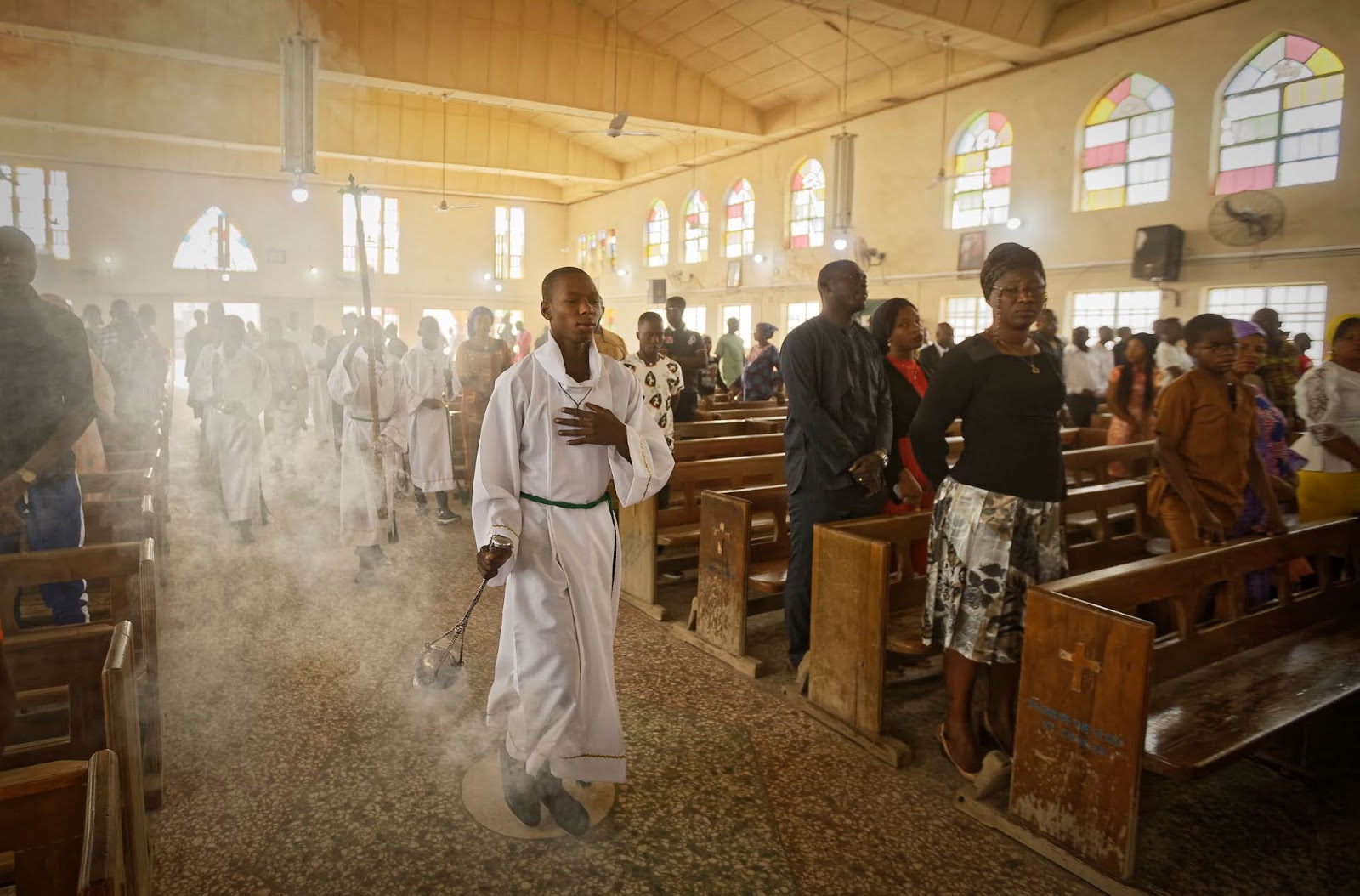
Λειτουργία στη χριστιανική, καθολική εκκλησία του Αγίου Καρόλου στην πόλη Κάνο. A.P./BEN CURTIS

Οι Φουλάνι φθάνουν συνήθως νύχτα. Είναι ξυπόλυτοι, ενώ αν δεν έχουν μοτοσικλέτες, δεν τους ακούει κανείς να πλησιάζουν τα χωριά. Καμιά φορά, ένας σκύλος μπορεί να αρχίσει να γαβγίζει, ενώ άλλες φορές ο σκοπός του χωριού μπορεί να ηχήσει συναγερμό. Η άφιξή τους συνοδεύεται από ποδοβολητό αλόγων, σύννεφα σκόνης, άγριες φωνές, λες και θέλουν να εμψυχώσουν ο ένας τον άλλο. Πριν προλάβουν οι κάτοικοι να οχυρωθούν, οι Φουλάνι έχουν εισβάλει στα σπίτια, χτυπώντας με τις ματσέτες, αναζητώντας εγκύους, πυρπολώντας, λεηλατώντας, βιάζοντας. Δεν σκοτώνουν απαραίτητα όλους τους κατοίκους. Σε κάποια δεδομένη στιγμή, σταματούν. Απαγγέλλουν ευκαιριακό στίχο από το κοράνι, συγκεντρώνουν τα φοβισμένα ζώα και φεύγουν όπως ήρθαν, πολύ γρήγορα, αφήνοντας τους νεκρούς τριγύρω τους. 
Πρέπει να μείνει κάποιος ζωντανός για να διηγηθεί. Χρειάζονται μάρτυρες για να πιστοποιήσουν ότι οι Φουλάνι είναι ικανοί για όλα και δεν φοβούνται κανέναν, παρά μόνο τον θεό.
Στην ομοσπονδιακή πρωτεύουσα Αμπούτζα, 17 ηγέτες της χριστιανικής κοινότητας ήρθαν να με συναντήσουν. Κάποιοι είχαν ταξιδέψει πολλές ημέρες σε ασφυκτικά γεμάτα ταξί ή λεωφορεία. Ορισμένοι καθυστέρησαν, έχοντας να αντιμετωπίσουν μπλόκα στους δρόμους των πολιτειών Γιομπέ και Ανταμάουα, που βρίσκονται σε κατάσταση έκτακτης ανάγκης. Ολοι τους έφθασαν με ένα ή δύο επιζήσαντες των σφαγών. Τα 40 θύματα, άνδρες και γυναίκες, συναισθάνονταν τη σοβαρότητα της στιγμής, ενώ κάποιοι έφεραν μαζί τους ένα στικ USB, μία χειρόγραφη έκθεση και ο τρίτος, ένα ντοσιέ φωτογραφιών με λεζάντες και ημερομηνίες. Τα πειστήρια αυτά θα μου παραδώσουν, σαν να ήταν μηνύματα στον ωκεανό, χωρίς να με γνωρίζουν, ελπίζοντας όμως ότι θα γίνω ο αγγελιαφόρος του πόνου τους. Παραλαμβάνω τις ηχογραφήσεις, διαβάζω τα έγγραφα. Νιώθω να ασφυκτιώ υπό το βάρος των ελπίδων και της αποστολής που μου αναθέτουν.

Οι μαρτυρίες

Παίρνοντας τον λόγο ο ένας μετά τον άλλο, οι επιζήσαντες της κόλασης επιβεβαιώνουν τη μέθοδο δράσης, που περιέγραψε ο επίσκοπος του Τζος. Ολοι τους έχουν απλανές βλέμμα, που μοιάζει να λέει ότι έχουν πεθάνει, παρότι οι άνθρωποι τους αντιμετωπίζουν σαν ζωντανούς. Οι διηγήσεις τους προσθέτουν μία ακόμη πινελιά στο σκηνικό της φρίκης. Οι τεμαχισμένες σοροί γυναικών. Ο μουγγός, από τον οποίο ζητούν να αλλαξοπιστήσει, πριν τον πετσοκόψουν με ματσέτες. Το κοριτσάκι που στραγγάλισαν με την αλυσίδα του Σταυρού του. Κάθε φορά, η κοινοτοπία της φρίκης των πράξεων αυτής της εθνότητας βοσκών, που ανήκουν και αυτοί «στης Γης τους κολασμένους». Να φταίει άραγε, το κάλεσμα για προσευχή των εξτρεμιστών ισλαμιστών της Μουσουλμανικής Αδελφότητας, που πολλαπλασιάζεται κάθε φορά που πυρπολείται ένας χριστιανικός ναός; Ο προαιώνιος ιμπεριαλισμός της εθνότητας των Πελ ή μήπως η φυσική αγριότητα του ανθρώπου, που δεν χάνει ευκαιρία να επανεμφανιστεί με αφορμή τη δεισιδαιμονία;
Συνειδητοποιώ ότι οι Φουλάνι διεξάγουν πραγματικό πόλεμο, ενώ αντιλαμβάνομαι ότι πρόκειται για μία διευρυμένη Μπόκο Χαράμ, απομακρυσμένη από την παραδοσιακή της βάση και ριζωμένη πλέον στις γεωργικές κοινότητες της βόρειας Νιγηρίας. Η Μπόκο Χαράμ αυτή έχει διασχίσει τα σύνορα και σπέρνει παντού τον θάνατο. Αμερικανός εθελοντής μου μιλάει για «σχολές εκπαίδευσης» στην πολιτεία Μπόρνο, για εθελοντές Φουλάνι. Ενας άλλος μου λέει ότι στην πολιτεία Μπαουτσί εντοπίστηκαν εκπαιδευτές της Μπόκο Χαράμ, που μάθαιναν στους Φουλάνι τον χειρισμό των όπλων, για να εγκαταλείψουν επιτέλους τις ματσέτες. 
Οι Φουλάνι, όμως, δεν έχουν σύνορα, είναι η Μπόκο Χαράμ, που δεν βρίσκεται πια περιχαρακωμένη σε γεωγραφικά περιορισμένο κρησφύγετο, για να στραφούν εναντίον κάθε άπιστου –χριστιανού ή μουσουλμάνου– στη Νιγηρία και πέρα από αυτή στο Τσαντ, στον Νίγηρα και στο Καμερούν.
Συχνά στα χωριά δυτικά του Τζος, στον δρόμο προς το Καφαντσάν, ζήτησα να δω τον οπλισμό που διαθέτουν οι πολιτοφυλακές των χωριών. Πρόκειται για τόξα και σφεντόνες, για μαχαίρια, ξύλα, πέτρες και ακόντια, δερμάτινα καμτσίκια. Οι κάτοικοι πρέπει στο μεταξύ να κρύβουν ακόμη και τον πρωτόγονο αυτό οπλισμό! Οταν ο στρατός καταφθάνει μετά τις επιθέσεις, οι στρατιώτες λένε στους κατοίκους ότι τα όπλα είναι παράνομα και κατάσχονται.

«Θάψτε τους χωρίς πλάκες και σταυρούς»

Σε πολλές περιπτώσεις υπήρχαν φυλάκια του στρατού σε μικρή απόσταση. Οι στρατιώτες, όμως, δεν βοήθησαν τους κατοίκους, ή ήρθαν μετά τη μάχη, ή προσποιήθηκαν ότι δεν έλαβαν εγκαίρως τα μηνύματα SMS που τους καλούσαν σε βοήθεια, ή ότι είχαν διαταγές να μην κινηθούν. «Πώς αλλιώς θα γινόταν;» είπε εξοργισμένος ο οδηγός μας καθώς η αυτοκινητοπομπή μας αναχωρούσε με κατεύθυνση το Ντάκου και την καμένη του εκκλησία. Ο στρατός είναι συνένοχος με τους Φουλάνι. Πηγαίνουν χέρι χέρι. Πριν από λίγα χρόνια, μετά μια επίθεση στο Μπιέι είχαν βρει έως και στρατιωτική στολή και ταυτότητα σε ένα θάμνο.
«Και πώς να εκπλαγούμε;» υπερθεμάτισε ο Νταλιόπ Σαλομόν Μουαντιρί, ένας από τους λίγους δικηγόρους της περιοχής που υπερασπίζονται τα θύματα. Οι αξιωματικοί στο γενικό επιτελείο των νιγηριανών ενόπλων δυνάμεων είναι Φουλάνι. Ο πυρήνας της κυβέρνησης καταλαμβάνεται από Φουλάνι. Και ο πρόεδρος Μπουχάρι –αυτό το αφρικανικό μείγμα Ερντογάν και Μοχάμεντ μπιν Σαλμάν, που αντέχει χάρη στη στήριξη της Αγκυρας, του Κατάρ και των Κινέζων– είναι και αυτός Φουλάνι.
Αυτή η συνενοχή επιβεβαιώνεται στην επαρχία Ριγιόμ, όπου δολοφονήθηκαν τέσσερις εκτοπισμένοι καθώς επέστρεφαν στα σπίτια τους. 
Οι χωρικοί γνωρίζουν τους δράστες. Η αστυνομία τούς έχει ταυτοποιήσει. Όλος ο κόσμος ξέρει ότι μετά την επίθεση βρήκαν καταφύγιο στο χωριό Φας, δύο χιλιόμετρα πιο πέρα. Αλλά τελούν υπό την προστασία του Αρντός, του τοπικού εμίρη των Φουλάνι, έτσι δεν συνελήφθη κανείς.
Επιβεβαιώνεται και στην επαρχία Μπάσα, όπως μας λέει ο Σαντέι Αμπντού. Αυτή τη φορά, ο στρατός ήρθε για να προειδοποιήσει ότι υπήρχε κίνδυνος. Έδωσαν στα γυναικόπαιδα εντολή να μπουν στο σχολείο και όταν το έκαναν, ένας απ’ αυτούς πυροβόλησε στον αέρα, σαν να δίνει σήμα. Από μακριά ακούστηκε άλλη ριπή, σαν απάντηση. Λίγα λεπτά αργότερα, αφού οι στρατιώτες είχαν φύγει για να εντοπίσουν, όπως είπαν, τους επιτιθέμενους, αυτοί εμφανίστηκαν, πήγαν κατευθείαν στην τάξη, άνοιξαν πυρ και σκότωσαν τους πάντες.

 
Διαμαρτυρία κατοίκων κατά τη μαζική κηδεία θυμάτων των Φουλάνι στην πόλη Μακούρντι. A.P.

Πήγα και στο Κβι, πιο νότια, στον τάφο τριών νέων. Το δράμα εκτυλίχθηκε την 20ή Απριλίου, όταν μια ομάδα χωρικών απέκρουσε με ξύλα επίθεση των Φουλάνι. Αντί να κυνηγήσει τους δράστες, η αστυνομία συνέλαβε τους τρεις αυτούς νέους, μαζί με δεκατέσσερις γείτονές τους με την κατηγορία της «άσκησης βίας εις βάρος ατόμων άλλης κοινότητας».
Οι δεκατέσσερις επανεμφανίστηκαν αρκετά σύντομα, με σημάδια από τα βασανιστήρια της αστυνομίας. Αλλά οι τρεις ήταν άφαντοι.
Λίγες ημέρες πριν φθάσω, το χωριό έμαθε την αλήθεια. Τους τρεις τούς χώρισαν από τους υπόλοιπους, τους σκότωσαν και έδωσαν τις σορούς τους στο νοσοκομείο ΕCWA της Τζος. Επί εβδομάδες, οι φοιτητές της ιατρικής έκαναν μαθήματα ανατομίας στα διαμελισμένα πτώματά τους, που φυλάσσονταν στη φορμόλη και στον πάγο. «Κάντε τους ό,τι θέλετε», είπε ο υπεύθυνος της αστυνομίας όταν παρέδωσε στους συγχωριανούς τους ό,τι είχε απομείνει από τις τρεις σορούς. «Θάψτε τους χωρίς πλάκες και σταυρούς, το απαγορεύει ο Αρντός».

Ο πλανόδιος με τα πορτρέτα Ερντογάν και Λάντεν 

Είδα κι εγώ Φουλάνι. Την πρώτη φορά κατά τύχη. Ημουν μόνος με τον Ζιλ Ερτσόγκ και ένα διερμηνέα, χωρίς φρουρά, στο Τογιότα που μας πήγαινε στο Γκοντονγκόντο. Φθάσαμε σε μια κατεστραμμένη γέφυρα και αναγκαστήκαμε να περάσουμε το ποτάμι με τα πόδια. Ανεβαίνοντας την πλαγιά, πέσαμε σε μπλόκο, που αποτελείτο από ένα τεντωμένο σχοινί και ένα υπόστεγο στο οποίο λαγοκοιμούνταν δύο ένοπλοι. «Δεν περνάτε, εδώ είναι η γη των Φουλάνι, ιερή γη του βασιλιά μας Ουσμάν νταν Φοντιό – λευκοί απαγορεύονται». 
Αυτή η ανάμνηση του Φοντιό, που με τις κατακτήσεις του, πριν από δύο αιώνες, ίδρυσε το χαλιφάτο του Σοκότο στη γη των Πελ και των Χάουσα, νόμιζα ότι είχε επιβιώσει μόνο στον Βορρά της χώρας. Προφανώς όχι, γιατί βρισκόμασταν πολλές εκατοντάδες χιλιόμετρα νοτιότερα. Αυτό το όνειρο της ανασύστασης ενός ισλαμικού κράτους πάνω στα πτώματα ανιμιστών, χριστιανών και μουσουλμάνων που αντιστέκονται στη ριζοσπαστικοποίηση έχει απήχηση μέχρι εδώ.
Τη δεύτερη φορά, ήταν στις παρυφές της Αμπούτζα. Ταξιδεύοντας με το αυτοκίνητο, φθάσαμε σε ένα χωριό που δεν έμοιαζε σε τίποτα με αυτά που είχαμε δει στις περιοχές των χριστιανών. «Τι κάνετε εδώ;» μας λέει ένας έφηβος που εμφανίστηκε από το πουθενά φορώντας μπλουζάκι με αγκυλωτό σταυρό, ενώ εμείς παριστάνουμε ότι ενδιαφερόμαστε για τις καλλιέργειες κόκκινου πιπεριού. «Επωφελείστε επειδή είναι Παρασκευή και είμαστε στο τζαμί για να κατασκοπεύσετε τις γυναίκες μας; Αυτό απαγορεύεται από το Κοράνι». 
Του λέω ότι ο αγκυλωτός σταυρός είναι και αυτός αντίθετος με τη διδασκαλία του Κορανίου. Νιώθει για λίγο ντροπή και εν συνεχεία αρχίζει μια διάλεξη για το πώς «με την εξαίρεση των κακών ψυχών», που «μισούν τους μουσουλμάνους», κατά τα άλλα «όλοι οι άνθρωποι είναι αδέλφια».
Μια άλλη φορά, στο Λάγος στο νότιο άκρο της χώρας, άρχισα να αναζητώ Φουλάνι πρόθυμους να μιλήσουν. Πήγα στην άκρη της τελευταίας γειτονιάς, σε ένα μέρος στο οποίο φθάνεις ύστερα από ώρες περπάτημα ή από ώρες αναμονής στα γιγάντια μποτιλιαρίσματα που παραλύουν την πόλη, τα λεγόμενα «go-slow». Είμαι με τρεις νέους χριστιανούς αγγλικανούς, που γλίτωσαν από μια σφαγή στα κεντρικά της χώρας και ζουν σε στρατόπεδο εκτοπισμένων. 
Παριστάνουν ότι ήρθαν να αγοράσουν ένα ζωντανό για μια οικογενειακή γιορτή και ενώ παζαρεύουν ένα κριάρι με λευκά κέρατα εγώ μιλάω με μια ομάδα Φουλάνι που κατάγονταν από την επαρχία Τζιγκάουα, στα σύνορα με τον Νίγηρα.
Δεν κατάλαβα πολλά για το πώς έφθασαν ώς το Λάγος, αλλά ήταν εύκολο να εκφράσουν τη χαρά που ένιωθαν επειδή βρίσκονταν στην πόλη και μπορούσαν, όπως τους είπε ο εμίρης τους, «να βουτήξουν το Κοράνι στη θάλασσα». «Υπάρχουν υπερβολικά πολλοί χριστιανοί στο Λάγος» διαμαρτύρεται ο Αμπντάλα με ύφος ελαφρώς απειλητικό. «Οι χριστιανοί είναι σκύλοι, γιοι σκύλων. Λέτε χριστιανοί, αλλά εμείς λέμε προδότες γιατί πήραν τη θρησκεία των λευκών. Εδώ δεν έχει χώρο για μιαρούς φίλους των λευκών». Γύρω του, οι βοσκοί και ο πλανόδιος που έρχεται να μου πουλήσει πορτρέτα του Ερντογάν και του Μπιν Λάντεν, θεωρούν ότι οι χριστιανοί στο τέλος θα φύγουν και η Νιγηρία, αν θέλει ο Θεός, θα ελευθερωθεί. 

Το συμπέρασμα

Επειτα από όλα αυτά μπορούμε ακόμη να αποδώσουμε τη βία στους προαιώνιους πολέμους μεταξύ διαφορετικών φυλετικών ομάδων; Φαντάζομαι σίγουρα ότι θα υπήρξαν, ως απάντηση, βιαιότητες εναντίον των φυλών Πελ και Χάουσα. Ομως στο τέλος του ταξιδιού μου στη Νιγηρία, έχω τη φρικτή αίσθηση ότι γύρισα στο 2007, όταν οι απεσταλμένοι του Χαρτούμ έσπερναν τον θάνατο στο Νταρφούρ, ή πριν απ’ αυτό, στο νότιο Σουδάν, όταν ο θάνατος του Τζον Γκαράγκ δεν είχε πυροδοτήσει ακόμη ολοκληρωτικό πόλεμο των ισλαμιστών απέναντι στους χριστιανούς. 
Ή ακόμη νωρίτερα στη Ρουάντα, εκείνες τις ημέρες της άνοιξης του 1994, που κανένας δεν ήθελε να πιστέψει ότι βρισκόταν σε εξέλιξη η τρίτη γενοκτονία του 20ού αιώνα. 
Θα αφήσουμε την Ιστορία να επαναληφθεί στη Νιγηρία; Θα περιμένουμε, όπως συνήθως, να ολοκληρωθεί η καταστροφή για να συγκινηθούμε; Θα μείνουμε με σταυρωμένα χέρια την ώρα που η ισλαμιστική διεθνής (υπό περιορισμό στην Ασία, σε αναδίπλωση στην Ευρώπη, ηττημένη στη Συρία και στο Ιράκ) ανοίγει ένα νέο μέτωπο στην απέραντη αυτή γη, στην οποία συνυπάρχουν εδώ και αιώνες τα τέκνα του Αβραάμ; Αυτό είναι το διακύβευμα του ταξιδιού στην καρδιά του νιγηριανού ζόφου. Αυτό είναι το νόημα της έκκλησης «SOS Χριστιανοί της Νιγηρίας», που απευθύνω σήμερα στον κόσμο. 

* Ο κ. Μπερνάρ-Ανρί Λεβί είναι Γάλλος συγγραφέας και φιλόσοφος.


Πάνω από 6.000 Νιγηριανοί χριστιανοί νεκροί

Εκκλησία online
 
Εκκλησιαστικοί ηγέτες στη Νιγηρία δηλώνουν ότι οι χριστιανοί αντιμετωπίζουν «καθαρή γενοκτονία» καθώς 6.000 άνθρωποι, κυρίως γυναίκες και παιδιά, έχουν δολοφονηθεί από ριζοσπάστες από τον Ιανουάριο [2020].
«Αυτό που συμβαίνει στην πολιτεία Plateau και σε άλλα μέρη στη Νιγηρία είναι καθαρή γενοκτονία και πρέπει να σταματήσει αμέσως», δήλωσε ο Χριστιανικός Σύλλογος της Νιγηρίας και οι ηγέτες των θρησκευτικών εκκλησιών στο Plateau State.
«Πάνω από 6.000 άτομα, κυρίως παιδιά, γυναίκες και ηλικιωμένοι, έχουν σκοτωθεί σε νυχτερινές επιδρομές από ένοπλους Fulani», συμπληρώνουν. Με δελτίο τύπου μάλιστα υποστηρίζουν ότι η διεθνής κοινότητα και τα Ηνωμένα Έθνη οφείλουν να παρέμβουν προτού το φαινόμενο εξαπλωθεί και σε άλλες χώρες.
Παρόλο που ορισμένα διεθνή μέσα ενημέρωσης προσπάθησαν να χαρακτηρίσουν τις δολοφονίες ως εμφύλια σύγκρουση μεταξύ κοινοτικών ομάδων, οι ηγέτες των εκκλησιών, μαζί με μεγάλες ομάδες ελέγχου των διωγμών όπως η Open Doors USA και η International Christian Concern υποστηρίζουν ότι οι Χριστιανοί αποτελούν σκόπιμο στόχο.
Αξιοσημείωτο είναι ότι πρόσφατα το εν λόγω ζήτημα κοινοποίησε και το ελληνορθόδοξο πατριαρχείο Αλεξανδρείας, με σκοπό να ευαισθητοποιήσει την κοινή γνώμη.