More here:
https://www.gettyimages.com/photos/kid-guns-africa
Please, see also:
Child soldiers (tag)

Slavery in Sudan - Wikipedia
Modern-day slavery
The "modern wave" of slavery in Sudan reportedly began in 1983 with the Second Sudanese Civil War between the North and South. It involved large numbers of Sudanese people from the southern and central regions, "primarily the Dinka, Nuer and Nuba of central Sudan," being captured and sold "(or exploited in other ways)" by Northern Sudanese who consider themselves as Arabs.[11][12] The problem of slavery reportedly became worse after the National Islamic Front-backed military government took power in 1989, the Khartoum government declared jihad against non-Muslim opposition in the south.[13] The Baggara were also given freedom "to kill these groups, loot their wealth, capture slaves, expel the rest from the territories, and forcefully settle their lands."[14]
The Sudan Criminal Code of 1991 did not list slavery as a crime, but the Republic of Sudan has ratified the Slavery Convention, the Supplementary Convention on the Abolition of Slavery, the Slave Trade, and Institutions and Practices Similar to Slavery, and is a party to the International Covenant on Civil and Political Rights (ICCPR).[1] Nonetheless, according to the imam of the Ansar movement and former prime minister, Sadiq al-Mahdi, jihad
requires initiating hostilities for religious purposes. [...] It is true that the [NIF] regime has not enacted a law to realize slavery in Sudan. But the traditional concept of jihad does allow slavery as a by-product [of jihad].[15]
Human Rights Watch[16] and Amnesty International[17] first reported on slavery in Sudan in 1995 in the context of the Second Sudanese Civil War. In 1996, two more reports emerged, one by a United Nations representative and another by reporters from the Baltimore Sun, just one of many "extensive accounts of slave raiding" in Sudan provided by Western media outlets since 1995.[Note 1]
Human Rights Watch and others have described the contemporary form of slavery in Sudan as mainly the work of the armed, government-backed militia of the Baggara tribes who raid civilians—primarily of the Dinka ethnic group from the southern region of Bahr El Ghazal. The Baggara captured children and women who were taken to western Sudan and elsewhere. They were "forced to work for free in homes and in fields, punished when they refuse, and abused physically and sometimes sexually". The government of Sudan "arm[ed] and sanction[ed] the practice of slavery by this tribal militia", known as muraheleen, as a low cost way of weakening its enemy in the Second Sudanese Civil War, the rebel Sudan People's Liberation Movement/Army (SPLM/A), which was thought to have a base of support among the Dinka tribe of southern Sudan.[1]
According to a 2002 report issued by the International Eminent Persons Group, (acting with the encouragement of the US State Department) both the government-backed militias and the rebels (led by the SPLA) have been found guilty of abducting civilians, but "of particular concern" were incidents that occurred "in conjunction with attacks by pro-government militias known as murahaleen on villages in SPLA-controlled areas near the boundary between northern and southern Sudan." The Group concluded that "in a significant number of cases", abduction is the first stage in "a pattern of abuse that falls under the definition of slavery in the International Slavery Convention of 1926 and the Supplementary Convention of 1956."[2]
Estimates of abductions during the war range from 14,000 to 200,000.[19] One estimate by social historian Jok Madut Jok is of 10–15,000 slaves in Sudan "at any one time", the number remaining roughly constant as individual slaves come and go—as captives escape, have their freedom bought or are released as unfit for labor, more are captured.[20] Until 1999, the number of slaves kept by slave taker retains after the distribution of the human war booty was usually "three to six and rarely exceeded ten per slave raider". Although modern slave trading never approached the scale of nineteenth-century Nilotic slavery, some Baggara "operated as brokers to convert the war captives into slaves", selling slaves "at scattered points throughout Western Sudan", and "as far north as Kharoum". Illegal and highly unpopular internationally, the trade is done "discreetly", and kept to a "minimal level" so that "evidence for it is very difficult to obtain." "Slave owners simply deny that Southern children working for them are slaves." [21]
According to a January 25, 1999, report in CBS news, slaves have been sold for $50 apiece.[22]
Writing for The Wall Street Journal on December 12, 2001, Michael Rubin said:[23]
What's Sudanese slavery like? One 11-year-old Christian boy told me about his first days in captivity: "I was told to be a Muslim several times, and I refused, which is why they cut off my finger." Twelve-year-old Alokor Ngor Deng was taken as a slave in 1993. She has not seen her mother since the slave raiders sold the two to different masters. Thirteen-year-old Akon was seized by Sudanese military while in her village five years ago. She was gang-raped by six government soldiers, and witnessed seven executions before being sold to a Sudanese Arab.
Many freed slaves bore signs of beatings, burnings and other tortures. More than three-quarters of formerly enslaved women and girls reported rapes.
While nongovernmental organizations argue over how to end slavery, few deny the existence of the practice. ...[E]stimates of the number of blacks now enslaved in Sudan vary from tens of thousands to hundreds of thousands (not counting those sold as forced labour in Libya)...
The Sudanese government has never admitted to the existence of "slavery" within their borders,[24][25] but in 1999, under international pressure, it established the committee to Eradicate the Abduction of Women and Children (CEAWC). 4,000 "abducted" southerners were returned to South Sudan through this program before it was shut down in 2010.[26]
According to the Rift Valley Institute, slave-raiding, "abduction … effectively ceased" in 2002. "A significant number" of slaves were repatriated after 2005 the Comprehensive Peace Agreement of 2005, but "an unknown number" remain in captivity.[4] The Institute created a "Sudan Abductee Database" containing "the names of over 11,000 people who were abducted in 20 years of slave-raiding" in Northern Bahr el-Ghazal state in southern Sudan, from 1983 to 2002.[4][5] The January 2005 "North/South Comprehensive Peace Agreement (CPA)" peace treaty that ended the Sudanese civil war[27] put an end to the slave raids, according to Christian Solidarity International, but did not provide a "way home for those already enslaved."[28] The last Human Rights Watch "Backgrounder on Slavery in Sudan" was updated March 2002.[1]
Christian Solidarity International slave redemption effortsEfforts to "redeem" or to buy the freedom of slaves in Sudan are controversial.[1] Beginning in 1995, Christian Solidarity International began "redeeming" slaves through an underground network of traders set up through local peace agreements between Arab and southern chiefs. The group claims to have freed over 80,000 people in this manner since that time.[29] Several other charities eventually followed suit.
In 1999, UNICEF called the practice of redeeming slaves 'intolerable', arguing that these charities are implicitly accepting that human beings can be bought and sold.[30]
UNICEF also said that buying slaves from slave-traders gives them cash to purchase arms and ammunition. But Christian Solidarity said they purchase slaves in Sudanese pounds, not US dollars that could be used to purchase arms.[30]
As of 2015, Christian Solidarity International stated that it continues redeeming slaves. On its website,[29] the group stated that it employs safeguards against fraud, and that allegations of fraud "remain today unsubstantiated".
‘How I escaped child slavery in Sudan’

Johannesburg - His tribal scars are the first thing you notice about Simon Deng.
He sits suited and collared and tied - a small blue pin on his lapel reading, “Freedom is not free.”
But it’s the line of scar tissue - 20 or so bumps stretching across his brow, from ear to ear - that catch the eye.
The first thing he did after escaping slavery was to have the markings of South Sudan’s Shilluk tribe cut into his flesh.
“For all those years that I was a slave, the dog lived better than I did,” he says.
“My slave master told me that to be treated like a human being, I must do three things: convert to Islam, take an Arab name, and become their son. To give up my identity. Now, nobody can take my identity away.”
Deng was nine when he was abducted, put on a boat going up the Nile and given to a northern Sudanese family as a “gift”.
For the next three-and-a-half years, he was the family’s beast of burden, doing chores, walking to and from the river carrying water.
“I was made to do things a child cannot do physically. It wasn’t easy, but did I have a choice? I was punished if I did not fulfil all my tasks.”
He was beaten, bullied, threatened. Run away and your legs will be cut off, he was told.
It’s difficult to imagine now. Deng sits in the restaurant of an upmarket hotel, pouring warm milk into his coffee - an award-winning abolitionist activist travelling the world to share his message that slavery is not history; that it is happening now.
But it was only after 20 years of freedom that Deng began to speak up.
For former slaves, speaking about their ordeal is taboo - shameful, says Deng. Even when he became a Sudanese long-distance swimming champion, he kept his experiences to himself.
But in 1993, having relocated to the US, he read a newspaper article that brought back the pain of his childhood.
“It said in Sudan you could buy a human being for $10. I could not believe what I saw. For three nights I couldn’t sleep. It haunted me. These were my people. This was my country. This was the very situation I had walked away from. But I was living in denial.”
Deng organised several walks across the US to raise awareness about slavery in his country, and to push for the independence of South Sudan.
“To look back and see where I am now, I consider myself a lucky victim. So many kids like me who went through what I went through will never have this opportunity, to go all over the world and speak to free people as a free person. I have a moral obligation to speak out on behalf of those who can’t speak for themselves.”
It is a moral obligation that extends to countries with clout, he says. Countries like South Africa.
South Sudan gained independence in July 2011, yet the fighting between north and south persists.
“The AU is always sitting down to discuss Sudan - but the solutions do not materialise. Africa needs a fatherhead to look up to and South Africa is in a position to play that role. If South African leaders turn a blind eye to a child calling for help, that itself is immoral.”
South Africa has forces in Darfur, western Sudan, as part of the UN-AU operations in the region.
For Deng, freedom came in the form of the same tribal marks he now bears. Sent to market one day, he saw three men with the scars he’d seen back home.
“It was like the sun rising out from nowhere,” he says.
He approached the men, spilled out his story, his name, the names of his parents, his village, his tribe, speaking in his native tongue to convince them he was one of them. They knew somebody from the same village. Over the next few weeks, Deng’s escape was plotted.
Then, suddenly, he was on a steamer heading south and standing outside his mother’s hut and his sister was screaming and his mother was crying and the son they thought was long dead - the son who had been missing for three-and-a-half years, whose father had offered a reward of 10 cows for information on - was home.
Deng is still based in the US, but travels to South Sudan as often as he can. As for the north? “Never,” he says.
But that’s the point, having that choice.
“There was a time when I couldn’t say no, when all I knew was yes - and yes to everything. Now, without fear of torture or punishment, I can choose. I can say no. I am a free man.”
* For every 1 000 people in Africa, four will be pushed into modern-day slavery.
According to the International Labour Organisation, an estimated 20.9 million people around the world were victims of forced labour between 2002 and 2011.
Of these, 4.5 million were victims of forced sexual exploitation, while 14.2 million were forced into economic activities of the kind Simon Deng experienced, like agriculture, construction, domestic work and manufacturing. Ten percent were at the mercy of state entities, like prisons or the army, or rebel forces.
More than half the victims were women and girls, and a quarter were children under the age of 17. Most of these victims were found in Asia, but in an unwelcome second place - with 3.7 million people in forced labour - was Africa.
Source: ILO 2012 Global Estimate of Forced Labour
kristen.vanschie@inl.co.za // The Star
Children in Sudan: Slaves, Street Children and Child Soldiers

Interpol Rescues 85 Child Slaves From Sudan's Streets and Gold Mines (2018)
History of slavery in the Sudan (photo)
Slavery in modern Africa
Mende Nazer
Francis Bok
Human rights in Sudan
History of Slavery in the Muslim World
Christian Solidarity International

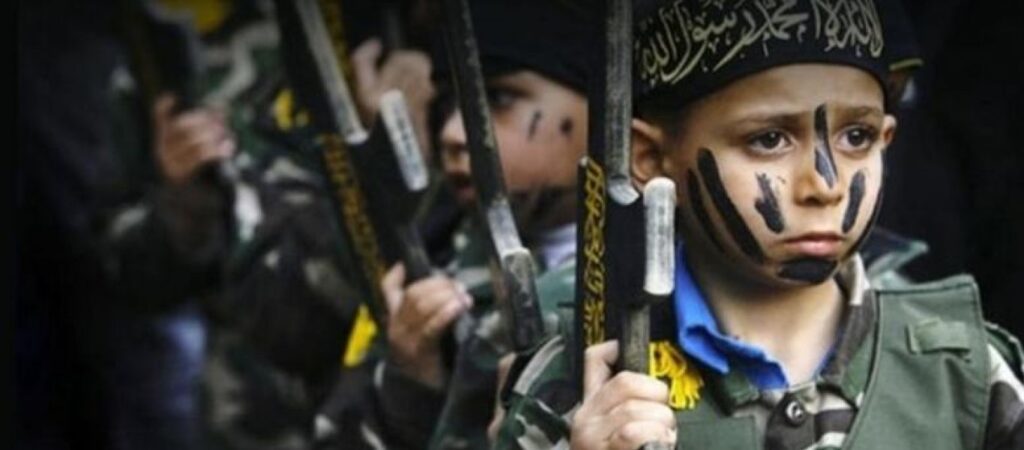
H Ημέρα της Ερυθράς Χειρός τιμάται κάθε χρόνο στις 12 Φεβρουαρίου με σκοπό να θυμίσει, και να ευαισθητοποιήσει τους πολίτες του κόσμου για τα παιδιά που στρατεύονται παρά τη θέλησή τους σε πολέμους και ένοπλες συγκρούσεις. Πρόκειται για τη χειρότερη μορφή παιδικής κακοποίησης. Το σύγχρονο αυτό παιδομάζωμα έχει συχνά ως στόχο παιδιά Χριστιανικών Οικογενειών, τα οποία πέφτουν θύματα απαγωγής σε τρυφερή ηλικία.
Παραδείγματα εκτεταμένης χρησιμοποίησης παιδιών ως στρατιωτών παρατηρούνται κυρίως σε χώρες της Αφρικής (Κονγκό, Ρουάντα, Ουγκάντα, Σουδάν, Ακτή Ελεφαντοστού), αλλά και στις Φιλιππίνες, τη Μυανμάρ (Βιρμανία) και την Κολομβία. Υπολογίζεται ότι ο αριθμός τους ανέρχεται σε περίπου 300.000, το ένα τρίτο των οποίων είναι κορίτσια.
Η Ημέρα της Ερυθράς Χειρός καθιερώθηκε στις 12 Φεβρουαρίου 2002, όταν τέθηκε σε ισχύ η Συνθήκη του ΟΗΕ για τα δικαιώματα των Παιδιών στις Ενοπλες Συγκρούσεις. Η Ελλάδα επικύρωσε τη συνθήκη στις 22 Οκτωβρίου 2003.
Ο «Συνασπισμός για τη μη χρησιμοποίηση Παιδιών ως Στρατιωτών», που
εδρεύει στο Λονδίνο και έχει την πρωτοβουλία των εκδηλώσεων,
περιλαμβάνει στους κόλπους του οργανώσεις, όπως η Διεθνής Αμνηστία και
το Παρατηρητήριο των Δικαιωμάτων του Ανθρώπου (Human Right Watch) και
συνεργάζεται με τη UNICEF, τον Διεθνή Ερυθρό Σταυρό και τη Διεθνή
Οργάνωση Εργασίας.
Έντονο είναι το φαινόμενο παιδιών, κυρίως χριστιανικών οικογενειών, που
πέφτουν θύματα απαγωγής και εν συνεχεία χρησιμοποιούνται ως βομβιστές
αυτοκτονίας, καθώς μπορούν να εισρεύσουν σε πλήθος ανθρώπων χωρπίς να
κινήσουν υποψίες.
Πολλά από αυτά συγκεντρώνονται από πολύ μικρές ηλικίες σε στρατόπεδα και μετατρέπονται σε ακραίους φανατικούς μαχητές.
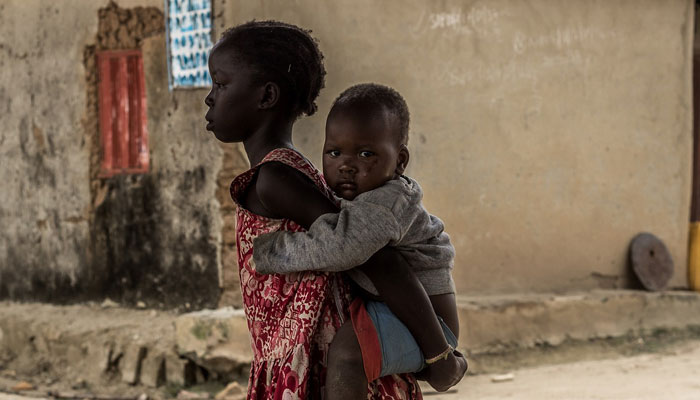
Την περασμένη Τετάρτη ο επικεφαλής Γραφείου Καταπολέμησης της
Τρομοκρατίας του ΟΗΕ Βλαντιμίρ Βορόνκοφ, μιλώντας στο Συμβούλιο
Ασφαλείας υπογράμμισε ότι η απειλή για την παγκόσμια ειρήνη και ασφάλεια
που θέτουν οι τρομοκράτες μαχητές του ISIS «αυξάνεται ξανά», εν μέσω
πανδημίας.
Ο κ. Βορόνκοφ έκανε ιδιαίτερη αναφορά στη δύσκολη κατάσταση στην οποία
βρίσκονται γυναίκες και παιδιά, τα οποία αποτελούν εύκολη λεία στα
οράματα των μαχητών του Ισλαμικού Στρατού.
«Σχεδόν δύο χρόνια μετά την εδαφική ήττα του ISIS, περίπου 27.500 παιδιά ζουν σε στρατόπεδα στη βορειοανατολική Συρία, συμπεριλαμβανομένων περίπου 8.000 παιδιών από περίπου 60 χώρες εκτός του Ιράκ», είπε, προσθέτοντας ότι το 90% είναι κάτω από 12 ετών.
Ανησυχητική είναι η κατάσταση και στη Νιγηρία. Εκεί η τρομοκρατική
οργάνωση Μπόκο Χαράμ, που στόχο έχει να εξαλείψει κάθε χριστιανικό
στοιχείο από τις περιοχές που ελέγχει στρατολογεί μικρά παιδιά.
Σύμφωνα με στοιχεία που έδωσε προσφάτως στη δημοσιότητα ο Οργανισμός
Ηνωμένων Εθνών από το 2009, περίπου 8.000 παιδιά έχουν απαχθεί από την
Boko Haram. Και σύμφωνα με μια έκθεση της UNICEF, τουλάχιστον 117 από
αυτά τα παιδιά έχουν χρησιμοποιηθεί ως βομβιστές αυτοκτονίας από το 2017
– και πάνω από το 80% από αυτά είναι κορίτσια.
Οι μαρτυρίες που περιλαμβάνονται στις εκθέσεις είναι συγκλονιστικές: Οι Χριστιανικές κοινότητες στη Νιγηρία ζουν κάτω από ένα καθεστώς τρόμου. Εξτρεμιστές εισβάλλουν στα σπίτια τους, καίνε τα χωριά τους, βιάζουν τις γυναίκες και τα μικρά κορίτσια, βασανίζουν, δολοφονούν και καταστρέφουν εκκλησίες.
Σύμφωνα με προηγούμενη έρευνα του Κέντρου Καταπολέμησης της Τρομοκρατίας από το Πανεπιστήμιο του Yale από τους 134 βομβιστές αυτοκτονίας, των οποίων η ηλικία έχει ταυτοποιηθεί, το 60% ήταν έφηβοι και παιδιά. Ο νεότερος τρομοκράτης που έχει μέχρι σήμερα εντοπιστεί ήταν μόλις 7 ετών. Η Boko Haram χρησιμοποίησε τέσσερις φορές περισσότερα κορίτσια από αγόρια. Η Ellen Chapin, ερευνήτρια στο Yale δήλωσε στο CNN πως η οργάνωση έχει στρατολογήσει 42 έφηβα κορίτσια και 23 μικρά κορίτσια (12 ετών και κάτω), σε σύγκριση με 11 εφήβους και 5 μικρά αγόρια.
«Ας είμαστε σαφείς: τα παιδιά αυτά είναι τα θύματα και όχι οι δράστες», λέει ο Μanuel Fonten, περιφερειακός διευθυντής της Unicef για τη δυτική και τη κεντρική Αφρική. «Η παραπλάνηση των παιδιών και ο εξαναγκασμός τους να διαπράξουν θανάσιμες πράξεις είναι μία από τις πιο φρικτές πλευρές της βίας στη Νιγηρία και στις γειτονικές χώρες», προσθέτει. Επιπλέον, τα παιδιά που γεννήθηκαν από αναγκαστικούς γάμους ή ως συνέπεια της σεξουαλικής βίας «αντιμετωπίζουν επίσης τον στιγματισμό και τις διακρίσεις» στα χωριά τους και στους καταυλισμούς των εκτοπισμένων.
Child soldiers (ενότητα στο ιστολόγιό μας)
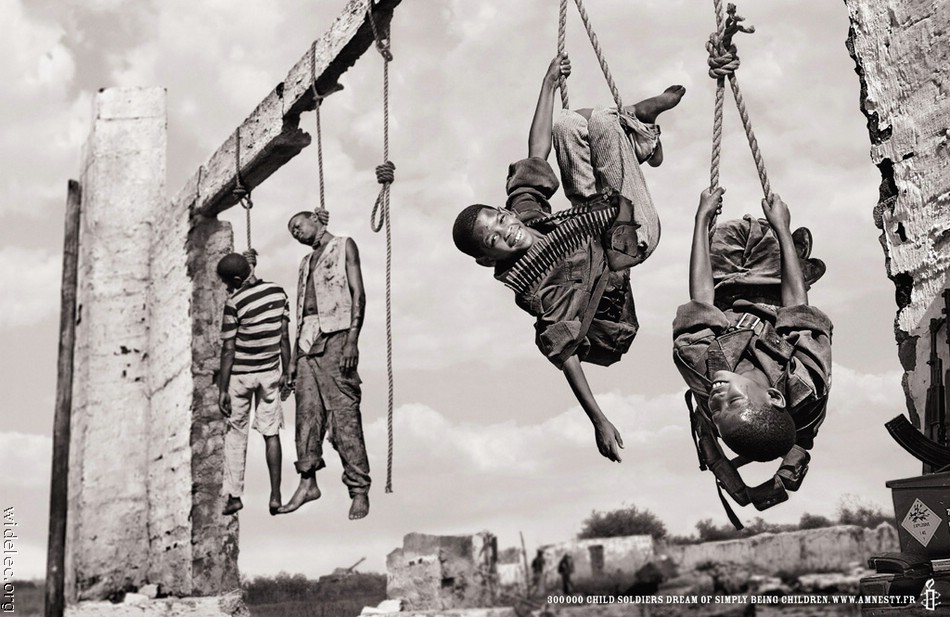
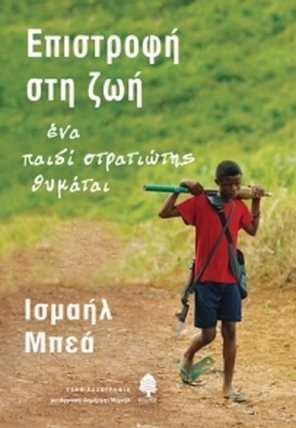
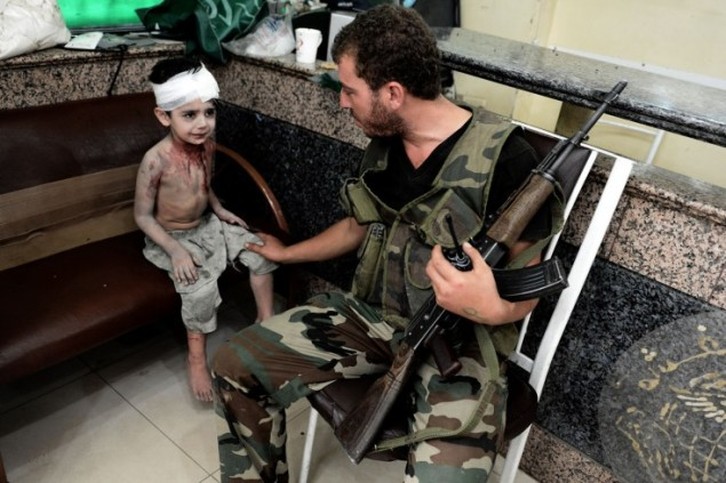
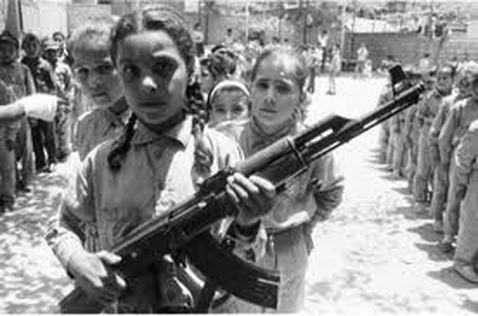 Χιλιάδες
παιδιά υπηρετούν ως στρατιώτες σε ένοπλες συρράξεις σε όλο τον κόσμο.
Αυτά τα αγόρια και τα κορίτσια, καθώς μερικοί από την ηλικία των
8-ετών, συμμετέχουν σε κυβερνητικές δυνάμεις και ένοπλες ομάδες της
αντιπολίτευσης. Μπορούν να βρίσκονται στην πρώτη γραμμή, να
συμμετέχουν σε αποστολές αυτοκτονίας, και να ενεργήσουν ως κατάσκοποι,
αγγελιοφόροι, ή παρατηρητές. Τα κορίτσια εξαναγκάζονται σε σεξουαλική
δουλεία. Πολλοί έχουν απαχθεί ή προσλαμβάνονται με τη βία, ενώ άλλοι
έχουν ενταχθεί από απελπισία, πιστεύοντας ότι οι ένοπλες ομάδες
προσφέρουν καλύτερη ευκαιρία τους για επιβίωση. Πολλοί είναι αυτοί
βέβαια που δεν διστάζουν να "αρπάξουν" την ευκαιρία και να βάλλουν μέχρι
και κορίτσια στην πρώτη γραμμή,στον πόλεμο.Μάλιστα φαίνεται πως αυτή
είναι και η εύκολη λύση,αφού με καμία δυσκολία και αντίδραση από αυτά
αλλά και τις οικογένειές τους,τα απομακρύνουν από αυτές.Έχοντας λοιπόν
οι άνδρες μαζί τους τόσα άτομα γένους θηλυκού,βρίσκουν ευκαιρίες και
ικανοποιούν μέχρι και τις σεξουαλικές τους ανάγκες.
Χιλιάδες
παιδιά υπηρετούν ως στρατιώτες σε ένοπλες συρράξεις σε όλο τον κόσμο.
Αυτά τα αγόρια και τα κορίτσια, καθώς μερικοί από την ηλικία των
8-ετών, συμμετέχουν σε κυβερνητικές δυνάμεις και ένοπλες ομάδες της
αντιπολίτευσης. Μπορούν να βρίσκονται στην πρώτη γραμμή, να
συμμετέχουν σε αποστολές αυτοκτονίας, και να ενεργήσουν ως κατάσκοποι,
αγγελιοφόροι, ή παρατηρητές. Τα κορίτσια εξαναγκάζονται σε σεξουαλική
δουλεία. Πολλοί έχουν απαχθεί ή προσλαμβάνονται με τη βία, ενώ άλλοι
έχουν ενταχθεί από απελπισία, πιστεύοντας ότι οι ένοπλες ομάδες
προσφέρουν καλύτερη ευκαιρία τους για επιβίωση. Πολλοί είναι αυτοί
βέβαια που δεν διστάζουν να "αρπάξουν" την ευκαιρία και να βάλλουν μέχρι
και κορίτσια στην πρώτη γραμμή,στον πόλεμο.Μάλιστα φαίνεται πως αυτή
είναι και η εύκολη λύση,αφού με καμία δυσκολία και αντίδραση από αυτά
αλλά και τις οικογένειές τους,τα απομακρύνουν από αυτές.Έχοντας λοιπόν
οι άνδρες μαζί τους τόσα άτομα γένους θηλυκού,βρίσκουν ευκαιρίες και
ικανοποιούν μέχρι και τις σεξουαλικές τους ανάγκες.


Former child soldier speaks: 14-year old Francis joined anti-Balaka to avenge brother's death
Francis, who lives in CAR's Yaloke district, joined the anti-Balaka militant group after his brother and uncle were allegedly killed by the Seleka.
"I went to join the anti-Balaka because I couldn't let the death of my brother go unpunished," he told World Vision. "I killed two people with a knife - two Fulani children, then I ran to Zawa, 30km from Yaloke. I continued fighting for the anti-Balaka, I killed two more boys around 15-years old. I returned to Yaloke but the fighting has gotten more difficult because the Seleka were backed there. I killed another man in Yaloke, in a place called Lala. I used a knife."
Francis then fled the group and went to live back with his mother in Yaloke. He said: "I'm not sure what I want to see for my country in the future... it is too difficult for me to answer. But all I know is I don't want to join any armed groups anymore. I want peace, we need peace and I'm happy that the laws of the country are coming back."
The charity said: "World Vision has been supporting him and other helped Francis and other former child soldiers in our child friendly spaces where children like him can have the chance to experience a little bit of normality – a place where they can be children and play in safety. We have also been providing families with food and clothing, as well as practical assistance to return to school.