Εμφάνιση αναρτήσεων με ετικέτα Algeria. Εμφάνιση όλων των αναρτήσεων

Τετάρτη 19 Απριλίου 2023

H Σταύρωση της Αφρικής

Ο τεράστιος πλούτος της Μαύρης Ηπείρου έγινε πλούτος της Δύσης και δική της τραγωδία


Orthodox Metropolis of Zambia


«Ο λαός σου δεν μπορεί άλλο, Κύριε,
Αντί πετρελαίου και αερίου
Πουλάνε τη χώρα μας»

Azagaia, “Vendem o Pais,” («Πουλάνε τη χώρα μας»)

Σε προηγούμενο άρθρο αναφερθήκαμε στην περίπτωση της Μαδαγασκάρης, μιας πάμφτωχης πρώην αποικίας της Γαλλίας, που τώρα, δίπλα στα άλλα τεράστια προβλήματά της έχει να αντιμετωπίσει και την κλιματική αλλαγή – και στην οποία η ελληνική κυβέρνηση εξήγαγε, για λογαριασμό του Ισραήλ, το κακόβουλο λογισμικό Predator.

Η Μαδαγασκάρη νίκησε τους Γάλλους στρατιωτικά τον 19ο αιώνα, όταν πρωτοπήγαν να την κατακτήσουν, αλλά το Παρίσι τους πήρε πίσω την ανεξαρτησία τους με οικονομικά μέσα, υποχρεώνοντάς τους μάλιστα να καταβάλλουν πολεμικές αποζημιώσεις. Μια ιστορία κάπως παρόμοια, τηρουμένων των αναλογιών, με την ημι-ακύρωση της Ελληνικής Επανάστασης, μέσω των «δανείων της Ανεξαρτησίας» (που μάλλον της εξάρτησης θά ’πρεπε να ονομάζονται) και που η οργάνωσή τους έχει κατά καιρούς αποδοθεί στους Ρότσιλντ, χωρίς όμως να αποδειχθεί αυτό.

Κάποια στιγμή οι Γάλλοι έκαναν τη Μαδαγασκάρη και επίσημα αποικία τους, οι ντόπιοι όμως μάλλον δεν το βρήκαν αυτό πολύ του γούστου τους και όλο και ξεσηκώνονταν. Η καταστολή των εξεγέρσεων αυτών προκάλεσε, ανάλογα με τις πηγές, από εκατό έως επτακόσιες χιλιάδες νεκρούς. Η τελευταία μεγάλη σφαγή που έκαναν οι Γάλλοι στο νησί ήταν το 1947, με 40.000 νεκρούς.
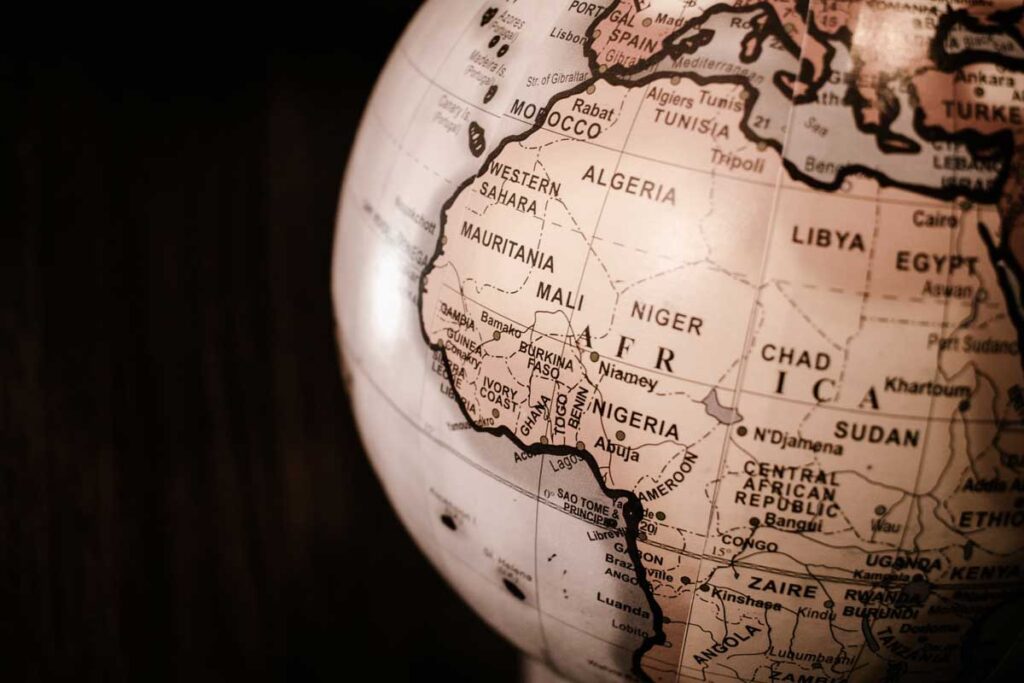
Νεοαποικιοκρατία

Το νησί κέρδισε τελικά την ανεξαρτησία του, αλλά, όπως και σε πολλές άλλες αφρικανικές και ασιατικές χώρες, η αποικιοκρατία αντικαταστάθηκε απλώς από τη νεοαποικιοκρατία, με τους δυτικούς και ιδίως τους Γάλλους να εκμεταλλεύονται ανελέητα μέχρι και σήμερα τον πλούτο της χώρας και τη δουλειά των ανθρώπων της, όπως συμβαίνει σχεδόν σε όλη την Αφρική.

Σε πολλές μάλιστα χώρες, τα εθνικοαπελευθερωτικά κινήματα που έδωσαν πολύχρονες, άφθαστου ηρωισμού μάχες κατά των ξένων, εκφυλίστηκαν, ενίοτε φτάνοντας μέχρι του σημείου να γίνουν τα ίδια φορείς της νέο-αποικιοκρατίας.

Θυμάμαι τον Μιχάλη Ράπτη-Pablo, κύριο, και για μια ολόκληρη περίοδο μοναδικό διεθνώς, υποστηρικτή, ως ηγέτη τότε της 4ης Διεθνούς, με κάθε δυνατό μέσο, περιλαμβανομένου του εφοδιασμού και της κατασκευής ακόμα όπλων, της Αλγερινής Επανάστασης, να μου λέει πόση έκπληξη ένοιωσε όταν είδε μπαρουτοκαπνισμένους καπετάνιους του αλγερινού FLN (ΕΑΜ) να κυκλοφορούν επιδεικτικά μεταμορφωμένοι έξι μήνες αργότερα με τις πολυτελείς κούρσες τους και να διάγουν βίο προυχόντων. Την ίδια έκπληξη που ένοιωσα και εγώ όταν ο θυρωρός του κρατικού θεάτρου του Ζάγκρεμπ, περήφανος αυτός, με οδήγησε στο ειδικό θεωρείο που κρατούσε, όπως οι βασιλιάδες του παλιού καιρού, ο Τίτο, αρχηγός ενός από τα μεγαλύτερα επαναστατικά κινήματα της Ευρώπης, των παρτιζάνων της Γιουγκοσλαβίας.

Μερικές φορές οι ξένες υπηρεσίες έβαλαν και το χεράκι τους βέβαια να ευνοήσουν αυτή τη μετάλλαξη των ηγεσιών των εθνικοαπελευθερωτικών κινημάτων. Ενδεχομένως τον ρόλο αυτό έπαιξαν στην Αλγερία, σύμφωνα με ορισμένες φήμες, που δεν γνωρίζω όμως αν ευσταθούν, οι υπηρεσίες της Δυτικής Γερμανίας στο πραξικόπημα με το οποίο αντικαταστάθηκε ο πρώτος πρόεδρος Μπεν Μπέλα από τον αρχηγό του στρατού Μπουμεντιέν.

Μοζαμβίκη

Ο τυφώνας Freddy έπληξε άγρια και τη Μοζαμβίκη, όπου μάλιστα, κατά μία σατανική σύμπτωση, όλα αυτά συνέπεσαν με τον θάνατο του μεγάλου hip hop καλλιτέχνη Azagaia, ειδώλου στη χώρα του, αλλά και σε όλες τις χώρες που μιλούν τα πορτογαλικά. Αυτός ήταν που τραγουδούσε

Ο λαός σου δεν μπορεί άλλο, Κύριε
Αντί πετρελαίου και αερίου πουλάνε τη χώρα μας

στίχους στο εμβληματικό τραγούδι του «Vendem o Pais», («Πουλάνε τη χώρα»). Πολύ δημοφιλής στη χώρα του, τόσο στη νεολαία όσο και στους πιο ηλικιωμένους, ο Azagaia έμπηγε το μαχαίρι στις μεγάλες πληγές των αποτελεσμάτων της κλιματικής αλλαγής, αλλά και της κοινωνικής και πολιτικής πραγματικότητας της χώρας του και της Αφρικής. Ο θάνατός του έβγαλε εκατομμύρια στους δρόμους και η κυβέρνηση της Μοζαμβίκης απάντησε με σκληρή καταστολή.


Αμερική, Ρωσία, Κίνα και παναφρικανισμός

Δώσαμε παραπάνω μια εκλεκτική και πολύ περιορισμένη ασφαλώς, αλλά χαρακτηριστική εικόνα μερικών από τα πολλά και τεράστια προβλήματα που ταλανίζουν τη Μαύρη Ήπειρο, που τόσο συχνά το άφθονο αίμα των λαών της από Μαύρη την έβαψε Κόκκινη. Ο τεράστιος πλούτος της έγινε πλούτος της Δύσης και δική της τραγωδία.

Φυσικό είναι, σε αυτές τις συνθήκες, και τα λαϊκά κινήματα της ηπείρου, αλλά και πολλές κυβερνήσεις να βλέπουν με ευνοϊκό μάτι την είσοδο της Κίνας στην περιοχή και την επάνοδο της Ρωσίας, ενώ κερδίζει όλο και περισσότερο έδαφος η ιδέα περιφερειακών συσπειρώσεων και το ευρύτερο όραμα του παναφρικανισμού.

Η απάντηση των Αμερικανών στην πρόκληση αυτή είναι κυρίως η γενίκευση των επεμβάσεων της CIA και της ιδιαίτερα δραστήριας και επιθετικής, σε όλη την ήπειρο, AFRICOM, της διοίκησης των αμερικανικών ενόπλων δυνάμεων για την Αφρική, επεμβάσεις στις οποίες σπανιότατα αναφέρεται ο δυτικός τύπος. Και το να δίνουν μαθήματα στους Αφρικάνους πώς να αποφεύγουν τις συνεργασίες με τους Κινέζους και τους Ρώσους.

Μόνο που οι καιροί έχουν αλλάξει. Της τά ’παν έξω από τα δόντια της Αμερικανίδας αντιπροέδρου Κάμαλα Χάρις οι ηγέτες των χωρών που επισκέφθηκε πρόσφατα. Όσο για τον πρόεδρο της Αφρικανικής Ένωσης, εξήγησε με τα ακόλουθα λόγια τη θέση των Αφρικανών: «Όταν μιλάμε, συχνά δε μας ακούνε ή πάντως δεν ενδιαφέρονται για το τι λέμε. Αυτό είναι που θέλουμε να αλλάξουμε. Και να μη μας λέει κανένας: μη δουλεύετε με τον ένα ή με τον άλλο. Θέλουμε να δουλεύουμε και να εμπορευόμαστε με όλους» (Why Africa Chose China | Defend Democracy Press).

Αν η ανάκτηση ή η απώλεια της αξιοπρέπειας είναι επίσης και ένας δείκτης για το ποιος έχει ή δεν έχει μέλλον, η Αφρική και ο μη δυτικός κόσμος ανεβαίνουν, η Ευρώπη (και η Ελλάδα μαζί της) πέφτει. Έστω και αν ξεκινάνε από πολύ διαφορετικά, προς το παρόν, επίπεδα.

Μακάρι να είχαμε και εμείς καναν πολιτικό σαν αυτούς που εμφανίζονται τώρα στη Μαύρη Ήπειρο. Πού τέτοια τύχη όμως;

Υ.Γ.: Στο άρθρο μας για τις κυρώσεις στη Ρωσία και στη Λευκορωσία, παραλείψαμε κάτι ουσιώδες. Τα ευρωπαϊκά κράτη έχουν μπλοκάρει 350.000 τόνους λιπάσματα που προορίζονται για φτωχές αφρικανικές χώρες, παρά το γεγονός ότι η Ρωσία έχει δηλώσει ότι τα χαρίζει και, επομένως δεν θα έχει εισοδήματα από αυτά. Ταυτόχρονα όμως οι Ευρωπαίοι έχουν άρει τις κυρώσεις για εισαγωγές ρωσικών λιπασμάτων προς τις ίδιες, παρά το ότι από αυτές κερδίζει η Ρωσία, γιατί χρειάζονται τα λιπάσματα. Τι κι αν πεθάνουν μερικοί ακόμα Αφρικάνοι; Μαύροι είναι άλλωστε, όχι άνθρωποι.

#νεοαποικιοκρατία#Αφρική

Δευτέρα 6 Δεκεμβρίου 2021

Saint Crispina the Martyr from Thacora (Tagora) of Algeria


Commemorated on December 5

Icon (from here & here): Saint Crispina among the female martyrs in a 6th century mosaic.

Saint Crispina lived at Thacora (Tagora) in Africa, and was arrested for professing Christianity. The proconsul Annius Anullinus presided at her trial at Theveste (or Tebessa) in December of 304. [Thagora was a Carthaginian and Roman town at what is now Taoura, Algeria. The Punic form of its name was TGRN (𐤕‬𐤂‬𐤓𐤍). The Tabula Peutingeriana calls it Thacora.(en.wikipedia)]

Anullinus asked her if she was aware that she was required by law to offer sacrifice to the gods for the welfare of the emperors Diocletian and Maximian. She said that she did not know of this decree, and that her Christian faith would not allow her to offer sacrifice to false gods.

“Turn away from this superstition,” Anullinus said, “and submit to the sacred rites of the Roman gods.”

Saint Crispina replied that she knew no other god but the God worshiped by Christians. The proconsul threatened her with torture, and the saint said that she would gladly endure this for the sake of Christ.

Anullinus told her to stop being stubborn and to obey the edict. Crispina answered, “I will obey the edict given me by my Lord Jesus Christ.”

The proconsul repeated his threat of torture, saying that she would be forced to obey the edict. He also pointed out that the entire province of Africa had offered sacrifice, but Saint Crispina remained firm in her faith, saying that she would never offer sacrifice to demons.

Enraged that she would not accept the pagan gods, Anullinus said that she would be forced to bow before the idols and to offer incense. The courageous woman retorted that she would never do so as long as she lived.

Then the proconsul sought to persuade her that it would not be a sacrilege to offer sacrifice to the gods as required by law. She said, “May those gods, who have not made heaven and earth, perish.”

Anullinus urged Crispina to respect the Roman religion, but she said, “I have told you again and again that I am ready to endure any tortures rather than worship the idols which are the work of men’s hands.”

Anullinus told her that she spoke blasphemy and was not acting in a way which would ensure her safety. He then tried to humiliate her by ordering her head to be shaved. The holy martyr replied, “If I were not seeking my own well-being, I would not be on trial before you now. Let your gods speak, then I shall believe.”

The proconsul told her she could either live a long life, or die in agony before being beheaded. Saint Crispina told him, “I would thank my God if I obtained this. I would gladly lose my head for the Lord’s sake, for I refuse to offer sacrifice to those ridiculous deaf and dumb statues.”

Anullinus lost patience with her and ordered that the minutes of the trial be read back before he pronounced sentence. “Since Crispina persists in her superstition and refuses to offer sacrifice to the gods in accordance with our law, I order her to be executed by the sword.”

Saint Crispina said, “Thanks be to God, Who has deigned to free me from your hands.” She made the Sign of the Cross and stretched forth her neck to the executioner.

Saint Crispina was beheaded on December 5, 304 in accordance with the fourth edict of Diocletian. Saint Augustine mentions her in Sermons 286 and 354. 

Troparion — Tone 4

Your lamb Crispina calls out to You, O Jesus, in a loud voice: / "I love You, my Bridegroom, and in seeking You I endure suffering. / In baptism I was crucified so that I might reign in You, / and I died so that I might live with You. / Accept me as a pure sacrifice, / for I have offered myself in love." / Through her prayers save our souls, since You are merciful.

Please, see also
 

OBSERVING THE FEAST DAYS OF THE AFRICAN SAINTS
The Kingdom of Heaven, where racial discrimination has no place

"THE WAY" - An Introduction to the Orthodox Faith
Theosis (deification): The True Purpose of Human Life
"We are called to holiness!" ― Two orthodox voices from Africa about the Sunday of All Saints (Sunday after Pentecost)
"That is the purpose of the Church, to make people holy" : Sunday of All Saints 


Παρασκευή 27 Αυγούστου 2021

Bread in Africa

clovegarden.com


While domestication of grains for easy harvesting may have originated in Anatolia and Caucasus, about 10,000 years ago, the Horn of Africa was certainly not far behind. Grinding of grains into flour with sliding stones, and the baking of flat breads, is far older. Today, the main breads of Africa are still made under very primitive conditions. in a manner possibly in place before the dawn of history.   Photo by Lelaw Wondimu distributed under license Creative Commons.

More on Bread.


North Africa

  -   The Maghreb (Algeria, Morocco, Tunisia, Libya, Mauritania), Egypt, Sudan


Baghrir

  -   [Beghrir] 

This is a popular bread in the Maghreb region, often eaten for breakfast with a mix of butter and honey, but also with jams. It is made from semolina or wheat flour.   Photo by Tamorlan distributed under license Creative Commons Attribution-ShareAlike v3.0 Unported.


Pita Bread


-   [Pita (Greek); Pocket Bread; Pide (Turkey); Khubz Arabi (Arabic)] 

This lightly leavened wheat bread is very popular throughout North Africa, and far beyond. The ethnic markets here in the Los Angeles region are piled high with pita, in both white (photo) and whole wheat versions, in the 7 inch and larger sizes.

The earliest Arabic recipes (10th century) have these baked in a Tandoor, but today they are usually made in continuous industrial ovens so as to meet the high demand. Pita is baked in a very hot oven at 450°F/232°C or higher, causing the disk to puff up dramatically. When removed from the oven the disk collapses, but the two sides remain separated, so the bread can be opened into a pocket. Throughout the region, street foods of all kinds are packed into pita pockets.

The photo specimen was a 7 inch diameter disk 0.15 inch thick. Half the top layer was removed to show the inside. Enriched wheat flour, water, yeast, salt, calcium propionate.

Kisra Rhaheeefa 


Kisra Rhaheeefa is much like Ethiopia's Injera and used similarly, but is made from Sorghum Flour or Wheat Flour rather than Teff. The "Kisra Rhaheeefa" name differentiates it from "Kisra Aseeda", which is a Sorghum Porridge.   Photo by Mohammed Elfatih Hamadien distributed under license Creative Commons Attribution-ShareAlike v4.0 International.

The Horn of Africa

  -   Ethiopia, Djibouti, Eritrea, Somalia


Injera

  -   [Injera (Amharic); (Bidenaa (Oromo)] 

This is the bread of Ethiopia and Eritrea, usually made from Teff. It was traditionally, and is often still today, made very large, to fit the table for which it would be the tablecloth. Scoops of stews and other recipes are placed directly on it. Diners tear off pieces of the "tablecloth" and use them to pick up the food. Today, especially in restaurants it is often made smaller and served on an Indian thali, or a very large plate.   Photo by PhoTom distributed under license Creative Commons Attribution-ShareAlike v4.0 International.

This is a sour dough bread, made with a leavened batter similar to thin pancake batter. The batter is baked on a large clay or metal tray, over moderate heat, and on one side only. Bubbles on the top side burst, giving the bread a spongy texture, almost like honeycomb tripe, which is very good at holding sauces. Temperature is regulated so it sets through, but does not brown on the bottom (see the rolled examples in the photo at the top of the page). It can be made using white or brown Teff, or a mix. Farmers say the white Teff is preferred to the brown by most of their customers.

Lahoh

  -   [Luhuh (Somali), Laxoox, Lahooh, Canjeero, Canjeelo, Anjeero]

This bread is popular in Somalia, Djibouti and Yemen, but now also popular in Israel, introduced by Yemenite Jews. It is a fermented sour dough bread usually made of Sorghum Flour or Corn Flour and cooked on circular metal stove called a taawa or daawo. In Yemen, it is often served by street vendors.   Photo by Gilabrand at en.wikipedia distributed under license Creative Commons Attribution-ShareAlike v3.0 Unported attribution required.

East Africa

  -   Tanzania, Kenya, Uganda, Rwanda, Burundi and South Sudan


Chapati

Long influenced by India, East Africa has adopted the Indian Chapati as their main form of bread - but they use white flour instead of the whole wheat Atta flour used in India. As it is very inconvenient for me to produce Chipatis, I use Flour Tortillas, easily available here in Southern California. I prefer the small 5 inch diameter ones. Incidentally, Whole Wheat Flour Tortillas make an excellent substitute for Indian Chapatis


Kisra Rhaheeefa


South Sudan (Christian and Native Religion) is now a separate country from Sudan (all Muslim) and is moving strongly into the East African community. One thing they still have in common with Sudan is Sudan's Kisra Rhaheeefa.
bk_africae 131129   -   www.clovegarden.com
©Andrew Grygus - agryg@clovegarden.com - Photos on this page not otherwise credited are © cg1 - Linking to and non-commercial use of this page permitted


Bread and Bread-Baking Technologies in Africa

Bread is a dietary staple in North Africa, Northeastern Africa, and the Horn of Africa, and it is important in the diet of many Saharan and sub-Saharan people. African breads are made from the flours of a variety of cereals, tubers, and corms that are baked, steamed, and sometimes fried to produce pancake, flat bread, leavened or slightly leavened loaves, or cakes using ovens, hearths, griddles, pots, and molds. Technical choice in bread baking is associated with the baking properties of bread ingredients and social group’s culinary practices and preferences and does not represent evolutionary stages.

The Bread/Oven Porridge/Pot Bread/Griddle Traditions

Research of Africa’s culinary practices includes the history of bread consumption and its associated technologies, an investigation that is far from exhaustive. Several researchers observe a general (but not absolute) culinary divide between bread-based cuisines that use ovens and griddles...

This is a preview of subscription content, log in to check access. 
 
References
  1. Abdullahi, M. D. (2001). Culture and customs of Somalia. London: Greenwood Press.Google Scholar
  2. Anderson, J. R., & Salah (El-Din) Mohamed Ahmed. (2006a). Bread moulds and throne halls: Recent discoveries in the Amun Temple Precinct at Dangeil. Sudan & Nubia, 10, 95–101.Google Scholar
  3. Anderson, J., & Salah (El-Din) Mohamed Ahmed. (2006b). Revealing terra incognita: Dangeil, Sudan. Current World Archaeology, 19, 23–30.Google Scholar
  4. Anderson, J. R., D’Andrea, A. C., Logan, A., & Ahmed, S. M. (2007). Bread moulds from the Amun Temple at Dangeil, Nile state – an addendum. Sudan & Nubia, 11, 89–93.Google Scholar
  5. Apentiik, R. (1997). Bulsa technologies and systems of thought. Unpublished M.A. thesis, Department of Archaeology, University of Calgary.Google Scholar
  6. Arthur, J. W. (2014). Culinary crafts and foods in southwestern Ethiopia: An ethnoarchaeological study of Gamo Groundstones and pottery. African Archaeological Review, 31(2), 131–168.Google Scholar
  7. Baldados, A., & Constantini, L. (2011). Sorghum exploitation at the Kassala and its environs, northeastern Sudan in the second and first millennia BC. Nyame Akuma, 75, 33–39.Google Scholar
  8. Balfet, H. (1975). Bread in some regions of the Mediterranean area. In M. L. Arnott (Ed.), Gastronomy: The anthropology of good habits (pp. 305–314). The Hague: Mouton Publishers.Google Scholar
  9. Bruneton, A. (1975). Bread in the region of the Moroccan High Atlas. In M. L. Arnott (Ed.), Gastronomy: The anthropology of food habits (pp. 275–285). The Hague: Mouton Publishers.Google Scholar
  10. Chittick, N. (1984). Manda. London: British Institute in Eastern Africa.Google Scholar
  11. Close, A. (1995). Few and far between. In W. K. Barnett & J. W. Hoopes (Eds.), The emergence of pottery technology and innovation in ancient. Societies (pp. 23–37). Washington, DC: Smithsonian Institution Press.Google Scholar
  12. D’Andrea, A. C. (2008). T’ef (eragrostis tef) in ancient agricultural systems of Ethiopia. Economic Botany, 62(4), 547–566.CrossRefGoogle Scholar
  13. D’Andrea, A. C., Schmidt, P. R., & Matthew, C. C. (2008). Paleoethnobotanical analysis and agricultural economy in early first millennium BCE sites around Asmara. In P. R. Schmidt, M. C. Curtis, & R. Zelalem Teka (Eds.), The archaeology of ancient Eritrea (pp. 207–216). Asmara: Red Sea Press.Google Scholar
  14. Deacon, J. (1984). Later Stone Age people and their descendants in southern Africa. In R. G. Klein (Ed.), Southern African prehistory and paleoenvironments (pp. 221–228). Rotterdam: A.A. Balkema Publishers.Google Scholar
  15. Dirar, H. A. (1993). The indigenous fermented foods of the Sudan. Wallingford, UK: CAB.Google Scholar
  16. Dombrowski, J. C. (1971). Excavations in Ethiopia: Lalibela and Natchabiet Caves, Begemeder Province. Ph.D. dissertation, Department of Anthropology, Boston University.Google Scholar
  17. Dufton, H. (1970 [1867]). Narrative of a journey through Abyssinia in 1862–3. Westport, CT: Negro Universities Press.Google Scholar
  18. Edwards, D. N. (1996). Sorghum, beer and Kushite society. Norwegian Archaeological Review, 29, 65–77.CrossRefGoogle Scholar
  19. Edwards, D. N. (2004). Nubian past. An archaeology of Sudan. London: Routledge.Google Scholar
  20. Fuller, D. (2004). Kawa. Sudan and Nubia, 6, 70–74.Google Scholar
  21. Gast, M., & Adrian, J. (1965). Mils et sorgho en Ahaggar etude ethnologique et nutritionelle. Paris: Arts et Métiers Graphiques.Google Scholar
  22. Haaland, R. (2007). Porridge and pot, bread and oven: Food ways and symbolism in Africa and the near east from the Neolithic to the present. Cambridge Archaeological Journal, 17(2), 165–182.CrossRefGoogle Scholar
  23. Haaland, R. (2012). Changing food ways as indicators of emerging complexity in Sudanese Nubia: From Neolithic agropastoralists to the Meroitic civilization. Azania , 47(3), 327–342.CrossRefGoogle Scholar
  24. Hard, N. F., Odunfa, S. A., Cheri-Ho Lee, Quintero-Ramírez, R., Argelia Lorence-Quinoñes, & Carmen Wacher-Radarte. (1999). Fermented cereals a global perspective. FAO Agricultural Services Bulletin. http://www.fao.org/docrep/x2184E/x2184E00.htm.
  25. Hillman, G. C. (1989). Late Palaeolithic plant foods from Wadi Kubbaniya in upper Egypt: Dietary diversity, infant weaning, and seasonality in a riverine environment. In D. R. Harris & G. C. Hillman (Eds.), Foraging and farming (pp. 207–239). London: Unwin Hyman.Google Scholar
  26. Hobbs, J. (1989). Bedouin life in the Egyptian wilderness. Austin: University of Texas Press.Google Scholar
  27. Horton, M. (1996). Shanga. London: British Institute in Eastern Africa.Google Scholar
  28. Huysecom, E., Rasse, M., Lespez, L., Neumann, K., Fahmy, A., Ballouche, A., et al. (2009). The emergence of pottery in Africa during the tenth millennium cal BC: New evidence from Ounjougou (Mali). Antiquity, 83, 905–917.CrossRefGoogle Scholar
  29. Jacquet-Gordon, H. (1981). A tentative typology of Egyptian bread moulds. In D. Arnold (Ed.), Studien zur altägyptischen Kerami (pp. 11–24). Mainze am Rhein: Verlag.Google Scholar
  30. Keenleyside, A., Schwarcz, H., Stirling, L., & Lazreg, N. B. (2009). Stable isotopic evidence for diet in a Roman and Late Roman population from Leptiminus, Tunisia. Journal of Archaeological Science, 36, 51–63.CrossRefGoogle Scholar
  31. Kimmage, K. (1991). The evolution of the ‘wheat trap’: The Nigerian wheat boom. Africa, 60(4), 471–501.CrossRefGoogle Scholar
  32. Kobischanov, Y. M. (1979). Axum. London: Pennsylvania State University Press.Google Scholar
  33. Leek, F. F. (1972). Teeth and bread in ancient Egypt. Journal of Egyptian Archaeology, 58, 126–132.CrossRefGoogle Scholar
  34. Lehner, M. (1997). The complete pyramids. London: Thames and Hudson Ltd.Google Scholar
  35. Lewicki, T. (1974). West African food in the middle ages. Cambridge: Cambridge University Press.CrossRefGoogle Scholar
  36. Lyons, D. (2007). Cuisine and identity: An ethnoarchaeological example from eastern Tigray, Ethiopia. Journal of Social Archaeology, 7(3), 346–371.CrossRefGoogle Scholar
  37. Lyons, D., & D’Andrea, A. C. (2003). Griddles, ovens, and agricultural origins: An ethnoarchaeological study of bread baking in highland Ethiopia. American Anthropologist, 105(3), 515–530.CrossRefGoogle Scholar
  38. Mattingly, D. (2003). Fortifications, settlement and domestic architecture. In D. Mattingly (Ed.), The archaeology of Fazzan (Synthesis, Vol. 1, pp. 136–176). London: Society for Libyan Studies.Google Scholar
  39. McIntosh, S. K. (1995). Pottery. In S. K. McIntosh (Ed.), Excavations at Jenne-Jeno, Hambarketolo, and Kaniana (Inland Niger Delta, Mali), the 1981 Season (pp. 130–213). Berkeley: University of California Press.Google Scholar
  40. Mosley, D. (2004). Breaking bread. The roles of taste in colonialism. Food Culture and Society , 7(2), 49–62.Google Scholar
  41. Murray, M. A. (2000). Cereal production and processing. In P. T. Nicholson & I. Shaw (Eds.), Ancient Egyptian materials and technology (pp. 505–536). Cambridge: Cambridge University Press.Google Scholar
  42. National Research Council. (1996). Lost crops of Africa, volume 1: Grains. Washington, DC: National Academy Press.Google Scholar
  43. Neumann, K. (2005). The romance of farming: Plant cultivation and domestication in Africa. In A. B. Stahl (Ed.), African archaeology (pp. 249–275). Oxford: Blackwell Publishing.Google Scholar
  44. Nicholaisen, J. (1963). Ecology and culture of the pastoral Tuareg. Copenhagen: National Museum.Google Scholar
  45. Pankhurst, R. (1968). Economic history of Ethiopia 1800–1935. Addis Ababa: Haile Selassie I University Press.Google Scholar
  46. Pelling, R. (2003). Medieval and early modern agriculture and crop dispersal in the Wadi el-Agial, Fezzan, Libya. In K. Neumann, A. Butler, & S. Kahlheber (Eds.), Food, fuel and fields progress in African archaeobotany (pp. 129–138). Köln: Heinrich Barth Institut.Google Scholar
  47. Peña, L. Z., Peña -Chocarro, L., Estévez, J. J. I., & Urquijo, J. E. G. (2003). Ethnoarchaeology in the Moroccan Jebala (Western Rif): Wood and dung as fuel. In K. Neumann, A. Butler, & S. Kahlheber (Eds.), Food, fuel and fields progress in African archaeobotany (pp. 163–176). Köln: Heinrich Barth Institut.Google Scholar
  48. Phillipson, D. (2012). Foundations of an African civilisation Aksum and the northern horn 1000BC–AD1300. Rochester, NY: James Currey.Google Scholar
  49. Pope, J. W. (2014). Epigraphic evidence for a “porridge-and-pot” tradition on the ancient middle Nile. Azania, 48(4), 473–497.CrossRefGoogle Scholar
  50. Samuel, D. (1999). Bread making and social interactions at the Amarna workmen’s village, Egypt. World Archaeology, 31(1), 121–144.CrossRefGoogle Scholar
  51. Samuel, D. (2000). Brewing and baking. In P. T. Nicholson & I. Shaw (Eds.), Ancient Egyptian materials and technology (pp. 537–576). Cambridge: Cambridge University Press.Google Scholar
  52. Schmidt, P. R., & Curtis, M., with a contribution from Ascunce, M.S., Kitchen, A., Schimdt, P. R., Miyamoto, M. M., & Mulligan, C. J. (2008). The Second Millennium CE: Settlement, Economy and Ritual Life. In P. R. Schmidt, M.C. Curtis, & Zelalem Teka (Eds.), The archaeology of ancient Eritrea (pp. 265–284). Asmara: Red Sea Press.Google Scholar
  53. Shack, W. (1974). The central Ethiopians. London: International African Institute.Google Scholar
  54. Smeds, H. (1955). The ensete planting culture of eastern Sidamo. Acta Geographica, 13(4), 1–39.Google Scholar
  55. Van de Mieroop, M. (1997). The ancient mesopotamian city. Oxford: Clarendon Press.Google Scholar
  56. Wilson, H. (1988). Egyptian food and drink. Aylesbury, UK: Shire Publications Ltd.Google Scholar 
     
    Additional Reading
  1. Chazan, M., & Lehner, M. (1990). An ancient analogy: Pot baked bread in ancient Egypt and Mesopotamia. Paléorient, 16(2), 21–35.CrossRefGoogle Scholar
  2. Food and Agriculture Organization (1995). Sorghum and Millets in Human Nutrition (Food and Nutrition Series, No. 27). Rome: Food and Agriculture Organization.Google Scholar
  3. Gebrekidan, B., & Gebrehiwot, B. (1982). Sorghum injera preparations and quality parameters. In L. W. Rooney & D. S. Murty (Eds.), Proceedings of the international symposium on sorghum grain quality (pp. 55–66). Patancheru, India: ICRISAT.Google Scholar
  4. Larsen, H. (1936). On baking in Egypt during the Middle Kingdom. Acta Archaeologica, 7, 51–57.Google Scholar
  5. Pomeranz, Y., & Shellenberger, J. A. (1971). Bread science and technology. Westport, CT: Avi Publishing Company.Google Scholar
  6. Samuel, D. (1989). Their staff of life: Initial investigations on ancient Egyptian bread baking. In B. J. Kemp (Ed.), Amarna reports V (pp. 253–290). London: Egypt Exploration Society.Google Scholar 
     
    Egyptian Bread Websites
  1. Hilary Stewart on Ancient Egyptian bread baking. http://ancientfoods.wordpress.com/2011/08/12/ancient-egypt-bread/
  2. Sally Grainger and Roman bread, British Museum. http://blog.britishmuseum.org/2013/07/19/a-very-versatile-roman-oven/