Εμφάνιση αναρτήσεων με ετικέτα Rwanda. Εμφάνιση όλων των αναρτήσεων

Τρίτη 8 Απριλίου 2025

Τα παιδιά του δρόμου της Ρουάντας

Ένα μεγάλο κοινωνικό πρόβλημα που αντιμετωπίζει η Αφρική είναι τα παιδιά του δρόμου. Για διάφορους λόγους χιλιάδες παιδιά έχουν εγκαταλείψει την οικογένεια και το σπίτι τους και ζουν στον δρόμο. Συνήθως οι λόγοι είναι οικονομικοί, καθώς όταν οι οικογένειες δεν μπορούν να αναθρέψουν τα πολλά παιδιά, τα διώχνουν να ζήσουν στον δρόμο. Και εκείνα αναγκάζονται να κοιμούνται στον δρόμο και να κάνουν πράγματα του δρόμου. Ο,τι φαντασθεί κανείς. Πολλά παιδιά ζουν μαζί σαν τα ζώα σε κοπάδια.
ρουαντα

Για κάθε κοινωνία είναι ένας μόνιμος μπελάς, αφού επιβιώνουν κυρίως με την κλεψιά. Δεν ζουν πολλά χρόνια, αφού είναι εκτεθειμένα στις άσχημες καιρικές συνθήκες κυρίως στις τροπικές χώρες. Είτε πεθαίνουν από αρρώστιες, είτε σκοτώνονται από τους ιδιοκτήτες που προασπίζονται έτσι τις περιουσίες τους, είτε μεταξύ τους.

Κανείς δεν κάνει κάτι για να τα βοηθήσει. Μόνο κάποιοι ιεραπόστολοι τα μαζεύουν σε οικοτροφεία και προσπαθούν να τα εξημερώσουν και να τα κάνουν ανθρώπους.
ρουαντα

Όταν αναλάβαμε τα καθήκοντα του Πατριαρχικού Επιτρόπου της Ι. Επισκοπής Ρουάντας, το Κράτος ζήτησε να βοηθήσουμε σ’ αυτό το πρόβλημα και να συμβάλει η Εκκλησία μας στον περιορισμό του.

Πράγματι με την βοήθεια του Αρχιμ. Αναστασίου Hamilcar Fidele Tuyisenge, θεολόγου-κοινωνικού λειτουργού, οργανώθηκε το πρόγραμμα βοήθειας των παιδιών του δρόμου. Συνεργασθήκαμε με την Κοινωνική Υπηρεσία του Δήμου Rwamagana, απ’ όπου πήραμε την άδεια της εφαρμογής του προγράμματος. Το όλο εγχείρημα μπόρεσε να εφαρμοσθεί με την χορηγία του π. Γεωργίου Σχοινά, εφημερίου του Ι. Ναού Αγ. Νικολάου Φιλοπάππου, και των πνευματικών του παιδιών.
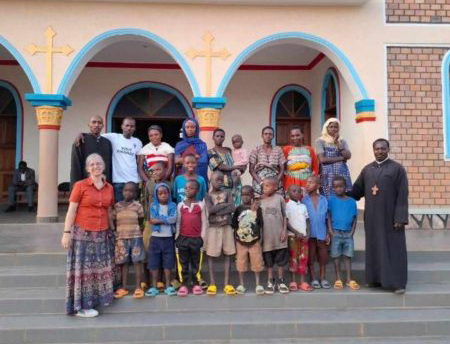
. Ο π. Λάζαρος κατά την επίσκεψη του στις φυλακές του Κολουέζι

Το Επισκοπικό Συμβούλιο της Ιεράς Επισκοπής Ρουάντας διόρισε Διοικητικό Συμβούλιο για την διοίκηση του Ιδρύματος, νοικιάσθηκε χώρος που ονομάσθηκε «Σπίτι της Αγάπης», έγινε πρόσληψη κατάλληλου προσωπικού και υπεύθυνη του προγράμματος ορίστηκε η εκπαιδευτικός Κωνσταντίνα Κανελλοπούλου από την Αθήνα.

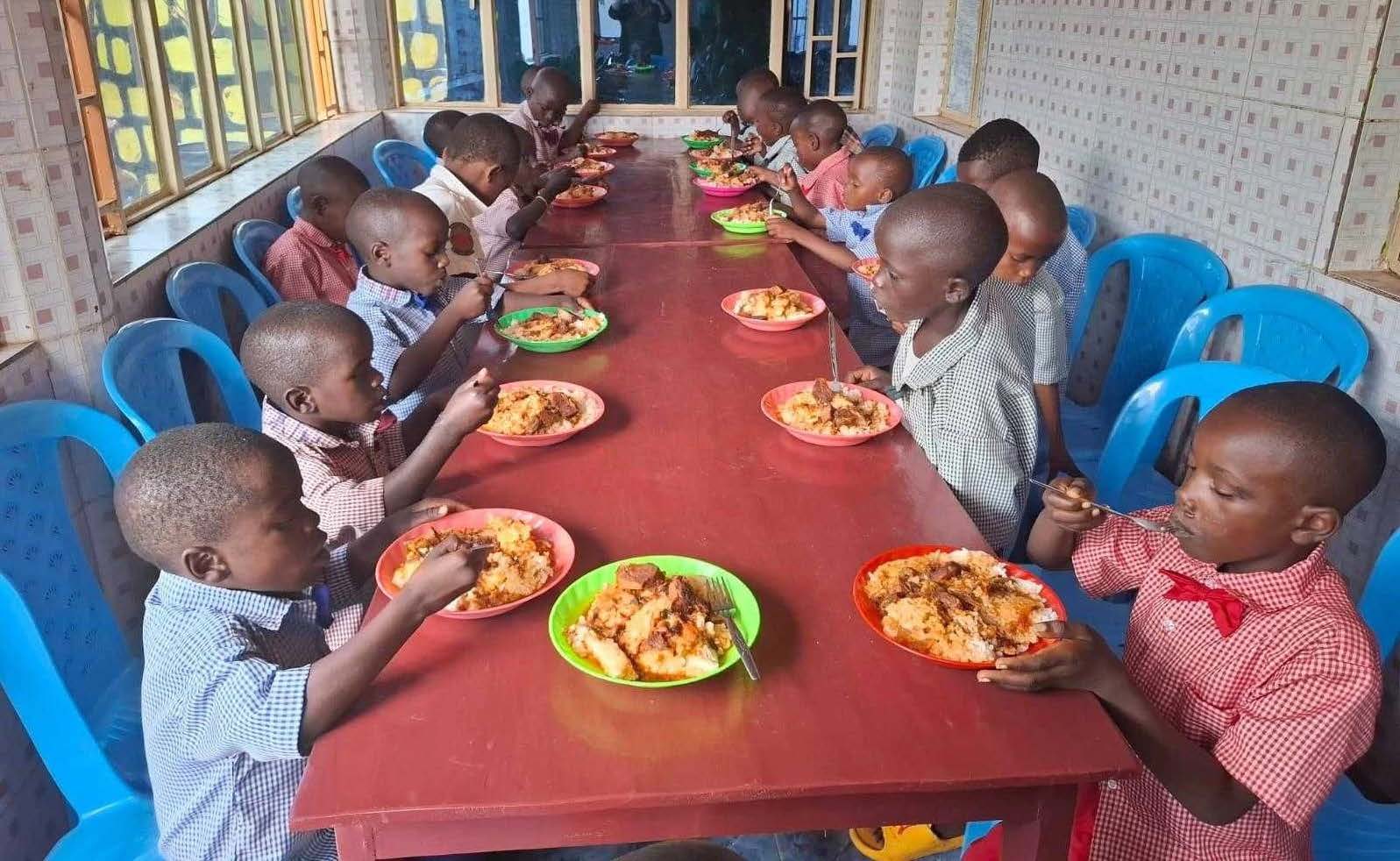
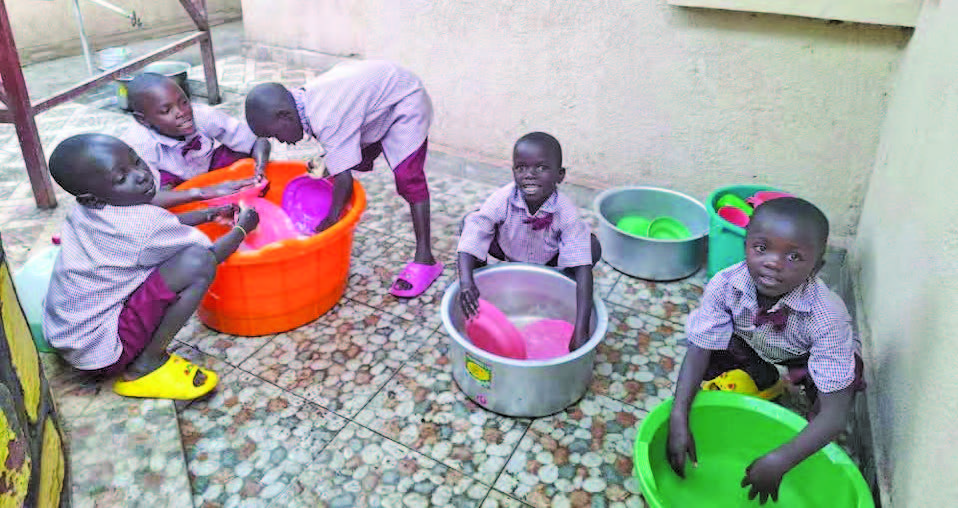
Ξεκινήσαμε με την συγκέντρωση 20 παιδιών ηλικίας 5-12 χρονών. Πρώτη μας φροντίδα είναι η σωματική καθαριότητα και ο έλεγχος της ιατρικής τους κατάστασης. Τους παρέχουμε καινούργια ρούχα και παπούτσια και τους μαθαίνουμε πως θα προσαρμοσθούν στο κοινό πρόγραμμα. Ο έμπειρος παιδαγωγός π. Βασίλειος συνεργάζεται με τα παιδιά και μαθαίνει τους λόγους για τους οποίους εγκατέλειψαν το σπίτι τους. Στην συνέχεια επισκέπτεται τους γονείς, διαπιστώνει επί τόπου την οικογενειακή κατάσταση και γίνεται προσπάθεια επανένωσης του παιδιού με την οικογένεια και μόνιμης επιστροφής στο σπίτι. Δόξα τω Θεώ! Λίγες μέρες μετά την ένταξη στο πρόγραμμα τα παιδιά επιστρέφουν στα σπίτια τους!
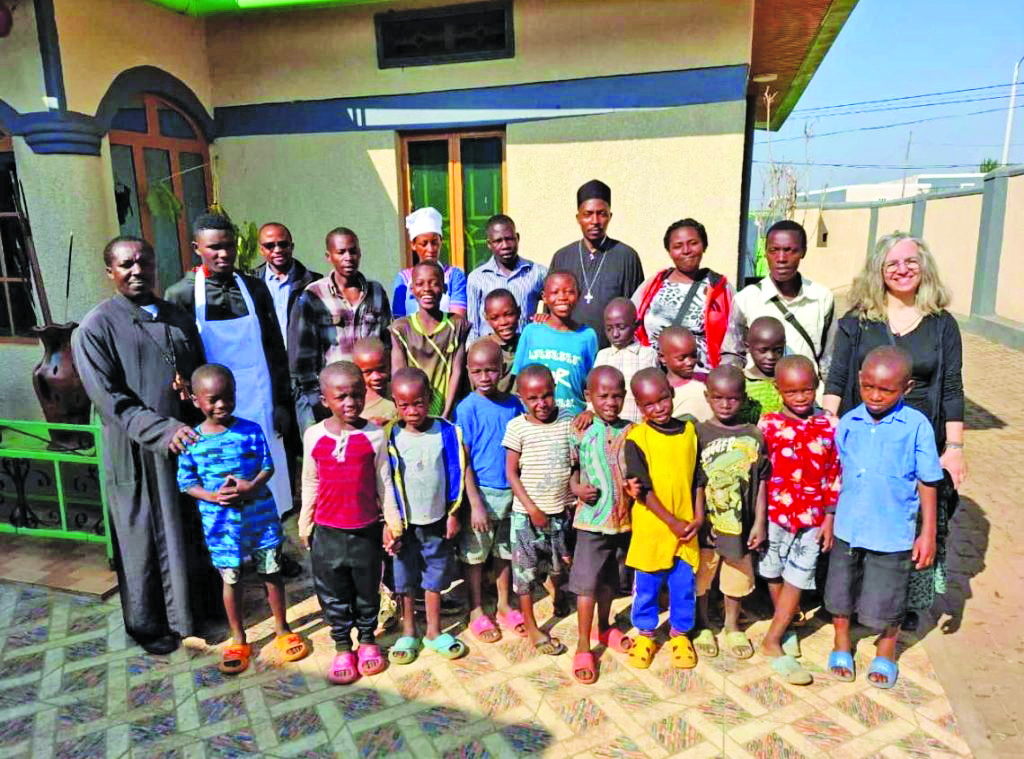
ρουαντα

Η μέρα ξεκινά με προσευχή στον Ναό, γυμναστική, πρωϊνό και ακολουθεί εκπαίδευση με κατήχηση, κοινωνινή αγωγή και ψυχαγωγία με ύμνους, τραγούδια και εργόχειρες κατασκευές. Μετά το μεσημεριανό ακολουθούν αθλητικές δραστηριότητες και στην συνέχεια το βραδινό φαγητό. Με την ολοκλήρωση της εκπαίδευσης τα παιδιά είναι έτοιμα για να επιστρέψουν στο Σχολείο τους.

Καθ’ όλη την διάρκεια του έτους, κάθε απόγευμα, σχολώντας από το Σχολείο περνούν από το «Σπίτι της Αγάπης», διαβάζουν τα μαθήματά τους με την βοήθεια εκπαιδευτικού και έπειτα επιστρέφουν στα σπίτια τους.
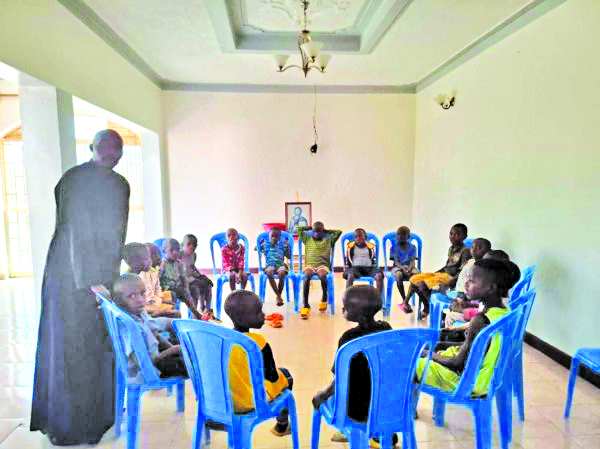
ρουαντα

Νιώθουμε πραγματικά μεγάλη συγκίνηση, όταν τα μικρά παιδιά μας πιασμένα χέρι-χέρι έρχονται την Κυριακή στον Ι. Ναό των Αγίων Αποστόλων Πέτρου και Παύλου και ψάλλουν όλα μαζί. Εκεί αντιλαμβανόμαστε ότι από παιδιά του δρόμου έγιναν παιδιά του Θεού! Αυτό είναι το αποτέλεσμα της αγάπης και της θαλπωρής, που τους παρέχουμε!

Την προσπάθεια αυτή στηρίζει εξ αρχής και ο Ιεραποστολικός Σύνδεσμος με εκκλήσεις στο έγκριτο περιοδικό του. Όσοι από τους φίλους της Ιεραποστολής επιθυμούν να συνδράμουν και να ενισχύσουν το έργο μπορούν να απευθυνθούν στον Ι. Σύνδεσμο και να προσφέρουν την βοήθειά τους.

Η Ιερά Επισκοπή Ρουάντας με ευγνωμοσύνη ευχαριστεί τους φίλους και δωρητές του Ι. Συνδέσμου για την ενίσχυση του προγράμματος των παιδιών του δρόμου και εύχεται κάθε ευλογία στα δικά τους παιδιά και στις οικογένειές τους.


Παρασκευή 10 Μαΐου 2024

ΕΚΚΛΗΣΗ ΓΙΑ ΤΑ ΠΑΙΔΙΑ ΤΗΣ ΡΟΥΑΝΤΑ


Στήν Ἀφρική εἶναι πολύ συχνό τό φαι­νόμενο τῶν ἀστέγων παιδιῶν. Ἡ μητέρα, ὅταν δέν θέλει ἕνα παιδί, λέει, «εἶναι τοῦ δια­βό­λου» καί τό διώχνει. Τά παιδιά αὐτά ζοῦν μέσ’ τό δρόμο καί κάνουν πράγ­­μα­τα τοῦ δρόμου. Ἰδιαί­τε­ρα στή Ρουά­­ντα τό πρόβλημα αὐτό εἶναι πολύ ἔντο­νο.
Ἀποφασίσαμε λοιπόν, στά πλαίσια τοῦ ἱεραποστολικοῦ ἔργου στήν Ρουάντα, νά βοηθήσουμε τά παιδιά τοῦ δρόμου, πού ἔρχονται καί κοι­μοῦνται στό προαύλιο τοῦ Ναοῦ τῶν Ἁγίων Ἀποστόλων Πέτρου καί Παύλου Ρυαμαγκάνας.
 
Σκοπός μας εἶναι νά τούς δίνουμε φαγητό κάθε μεσημέρι καί νά βροῦμε ἕνα χῶρο νά στεγασθοῦν, ὅπου θά διαμένουν, θά πηγαίνουν σχο­λεῖο καί θά ἔχουν τήν ἀνάλογη φροντίδα ἀπό κατάλληλα ἐκπαι­δευ­μένο προσωπικό.
Ζητοῦμε τήν προσευχή σας, γιά τήν εὐώδοση αὐτοῦ τοῦ δύσκο­λου ἐγχειρήματος.
Κάνουμε ἔκκληση, κυρίως σέ ἐκπαιδευτικούς, πού γνωρίζουν τήν ἀγ­γλική γλῶσσα, νά προσφέρουν τήν βοήθειά τους μέ προσωπική ἐθε­λο­ντική ἐργασία στήν ὀργάνωση καί λειτουργία αὐτοῦ τοῦ οἰκο­τρο­φεῖου. Ἀλλά καί σέ κάθε ἀγαπῶσα καρδιά, πού θά ἤθελε νά προ­σφέ­ρει μιά ζεστή ἀγκαλιά σ’ αὐτά τά παιδιά, πού τόσο τήν ἔχουν στε­ρηθεῖ!
 
Παρακαλοῦμε γιά τήν οἰκονομική ἐνίσχυση αὐτοῦ τοῦ ἔργου. Τά ἔξοδα κάθε παιδιοῦ, γιά τήν διατροφή του, τήν ἐνδυμασία του, τή στέγασή του καί τήν ἐκπαίδευσή του ὑπολογίζονται περί τά 3€ τήν ἡμέρα, 90€ τό μῆνα ἤ 270 € τό τρίμηνο.
 
ΤΑ ΕΞΟΔΑ ΓΙΑ ΚΑΘΕ ΠΑΙΔΙ
ΠΙΟ ΑΝΑΛΥΤΙΚΑ
Διατροφή : 1€ τήν ἡμέρα
Διαμονή: 10 € τόν μῆνα
Ἐνδυμασία: 50 € ἄπαξ
Δίδαδακτρα – σχολικά εἶδη: 35€ τό τρίμηνο
 
Μπορείτε να κάνετε ΔΩΡΕΑ στον λογαριασμό τραπέζης του ιεραποστολικης αδελφότητας
Ἀριθμός Λογαριασμοῦ Ἐθνικῆς Τραπέζης
IBAN: GR 5101103260000032600342904
ΔΙΕΥΘΥΝΣΗ ΙΕΡΑΠΟΣΤΟΛΗΣ
ORTHODOX CHURCH IN TANZANIA HOLY DIOCESE OF BUKOBA
P.O.BOX. 1704 BUΚOBA - TANZANIA tel.: +255 784 530585
Τηλ. Θεοφ. Χρυσοστόμου +30 6977992424, e-mail: p.xrysostomos1956@gmail.com
 
ΙΕΡΑΠΟΣΤΟΛΙΚΗ ΑΔΕΛΦΟΤΗΤΑ
«ΣΤΑ ΙΧΝΗ ΤΟΥ ΠΑΤΡΟΚΟΣΜΑ»
Τηλ. 6943004460, e-mail: ierapostolipatrokosmas@gmail.com
 
ΙΕΡΑ ΜΟΝΗ ΑΓΙΟΥ ΚΟΣΜΑ ΑΙΤΩΛΟΥ ΑΡΝΑΙΑ
ΤΗΛ. 2372304064 & 6944122365 e-mail: i.m.agiou.kosma.arnaia@gmail.com

Παρασκευή 27 Αυγούστου 2021

Bread in Africa

clovegarden.com


While domestication of grains for easy harvesting may have originated in Anatolia and Caucasus, about 10,000 years ago, the Horn of Africa was certainly not far behind. Grinding of grains into flour with sliding stones, and the baking of flat breads, is far older. Today, the main breads of Africa are still made under very primitive conditions. in a manner possibly in place before the dawn of history.   Photo by Lelaw Wondimu distributed under license Creative Commons.

More on Bread.


North Africa

  -   The Maghreb (Algeria, Morocco, Tunisia, Libya, Mauritania), Egypt, Sudan


Baghrir

  -   [Beghrir] 

This is a popular bread in the Maghreb region, often eaten for breakfast with a mix of butter and honey, but also with jams. It is made from semolina or wheat flour.   Photo by Tamorlan distributed under license Creative Commons Attribution-ShareAlike v3.0 Unported.


Pita Bread


-   [Pita (Greek); Pocket Bread; Pide (Turkey); Khubz Arabi (Arabic)] 

This lightly leavened wheat bread is very popular throughout North Africa, and far beyond. The ethnic markets here in the Los Angeles region are piled high with pita, in both white (photo) and whole wheat versions, in the 7 inch and larger sizes.

The earliest Arabic recipes (10th century) have these baked in a Tandoor, but today they are usually made in continuous industrial ovens so as to meet the high demand. Pita is baked in a very hot oven at 450°F/232°C or higher, causing the disk to puff up dramatically. When removed from the oven the disk collapses, but the two sides remain separated, so the bread can be opened into a pocket. Throughout the region, street foods of all kinds are packed into pita pockets.

The photo specimen was a 7 inch diameter disk 0.15 inch thick. Half the top layer was removed to show the inside. Enriched wheat flour, water, yeast, salt, calcium propionate.

Kisra Rhaheeefa 


Kisra Rhaheeefa is much like Ethiopia's Injera and used similarly, but is made from Sorghum Flour or Wheat Flour rather than Teff. The "Kisra Rhaheeefa" name differentiates it from "Kisra Aseeda", which is a Sorghum Porridge.   Photo by Mohammed Elfatih Hamadien distributed under license Creative Commons Attribution-ShareAlike v4.0 International.

The Horn of Africa

  -   Ethiopia, Djibouti, Eritrea, Somalia


Injera

  -   [Injera (Amharic); (Bidenaa (Oromo)] 

This is the bread of Ethiopia and Eritrea, usually made from Teff. It was traditionally, and is often still today, made very large, to fit the table for which it would be the tablecloth. Scoops of stews and other recipes are placed directly on it. Diners tear off pieces of the "tablecloth" and use them to pick up the food. Today, especially in restaurants it is often made smaller and served on an Indian thali, or a very large plate.   Photo by PhoTom distributed under license Creative Commons Attribution-ShareAlike v4.0 International.

This is a sour dough bread, made with a leavened batter similar to thin pancake batter. The batter is baked on a large clay or metal tray, over moderate heat, and on one side only. Bubbles on the top side burst, giving the bread a spongy texture, almost like honeycomb tripe, which is very good at holding sauces. Temperature is regulated so it sets through, but does not brown on the bottom (see the rolled examples in the photo at the top of the page). It can be made using white or brown Teff, or a mix. Farmers say the white Teff is preferred to the brown by most of their customers.

Lahoh

  -   [Luhuh (Somali), Laxoox, Lahooh, Canjeero, Canjeelo, Anjeero]

This bread is popular in Somalia, Djibouti and Yemen, but now also popular in Israel, introduced by Yemenite Jews. It is a fermented sour dough bread usually made of Sorghum Flour or Corn Flour and cooked on circular metal stove called a taawa or daawo. In Yemen, it is often served by street vendors.   Photo by Gilabrand at en.wikipedia distributed under license Creative Commons Attribution-ShareAlike v3.0 Unported attribution required.

East Africa

  -   Tanzania, Kenya, Uganda, Rwanda, Burundi and South Sudan


Chapati

Long influenced by India, East Africa has adopted the Indian Chapati as their main form of bread - but they use white flour instead of the whole wheat Atta flour used in India. As it is very inconvenient for me to produce Chipatis, I use Flour Tortillas, easily available here in Southern California. I prefer the small 5 inch diameter ones. Incidentally, Whole Wheat Flour Tortillas make an excellent substitute for Indian Chapatis


Kisra Rhaheeefa


South Sudan (Christian and Native Religion) is now a separate country from Sudan (all Muslim) and is moving strongly into the East African community. One thing they still have in common with Sudan is Sudan's Kisra Rhaheeefa.
bk_africae 131129   -   www.clovegarden.com
©Andrew Grygus - agryg@clovegarden.com - Photos on this page not otherwise credited are © cg1 - Linking to and non-commercial use of this page permitted


Bread and Bread-Baking Technologies in Africa

Bread is a dietary staple in North Africa, Northeastern Africa, and the Horn of Africa, and it is important in the diet of many Saharan and sub-Saharan people. African breads are made from the flours of a variety of cereals, tubers, and corms that are baked, steamed, and sometimes fried to produce pancake, flat bread, leavened or slightly leavened loaves, or cakes using ovens, hearths, griddles, pots, and molds. Technical choice in bread baking is associated with the baking properties of bread ingredients and social group’s culinary practices and preferences and does not represent evolutionary stages.

The Bread/Oven Porridge/Pot Bread/Griddle Traditions

Research of Africa’s culinary practices includes the history of bread consumption and its associated technologies, an investigation that is far from exhaustive. Several researchers observe a general (but not absolute) culinary divide between bread-based cuisines that use ovens and griddles...

This is a preview of subscription content, log in to check access. 
 
References
  1. Abdullahi, M. D. (2001). Culture and customs of Somalia. London: Greenwood Press.Google Scholar
  2. Anderson, J. R., & Salah (El-Din) Mohamed Ahmed. (2006a). Bread moulds and throne halls: Recent discoveries in the Amun Temple Precinct at Dangeil. Sudan & Nubia, 10, 95–101.Google Scholar
  3. Anderson, J., & Salah (El-Din) Mohamed Ahmed. (2006b). Revealing terra incognita: Dangeil, Sudan. Current World Archaeology, 19, 23–30.Google Scholar
  4. Anderson, J. R., D’Andrea, A. C., Logan, A., & Ahmed, S. M. (2007). Bread moulds from the Amun Temple at Dangeil, Nile state – an addendum. Sudan & Nubia, 11, 89–93.Google Scholar
  5. Apentiik, R. (1997). Bulsa technologies and systems of thought. Unpublished M.A. thesis, Department of Archaeology, University of Calgary.Google Scholar
  6. Arthur, J. W. (2014). Culinary crafts and foods in southwestern Ethiopia: An ethnoarchaeological study of Gamo Groundstones and pottery. African Archaeological Review, 31(2), 131–168.Google Scholar
  7. Baldados, A., & Constantini, L. (2011). Sorghum exploitation at the Kassala and its environs, northeastern Sudan in the second and first millennia BC. Nyame Akuma, 75, 33–39.Google Scholar
  8. Balfet, H. (1975). Bread in some regions of the Mediterranean area. In M. L. Arnott (Ed.), Gastronomy: The anthropology of good habits (pp. 305–314). The Hague: Mouton Publishers.Google Scholar
  9. Bruneton, A. (1975). Bread in the region of the Moroccan High Atlas. In M. L. Arnott (Ed.), Gastronomy: The anthropology of food habits (pp. 275–285). The Hague: Mouton Publishers.Google Scholar
  10. Chittick, N. (1984). Manda. London: British Institute in Eastern Africa.Google Scholar
  11. Close, A. (1995). Few and far between. In W. K. Barnett & J. W. Hoopes (Eds.), The emergence of pottery technology and innovation in ancient. Societies (pp. 23–37). Washington, DC: Smithsonian Institution Press.Google Scholar
  12. D’Andrea, A. C. (2008). T’ef (eragrostis tef) in ancient agricultural systems of Ethiopia. Economic Botany, 62(4), 547–566.CrossRefGoogle Scholar
  13. D’Andrea, A. C., Schmidt, P. R., & Matthew, C. C. (2008). Paleoethnobotanical analysis and agricultural economy in early first millennium BCE sites around Asmara. In P. R. Schmidt, M. C. Curtis, & R. Zelalem Teka (Eds.), The archaeology of ancient Eritrea (pp. 207–216). Asmara: Red Sea Press.Google Scholar
  14. Deacon, J. (1984). Later Stone Age people and their descendants in southern Africa. In R. G. Klein (Ed.), Southern African prehistory and paleoenvironments (pp. 221–228). Rotterdam: A.A. Balkema Publishers.Google Scholar
  15. Dirar, H. A. (1993). The indigenous fermented foods of the Sudan. Wallingford, UK: CAB.Google Scholar
  16. Dombrowski, J. C. (1971). Excavations in Ethiopia: Lalibela and Natchabiet Caves, Begemeder Province. Ph.D. dissertation, Department of Anthropology, Boston University.Google Scholar
  17. Dufton, H. (1970 [1867]). Narrative of a journey through Abyssinia in 1862–3. Westport, CT: Negro Universities Press.Google Scholar
  18. Edwards, D. N. (1996). Sorghum, beer and Kushite society. Norwegian Archaeological Review, 29, 65–77.CrossRefGoogle Scholar
  19. Edwards, D. N. (2004). Nubian past. An archaeology of Sudan. London: Routledge.Google Scholar
  20. Fuller, D. (2004). Kawa. Sudan and Nubia, 6, 70–74.Google Scholar
  21. Gast, M., & Adrian, J. (1965). Mils et sorgho en Ahaggar etude ethnologique et nutritionelle. Paris: Arts et Métiers Graphiques.Google Scholar
  22. Haaland, R. (2007). Porridge and pot, bread and oven: Food ways and symbolism in Africa and the near east from the Neolithic to the present. Cambridge Archaeological Journal, 17(2), 165–182.CrossRefGoogle Scholar
  23. Haaland, R. (2012). Changing food ways as indicators of emerging complexity in Sudanese Nubia: From Neolithic agropastoralists to the Meroitic civilization. Azania , 47(3), 327–342.CrossRefGoogle Scholar
  24. Hard, N. F., Odunfa, S. A., Cheri-Ho Lee, Quintero-Ramírez, R., Argelia Lorence-Quinoñes, & Carmen Wacher-Radarte. (1999). Fermented cereals a global perspective. FAO Agricultural Services Bulletin. http://www.fao.org/docrep/x2184E/x2184E00.htm.
  25. Hillman, G. C. (1989). Late Palaeolithic plant foods from Wadi Kubbaniya in upper Egypt: Dietary diversity, infant weaning, and seasonality in a riverine environment. In D. R. Harris & G. C. Hillman (Eds.), Foraging and farming (pp. 207–239). London: Unwin Hyman.Google Scholar
  26. Hobbs, J. (1989). Bedouin life in the Egyptian wilderness. Austin: University of Texas Press.Google Scholar
  27. Horton, M. (1996). Shanga. London: British Institute in Eastern Africa.Google Scholar
  28. Huysecom, E., Rasse, M., Lespez, L., Neumann, K., Fahmy, A., Ballouche, A., et al. (2009). The emergence of pottery in Africa during the tenth millennium cal BC: New evidence from Ounjougou (Mali). Antiquity, 83, 905–917.CrossRefGoogle Scholar
  29. Jacquet-Gordon, H. (1981). A tentative typology of Egyptian bread moulds. In D. Arnold (Ed.), Studien zur altägyptischen Kerami (pp. 11–24). Mainze am Rhein: Verlag.Google Scholar
  30. Keenleyside, A., Schwarcz, H., Stirling, L., & Lazreg, N. B. (2009). Stable isotopic evidence for diet in a Roman and Late Roman population from Leptiminus, Tunisia. Journal of Archaeological Science, 36, 51–63.CrossRefGoogle Scholar
  31. Kimmage, K. (1991). The evolution of the ‘wheat trap’: The Nigerian wheat boom. Africa, 60(4), 471–501.CrossRefGoogle Scholar
  32. Kobischanov, Y. M. (1979). Axum. London: Pennsylvania State University Press.Google Scholar
  33. Leek, F. F. (1972). Teeth and bread in ancient Egypt. Journal of Egyptian Archaeology, 58, 126–132.CrossRefGoogle Scholar
  34. Lehner, M. (1997). The complete pyramids. London: Thames and Hudson Ltd.Google Scholar
  35. Lewicki, T. (1974). West African food in the middle ages. Cambridge: Cambridge University Press.CrossRefGoogle Scholar
  36. Lyons, D. (2007). Cuisine and identity: An ethnoarchaeological example from eastern Tigray, Ethiopia. Journal of Social Archaeology, 7(3), 346–371.CrossRefGoogle Scholar
  37. Lyons, D., & D’Andrea, A. C. (2003). Griddles, ovens, and agricultural origins: An ethnoarchaeological study of bread baking in highland Ethiopia. American Anthropologist, 105(3), 515–530.CrossRefGoogle Scholar
  38. Mattingly, D. (2003). Fortifications, settlement and domestic architecture. In D. Mattingly (Ed.), The archaeology of Fazzan (Synthesis, Vol. 1, pp. 136–176). London: Society for Libyan Studies.Google Scholar
  39. McIntosh, S. K. (1995). Pottery. In S. K. McIntosh (Ed.), Excavations at Jenne-Jeno, Hambarketolo, and Kaniana (Inland Niger Delta, Mali), the 1981 Season (pp. 130–213). Berkeley: University of California Press.Google Scholar
  40. Mosley, D. (2004). Breaking bread. The roles of taste in colonialism. Food Culture and Society , 7(2), 49–62.Google Scholar
  41. Murray, M. A. (2000). Cereal production and processing. In P. T. Nicholson & I. Shaw (Eds.), Ancient Egyptian materials and technology (pp. 505–536). Cambridge: Cambridge University Press.Google Scholar
  42. National Research Council. (1996). Lost crops of Africa, volume 1: Grains. Washington, DC: National Academy Press.Google Scholar
  43. Neumann, K. (2005). The romance of farming: Plant cultivation and domestication in Africa. In A. B. Stahl (Ed.), African archaeology (pp. 249–275). Oxford: Blackwell Publishing.Google Scholar
  44. Nicholaisen, J. (1963). Ecology and culture of the pastoral Tuareg. Copenhagen: National Museum.Google Scholar
  45. Pankhurst, R. (1968). Economic history of Ethiopia 1800–1935. Addis Ababa: Haile Selassie I University Press.Google Scholar
  46. Pelling, R. (2003). Medieval and early modern agriculture and crop dispersal in the Wadi el-Agial, Fezzan, Libya. In K. Neumann, A. Butler, & S. Kahlheber (Eds.), Food, fuel and fields progress in African archaeobotany (pp. 129–138). Köln: Heinrich Barth Institut.Google Scholar
  47. Peña, L. Z., Peña -Chocarro, L., Estévez, J. J. I., & Urquijo, J. E. G. (2003). Ethnoarchaeology in the Moroccan Jebala (Western Rif): Wood and dung as fuel. In K. Neumann, A. Butler, & S. Kahlheber (Eds.), Food, fuel and fields progress in African archaeobotany (pp. 163–176). Köln: Heinrich Barth Institut.Google Scholar
  48. Phillipson, D. (2012). Foundations of an African civilisation Aksum and the northern horn 1000BC–AD1300. Rochester, NY: James Currey.Google Scholar
  49. Pope, J. W. (2014). Epigraphic evidence for a “porridge-and-pot” tradition on the ancient middle Nile. Azania, 48(4), 473–497.CrossRefGoogle Scholar
  50. Samuel, D. (1999). Bread making and social interactions at the Amarna workmen’s village, Egypt. World Archaeology, 31(1), 121–144.CrossRefGoogle Scholar
  51. Samuel, D. (2000). Brewing and baking. In P. T. Nicholson & I. Shaw (Eds.), Ancient Egyptian materials and technology (pp. 537–576). Cambridge: Cambridge University Press.Google Scholar
  52. Schmidt, P. R., & Curtis, M., with a contribution from Ascunce, M.S., Kitchen, A., Schimdt, P. R., Miyamoto, M. M., & Mulligan, C. J. (2008). The Second Millennium CE: Settlement, Economy and Ritual Life. In P. R. Schmidt, M.C. Curtis, & Zelalem Teka (Eds.), The archaeology of ancient Eritrea (pp. 265–284). Asmara: Red Sea Press.Google Scholar
  53. Shack, W. (1974). The central Ethiopians. London: International African Institute.Google Scholar
  54. Smeds, H. (1955). The ensete planting culture of eastern Sidamo. Acta Geographica, 13(4), 1–39.Google Scholar
  55. Van de Mieroop, M. (1997). The ancient mesopotamian city. Oxford: Clarendon Press.Google Scholar
  56. Wilson, H. (1988). Egyptian food and drink. Aylesbury, UK: Shire Publications Ltd.Google Scholar 
     
    Additional Reading
  1. Chazan, M., & Lehner, M. (1990). An ancient analogy: Pot baked bread in ancient Egypt and Mesopotamia. Paléorient, 16(2), 21–35.CrossRefGoogle Scholar
  2. Food and Agriculture Organization (1995). Sorghum and Millets in Human Nutrition (Food and Nutrition Series, No. 27). Rome: Food and Agriculture Organization.Google Scholar
  3. Gebrekidan, B., & Gebrehiwot, B. (1982). Sorghum injera preparations and quality parameters. In L. W. Rooney & D. S. Murty (Eds.), Proceedings of the international symposium on sorghum grain quality (pp. 55–66). Patancheru, India: ICRISAT.Google Scholar
  4. Larsen, H. (1936). On baking in Egypt during the Middle Kingdom. Acta Archaeologica, 7, 51–57.Google Scholar
  5. Pomeranz, Y., & Shellenberger, J. A. (1971). Bread science and technology. Westport, CT: Avi Publishing Company.Google Scholar
  6. Samuel, D. (1989). Their staff of life: Initial investigations on ancient Egyptian bread baking. In B. J. Kemp (Ed.), Amarna reports V (pp. 253–290). London: Egypt Exploration Society.Google Scholar 
     
    Egyptian Bread Websites
  1. Hilary Stewart on Ancient Egyptian bread baking. http://ancientfoods.wordpress.com/2011/08/12/ancient-egypt-bread/
  2. Sally Grainger and Roman bread, British Museum. http://blog.britishmuseum.org/2013/07/19/a-very-versatile-roman-oven/

Παρασκευή 31 Ιουλίου 2020

African women: asserting their rights


From Africa Renewal: 

Michelle Bachelet, executive director of UN Women, the world body’s new agency on gender equality issues. 
Michelle Bachelet, executive director of UN Women, the world body’s new agency on gender equality issues.
Photograph: UN Photo / Paulo Filgueiras

As elsewhere in the world, women in Africa are struggling for their fair share of political power and economic opportunity. In recent decades — thanks in great measure to their own organization and energetic efforts — they have made important strides. As Africa shakes off its legacies of autocratic rule, social marginalization and economic disarray, women are staking their claim to participate fully in their continent’s promising future.
But progress has been halting and uneven, and each step forward has been won against difficult obstacles and stubborn resistance. As in many parts of the world, gender inequalities remain deeply entrenched. Women suffer violence and discrimination across the continent. They lack access to decent work and face occupational segregation and wage gaps. They are still too often denied access to education and health care. Few women are represented in key political and economic decision-making positions.
Accelerating women’s empowerment is obviously critical for women themselves. But as the UN’s global agency for women, UN Women, emphasizes, gender equality is more than just a basic human right: “Its achievement has enormous socio-economic ramifications. Empowering women fuels thriving economies, spurring productivity and growth.” When UN Secretary-General Ban Ki-moon launched UN Women in 2010, he observed: “Where women are educated and empowered, economies are more productive and strong. Where women are fully represented, societies are more peaceful and stable.”
Over the years, Africa Renewal has frequently reported on and analyzed many different aspects of the struggles of African women for political, economic and social advancement. This special edition of the magazine – with the generous support of UN Women — brings together a number of those articles, most of them with new and updated material.


The Africa Renewal articles highlight important developments at the summit of political power, such as the adoption by the African Union (AU) of a legally binding protocol to the African Charter on Human and Peoples’ Rights on the rights of women. The AU has also declared the current decade, 2010-2020, as the “African Women’s Decade.” A few countries, such as Angola, Mozambique and South Africa have exceeded the 30 per cent benchmark for women legislators, while Rwanda has the highest percentage in the world. But in all African countries women still have a long way to go.
In some areas gender gaps have narrowed noticeably, as in primary schools, where nearly as many girls as boys are now enrolled. But completion rates remain low, and many girls still are unable to go on to secondary or tertiary education. Meanwhile, health care for women and girls has scarcely improved, while HIV/AIDS continues to exact a deadly toll on Africa’s women.
Repeatedly, the articles in Africa Renewal have noted that it is the hard work and commitment of women at the grassroots that can make the difference: the women farmers, traders, entrepreneurs and activists who struggle day-in and day-out to better their lives and improve the prospects for their families, communities and nations. If Africa is to have a brighter future, gender equality must be achieved. 

African women’s long walk to freedom

Across Africa, women’s movements are now putting more emphasis on decision-making power 
Across Africa, women’s movements are now putting more emphasis on decision-making power.
Photograph: Reuters / Mowliid Ibdi

Africa’s political independence was accompanied by a clarion call to eradicate poverty, illiteracy and disease. Fifty years after the end of colonialism, the question is: To what extent has the promise of that call been realized for African women? There is no doubt that African women’s long walk to freedom has yielded some results, however painfully and slowly.
The African Union (AU) now has a legally binding protocol to the African Charter on Human and Peoples’ Rights on the rights of women. The protocol spells out clearly women’s rights to equality and non-discrimination in a number of areas. It has been ratified by a growing number of African states, can be used in civil law proceedings and is being codified into domestic common law. The AU has also issued a Declaration on Gender Equality in Africa, under which member states are supposed to regularly report on progress.
The protocol and declaration both reflect and reinforce developments at the national level. Many African states have moved to enhance constitutional protections for African women — particularly in the area of women’s rights and equality. And the last two decades have seen the emergence of legislation to address violence against women, including sexual violence.
 
Political representation

These developments have been accompanied by improvements in African women’s political representation. The AU adopted, from its inception, a 50 per cent quota for women’s representation, which is reflected in the composition of the AU Commission.
Again, this standard reflects and reinforces efforts to enhance women’s representation at the national level. Angola, Mozambique and South Africa have exceeded the 30 per cent benchmark for their legislatures. Rwanda made history in 2008 when 56 per cent of legislators elected to parliament were women, the highest in the world. A few countries, including Nigeria, have seen women assume non-traditional ministerial portfolios, in defence and finance, for example. And Liberia also made history (“herstory”) by becoming the first African country to elect into office a female head of state, Ellen Johnson-Sirleaf.
Progress is evident, particularly in countries that have electoral systems based on or incorporating proportional representation. However, enhanced women’s representation has been harder to achieve in first-past-the-post electoral systems.
Even where there has been progress, the question is whether increased representation of women is catalyzing action by the executives and legislatures in favour of gender equality. That question arises because the battle for women’s representation is not only demographic (with political representation as an end) but also for gender equality (with political representation as a means).
Put another way, there has been a shift in the focus and strategy of the African women’s movement over the last two decades, from emphasizing capacity-building to improve African women’s access to resources to emphasizing decision making to enhance African women’s control over resources. This shift was made possible by real gains resulting from the capacity-building approach.
 
Education, poverty, health

These gains are most evident in African women’s education. Girls and boys are now at par with respect to primary school enrolment. Efforts to get girls into school have been accompanied by efforts to keep them in school and to promote role models by developing gender-responsive curricula. Gender gaps are also narrowing in secondary education. The real challenge now lies at the university level, both in the enrolment figures and in curricula to benefit young women. So much for the “illiteracy” element of the African independence clarion call.
Gains for women are harder to see in that call’s “poverty” element, however. It is true that since independence investments in micro-credit and micro-enterprises for women have improved their individual livelihoods — and therefore those of their families. Since African women have proved that they are good lending risks, micro-credit is now being offered not just by development and micro-finance institutions, but also by commercial financial institutions.
Yet there was a critique of such investments, especially in the decade of the 1980s when governments withdrew from social service delivery as a result of structural adjustment programmes. Under those circumstances, such investments essentially enabled redistribution among the impoverished, rather than at a larger level from the rich to the poor.
The end of that era thus saw a new focus on gender budgeting: looking at where national budget allocations and expenditures could enhance women’s status in the economy. Unsurprisingly, this approach has led African governments back towards public investments in social services.
It is now agreed, for example, that the benchmark for public investments in health in Africa is 15 per cent. The African women’s movement has called in particular for more to be directed towards reproductive and sexual health and rights. These areas are of critical concern to women, given the impact of HIV/AIDS, maternal mortality and violence against women, particularly in conflict areas. They are also of concern since African women’s continued lack of autonomy and choice over reproduction and sexuality lie at the heart of so much suffering. So much for the “disease” element of the independence call.
 
Where next?

Where to over the next 50 years, then? In light of the experience so far, the African women’s movement will be focusing not just on political representation, but also on the meaning of that representation for advancing gender equality and women’s human rights. And given recent retreats in Africa (such as the rise of the constitutional coup and “negotiated democracy”), the women’s movement will also be focusing on democracy, peace and security more broadly — that is, on the nature of the political system itself and not just on the means of getting into that system.
Economically, women will continue to focus on the macro-level, but in a deeper sense. What has emerged from gender budgeting efforts is the need to actually track budgetary expenditures, not just getting information about allocations.
It is also necessary to concentrate on the macro-economic framework for fiscal and monetary policies, especially in the context of stabilization programmes in response to the recent economic shocks. Previously that framework was assumed to be gender-neutral, but it clearly can have gendered consequences. This problem must be addressed to ensure that Africa’s growth will enhance women’s livelihoods.
Finally, the women’s movement will be focusing on reproductive and sexual health and rights. The battle over choice (including over gender identity and sexual orientation) is now an open one in many African countries. It is no longer couched politely in demographic or health terms.
The upsurge of conservative identity politics (in both ethnic and religious terms) is fuelling conflict on the continent. It constrains and dangerously limits women’s human rights, including reproductive and sexual rights. Such notions are not harmless — they have grave consequences for women’s autonomy, choice and bodily integrity. They therefore must be challenged.
African women’s long walk to freedom has only just begun.  

L. Muthoni Wanyeki is a former executive director of the Kenya Human Rights Commission.