Εμφάνιση αναρτήσεων με ετικέτα Εating ourselves. Εμφάνιση όλων των αναρτήσεων

Κυριακή 2 Μαρτίου 2025

Τιμόθεος, επίσκοπος Γκόμας (Κονγκό): «Η χώρα μας έχει υποστεί έναν άδικο πόλεμο από τους αντάρτες που στηρίζονται από την Ρουάντα, καλυμμένοι από ξένες δυνάμεις για εκμετάλλευση του υπεδάφους!»


Γκόμα, στις 04/02/2025
 
Αγαπητοί μας φίλοι και φίλες, περιπόθητοι, δόξα τω Θεώ!! Καλημέρα! Περνάμε πιο δύσκολα από ποτέ. Η Περιοχή μας είναι υπό κατοχή των ανταρτών. Μη μας αφήστε. Στηρίξετε μας! Στερούμεθα από όλα! Δεν έχουμε νερό, φαγητό, ρεύμα και ίντερνετ. Οι λεηλασίες αμέτρητες μέχρι και στα νοσοκομεία. Τα πτώματα παντού σε όλους τους δρόμους. Αρκετοί συνάνθρωποί μας έχουν αποκεφαλιστεί.
 
Έχω δει τα μηνύματά σας, τα περισσότερα δεν ανοίγουν λόγω του ασθενούς ίντερνετ. Ανά πάσα στιγμή κινδυνεύει η ζωή μας από σφαίρες και βόμβες.
Θα σας ενημερώσω για ό τι γράψατε αλλά και για ό τι η αγάπη σας μας έστειλε, όταν αυτό γίνει εφικτό!! Τίποτα δεν θα χαθεί από ό τι στείλατε, αρκεί να το στείλετε με τους τρόπους που σας έχουμε υποδείξει.
Κάνετε κάποιες αναρτήσεις για την εισβολή ανταρτών στην Γκόμα.
Σας ευχαριστώ πολύ για την αμέριστη συμπόνια και συμπάθειά σας, κατά την ώρα αυτή του πολέμου στην Γκόμα. Η χώρα μας έχει υποστεί έναν άδικο πόλεμο από τους αντάρτες που στηρίζονται από την Ρουάντα, καλυμμένοι από ξένες δυνάμεις για εκμετάλλευση του υπεδάφους. Μη μας ξεχάσετε. Εκατοντάδες συνάνθρωποί μας χάνουν την ζωή τους κάθε μέρα. Μη μας αφήστε. Ο Χριστός να σας ευλογεί!
 
Θα σας γράψω αναλυτικότερα για ότι συμβαίνει και αυτήν την ώρα στην μαρτυρική Γκόμα του Κονγκό.
Στις 27/01/2025 θα είχα πεθάνει, εγώ και οι 2 νέοι που ήταν μαζί μου στο επισκοπείο, από τα χτυπήματα σφαιρών των ανταρτών, αν λίγες ώρες πριν δεν είχαμε καταφέρει να φύγουμε από το επισκοπείο, έστω και περπατώντας μέσα σε αδέσποτες σφαίρες για περισσότερες από 2 ώρες, ψάχνοντας για άλλο μέρος, λίγο πιο ασφαλές από το πρώτο.
Μέρα νύχτα υπάρχουν σφαίρες, εκτοξευτές ρουκετών και οβίδες σε όλη την πόλη, σε όλες τις γειτονιές. Είμαι σε επαφή με όλους τους πιστούς μας και τους στέλνω οικονομική βοήθεια όποτε χρειάζεται και ανά πάσα στιγμή. Δεν έχω σχεδόν τίποτα ακόμα μαζί μου. Ό,τι κρατούσαμε στην άκρη έχει ήδη ξοδευτεί.
 
Πολλοί με έχουν πάρει τηλέφωνο, και μέσα και εκτός του Κονγκό, και μου έχουν γράψει επίσης και έχουν εκφράσει την αλληλεγγύη τους και τους ευχαριστώ πολύ. Δεν υπάρχει διέξοδος από την πόλη σε αυτό το σημείο που έχουμε φτάσει.
Πολλοί μου ζήτησαν να φύγω από την πόλη Γκόμα, πριν κλείσουν το αεροδρόμιο και όλες οι έξοδοι και τα σύνορα της πόλης. Θα μπορούσα να το είχα κάνει, αλλά δεν ήθελα να αφήσω τους πιστούς μας, το ποίμνιο μου. Είναι η ώρα που έχουν πολύ ανάγκη της παρουσίας μου για ό τι μπορώ κι εγώ να τους προσφέρω ως Επίσκοπός τους. Ο Άγιος Ισίδωρος ο Πηλουσιώτης λέγει «Ο Χριστός έγινε Ιερέας στον Σταυρό». Προτίμησα να σταυρωθώ μαζί τους, για να αναστηθώ μαζί τους, αν θέλει ο Θεός. 
 
ΠΑΡΑΚΑΛΩ ΚΡΑΤΗΣΤΕ ΜΑΣ ΣΤΙΣ ΠΡΟΣΕΥΧΕΣ ΣΑΣ!
ΚΟΙΝΟΠΟΙΗΣΤΕ
 
† Ο Γκόμας και Μεγάλου Κίβου Τιμόθεος 
 
Το Ανατολικό Κονγκό σε κατάσταση συναγερμού
 
Μπούνιας, Κισανγκάνι και Αν. Κονγκό, Πολύκαρπος
 

Αγαπητοί μου εν Χριστώ αδελφοί, από Ανατολικό Κονγκό, σας ενημερώνουμε περί της εν γένει κατάστασης έκτακτης ανάγκης και κρίσεως του τόπου.

Από της 28ης ε. μηνός, η πόλη της Γκόμα στην Ιερά Επισκοπή Γκόμας και Μεγάλου Κύβου, έχει περιέλθει σε κατάσταση κατοχής από τις δυνάμεις των παραστρατιωτικών δυνάμεων του Μ23.

Σήμερα από τον Επίσκοπο Γκόμας και Μεγάλου Κίβου κ. Τιμόθεο, μου ζητήθηκε να προβώ σε μια συνοπτική ενημέρωση, εκ μέρους του, μέσω του φίλτατου Εκκλησιαστικού Ειδησεογραφικού Πρακτορείου Romfea.gr, μια που ο ίδιος στερείται διαδικτύου λόγω της υπάρχουσας κατάστασης.

Η κατάσταση στην Γκόμα είναι πολύ δύσκολη. Όσον αφορά την Εκκλησία, ο Θεοφιλέστατος Επίσκοπος κ. Τιμόθεος, έχει μετακομίσει από την Επισκοπή σε κοντινό ασφαλέστερο οίκημα, γιατί η Επισκοπική Οικία βρέθηκε απρόσμενα στο επίκεντρο των εχθροπραξιών.

Όλη η γείτονα περιοχή, έχει υποστεί βανδαλισμούς, ενώ η ίδια η Επισκοπή έχει χτυπηθεί από εχθρικά πυρά (σφαίρες μικρότερου και μεγαλύτερου μεγέθους και ισχύος).

Με τον αδελφό Επίσκοπο κ. Τιμόθεο, επικοινωνώ μετά δυσκολίας, καθημερινά όμως, για να επιβεβαιώσω την ασφαλή του διαμονή, φροντίζοντας συγχρόνως να γνωρίζω και την καθ’ ημέραν εξέλιξιν των πραγμάτων, τόσο δι΄αυτόν, όσον και δια τους αδελφούς που συνοδεύουν τον Θεοφιλέστατο, ιδιαιτέρως περί του εξ’ Ελλάδος αδελφού μας κληρικού που εθελοντικά διακονεί στην Επισκοπή Μ. Κίβου, αρχιμανδρίτη κ. Νικηφόρο.

Όσον αφορά τώρα τον λαό μας και την εν γένει κατάσταση, ιδιαιτέρως στην Γκόμα, έχω να πω, ότι καθημερινά γίνονται εχθροπραξίες, με θύματα, κυρίως από την πλευρά των Εθνικών μας στρατιωτικών δυνάμεων (FARDC).

Τα γεγονότα, παρατηρούμε μετά βαθυτάτης λύπης και είμαστε αυτόπτες μάρτυρες οι εν Κονγκό 6 Ορθόδοξοι Μητροπολίτες και Επίσκοποι του τόπου μας, θρηνώντας καθημερινά για τις νέες ψυχές, τα παιδιά μας που φεύγουν άδικα, σε έναν ακόμα πόλεμο που θα μπορούσε κάλλιστα να είχε αποφευχθεί εκ των προτέρων.

Η πόλη της Γκόμα ζει σε κατάσταση έκτακτης ανάγκης, χωρίς νερό, ηλεκτρικό ρεύμα, διαδίκτυο, με περιορισμένες τηλεπικοινωνίες, χωρίς ραδιόφωνο και τηλεόραση, χωρίς αεροδρόμιο και φυσικά χωρίς ανεφοδιασμό. Πλήθη ταλαιπωρημένων υπάρξεων, των κατοίκων της πόλεως, προσπαθούν να μετακινηθούν προς τις γειτονικές περιοχές και εκτοπίζονται βίαια από τα σπίτια τους.

Πρόκειται για ένα μεταναστευτικό κύμα εκατοντάδων χιλιάδων κατοίκων, που προσπαθεί να ξεφύγει από την υπάρχουσα κατάσταση.

Τα μαγαζιά στους δρόμους λεηλατήθηκαν ενώ η μετακίνηση των ανθρώπων καθίσταται άκρως επικίνδυνη. Αυτό έχει ως αποτέλεσμα να μην υπάρχει σωστός ανεφοδιασμός και να ταλαιπωρείται ο πληθυσμός από έλλειψη και των πλέον αναγκαίων.

Εμείς ως Εκκλησία βρισκόμαστε στο πλευρό του λαού που μας έθεσε ο Κύριος να υπηρετήσουμε. Τιμώντας την Θεόπνευστη, σεπτή εντολή του Μακαριωτάτου Πατριάρχου μας Αλεξανδρείας και Πάσης Αφρικής κ.κ. Θεοδώρου Β΄ και της περί αυτού Ιεράς Συνόδου, στεκόμαστε θυσιαστικά στο πλευρό του λαού μας, όλων των Κονγκολέζων αδελφών μας.

Εν καρδία συντετριμμένη και θερμή προσευχή, δεόμεθα καθημερινά διά την εν συντόμω λήξη των άδικων εχθροπραξιών, διά την ειρήνευση των εμπλεκομένων εχθρικών δυνάμεων και διά την σωτηρία του λαού μας.

Παρακαλώ προσεύχεσθε δι ημάς, ιδαιτέρως διά τον Θεοφιλέστατο Επίσκοπο Γκόμας και Μεγάλου Κίβου κ. Τιμόθεο, που παραμένει εν πλήρη επιγνώσει των συνεπειών, στην Έδρα του, αλλά και δι’ όλους ημάς που αναμένουμε την μοιραία ίσως επέκταση των τεκταινομένων και στην αμέσως γείτονα Επισκοπή μας της Μπούνια και Αν. Κονγκό.

Από τα βάθη της εν αγωνία και θλίψει καρδιάς μας, ευχόμαστε,
ειρήνη στον κόσμο και αγάπη Χριστού σε όλους!

Μετ’ ευχών,
Ελάχιστος εν αδελφοίς,

Ο Μπούνιας, Κισανγκάνι και Αν. Κονγκό, Πολύκαρπος

Τρίτη 26 Δεκεμβρίου 2023

"We are unimaginably pained by this “peace on earth” under conditions of terror!": CHRISTMAS CIRCULAR MESSAGE OF THE PATRIARCH OF ALEXANDRIA / Η ΕΓΚΥΚΛΙΟΣ ΤΩΝ ΧΡΙΣΤΟΥΓΕΝΝΩΝ ΤΟΥ ΠΑΤΡΙΑΡΧΗ ΑΛΕΞΑΝΔΡΕΙΑΣ ΘΕΟΔΩΡΟΥ


Patriarchate of Alexandria

THEODOROS II

BY THE GRACE OF GOD POPE AND PATRIARCH OF ALEXANDRIA AND ALL AFRICA TO THE PLENITUDE

OF THE APOSTOLIC AND PATRIARCHAL THRONE OF ALEXANDRIA

GRACE AND MERCY AND PEACE FROM OUR LORD AND GOD AND SAVIOUR

         JESUS CHRIST, WHO WAS BORN IN BETHLEHEM  

My dear and blessed brothers and sisters in Christ,

Filled with festive joy and rejoicing for the great and illustrious day of the Birthday of our Lord and God and Savior Jesus Christ, we exclaim together with the heavenly and bodiless powers  “Glory to God in the highest and on earth peace, good will to men” (Luke 2:14). And on earth, peace! The moving proclamation of the Holy angels who on the night of the birth of our Great God appeared above the God-receiving Cave of Bethlehem, praising and glorifying God, as liturgical beings.

A universal, heart-felt, timeless request, remains unsatisfied after so many centuries! But what an irony! Christmas wishes for peace and happiness when fear, anxiety and terror, following the recent tragic events in the Middle East, have been spread over the globe; when innumerable people are uprooted from their homelands and take the bitter path of the refugee, without knowing the consequences and what will be their end. We are unimaginably pained by this “peace on earth” under conditions of terror!

In the twenty-one centuries that separate us in time from the unparalleled day of the Divine Incarnation, millions of people have sacrificed themselves in war operations, tons of blood have been shed on the battlefields and behind the lines, innumerable are the bloody pages of History, in which “people have shame the beasts.”

Have we ever wondered why? Because humans wanted to build a world without God; without the peace that He gives us. Some did not hesitate to proclaim His death. Most of us have banished Him from our lives to enthrone in His place our self, our vanity and our passions, our “happiness” as we define it. Or what is even most tragic, because some people in the name of God think they have the right to wreak havoc; to exterminate innocents in horrible ways; to destroy in the blink of an eye the labours and fortunes of an entire life, to plunge defenseless women and children and entire societies into fear and insecurity.

Peace according to the eternal and infallible word of our Lord goes hand in hand with justice. As long as humans wrong others, oppress them, exploit them, belittle them, peace cannot flourish.

Our ancient Patriarchate of Alexandria and all Africa, having the entire African continent under its pastoral and Canonical jurisdiction, has the direct and bitter experience of the peoples it has served and still serves over the centuries, of the unjust and cruel exploitation of them, of the bleeding of their wealth-producing sources, of conflict being caused between them by the powerful of the earth and of their displacement from their birthplaces.

My blessed children,

According to Christian teaching, peace is primarily a gift of God; a fruit of the Holy Spirit. We are at peace when Christ dwells in our hearts; when His eternal and unchanged Gospel law guides our steps and inspires our behavior. Peoples and nations coexist peacefully and harmoniously, when we see our fellow human beings as living images of God; if we actually respect the dignity and rights of others, persons and peoples. The word of the Apostle Paul about our Christ “He is our peace” (Eph. 2:14) assures us that the entire Gospel of Christ is essentially the only existing Science of Peace in the world.

With these paternal thoughts, we fervently bless you and paternally exhort each one of you individually: Open wide the doors of your hearts so that they may be filled with the peace of our Christ “which transcends all understanding” (Philippians 4:7). With your presence, your words and your actions, everywhere, in your family, in your work environment, in your friendly and social interactions, become peaceful people, “walk as children of light” (Eph. 5:7).

“Be at peace”, as commanded by Paul, the great apostle of the nations, “and the God of peace will be with you” (2 Cor. 13:11). And this peace is a consequence of the Nativity and a gift of the Incarnate Christ. But it is granted to those who pray and strive for it: “Make every effort to live in peace with everyone and to be holy; without holiness no one will see the Lord” (Heb. 12:14).

A joyous and peaceful Feast of the Nativity!
May the coming year 2024 be happy, blessed and peaceful!

† THEODOROS II

Pope and Patriarch of Alexandria and All Africa

In the Great City of Alexandria

Feast of the Nativity 2023


Η ΕΓΚΥΚΛΙΟΣ ΤΩΝ ΧΡΙΣΤΟΥΓΕΝΝΩΝ ΤΟΥ ΠΑΤΡΙΑΡΧΟΥ ΑΛΕΞΑΝΔΡΕΙΑΣ ΘΕΟΔΩΡΟΥ

Πατριαρχείο Αλεξανδρείας

Θ Ε Ο Δ Ω Ρ Ο Σ   Β’

ΕΛΕΩι  ΘΕΟΥ  ΠΑΠΑΣ  ΚΑΙ  ΠΑΤΡΙΑΡΧΗΣ ΑΛΕΞΑΝΔΡΕΙΑΣ ΚΑΙ  ΠΑΣΗΣ  ΑΦΡΙΚΗΣ

ΠΑΝΤΙ  Τ  ΠΛΗΡΩΜΑΤΙ

ΤΟΥ ΑΠΟΣΤΟΛΙΚΟΥ  ΚΑΙ  ΠΑΤΡΙΑΡΧΙΚΟΥ  ΘΡΟΝΟΥ  ΑΛΕΞΑΝΔΡΕΙΑΣ

ΧΑΡΙΣ  ΚΑΙ  ΕΛΕΟΣ  ΚΑΙ  ΕΙΡΗΝΗ ΠΑΡΑ ΤΟΥ  ΕΝ  ΒΗΘΛΕΕΜ  ΓΕΝΝΗΘΕΝΤΟΣ

ΚΥΡΙΟΥ ΚΑΙ  ΘΕΟΥ  ΚΑΙ  ΣΩΤΗΡΟΣ  ΗΜΩΝ ΙΗΣΟΥ  ΧΡΙΣΤΟΥ

            Αδελφοί μου αγαπητοί και ευλογημένοι,

Πλημμυρισμένοι από εόρτιο χαρά και αγαλλίαση για την μεγάλη και επιφανή ημέρα των Γενεθλίων του Κυρίου και Θεού και Σωτήρος ημών Ιησού Χριστού ,αναφωνούμε μετά των επουρανίων δυνάμεων Ασωμάτων το «Δόξα ν ψίστοις Θε καί πί γς ερήνη, ν νθρώποις εδοκία» (Λουκ. 2,14) Καί ἐπί γῆς εἰρήνη! Η συγκλονιστική διακήρυξη των Αγίων αγγέλων που τη νύχτα της γεννήσεως  του Επιφανέντος Θεού εμφανίστηκαν πάνω από το Θεοδέγμον Σπήλαιο τής Βηθλεέμ, ανυμνούντες και δοξολογούντες τον Θεό, ως λειτουργικά όντα.

Ένα αίτημα πανανθρώπινο, καρδιακό, διαχρονικό, παραμένει ωστόσο μετά την παρέλευση τόσων αιώνων ανικανοποίητο! Τι ειρωνεία όμως ! Χριστουγεννιάτικες ευχές για ειρήνη και ευτυχία, όταν ο φόβος, η αγωνία και ο τρόμος, μετά και από τα προσφάτως τραγικά γεγονότα στην Μέση Ανατολή, έχουν απλωθεί πάνω από την  υφήλιο·  όταν αναρίθμητοι άνθρωποι ξεριζώνονται από τις πατρίδες τους και οδεύουν τον πικρό δρόμο τής προσφυγιάς, χωρίς να γνωρίζουν τίς συνέπειες και την κατάληξή τους. Μας πονάει αφάνταστα τούτο το «επί γης ειρήνη» υπό συνθήκες τρόμου!

Στους είκοσι και έναν αιώνες, που μας χωρίζουν χρονικά από την ανεπανάληπτη ημέρα της Θείας Ενανθρώπησης, εκατομμύρια ανθρώπων έχουν θυσιαστεί σε πολεμικές επιχειρήσεις, τόνοι αιμάτων έχουν χυθεί στα πεδία των μαχών και τα μετόπισθεν, αναρίθμητες οι ματωμένες σελίδες της Ιστορίας, στις οποίες «οι άνθρωποι ντροπιάζουν τα θηρία».

Αναρωτηθήκαμε ποτέ το γιατί; Γιατί οι άνθρωποι θελήσαμε να  οικοδομήσουμε ένα κόσμο χωρίς Θεό· χωρίς την ειρήνη πού Εκείνος μας χαρίζει. Κάποιοι  δεν δίστασαν να διακηρύξουν τον θάνατό Του. Η πλειονότητα τον εξορίσαμε από τη ζωή μας για να ενθρονίσουμε στη θέση Του το άτομό μας, τη φιλαυτία μας και τα πάθη μας, την «ευτυχία» μας, όπως εμείς την καθορίζουμε. Ή το τραγικότερο, γιατί κάποιοι στο όνομα του Θεού νομίζουν πώς δικαιούνται να σπέρνουν τον όλεθρο· να  εξοντώνουν με φρικαλέους τρόπους αθώους· να  καταστρέφουν εν ριπή οφθαλμού τούς κόπους και τις περιουσίες μιας ολόκληρης ζωής, να βυθίζουν στο πένθος τα ανυπεράσπιστα γυναικόπαιδα και ολόκληρες κοινωνίες στον φόβο και την ανασφάλεια.

Η ειρήνη κατά τον αιώνιο και αψευδή λόγο του Κυρίου μας συμπορεύεται με τη δικαιοσύνη. Όσο οι άνθρωποι αδικούμε τούς άλλους, τούς καταπιέζουμε, τούς εκμεταλλευόμαστε, τούς υποτιμούμε, ειρήνη  δεν μπορεί να ευδοκιμήσει.

Το καθ' ημάς παλαίφατο Πατριαρχείο Αλεξανδρείας και πάσης Αφρικής, έχοντας στη ποιμαντική και Κανονική δικαιοδοσία του ολόκληρη την Αφρικανική ήπειρο, κατέχει την αμεσότατη και πικρή πείρα στους λαούς που διακονεί ανά τους αιώνες, της αδίκου και στυγνής εκμεταλλεύσεως αυτὠν, της αφαίμαξης των πλουτοπαραγωγικών πηγών τους, της προκλήσεως συγκρούσεως μεταξύ τους από τους ισχυρούς της γης και της εκτοπίσεώς τους από τους γενεθλίους τόπους.

Παιδιά μου ευλογημένα,

Η ειρήνη, κατά την χριστιανική διδασκαλία είναι πρωτίστως δώρο τού Θεού· καρπός τού Παναγίου Πνεύματος. Ειρηνεύουμε , όταν ενοικεί στις καρδιές μας ὁ Χριστός· όταν καθοδηγεί τα βήματά μας και εμπνέει τη συμπεριφορά μας ο αιώνιος και απαραχάρακτος Ευαγγελικός Του νόμος. Λαοί και έθνη συνυπάρχουμε ειρηνικά και αρμονικά, όταν βλέπουμε τους συνανθρώπους μας ως ζωντανές εικόνες τού Θεού· εάν σεβόμαστε εμπράκτως την αξιοπρέπεια και τα δικαιώματα των άλλων, προσώπων και λαών.  Ο λόγος του Αποστόλου Παύλου για το Χριστό μας «Ατός γάρ στίν ερήνη μν» (Ἐφεσ. 2, 14) μας βεβαιώνει ότι όλο το Ευαγγέλιο του Χριστού στην ουσία είναι η μόνη στον κόσμο υπάρχουσα Επιστήμη περί της Ειρήνης.

Με τις πατρικές αυτές σκέψεις, σάς ευλογούμε διαπύρως και προτρέπουμε πατρικώς τον καθένα σας ξεχωριστά: Ανοίξτε διάπλατα τίς θύρες των καρδιών σας για να γεμίσουν από την ειρήνη τού Χριστού μας «τήν πάντα νον περέχουσαν» (Φιλιπ.4,7). Με την παρουσία σας, τα λόγια και τίς πράξεις σας, παντού, στην οικογένειά σας, στο εργασιακό σας περιβάλλον, στις φιλικές και κοινωνικές σας αναστροφές, γίνετε οι ειρηνικοί άνθρωποι, « ς τέκνα φωτς περιπατετε»(Ἐφεσ.5,7)

«Ερηνεύετε», όπως παραγγέλλει ο μέγας απόστολος των εθνών Παύλος, «καί Θεός τς ερήνης θά εναι μαζί σας» (Β’ Κορ. 13,11). Και αυτή η ειρήνη είναι συνέπεια της Γεννήσεως και δώρο του Ενανθρωπήσαντος Χριστού. Χαρίζεται όμως σε αυτοὺς που προσεύχονται και αγωνίζονται γι’ αυτήν· «ερήνην διώκετε μετ πάντων κα τν γιασμόν, ο χωρς οδες ψεται τν Κύριον» (Ἑβρ. 12 ,14).

Πανευφρόσυνα και ειρηνικά Χριστούγεννα!
Καλό, ευλογημένο και γαλήνιο το ανατέλλον έτος 2024!

† Ο Πάπας και Πατριάρχης Αλεξανδρείας και πάσης Αφρικής
Θ Ε Ο Δ Ω Ρ Ο Σ  Β’

Εν τη Μεγάλη Πόλει της Αλεξανδρείας
Άγια Χριστούγεννα 2023

Please, see also

December 2023 in Africa


CELEBRATION OF THE NATIVITY OF LORD JESUS CHRIST - Uganda

Πέμπτη 24 Ιουνίου 2021

Zombies of Nairobi! - The story of Kenya's liquid drugs and their impact on street children


"In the second episode of Toxicity we take you among Nairobi's street kids, turned into zombies by lethal sniffing drugs such as glue and jet fuel, which they inhale hundreds of times every day. 

These drugs mess with their brain functions and transform them into junkies incapable of controlling their mind and body. 

Report by Pablo Trincia".

Please, see the video here!

Four of the readers' comments

This guy has guts. I'm Kenyan and I'd never step foot on the places this guy went to film this.

Never felt this bad watching a documentary. This is more impactful than Vice.

They really went for a Narcos opening but I don't blame them.

They're doing drugs so that they don't feel the hunger. This is so sad and depressing.
"Children are the future of our society", just wonder how bleak the future is. 


Δευτέρα 1 Μαρτίου 2021

War violence and domestic violence: Understanding the relationship and linkages with forced migration and religious beliefs


Please, see the video here.

According to the Statista Research Department, in 2019 there were 158 violent crises, 71 disputes, 23 limited wars and 15 wars in the world. In November 2020, a new conflict erupted in Tigray region, northern Ethiopia, the main sites of project dldl/ድልድል, which works to support the development of religio-culturally sensitive approaches to addressing domestic violence in rural Ethiopian Orthodox communities. The eruption of the war raised an urgent need to pay attention to violence experienced in political conflict and war trauma, along the associated implications for domestic life and family relations in conflict-affected communities. This webinar will present preliminary results from an ongoing scoping literature review that was initialised since the war outbreak to identify the evidence on the relationship between political violence and domestic violence, with a particular interest in identifying intersections with religious parameters where these have been reported.

Political violence is often marked by extensive sexual and gender-based violence (SGBV), torture, forced conscription or recruitment to fight, forced displacements, migration crises, and emergencies such as hunger, all of which affect the individual mentally, physically and materially, and also alter personal relationships with others and subsequently affecting entire communities. The effects of political violence may be conceptualised as continuous, adding to structural, communal and domestic forms of violence and amplifying the overall detrimental effects and intergenerational consequences of violence. The second part of the webinar will explore SGBV in forced migration, as long-term consequences of political violence, proposing a continuum of vulnerabilities across the forced migrant journeys and discussing complex intersections with religious parameters.

The webinar aims to inform current humanitarian efforts to support forcefully displaced populations in Tigray. The webinar can also benefit practitioners working in other conflict and displacement contexts. Humanitarian responses to SGBV must consider how political violence intersects with structural, normative and psychological parameters and seek to support affected groups in ways that can prevent further abuse in domestic and communal life post displacement.

Presentations

The relationship between political violence and domestic violence: Some preliminary results from a scoping literature review
Dr Romina Istratii and Teklu Cherkose (on behalf of project dldl/ድልድል)
While the relationship between political violence and domestic violence received limited attention historically, this has changed in recent decades and new evidence has emerged that suggests direct associations between exposure to political violence and an increased likelihood of victims/survivors and perpetrators experiencing or resorting to violence in the domestic sphere. Reviewing close to100 studies suggests a multi-dimensional mechanism through which political violence can affect rates of domestic violence, such as through mental health trauma affecting victims/survivors, direct effects on the behaviour of soldiers and veterans, or the breakdown of structures and support systems that would otherwise be available to victims of domestic violence in peace time. The ongoing review suggests that religious parameters have received minimal attention in the existing scholarship, and should be better integrated when appraising alleviation strategies in conflict , post-conflict contexts and displaced populations.

SGBV experiences in forced migration, religion and intersectional vulnerabilities
Sandra Pertek, University of Birmingham
As political violence intensifies SGBV in conflict and triggers displacement, it is important to account for its long-term impacts. Drawing upon the interviews with 23 Levantine and 15 Sub-Saharan forced migrant survivors of war and SGBV residing in Turkey and Tunisia, this presentation argues that religious factors intersected with multiple inequalities and vulnerabilities, shaping survivors’ experiences. With high levels of structural and interpersonal violence, many war survivors were trapped in abusive and exploitative relationships experiencing an intersectional continuum of SGBV pre-migration, in conflict and transit and refuge. Religious constructs intersected with patriarchal violent disorder in war and limited protection in displacement. Interventions and research might consider accounting for intersecting religious influences to mitigate SGBV effectively.


Τρίτη 15 Δεκεμβρίου 2020

Tigray crisis: Why there are fears of civil war in Ethiopia

By Desta Gebremedhin
BBC Tigrinya
images copyright Getty Images


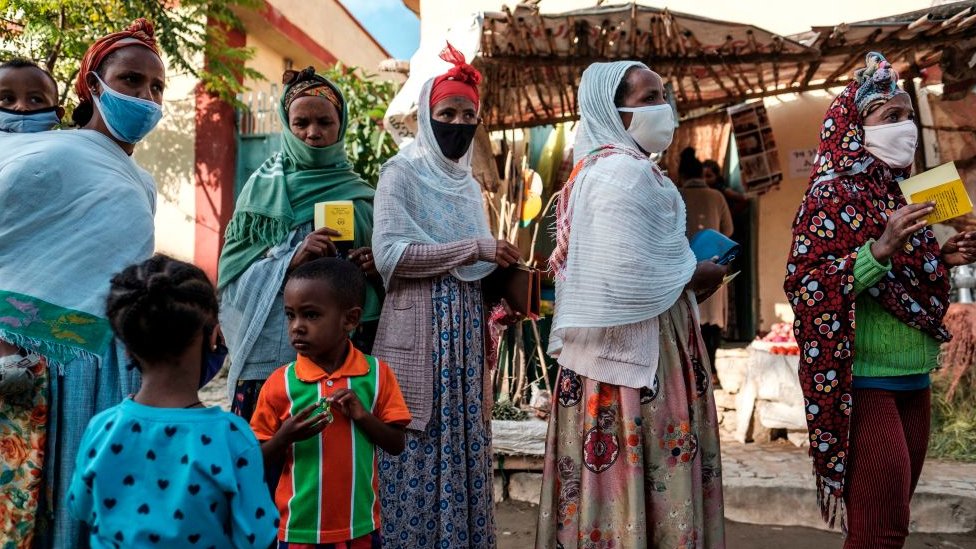
  • People queing to vote
    The election held in Tigray in September in defiance of the federal government heightened tensions

    Ongoing violence between the national army and forces loyal to the leaders of the northern Tigray region has prompted fears that Ethiopia is on the brink of a civil war.

    Hundreds of people have reportedly been killed since the fighting started on 4 November, and thousands have fled into neighbouring Sudan.

    What led to the fighting?

    September's election in Tigray, which the federal government had postponed nationwide because of coronavirus, is widely considered to be the cause of the recent rapid deterioration.

    Prime Minister Abiy Ahmed announced a military offensive after accusing Tigrayan forces of attacking and seizing a military base in the regional capital, Mekelle - a charge they deny.

    But the tension has been building for longer.

    The Tigray People's Liberation Front (TPLF), which was the dominant political party in Ethiopia for decades, has been feuding with Mr Abiy's government since shortly after he came to power in 2018.

    Elected as a "reformist leader", the prime minister accused officials in previous governments of corruption and human rights abuses, and removed key TPLF figures from the central government.

    This included the former intelligence chief and senior TPLF official, Getachew Asefa, who evaded arrest and fled to Tigray, where he remains as a fugitive.

    Mr Abiy's decision last year to merge the ethnically based parties that formed the governing EPRDF coalition and set up the Prosperity Party (PP) added fuel to the tensions. The TPLF opposed the decision, saying it would divide the country, and refused to join the PP.

    Earlier this year, the rift grew even wider after the federal government postponed nationwide elections.

    Tigray's decision to hold its own vote in September was an unprecedented act of defiance against the federal government. The federal parliament termed the process "illegal".

    Since then, both governments have designated each other as "illegitimate and unconstitutional".

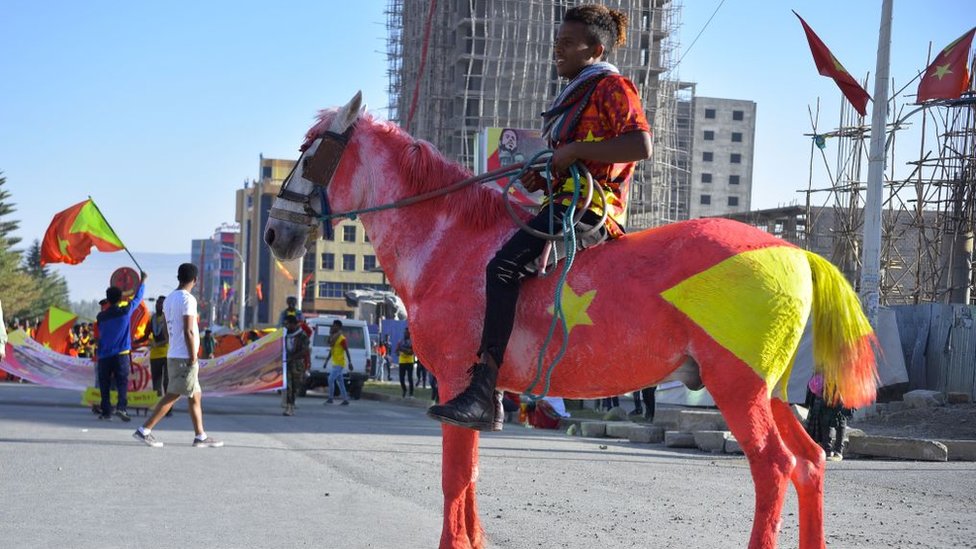
    A resident of Mekelle region rides a horse painted in the colours of the Tigray regional flag as they attend celebrations marking the 45th anniversary of the launching of the "Armed Struggle of the Peoples of Tigray", on February 19, 2020, in Mekelle
    A horse in Mekelle painted in the colours of the Tigray flag, which is proudly flown in the region

    The TPLF had previously made veiled threats of secession, citing an article in the federal constitution which allows the "unconditional right to self-determination, including the right to secession".

    "We will never back down for anyone who is intending to suppress our hard-won right to self-determination and self-rule," the region's leader, Debretsion Gebremichael said in August.

    Early in October, the federal government decided to cut ties with the Tigray region and the upper house of parliament voted to suspend budget aid to Tigray.

    Why was the TPLF so significant?

    Since the overthrow of Marxist leader Mengistu Haile Mariam in 1991 and up until 2018, the TPLF was the main partner in the governing coalition, as well as running Tigray itself.

    As a guerrilla army, the TPLF had played a pivotal role in Mengistu's demise and went on to dominate not just the country's politics but the economy as well.

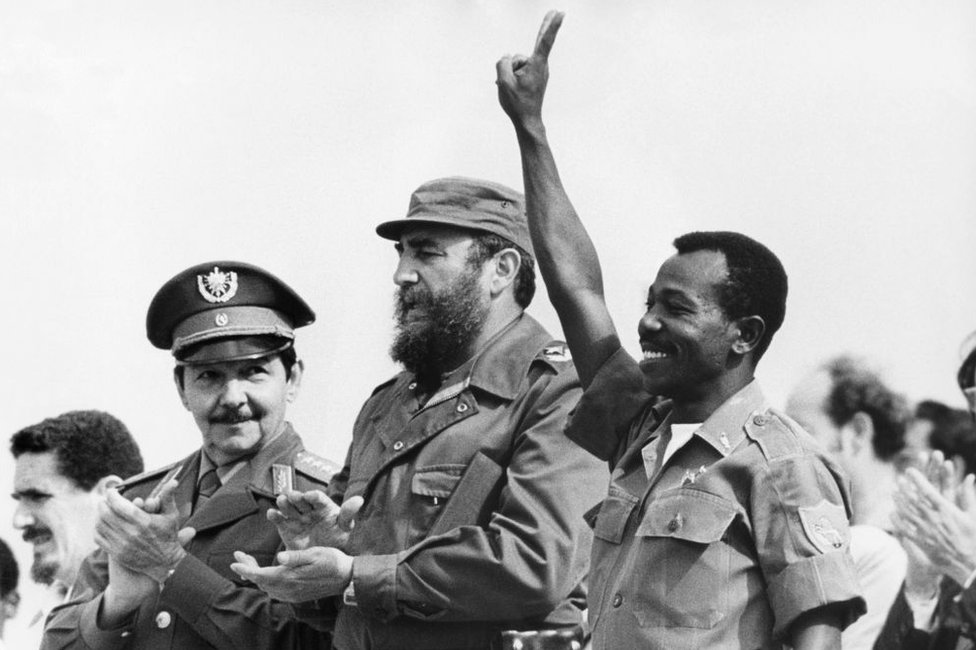
    Mengistu Haile Marian with Fidel Castro
    The TPLF was instrumental in the 1991 overthrow of Mengistu Haile Mariam (R), seen here in 1975 with Cuban leader Fidel Castro

    Its disagreement with Mr Abiy represents a deep fracture in the very core of power in the country.

    Most of the Tigray's regional leaders, including Mr Debretsion, had served in the central government for long periods of time.

    Mr Debretsion, who is a veteran fighter, was at one time the deputy prime minister. His comrades and advisers also held key positions in the country until Mr Abiy came to power.

    What does the TPLF want?

    The Tigray's administration sees Mr Abiy's reforms as an attempt to build a unitary system of government destroying the current federal arrangement.

    It also resents what it calls the prime minister's "unprincipled" friendship with Eritrean President Isaias Afwerki.

    Mr Abiy won the Nobel Peace Prize in 2019 for his efforts to bring peace with long-standing foe Eritrea. But the TPLF feels that Tigray's interests have been overlooked and it wants to have more say over future relations with Ethiopia's neighbour.

    On his part, the prime minister believes the TPLF officials are undermining his authority.

    Is Eritrea involved in the Tigray conflict?

    There is a long-standing rift between the TPLF and the government in Eritrea, which shares a long border with the Tigray region.

    The 1998-2000 Ethiopia-Eritrea war began over a dispute about territory along that border, particularly the area around the town of Badme.

    The status of Badme remains unresolved but Eritrea wants Ethiopia to abide by a UN-backed border commission ruling to hand over the town.

    But this cannot be achieved without the cooperation of the government in Tigray, as it administers the area.

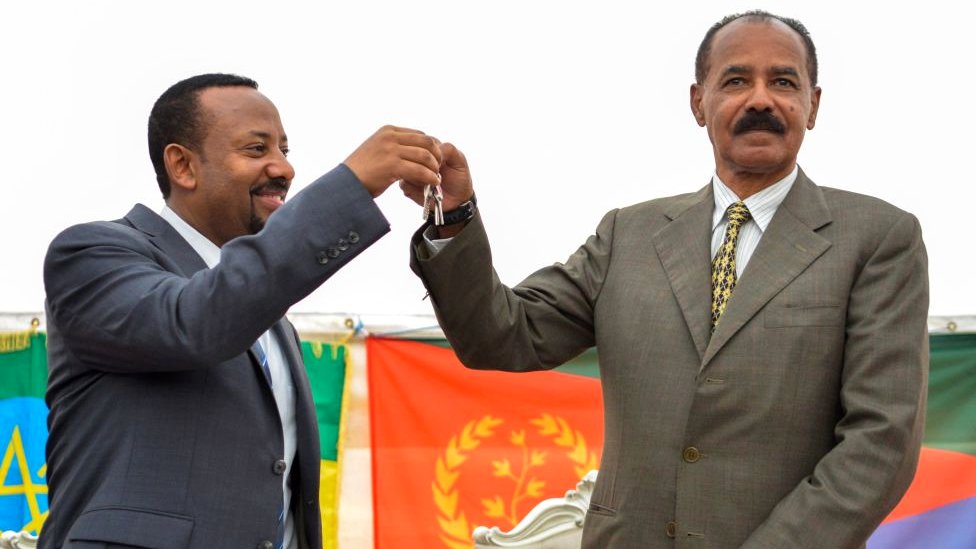
    Prime Minister Abiy and President Isaias
    There were celebrations when Prime Minister Abiy (l) agreed a deal with Eritrea's President Isaias Afwerki in 2018

    Speaking about the attack on the federal army base, Mr Abiy's office has accused the TPLF of dressing its soldiers in uniforms resembling those of the army of neighbouring Eritrea to "implicate the Eritrean government in false claims of aggression against the people of Tigray".

    Tigray's leader, Mr Debretsion, has accused Eritrean forces of joining the fight alongside Ethiopian forces against Tigray. Ethiopia and Eritrea have both denied this.

    How likely is a full-scale war?

    The Tigray regional leader has said his forces are ready to fight to defend the region, which would be "a burial place for the reactionaries", calling on Tigrayans to understand the situation and make all the necessary preparations. The TPLF has also issued a bond to raise money for its war effort.

    "We have prepared our army, our militia and our special force. Our preparation is aimed at averting war, but if we are to fight, we are ready to win," Mr Debretsion said.

    In justifying the military confrontation, Mr Abiy's office has accused the TPLF of "continued provocation and incitement of violence" and said "the last red line had been crossed".

    He has issued arrest warrants foe the TPLF leaders, appointed a new leader for the region and predicts that the war will soon be over but the TPLF forces are highly trained and experienced so some fear the conflict could drag on.

    There is also a concern that the conflict in Tigray, which accounts for about 6% of Ethiopia's population of over 100 million people, could exacerbate tensions in the rest of this ethnically divided country.

    Δευτέρα 24 Φεβρουαρίου 2020

    Over 1,000 Christians in Nigeria killed by Fulani, Boko Haram in 2019: NGO report


    christian post
    Photos from the article in Greek 
    Ο άγνωστος διωγμός των χριστιανών στη Νιγηρία


    Over 1,000 Christians have been killed this year in Nigeria as attacks led by Fulani extremists continue to plague rural farming communities in the Middle Belt, according to an estimation published by the U.K.-based nongovernmental organization Humanitarian Aid Relief Trust.
    HART, a nonprofit founded by U.K. member of Parliament Baroness Caroline Cox to “support people suffering from conflict and persecution,” released a report last month sharing details and testimonies from a recent fact-finding mission to Nigeria.
    The Nov. 18 report is titled “Your Land or Your Body: The escalating persecution and displacement of Christians in northern and central Nigeria.” A copy of the report was obtained by The Christian Post.
    “Islamist Fulani militia continue to engage in an aggressive and strategic land grabbing policy in Plateau, Benue, Taraba, Southern Kaduna and parts of Bauchi state,” the report reads. “They attack rural villages, force villagers off their lands and settle in their place — a strategy that is epitomized by the phrase: ‘your land or your blood.’”
    Fulanis are a predominantly Muslim nomadic people group of about 20 million across West and Central Africa. They have long come under tension with farming communities as the scarcity for land gets greater and the human populations get larger.
    While farmer-herder clashes are nothing new, the violence carried out against farming communities has increased in severity as thousands have been killed in the last several years.
    While the report states that the exact death toll for 2019 is unknown, “Preliminary data suggests that over 1,000 Christians have been killed since January.” HART estimates that there have been more than 6,000 Christians killed since 2015 and as many as 12,000 displaced from their villages.
    “I have visited many of the affected areas and seen the tragedies of death and destruction,’” Cox said in a statement. “In every village, the message from local people is the same: ‘Please, please help us! The Fulani are coming. We are not safe in our own homes.’”
    There was a rise in Fulani extremist attacks in the Kaduna state in 2019 after Christians were accused of a reprisal attack on a Fulani settlement that killed as many as 131 in February. 

    A dozen Christian villages in Nigeria wiped out in four-day killing spree

    open doors (2018)


    At Open Doors, one of our core values is prayer—prayer for God’s people who face persecution and prayer for Damascus Road awakenings for those who persecute. Please join us in praying for sub-Saharan Africa. The world’s second-largest continent—including 1.2 billion people, thousands of ethnic groups and 54 internationally recognized countries—is currently on fire with persecution. The widely reported story below chronicles an attack in Nigeria in June 2018. But the reports of persecution are ongoing from our teams working with churches and ministries in Africa. For example, late last week our team shared news of a recent attack on a largely Christian village in the Democratic Republic of the Congo (DRC). Please join us as we pray and work to strengthen the church in sub-Saharan Africa–to equip and empower God’s people to be light in the darkness.
    Most of the victims were in their homes sleeping when the attacks began … when Muslim Fulani militant herdsmen began their killing spree in Nigeria that lasted four days, Thursday through Sunday evening and into Monday.
    In only days, a dozen villages in Nigeria’s Plateau state were wiped out. The affected communities surround the city of Jos—known as the epicenter of Christianity in northern Nigeria’s Middle Belt.
    According to our on-the-ground sources, as many as 200 Christians had been killed, however, some residents fear the death toll may be even higher, as more bodies are yet to be recovered, while others were burned beyond recognition. On Sunday, 75 of the victims were buried in a mass grave.
    We are still gathering information about the violence, but the details we have from our sources on the ground so far reveal the scale and brutality of the attacks, in many cases more extensive than have been reported elsewhere:
    • 120 people who were attending the funerals of an elderly member were hacked to death as they returned home.
    • In another attack, in Gana Ropp village, a pastor, Rev. Musa Choji, was killed, as were his wife and son.
    • In Gidin Akwati, the whole community was burned down. Local sources say that some of those displaced are still hiding in the bush, as they haven’t yet been able to find their way to a safe haven.
    • A pastor with the Evangelical Church Winning All (ECWA) denomination, who wanted to remain anonymous for security reasons, said that following an attack on Saturday, his entire village was reduced to ashes, and more than 100 people lost their lives.
    The ECWA pastor said more than 50 heavily armed Fulani herdsmen surrounded the village of Nghar, in Gashes district, at around 3:30 a.m. They burned down all the houses, as well as two churches. Only a few people were able to escape.
    His wife’s family was decimated. The assailants killed 14 members of her family, including her mother and sister. Others who had come to visit them were also killed. In total, 27 people lost their lives in the same house. They were all burned to death. Only one person—his wife’s younger brother—survived, as he managed to escape through the roof.
    World Watch Monitor reports that on the day of the attack in Nghar, only two soldiers and one policeman were in the village, but they reportedly ran for their lives when the herdsmen launched their attack.
     
    Attacks were peak of ongoing violence

    Reportedly, the violence in the attacked areas has been happening for the last two weeks. Over the weekend, the violence reached a peak. Pastor Steve Kwol, chairman of the Pentecostal Federation of Nigeria for Plateau North, which includes the attacked areas, said that herdsmen were ambushing people going to their farms or traveling on their motorbikes.
    Since Thursday, the herdsmen militants had launched “very serious attacks” on the whole communities, he said. Despite the current dusk-to-dawn curfew and the presence of military, the attacks are still ongoing, he says. Two villages—Kwi and Dorowa—were badly damaged on Monday.
    In Dorowa, most of the properties were burned down, including four church buildings. The adjoining buildings, such as pastors’ houses, were also destroyed by fire.
    In Kwi, a number of buildings, including churches, were also set on fire. The exact number of people killed there is not yet known, but many were displaced and are now living in camps in neighboring villages.


    “We’ve been living peacefully with [Fulani herdsmen]” Pastor Kwol said. “Since this crisis started in Plateau in recent months, our people have not killed one Fulani man. Instead, they have been killing our people one by one. We just buried them and carried on.” he said. As a result of the ongoing insecurity, there are places where people can no longer go to farm,” he said, “because when they go, the Fulani will come and take their cows, or attack them.”
    “Just two weeks ago, they shot my wife’s young brother. But he survived. He was discharged on Wednesday and had returned home on Thursday, only to get killed in the last attack, on Saturday.”

    Learn more about what's happening in Nigeria
     
    Nigerian Boko Haram survivor shares story with President Trump 7 things to know about deadly Fulani militant violence 7 things you should know about Boko Haram "We are victims of Boko Haram viole

    See also


    Orthodox Mission in Tropical Africa (& the Decolonization of Africa)
    Nigeria: seeking Christ amid increased dangers...

    Nigeria’s modern slave raiders // Boko Haram attacks girls' schools
    Boko Haram insurgency 
    Boko Haram Using More Children as Suicide Bombers, Unicef Says   
    The Orthodox Christian sentiment regarding the persecutions of Christians by Islamists
    A Christian perspective on Islam   
    From Islam to Christianity: Saints in the Way to the Lihgt   
    Paul, the Christian equivalent to Mohammed