Εμφάνιση αναρτήσεων με ετικέτα Holy Bible. Εμφάνιση όλων των αναρτήσεων

Σάββατο 23 Απριλίου 2022

Old Testament prophecies hinting the Crucifixion and confirmed historically


Source: https://ethnegersis.blogspot/ -  (selected excerpts from Catechesis No.13)

Orthodox Outlet for Dogmatic Enquiries / Translation:  K.N.

ΕΛΛΗΝΙΚΑ: ΑΓΙΟΥ ΚΥΡΙΛΛΟΥ ΙΕΡΟΣΟΛΥΜΩΝ: ΟΙ ΠΡΟΦΗΤΕΙΕΣ ΠΟΥ ΕΚΠΛΗΡΩΘΗΚΑΝ ΚΑΤΑ ΤΗ ΣΤΑΥΡΩΣΗ ΤΟΥ ΚΥΡΙΟΥ [Μέρος πρώτο]


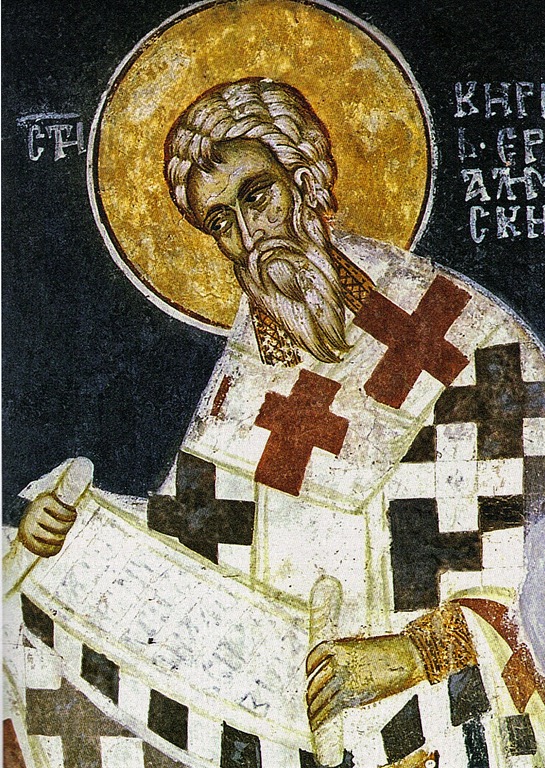
Saint Cyril of Jerusalem**:  “....and was crucified for our sake during the time of Pontius Pilate, and suffered and was buried....”

 *****

But let us now return to the subject of prophetic proofs that you asked for. The Lord was crucified - you have heard all the testimonies. You have seen the location of Golgotha hill. You agree with the information and applaud it as praiseworthy and you glorify it. But take care lest there come a time during a period of persecution that you renounce Him.  Do not delight in the Cross only during a period of peace, but preserve the same faith also during a period of persecution. Do not be a friend of Jesus in a time of peace, and in a time of war become an enemy. (…)

***********

So, Christ was crucified for our sake:  He, who had been judged during an icy-cold night – which is why there was a coal burning fire nearby:

John 18:18: “Now the slaves and servants who had made a fire of coals stood there, for it was cold, and they warmed themselves. And Peter was with them and warming himself.”

Christ was crucified at the third hour:

Mark 15:25:  Now it was the third hour, and they crucified Him”...

(The “third hour” means it was 3 hours after sunrise, that is, at 9 in the morning when they crucified Him)

Matthew 27:45: “Now from the sixth hour until the ninth hour there was darkness over all the land.”

(The 6th hour was 12 noon, so from 12 noon, darkness covered the entire land, until 3 in the afternoon).

Could these same details have been written by the Old Testament Prophets also? Let us check it out:

The prophet Zacharias said:

Zacharias 14:7:  On that day there shall be no light; it will be cold and icy for one day – and that day is known to the Lord – and it is not day and not night, and at evening time there shall be light.”

(During that one day, there will be no sunlight, so it will be a cold, icy day – hence Peter warming himself at a coal fire outside).

”So?  Didn't the Lord know about the other days?  Indeed, days are many, but this was the day of the Lord's patience, a day “which the Lord had created” (Psalm 117:24).  He likewise knew the day that was “not day and not night” (Zacharias 14:7).

What was the meaning of this enigma mentioned by the Prophet: “...and that day is known to the Lord – and it is not day and not night”?

What was that day? What should we call it?

The Gospel interprets this, as it narrates the events:  It was not “day”, because the sun did not shine while moving from east to west; instead, from the 6th hour (12 noon) until the 9th (3 afternoon), complete darkness prevailed (as above, Matthew 27:45), in the middle of the day! Hence, darkness suddenly prevailed in the middle of the day – which darkness God had named “night” (Genesis 1:1: “...and God called the light “day”, and the darkness He called “night”).

That is why it was neither “day” nor “night” literally, for there was not enough light to be called “day”, nor dark enough to be called “night”, given that after the 9th hour (3 afternoon) the sun shone again in the sky. This too was foretold by the Prophet when saying:not day and not night” (Zacharias 14:7), and adding at the end of v.7: “and at evening time there shall be light”.

Do you see the accuracy of the Prophets? Do you see how much truth there is in what has been prophesied and written in advance of the actualized events?

***********

Do you want to know exactly what time the sun was blotted out from the face of the earth? Was it perhaps on the 5th hour or the 8th or the 10th?  

Then state the exact time to the inconvincible Jews, o Prophet! When did the sun set?

The prophet Amos said:

And it will be on that day, says the Lord God, and the sun will set at noon, and the light will be darkened upon the earth in the daytime.”  (Amos 8:9)

– exactly as above:  

Now from the sixth hour until the ninth hour there was darkness over all the land.” (as above, Matthew 27:45)

What season would it take place in, o Prophet, and what day will it be?  

And I will turn your feasts into mourning and all your songs into lamentation. And I will bring sackcloth on every loin and baldness on every head. And I will make Him like the mourning for a loved one and those with Him like a day of suffering” (Amos 8:10]

These details implied the feast days of Unleavened Bread and the Jewish Passover - which was to “contain” the event of the Crucifixion during those days.  To which the Prophet adds the following:  And I will make Him like the mourning for a loved one and those with him like a day of suffering.”

And a great multitude of the people followed Him, and women who also mourned and lamented Him  (Luke 23:27)

While the Apostles may have remained in hiding, nevertheless, their souls were also filled with despair and mourning....

This prophecy also deserves our admiration.

***********

Now someone else might say:  Find yet another characteristic from the Passions of Christ which had been preannounced by the Prophets with such precision.'

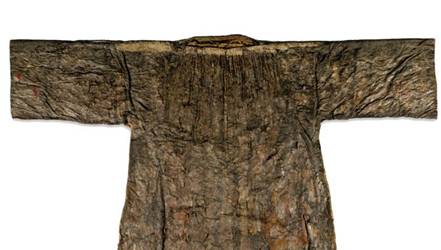
What other accurate evidence is there, related to the event of the Crucifixion?  When Jesus was being led to be crucified, He was wearing only a tunic and His robe was thrown over Him.

 https://chilonas.files.wordpress.com/2021/11/2-min.jpg

https://s1.neakriti.gr/images/756x429/files/2019-04-25/xitonas6.jpg

Then the soldiers, after they had crucified Jesus, took His clothes and made them into four parts, to each soldier one part, and also His undergarment (tunic). Now the tunic was seamless, woven from the top all in one piece.”  (John 19:23)

This garment was not torn into parts, as it would have become useless. So they decided to cast lots to see who it would fall to:

They said therefore among themselves, ‘Let us not tear it, but cast lots for it, whose it shall be’, so that the Scripture might be fulfilled which says: ’They divided My garments among them, and on My clothing they cast lots.” (John 19:24)

Was this also mentioned somewhere else?  Let us see what the Book of Psalms (11th century B.C.)says:  

they divided my clothes for themselves, and on my tunic they cast lots.”  (Psalm 21:19)

 ***********

Also, when He was being interrogated by Pilate, He had been wrapped in a red cloak:  

And they stripped Him and put a scarlet robe on Him”. (Matthew 27:28)

They had intentionally stripped Him, wishing to mock Him for making claims of royalty.

Was this also written in the old Testament?

Isaiah says:

Who is He that has come here from Edom, with a redness of garments from Bosor – so splendid in apparel, mighty, with power?”   (Isaiah 63:1)

Who is He that wears scarlet and is being dishonoured? Bosor apparently had such an interpretation for the Jews.

Why are your clothes red, and your garments like those of a wine press worker?”  (Isaiah 63:2)

To which He replied:

I had My arms outstretched all day long towards an inconvincible and contrary people who did not walk in a true way, but after their own sins.”   (Isaiah 65:2)

**************

He extended His arms upon the Cross, thus “embracing” the ends of the inhabited world. Because the centremost point on earth is Golgotha. And this is not my own reasoning. The Prophet is the one who said:

Yet God is our King from before aeons; He laboured for salvation in the midst of the earth.”  (Psalm 73:12).

 (You, o Lord, forged our salvation through Your world-saving Passions at the centre of the earth).

He who had stretched out the firmament with His divine arms has stretched out His human arms, which were pierced with nails so that when His human nature was nailed to the Cross – bearing the sins of mankind – and eventually perished, sin would also perish with it, but we would also be resurrected blameless and righteous.

For one may die with difficulty for a righteous man; but for a good man, perhaps someone may dare to die”. (Romans 5:7)

So, because death originated from a man (Romans 5:17), life was restored also by a Man – our Saviour - who died voluntarily. To be certain that this is the case, remember the One who said:

No one takes it away from Me, but I lay it down of Myself.  I have authority to lay it down, and I have power to take it back again”.    (John 10:18].

(No-one has the authority to take my life and kill Me if I do not want it. But I give it up on my own. I have the authority to offer my life, and I have the authority also to take it back again)

*************

But He of course had endured all these things in order to save everyone, but His people reciprocated with a wretched repayment.  Jesus said “I am thirsty” (John 19:28].  He who made abundant water spring from a steep precipice, and had asked for the fruits of the vine that He had planted:

Yet I planted you as a fruitful vine, from pure stock. How did you turn to bitterness, you foreign vine?”  (Jeremiah 2:21):

But what was that “vine”?  As regards its nature, it is of course mentioned by the Holy Fathers; as for its proclivity, it was Sodomic, because their vine originated in Sodom and its branches in Gomorrah; and yet, when the Lord thirsted, they took a sponge dipped in vinegar, tied it to a reed and offered that to Him!

Immediately one of them ran and took a sponge, filled it with soured wine, and put it on a reed, and offered it to Him to drink.”  (Matthew 27:48)

 In the book of Psalms we read:

And they gave gall as my food, and for my thirst they gave me vinegar to drink.”     (Psalms 68:22)

Do you see the transparency in the foretelling by Prophets?  Well, what kind of gall (bile) did they put in His mouth? They gave him, he says, 'wine mixed with myrrh, but He did not take it (Mark 15:23).

Myrrh is disgusting and terribly bitter to taste; is that how you reciprocate to the Lord?  Is that the kind of offering that the vine gives to its master?  Isaiah has rightly mourned for you ever since, saying:  

I must sing to my beloved one a song concerning My vineyard: A vineyard was created for My beloved one upon a hill, on a fertile place”.    (Isaiah 5:1)

But let us see what he says further on:

2 And I put a border around it and furrowed it and planted a Sorech vine, and I built a tower in the midst of it and dug out a wine vat in advance in it and I waited for it to produce grapes but, it produced thorns. And now, those who dwell in Jerusalem and you of Judah, judge between Me and My vineyard.  4 What more should I do for My vineyard that I have not done for it? For I have waited for it to produce grapes, but it produced thorns.5 So now I will announce to you what I will do to My vineyard:  I will remove its border and it shall be seized; and I will tear down its wall, and it shall be trampled on. 6 And I will abandon My vineyard and it shall not be pruned or dug, and they shall walk over it as if it is a wasteland of thorns; and I shall command the clouds to not deposit any rain on it. 7 For the vineyard of the Lord Shavaoth is the house of Israel and the man of Judah is the beloved new plant. I waited in order to make judgment, but it has made lawlessness; not justice, but noisiness.”  (Isaiah 5:2-7)

Look at the border of thorns that they surrounded My head with; I waited for the vine (Israel) to make Me grapes to quench My thirst with its wine, but My vineyard brought forth thorns.... So what decision should I make? I will order the clouds not to let rain fall on this vineyard... And of course the clouds stopped raining over that vineyard - that is, the prophetic voice stopped revealing God's will to them.

And as the apostle Paul said, Prophets thereafter would act within the Church:

28 But if there is no interpreter, let him keep silent in church, and let him speak to himself and to God. 29 Let two or three prophets speak, and let the others judge.   30 But if anything is revealed to another who sits by, let the first keep silent. 31 For you can all prophesy one by one, so that all may learn and all may be encouraged. 32 And the spirits of the prophets are subject to the prophets. 33 For God is not the author of confusion but of peace, as in all the churches of the saints.   (1 Corin.1:28-33)

And elsewhere:

And He Himself gave that some  be apostles, some prophets, some evangelists, and some pastors and teachers, 12 for the equipping of the saints for the work of ministry, for edifying the body of Christ.”  (Ephesians 4:11-12)

Agabus was also a prophet, who tied his hands and feet with a waistband and thus prophesied the apostle's imprisonment in Jerusalem

10 And as we stayed many days, a certain prophet named Agabus came down from Judea. 11 When he had come to us, he took Paul’s belt, bound his own hands and feet, and said, ‘Thus says the Holy Spirit - thus shall the Jews at Jerusalem bind the man who owns this belt, and deliver him into the hands of the Gentile Romans.’ ”    (Acts 21:10-11)

***********************

Saint Cyril of Jerusalem on the Creed**

Cyril became Bishop of Jerusalem ca. 350, during the years of Arian controversy that persisted after the first ecumenical Council of Nicea, convened by the emperor Constantine in 325. Cyril came to accept wholeheartedly the Nicene Creed’s definition of the divinity of Christ as “consubstantial” with God the Father. He attended the First Council of Constantinople in 381. Of his many writings, Cyril’s twenty-four famous catecheses (lectures on aspects of the faith), which he delivered as bishop in about 350, have been preserved. The first five of the catecheses concern 1) the prerequisites for Baptism, 2) repentance and remission of sins, 3) the Sacrament of Baptism, 4) ten key points of doctrine, and 5) on faith and the Creed, or Symbol of Faith.

Following is an excerpt from his Catechesis No. 5 on the Creed, §§12 and 13.

But in learning the Faith and in professing it, acquire and keep that only, which is now delivered to you by the Church, and which has been built up strongly out of all the Scriptures.  For since all cannot read the Scriptures, some being hindered as to the knowledge of them by want of learning, and others by a want of leisure, in order that the soul may not perish from ignorance, we comprise the whole doctrine of the Faith in a few lines.  This summary I wish you both to commit to memory when I recite it, and to rehearse it with all diligence among yourselves, not writing it out on paper, but engraving it by the memory upon your heart, taking care while you rehearse it that no catechumen chance to overhear the things which have been delivered to you.

I wish you also to keep this as a provision through the whole course of your life, and beside this to receive no other, neither if we ourselves should change and contradict our present teaching, nor if an adverse angel, transformed into an angel of light (II Corinthians 11:14) should wish to lead you astray.  For though we or an angel from heaven preach to you any other gospel than that you have received, let him be to you anathema. (Galatians 1:8-9)

So for the present listen while I simply say the Creed, and commit it to memory; but at the proper season expect the confirmation out of Holy Scripture of each part of the contents. For the articles of the Faith were not composed as seemed good to men; but the most important points collected out of all the Scripture make up one complete teaching of the Faith.  And just as the mustard seed in one small grain contains many branches, so also this Faith has embraced in few words all the knowledge of godliness in the Old and New Testaments.  Take heed then, brethren, and hold fast the traditions which you now receive, and write them on the table of your heart. (§12)

Guard them with reverence, lest per chance the enemy despoil any who have grown slack; or lest some heretic pervert any of the truths delivered to you. For faith is like putting money into the bank, even as we have now done; but from you God requires the accounts of the deposit. I charge you, as the Apostle says, before God who quickens all things, and Christ Jesus, who before Pontius Pilate witnessed the good confession, that you keep this faith which is committed to you, without spot, until the appearing of our Lord Jesus Christ.

A treasure of life has now been committed to you, and the Master demands the deposit at His appearing, “which in His own times He shall show, Who is the blessed and only Potentate, the King of kings, and Lord of lords; Who only has immortality, dwelling in light which no man can approach unto; Whom no man has seen nor can see. To Whom be glory, honor and power for ever and ever. Amen”. [I Timothy 6:15-16] (§13)

  *****

Translated by Edwin Hamilton Gifford. From Nicene and Post-Nicene Fathers, Second Series, Vol. 7. Edited by Philip Schaff and Henry Wace. (Buffalo, NY: Christian Literature Publishing Co.,1894.) Revised and edited by Kevin Knight for New Advent. Reprinted with permission. (Complete text: newadvent.org/fathers/310105.htm).

https://adoremus.org/2010/11/saint-cyril-of-jerusalem-on-the-creed/        

Σάββατο 16 Απριλίου 2022

Lazarus Saturday: Christ “stole him from among the dead.” Next weekend there will be a blasting of the gates of hell itself!

Largely ignored by much of Christendom, the Orthodox mark the day before Palm Sunday as “Lazarus Saturday” in something of a prequel to the following weekend’s Pascha. It is, indeed a little Pascha just before the greater one. And this, of course, was arranged by Christ Himself, who raised His friend Lazarus from the dead as something of a last action before entering Jerusalem and beginning His slow ascent to Golgotha through the days of Holy week.

One of the hymns of the Vigil of Lazarus Saturday says that Christ “stole him from among the dead.” I rather like the phrase. Next weekend there will be no stealing, but a blasting of the gates of hell itself. What he does for Lazarus he will do for all.

Lazarus, of course, is different from those previously raised from the dead by Christ (such as the daughter of Jairus). Lazarus had been four days dead and corruption of the body had already set in. “My Lord, he stinks!” one of his sisters explained when Christ requested to be shown to the tomb.

I sat in that tomb in September 2008. It is not particularly notable as a shrine. It is today, in the possession of a private, Muslim family. You pay to get in. Several of our pilgrims did not want to pay to go in. I could not stop myself.

Lazarus is an important character in 19th century Russian literature. Raskolnikov, in Crime and Punishment, finds the beginning of his repentance of the crime of murder, by listening to a reading of the story of Lazarus. It is, for many, and properly so, a reminder of the universal resurrection. What Christ has done for Lazarus He will do for all.

For me, he is also a sign of the universal entombment: that even before we die, we have frequently begun to inhabit our tombs. We live our life with the doors closed (and we stink). Our hearts are often places of corruption and not the habitation of the good God. Or, at best, we ask Him to visit us as He visited Lazarus. That visit brought tears to the eyes of Christ. The state of our corruption makes Him weep. It is such a contradiction to the will of God. We were not created for the tomb.

I also note that in the story of Lazarus – even in his being raised from the dead – he rises in weakness. He remains bound by his graveclothes. Someone must “unbind” him. We ourselves, having been plunged into the waters of Baptism and robed with the righteousness of Christ, too often exchange those glorious robes for graveclothes. Christ has made us alive, but we remain bound like dead men.

I sat in the tomb of Lazarus because it seemed so familiar. But there is a voice that calls us all…


CALLING THE DEAD TO NEW LIFE — THE RAISING OF LAZARUS FROM THE DEAD!...


Orthodox Metropolis of Zambia

On the day before Palm Sunday (and the start of Holy Week), the Eastern Orthodox Church celebrates what we call Lazarus Saturday. On this day, we remember Christ’s raising of His dear friend Lazarus from the dead, after he had been dead four days. This feast marks the end of the forty days of Great Lent and serves as a unique transition into our Lord’s Passion. In triumph and joy, the Church bears witness to Christ’s power over death and exalts Him as King before entering the most solemn week of the year, one that leads the faithful in remembrance of His suffering and death and concludes with the great and glorious Feast of Pascha.

CELEBRATION OF THE FEAST
Having fulfilled Forty Days […] we ask to see the Holy Week of Thy Passion. With these words sung at Friday Vespers, Lent comes to its end; and we enter into the annual commemoration of Christ’s suffering, death and Resurrection. Liturgical texts describe the double feast of Lazarus’ resurrection and the Entrance of the Lord to Jerusalem (Palm Sunday) as the “beginning of the Cross”. Therefore, we must understand this Feast in the context of Holy Week. The Troparion of these days explicitly affirms that by raising Lazarus from the dead, Christ confirmed the truth of universal resurrection. Light and joy shine not only at the end of Holy Week but also at its beginning; they illumine darkness itself and reveal its ultimate meaning.

All those familiar with Orthodox worship know the peculiar, almost paradoxical character of Lazarus Saturday services. It is a Resurrection service on a Saturday, a day usually devoted to the liturgical commemoration of the dead. And the joy which permeates these services stresses one central theme: the upcoming victory of Christ over Hades. Hades is the Biblical term for Death, for that unescapable darkness and destruction that swallows all life and poisons the world with its shadow. But now—with Lazarus’ resurrection—death begins to tremble. Here, the decisive duel between Life and Death begins, and it gives us the key to the mystery of Pascha. In the early Church, Lazarus Saturday was called the “announcement of Pascha”; it announces and anticipates, indeed, the wonderful light and peace of the next Saturday—the Great and Holy Saturday, the day of the Lifegiving Tomb.

THE RAISING OF LAZARUS IN SCRIPTURE
THE LORD WAITS

We find this powerful story in the Gospel of John 11:1-45. Lazarus becomes ill, and his sisters, Mary and Martha send a message to Jesus. In response, Jesus says, “This illness does not lead to death; rather it is for God’s glory, so that the Son of God may be glorified through it” (vv. 1-4).

Instead of going immediately to Bethany, the town where Lazarus lived, Christ remained where he was for two more days. Only then did He return to Judea with His disciples, who tried to convince Him not to go for fear of the Jews who had recently tried to stone Him (John 10:31). Jesus comforts them and then explains that Lazarus has fallen asleep and that He must go to wake him. The disciples, mistakenly thinking the Lord meant Lazarus was simply sleeping, wondered why Jesus would go to wake him. This led to Jesus telling them directly that Lazarus was, indeed, dead.

MARTHA AND MARY GREET THE LORD
When Martha, one of Lazarus’ sisters, heard that Jesus was approaching, she went to meet Him. She said to Him, “Lord, if you had been here, my brother would not have died. But even now I know that God will give you whatever you ask of Him.” Jesus told her that her brother will rise again. Martha said she knew he would rise again in the resurrection on the last day.

But Jesus corrected her and said, “I am the resurrection and the life. Those who believe in me, even though they die, will live, and everyone who lives and believes in me will never die.” Jesus asked Martha if she believed this. And she said to Him, “Yes, Lord, I believe that you are the Messiah, the Son of God, the one coming into the world” (vv. 17-27).

After this, Martha returned to tell Mary that Jesus had come and was asking for her. Mary went to Him, followed by those consoling her. The mourners followed her, thinking she was going to the tomb to weep there. When she came to Jesus, she fell at His feet and said, “Lord, if you had been here, my brother would not have died.”

Jesus saw her weeping and those who were with her, and He was deeply moved. He asked to be taken to the tomb of Lazarus. As Jesus wept, the Jews said, “See how He loved him.” Others wondered that if Jesus could open the eyes of the blind, He certainly could have kept Lazarus from dying (vv. 28-37).

RAISING LAZARUS
Jesus came to the tomb and asked that someone move the stone from the door. Martha remarked that Lazarus had now been in the tomb for four days and that there would be a stench. Jesus replied, “Did I not tell you that if you believed, you would see the glory of God?” They took the stone away. Then Jesus looked toward heaven and said, “Father, I thank You for having heard me, but I have said this for the sake of the crowd standing here, so they may believe that You sent Me.” When He had said this, He called out with a loud voice, “Lazarus, come out!” Lazarus walked out of the tomb, bound with the strips of burial cloth, and Jesus said, “Unbind him, and let him go” (vv. 38-44).
According to ancient Jewish Tradition, the soul remained near the body for only three days. As a result of this miracle, many of the Jews present came to believe in Jesus. Christ performs this miracle to reassure His disciples that though He will suffer and die, He is still Lord and Victor over death. The resurrection of Lazarus is a prophecy in the form of an action. It foreshadows Christ’s own Resurrection eight days later, and at the same time it anticipates the resurrection of all the righteous on the Last Day: Lazarus is “the saving first-fruits of the regeneration of the world.”


THE SYMBOLISM BEHIND RAISING LAZARUS
Lazarus, as the friend of Christ, serves as a symbol for all of mankind. As beings made in the image of God, we are all called to divine friendship with Him: knowledge of God, communion with Him, and sharing of life with Him. “In Him was life and the life was the light of men” (John 1:4). And yet death (which God didn’t create) destroys and annihilates His creation.

But why does Christ weep if He knows that in a moment He will call Lazarus back from the dead? Because He contemplates the triumph of death and destruction in the world He created. At the grave of Lazarus, God encounters Death. He meets His Enemy, who has taken away from Him His world and become its prince. And we who follow Jesus enter with Him into that hour, into the climax and fulfillment of His work.

The Cross, its necessity and universal meaning are announced in the shortest verse of the Gospel: “and Jesus wept”. It is because He wept, i.e., loved Lazarus, that Jesus had the power of calling him back to life. The power of Resurrection is not a divine “power in itself,” but the power of love, or rather love as power. God is Love and Love is life. And Love creates Life. It is Love that weeps at the grave and it is Love that restores life. In Christ’s Divine tears, love is at work again —recreating, redeeming, restoring the darkened life of man. And this is why Lazarus Saturday is the beginning of both: the Cross, as the supreme sacrifice of love, and the Resurrection, as the ultimate triumph of love.

John 11:1-45
21st Century King James Version
 
11 Now a certain man was sick named Lazarus, of Bethany, the town of Mary and her sister Martha.

2 (It was that Mary who had anointed the Lord with ointment and wiped His feet with her hair, whose brother Lazarus was sick.)

3 Therefore his sisters sent unto Him, saying, “Lord, behold, he whom Thou lovest is sick.”

4 When Jesus heard that, He said, “This sickness is not unto death, but for the glory of God, that the Son of God might be glorified thereby.”

5 Now Jesus loved Martha and her sister and Lazarus.

6 When He heard therefore that Lazarus was sick, He stayed two days still in the same place where He was.

7 Then after that He said to His disciples, “Let us go into Judea again.”

8 His disciples said unto Him, “Master, the Jews of late sought to stone Thee, and goest Thou thither again?”

9 Jesus answered, “Are there not twelve hours in the day? If any man walk in the day he stumbleth not, because he seeth the light of this world.

10 But if a man walk in the night, he stumbleth because there is no light in him.”

11 These things said He, and after that He said unto them, “Our friend Lazarus sleepeth; but I go, that I may awaken him out of sleep.”

12 Then said His disciples, “Lord, if he sleep he shall do well.”

13 However Jesus spoke of his death, but they thought that He had spoken of the taking of rest in sleep.

14 Then Jesus said unto them plainly, “Lazarus is dead.

15 And I am glad for your sakes that I was not there, to the intent that ye may believe. Nevertheless let us go unto him.”

16 Then Thomas, who was called Didymus, said unto his fellow disciples, “Let us also go, that we may die with Him.”

17 Then when Jesus came, He found that he had lain in the grave four days already.

18 Now Bethany was nigh unto Jerusalem, about two miles away,

19 and many of the Jews came to Martha and Mary to comfort them concerning their brother.

20 Then Martha, as soon as she heard that Jesus was coming, went and met Him; but Mary sat still in the house.

21 Then Martha said unto Jesus, “Lord, if Thou hadst been here, my brother would not have died.

22 But I know that even now, whatsoever Thou wilt ask of God, God will give it Thee.”

23 Jesus said unto her, “Thy brother shall rise again.”

24 Martha said unto Him, “I know that he shall rise again at the resurrection on the Last Day.”

25 Jesus said unto her, “I am the resurrection and the Life. He that believeth in Me, though he were dead, yet shall he live;

26 and whosoever liveth and believeth in Me shall never die. Believest thou this?”

27 She said unto Him, “Yea, Lord, I believe that Thou art the Christ, the Son of God, who should come into the world.”

28 And when she had so said, she went her way and called Mary her sister secretly, saying, “The Master has come, and calleth for thee.”

29 As soon as she heard that, she arose quickly and came unto Him.

30 Now Jesus had not yet come into the town, but was in that place where Martha met Him.

31 The Jews then, who were with her in the house and comforting her, when they saw that Mary rose up hastily and went out, followed her, saying, “She goeth unto the grave to weep there.”

32 Then when Mary had come where Jesus was and saw Him, she fell down at His feet, saying unto Him, “Lord, if Thou hadst been here, my brother would not have died.”

33 When Jesus therefore saw her weeping, and the Jews also weeping who came with her, He groaned in the spirit and was troubled,

34 and said, “Where have ye laid him?” They said unto Him, “Lord, come and see.”

35 Jesus wept.

36 Then said the Jews, “Behold, how he loved him!”

37 And some of them said, “Could not this man, who opened the eyes of the blind, have caused that even this man should not have died?”

38 Jesus therefore again, groaning in Himself, came to the grave. It was a cave, and a stone lay against it.

39 Jesus said, “Take ye away the stone.” Martha, the sister of him that was dead, said unto Him, “Lord, by this time there is a stench, for he hath been dead four days.”

40 Jesus said unto her, “Said I not unto thee that if thou would believe, thou should see the glory of God?”

41 Then they took away the stone from the place where the dead was laid. And Jesus lifted up His eyes and said, “Father, I thank Thee that Thou hast heard Me.

42 And I knew that Thou hearest Me always, but because of the people who stand by I said it, that they may believe that Thou hast sent Me.”

43 And when He thus had spoken, He cried with a loud voice, “Lazarus, come forth!”

44 And he that was dead came forth, bound hand and foot with graveclothes, and his face was bound about with a napkin. Jesus said unto them, “Loose him, and let him go.”

45 Then many of the Jews who came to Mary and had seen the things which Jesus did, believed in Him
 
+++++++++++++++++++++++++++++++++++++++++++
 
João 11:1-45
Almeida Revista e Corrigida 2009
A ressurreição de Lázaro

11 Estava, então, enfermo um certo Lázaro, de Betânia, aldeia de Maria e de sua irmã Marta. 2 E Maria era aquela que tinha ungido o Senhor com unguento e lhe tinha enxugado os pés com os seus cabelos, cujo irmão, Lázaro, estava enfermo. 3 Mandaram-lhe, pois, suas irmãs dizer: Senhor, eis que está enfermo aquele que tu amas. 4 E Jesus, ouvindo isso, disse: Esta enfermidade não é para morte, mas para glória de Deus, para que o Filho de Deus seja glorificado por ela. 5 Ora, Jesus amava a Marta, e a sua irmã, e a Lázaro. 6 Ouvindo, pois, que estava enfermo, ficou ainda dois dias no lugar onde estava. 7 Depois disso, disse aos seus discípulos: Vamos outra vez para a Judeia. 8 Disseram-lhe os discípulos: Rabi, ainda agora os judeus procuravam apedrejar-te, e tornas para lá? 9 Jesus respondeu: Não há doze horas no dia? Se alguém andar de dia, não tropeça, porque vê a luz deste mundo. 10 Mas, se andar de noite, tropeça, porque nele não há luz. 11 Assim falou e, depois, disse-lhes: Lázaro, o nosso amigo, dorme, mas vou despertá-lo do sono. 12 Disseram, pois, os seus discípulos: Senhor, se dorme, estará salvo. 13 Mas Jesus dizia isso da sua morte; eles, porém, cuidavam que falava do repouso do sono. 14 Então, Jesus disse-lhes claramente: Lázaro está morto, 15 e folgo, por amor de vós, de que eu lá não estivesse, para que acrediteis. Mas vamos ter com ele. 16 Disse, pois, Tomé, chamado Dídimo, aos condiscípulos: Vamos nós também, para morrermos com ele.

17 Chegando, pois, Jesus, achou que já havia quatro dias que estava na sepultura. 18 (Ora, Betânia distava de Jerusalém quase quinze estádios.) 19 E muitos dos judeus tinham ido consolar a Marta e a Maria, acerca de seu irmão. 20 Ouvindo, pois, Marta que Jesus vinha, saiu-lhe ao encontro; Maria, porém, ficou assentada em casa. 21 Disse, pois, Marta a Jesus: Senhor, se tu estivesses aqui, meu irmão não teria morrido. 22 Mas também, agora, sei que tudo quanto pedires a Deus, Deus to concederá. 23 Disse-lhe Jesus: Teu irmão há de ressuscitar. 24 Disse-lhe Marta: Eu sei que há de ressuscitar na ressurreição do último Dia. 25 Disse-lhe Jesus: Eu sou a ressurreição e a vida; quem crê em mim, ainda que esteja morto, viverá; 26 e todo aquele que vive e crê em mim nunca morrerá. Crês tu isso? 27 Disse-lhe ela: Sim, Senhor, creio que tu és o Cristo, o Filho de Deus, que havia de vir ao mundo.

28 E, dito isso, partiu e chamou em segredo a Maria, sua irmã, dizendo: O Mestre está aqui e chama-te. 29 Ela, ouvindo isso, levantou-se logo e foi ter com ele. 30 (Ainda Jesus não tinha chegado à aldeia, mas estava no lugar onde Marta o encontrara.) 31 Vendo, pois, os judeus que estavam com ela em casa e a consolavam que Maria apressadamente se levantara e saíra, seguiram-na, dizendo: Vai ao sepulcro para chorar ali. 32 Tendo, pois, Maria chegado aonde Jesus estava e vendo-o, lançou-se aos seus pés, dizendo-lhe: Senhor, se tu estivesses aqui, meu irmão não teria morrido. 33 Jesus, pois, quando a viu chorar e também chorando os judeus que com ela vinham, moveu-se muito em espírito e perturbou-se. 34 E disse: Onde o pusestes? Disseram-lhe: Senhor, vem e vê. 35 Jesus chorou. 36 Disseram, pois, os judeus: Vede como o amava. 37 E alguns deles disseram: Não podia ele, que abriu os olhos ao cego, fazer também com que este não morresse? 38 Jesus, pois, movendo-se outra vez muito em si mesmo, foi ao sepulcro; e era uma caverna e tinha uma pedra posta sobre ela. 39 Disse Jesus: Tirai a pedra. Marta, irmã do defunto, disse-lhe: Senhor, já cheira mal, porque é já de quatro dias. 40 Disse-lhe Jesus: Não te hei dito que, se creres, verás a glória de Deus? 41 Tiraram, pois, a pedra. E Jesus, levantando os olhos para o céu, disse: Pai, graças te dou, por me haveres ouvido. 42 Eu bem sei que sempre me ouves, mas eu disse isso por causa da multidão que está ao redor, para que creiam que tu me enviaste. 43 E, tendo dito isso, clamou com grande voz: Lázaro, vem para fora. 44 E o defunto saiu, tendo as mãos e os pés ligados com faixas, e o seu rosto, envolto num lenço. Disse-lhes Jesus: Desligai-o e deixai-o ir.

45 Muitos, pois, dentre os judeus que tinham vindo a Maria e que tinham visto o que Jesus fizera creram nele.
 
St Lazarus, holy icon from the city of Larnaca, Cyprus

+++++++++++++++++++++++++++++++++++++++++++
 
Йоан 11:1-45
1940 Bulgarian Bible

11 Един <човек на име> Лазар, от Витания, от селото на Мария и на сестра й Марта, беше болен.

2 (А Мария, чийто брат Лазар беше болен, бе оная, която помаза Господа с миро и отри нозете Му с косата си).

3 И тъй, сестрите пратиха до Него да Му кажат: Господи, ето този, когото обичаш, е болен.

4 А Исус, като чу това, рече: Тази болест не е смъртоносна, но е за Божията слава, за да се прослави Божият Син чрез нея.

5 А Исус обичаше Марта, и сестра й, и Лазара.

6 Тогава откак чу, че бил болен, престоя два дни на мястото, гдето се намираше.

7 А подир това, каза на учениците: Да отидем пак в Юдея.

8 Казват Му учениците: Учителю, сега юдеите искаха да Те убият с камъни, и пак ли там отиваш?

9 Исус отговори: Нали има дванадесет часа в деня? Ако ходи някой денем, не се препъва, защото вижда виделината на тоя свят.

10 Но ако ходи някой нощем, препъва се, защото не е осветлен.

11 Това изговори, и подир туй им каза: Нашият приятел Лазар заспа; но Аз отивам да го събудя.

12 Затова учениците Му рекоха: Господи, ако е заспал, ще оздравее.

13 Но Исус бе говорил за смъртта му; а те мислеха, че говори за почиване в сън.

14 Тогава Исус им рече ясно: Лазар умря.

15 И заради вас, радвам се, че не бях там, за да повярвате; обаче, нека да отидем при него.

16 Тогава Тома, наречен близнак, каза на съучениците: Да отидем и ние, за да умрем с Него.

17 И тъй, като дойде Исус, намери, че <Лазар> бил от четири дни в гроба.

18 А Витания беше близо до Ерусалим, колкото петнадесет стадии;

19 и мнозина от юдеите бяха при Марта и Мария да ги утешават за брат им.

20 Марта, прочее, като чу, че идел Исус, отиде да Го посрещне; а Мария още седеше в къщи.

21 Тогава Марта рече на Исуса: Господи, да беше Ти тука, не щеше да умре брат ми.

22 Но и сега зная, че каквото и да поискаш от Бога, Бог ще Ти даде.

23 Казва й Исус: Брат ти ще възкръсне.

24 Казва Му Марта: Зная, че ще възкръсне във възкресението на последния ден.

25 Исус й рече: Аз съм възкресението и живота; който вярва в Мене, ако и да умре, ще живее;

26 и никой, който е жив и вярва в Мене, няма да умре до века. Вярваш ли това?

27 Казва му: Да Господи, вярвам, че Ти си Христос, Божият Син, Който има да дойде на света.

28 И като рече това, отиде да повика скришом сестра си Мария, казвайки: Учителят е дошъл и те вика.

29 И тя, щом чу това, стана бързо и отиде при Него.

30 Исус още не беше дошъл в селото, а беше на мястото, гдето Го посрещна Марта.

31 А юдеите, които бяха с нея в къщи и я утешаваха, като видяха, че Мария стана бързо и излезе, отидоха подире й, като мислеха че отива на гроба да плаче там.

32 И тъй, Мария, като дойде там гдето беше Исус и Го видя, падна пред нозете Му и рече Му: Господи, да беше Ти тука, нямаше да умре брат ми.

33 Исус, като я видя, че плаче, и юдеите, които я придружаваха, че плачат, разтъжи се в духа си и се смути.

34 И рече: Где го положихте? Казват Му: Господи, дойди и виж.

35 Исус се просълзи.

36 Затова юдеите думаха: Виж колко го е обичал!

37 А някои от тях рекоха: Не можеше ли Този, Който отвори очите на слепеца, да направи така, че и този да не умре?

38 Исус, прочее, като тъжеше пак в Себе Си, дохожда на гроба. Беше пещера, и на нея бе привален камък.

39 Казва Исус: Отместете камъка. Марта, сестрата на умрелия, Му казва: Господи, смърди вече, защото е от четири дни в <гроба>.

40 Казва й Исус: Не рекох ли ти, че ако повярваш ще видиш Божията слава?

41 И тъй, отместиха камъка. А Исус подигна очи нагоре и рече: Отче, благодаря Ти, че Ме послуша.

42 Аз знаех, че Ти винаги Ме слушаш; но това казах заради народа, който стои наоколо, за да повярват, че Ти си Ме пратил.

43 Като каза това, извика със силен глас: Лазаре, излез вън!

44 Умрелият излезе, с ръце и нозе повити в саван, и лицето му забрадено с кърпа. Исус им каза: Разповийте го и оставете го да си иде.

45 Тогава мнозина от юдеите, които бяха дошли при Мария и видяха това що стори <Исус>, повярваха в Него.
 
Η ΑΝΑΣΤΑΣΗ ΤΟΥ ΛΑΖΑΡΟΥ

Κατά Ιωάννην Άγιο Ευαγγέλιο, Κεφάλαιο ΙΑ'(11) 1-45 Νεοελληνική Απόδοση

Ο θάνατος του Λαζάρου
Ήταν τότε κάποιος που ασθενούσε, ο Λάζαρος από τη Βηθανία, από το χωριό της Μαρίας και της Μάρθας της αδελφής της.
Και ήταν η Μαρία εκείνη που άλειψε τον Κύριο με μύρο και σκούπισε τα πόδια του με τα μαλλιά της, της οποίας ο αδελφός της ο Λάζαρος ασθενούσε.
Απέστειλαν ανθρώπους, λοιπόν, οι αδελφές προς αυτόν και έλεγαν: «Κύριε, δες, αυτός που αγαπάς ασθενεί».
Όταν το άκουσε τότε ο Ιησούς, είπε: «Αυτή η ασθένεια δεν είναι για θάνατο, αλλά για τη δόξα του Θεού, για να δοξασθεί ο Υιός του Θεού μέσω αυτής».
Μάλιστα ο Ιησούς αγαπούσε τη Μάρθα και την αδελφή της και το Λάζαρο.
Μόλις λοιπόν άκουσε ότι ασθενεί, τότε έμεινε στον τόπο όπου ήταν δύο ημέρες.
Έπειτα, μετά από αυτό, λέει στους μαθητές: «Ας πηγαίνουμε στην Ιουδαία πάλι».
Του λένε οι μαθητές: «Ραβί, τώρα ζητούσαν να σε λιθοβολήσουν οι Ιουδαίοι, και πάλι πηγαίνεις εκεί;»
Αποκρίθηκε ο Ιησούς: «Δεν είναι δώδεκα οι ώρες της ημέρας; Αν κάποιος περπατά την ημέρα, δε σκοντάφτει, γιατί το φως του κόσμου τούτου βλέπει.
Αν όμως κάποιος περπατά τη νύχτα, σκοντάφτει, γιατί το φως δεν είναι με αυτόν».
Αυτά είπε, και μετά από αυτό τους λέει: «Ο Λάζαρος ο φίλος μας έχει κοιμηθεί, αλλά πορεύομαι για να τον ξυπνήσω».
Του είπαν λοιπόν οι μαθητές: «Κύριε, αν έχει κοιμηθεί, θα σωθεί».
Ο Ιησούς όμως είχε μιλήσει για το θάνατό του. Ενώ εκείνοι νόμισαν ότι μιλάει για την κοίμηση του ύπνου.
Τότε λοιπόν τους είπε ο Ιησούς καθαρά: «Ο Λάζαρος πέθανε,
και χαίρομαι για σας, για να πιστέψετε, επειδή δεν ήμουν εκεί. Αλλά ας πηγαίνουμε προς αυτόν».
Είπε τότε ο Θωμάς, ο λεγόμενος Δίδυμος, στους συμμαθητές του: «Ας πηγαίνουμε κι εμείς να πεθάνουμε μαζί του».

Ο Ιησούς είναι η Ανάσταση και η Ζωή
Όταν ήρθε λοιπόν ο Ιησούς, τον βρήκε ήδη τέσσερις ημέρες να είναι στο μνήμα.
Και η Βηθανία ήταν κοντά στα Ιεροσόλυμα σε απόσταση μικρότερη από τρία χιλιόμετρα.
Και πολλοί από τους Ιουδαίους είχαν έρθει προς τη Μάρθα και τη Μαρία, για να τις παρηγορήσουν για τον αδελφό τους.
Η Μάρθα, λοιπόν, μόλις άκουσε ότι ο Ιησούς έρχεται, τον προϋπάντησε. Και η Μαρία καθόταν μέσα στον οίκο.
Είπε τότε η Μάρθα προς τον Ιησού: «Κύριε, αν ήσουν εδώ, δε θα πέθαινε ο αδελφός μου.
Αλλά και τώρα ξέρω ότι όσα ζητήσεις από το Θεό, θα σου τα δώσει ο Θεός».
Της λέει ο Ιησούς: «Θα αναστηθεί ο αδελφός σου».
Του λέει η Μάρθα: «Ξέρω ότι θα αναστηθεί κατά την ανάσταση, την έσχατη ημέρα».
Της είπε ο Ιησούς: «Εγώ είμαι η ανάσταση και η ζωή. Όποιος πιστεύει σ’ εμένα κι αν πεθάνει θα ζήσει,
και καθένας που ζει και πιστεύει σ’ εμένα δε θα πεθάνει στον αιώνα. Το πιστεύεις αυτό;»
Του λέει: «Ναι, Κύριε. Εγώ έχω πιστέψει ότι εσύ είσαι ο Χριστός, ο Υιός του Θεού, ο ερχόμενος στον κόσμο».

Ο Ιησούς δακρύζει
Και όταν είπε αυτό, έφυγε και φώναξε τη Μαρία την αδελφή της κρυφά και της είπε: «Ο δάσκαλος είναι εδώ και σε φωνάζει».
Εκείνη τότε, μόλις το άκουσε, σηκώθηκε γρήγορα και ερχόταν προς αυτόν.
Ακόμα, λοιπόν, ο Ιησούς δεν είχε έρθει στο χωριό, αλλά ήταν ακόμα στον τόπο όπου τον προϋπάντησε η Μάρθα.
Οι Ιουδαίοι, τότε, που ήταν μαζί της στην οικία και την παρηγορούσαν, όταν είδαν τη Μαρία ότι γρήγορα σηκώθηκε και εξήλθε, την ακολούθησαν, επειδή νόμισαν ότι πηγαίνει στο μνήμα, για να κλάψει εκεί.
Η Μαρία, λοιπόν, μόλις ήρθε εκεί όπου ήταν ο Ιησούς, όταν τον είδε, έπεσε μπροστά στα πόδια του και του λέει: «Κύριε, αν ήσουν εδώ, δε θα μου πέθαινε ο αδελφός».
Ο Ιησούς, τότε, καθώς την είδε να κλαίει και τους Ιουδαίους που ήρθαν μαζί της να κλαίνε, αναστέναξε στο πνεύμα του και ταράχτηκε
και είπε: «Πού τον έχετε θέσει;» Του λένε: «Κύριε, έλα και δες».
Δάκρυσε ο Ιησούς.
Έλεγαν λοιπόν οι Ιουδαίοι: «Δες πώς τον αγαπούσε».
Μερικοί όμως από αυτούς είπαν: «Δεν μπορούσε αυτός, που άνοιξε τα μάτια του τυφλού, να κάνει ώστε και αυτός να μην πεθάνει;»

Η ανάσταση του Λαζάρου
Ο Ιησούς, λοιπόν, πάλι αφού αναστέναξε μέσα του, έρχεται στο μνήμα. Και εκείνο ήταν σπήλαιο, και ένας λίθος βρισκόταν πάνω του στην είσοδο.
Λέει ο Ιησούς: «Σηκώστε το λίθο». Του λέει η αδελφή του πεθαμένου, η Μάρθα: «Κύριε, ήδη μυρίζει, γιατί είναι η τέταρτη ημέρα που πέθανε».
Της λέει ο Ιησούς: «Δε σου είπα ότι, αν πιστέψεις, θα δεις τη δόξα του Θεού;»
Σήκωσαν λοιπόν το λίθο. Τότε ο Ιησούς σήκωσε τους οφθαλμούς του πάνω και είπε: «Πατέρα, σε ευχαριστώ γιατί με άκουσες.
Εγώ βέβαια ήξερα ότι πάντα με ακούς, αλλά για το πλήθος που έχει σταθεί γύρω το είπα, για να πιστέψουν ότι εσύ με απέστειλες».
Και αφού είπε αυτά, με μεγάλη φωνή κραύγασε: «Λάζαρε, βγες έξω».
Εξήλθε τότε ο πεθαμένος, έχοντας δεμένα τα πόδια του και τα χέρια του με επιδέσμους, και το πρόσωπό του ήταν περιδεμένο με μαντίλι. Τους λέει ο Ιησούς: «Λύστε τον και αφήστε τον να φύγει».

Η συνωμοσία για να σκοτώσουν τον Ιησού
Πολλοί λοιπόν από τους Ιουδαίους που ήρθαν προς τη Μαρία και είδαν όσα έκανε πίστεψαν σ’ αυτόν.
 
Δείτε επίσης