Εμφάνιση αναρτήσεων με ετικέτα Turkana. Εμφάνιση όλων των αναρτήσεων

Σάββατο 13 Οκτωβρίου 2018

Sweet Poison: The Dark Side Of The International Aid Business


Note of our blog: We do not question the good intentions of the people who are fighting for Africa. Moreover, this is what the Orthodox missionaries do. But surely Africa must be freed from the need for help from the Western (capitalist) World. This is the world that exploits it.


Journeyman Pictures

Half a trillion dollars have been spent on the international aid machine in the last 50 years and it just keeps on pumping. It's an industry that's unquestionable and supported by the world's biggest celebrities; Bono, Bob Geldof, Angelina Jolie ... But recently an increasing number of experts have begun to criticise the giving game. This doc dissects the aid industry and reveals some difficult home truths about 'Aid as Business' in the Third World.

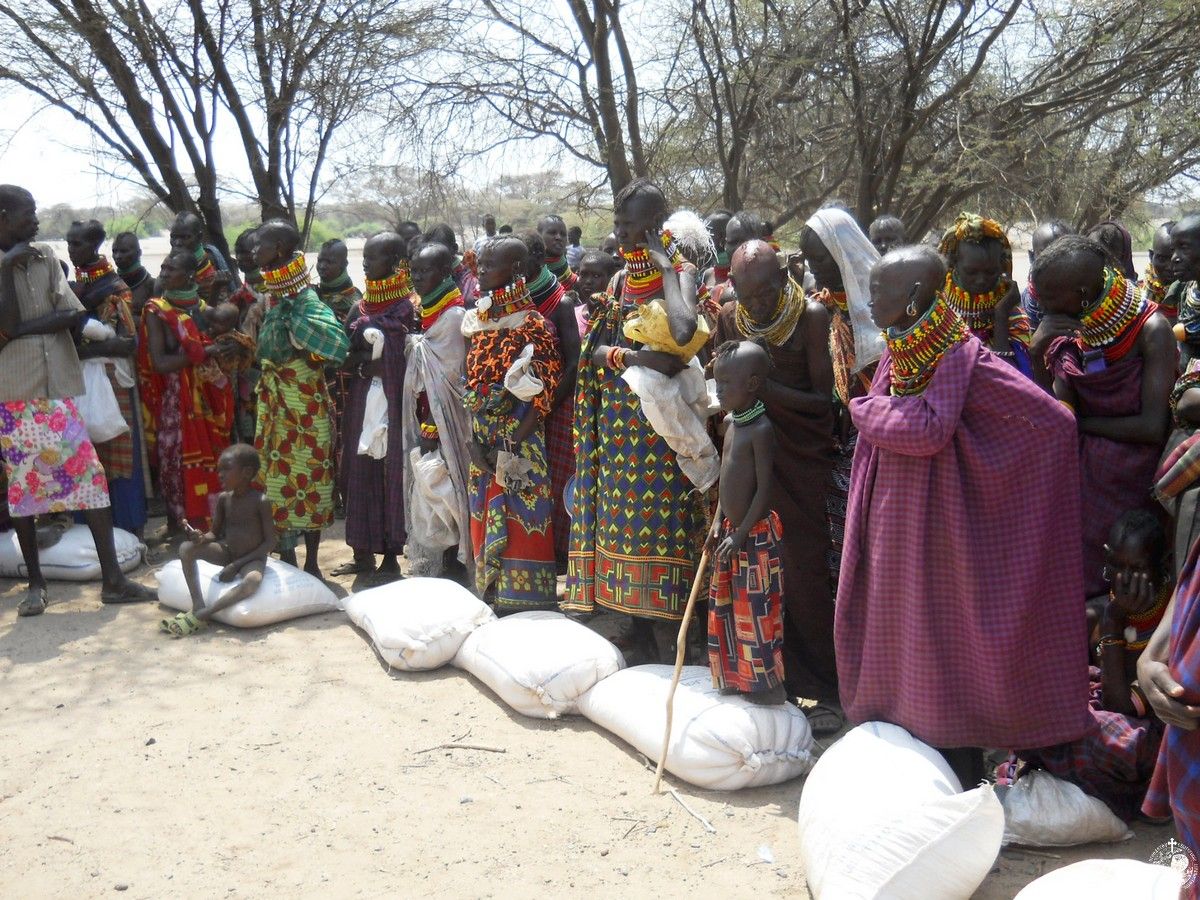
Like mana from heaven the white sacks full of grain fall from the skies onto the dusty plain, as hordes of children run after them. "We'll never get out of a mess like this", an African pastorialist states frankly.

Yet it is not just emergency aid that's under the microscope, long-term development aid projects in Africa have gone badly wrong; muddled thinking, failure and a desire to protect Western interests all undermining efforts. "The factory was useless and the white men were gone. And then the next famine came", a local says, describing what happened when Norwegian aid workers built a fish factory in Turkana. It was an ultra-modern factory, but totally unsuited to local requirements. With not enough electricity or water it closed down after 6 weeks.

Cyclical stories of 'the aid trap', dependency and NGO imperialism abound and it is puzzling how so many countries can commit so many resources to the problem with very little result. And as Professor Mamadou Diawara explains to us the cost of this failure isn't landed on the Westerners: "This money isn't a gift. African countries put themselves in debt."

From an African perspective 50 years of aid history has only one striking conclusion: "Africa is a very rich place. We have enough people... we have enough culture, we have enough natural resources, and in our view, the development of Africa can only be achieved by Africans".
 

You can see also

An Orthodox Christian parish in Turkana desert
Approaching the Turkana tribe
The Orthodox Church in Kenya & the Orthodox Patriarchal Ecclesiastical School of Makarios III

Orthodox Mission in Tropical Africa (& the Decolonization of Africa)
The Orthodox African Church (Patriarchate of Alexandria) denounces the exploitation of Africa by contemporary colonialists

The Sins of a Nation
«African needs to be helped, to find his divine roots, for his soul to be at peace, to become united with God...»
 
How “White” is the Orthodox Church?  
Eight principal areas of convergence between African spirituality and Ancient Christianity
The Church as the Liberated Zone: "All we Christians are terrorists..."
The Kingdom of Heaven, where racial discrimination has no place   
"THE WAY" - An Introduction to the Orthodox Faith 

Is capitalism compatible with Orthodox Christianity?
Grace and “the Inverted Pyramid”


Πέμπτη 14 Δεκεμβρίου 2017

Turkana - A Journey of Faith


Orthodox Missions

The Orthodox Christian Mission Center has been commissioned by the Assembly of Orthodox Bishops of North and Central America to help Orthodox Christians to make disciples of all nations. Among the Turkana of Northern Kenya, OCMC's ministries have helped welcome hundreds of people into the Body of Christ. For more information please visit www.ocmc.org or call the Mission Center at 1-877-GO-FORTH.
 
See also
 
Turkana, or "With God, All Things Are Possible"...
Kenya: a dance from orthodox Turkana girls / ngoma kutoka orthodox Turkana wasichana !...
An Orthodox Christian parish in Turkana desert
Approaching the Turkana tribe
The Orthodox Church in Kenya & the Orthodox Patriarchal Ecclesiastical School of Makarios III
Orthodox Mission in Tropical Africa (& the Decolonization of Africa)

The What Where, When, and Why of Orthodox Missions
Orthodox Kenya
Orthodox Mission
Serving the Least of the Brethren: the Missionary Work of "Orthodox Africa"!
Orthodox Christian dialogue with Banyore culture
Hope for the Kikuyu (Kenya) / "The caves along the Tana River became the refuge for freedom fighters..."

Παρασκευή 24 Φεβρουαρίου 2017

Turkana, or "With God, All Things Are Possible"...


Turkana man and children
 
Salawe was Turkana. A tall, thin and wiry man, dressed in a traditional colorful cloth that draped over his shoulder, he held an aura of authority and power. He was strong, in his sixties, and not only the leader of the remote Africa desert village, but also its Shaman. His influence was evident and seen in the respect and deference given to him by the people who turned to him for healing and prophecy. On one hot February day, Salawe sat across from a group of nine Americans and three African Orthodox clergy. Locked in a powerful and magnetic gaze with the group’s leader, they discussed Orthodox Christianity and bringing this new religion to his village, which still adhered to traditional beliefs.
The sun beat down mercilessly on the group who sat on the dry, sandy ground. Even in the shade of the Acacia tree the temperatures were above 100 degrees, and sweat trickled down their bodies. The air was still but charged with an electric presence. Something powerful and otherworldly was taking place. I was the group leader who was locked in this gaze with the shaman.
Looking back with amazement, I’ve asked myself: “How did this come to be? How did a group of people, so foreign and far removed from this isolated desert region, travel across the globe to sit in front of the local religious leader and engage in the deepest of conversations to introduce Jesus Christ and the Orthodox Church?”.
At one level, the birth of this encounter began when Jesus Christ entrusted His followers and the Church to carry on His mission. At another level, the encounter was a product of OCMC’s striving to reach for the most pertinent goals of this mission. At yet another level, it was the result of people allowing themselves to be stretched for God.
Fr. Martin Ritsi (from here)
Jesus, as He ascended into heaven, gave the marching orders for the Church: “Go therefore and make disciples of all Nations…” (Matt 28:19-20). This was not presented as an option or an aside, but rather as the final message delivered to the Apostles prior to His ascending into heaven.
Today, 1/4 of the world’s population (over 1 billion people) still have not heard the Gospel message, nor have they had the opportunity to accept Jesus Christ or to join the One, Holy, Catholic and Apostolic Church. The Turkana desert region of northern Kenya is one of those places. OCMC, as it strives to move forward and answer the call to missions in finding and reaching those who have never heard, had been guided to this special moment.
At the same time, being with the Turkana and meeting Salawe involved a willingness to stretch ourselves for God on the part of OCMC, myself, the Team that was there with me, the local Orthodox clergy, and maybe Salawe too!
The plan evolved after an exploratory visit to the area in 2009, when I sat with the local clergy from Lodwar and we began to dream about the growth of Orthodoxy among the Turkana. What could OCMC do in this area? Of course we could build a church or dig a well, or help with a school or address medical needs. But, we wanted to go further and dream about how we could stretch ourselves to get involved in a way that would directly help to spread the Gospel (in addition to these other methods) to the many people who had not yet been introduced to Christianity.

 
Turkana woman and girl

What resulted from our meeting was the idea to assemble a team of seminarians that would return to this area to interact with the newly illumined Christians, living as close to them as possible, sleeping in their remote villages and teaching under the local trees. In addition to reaching those who have newly joined the Church, somehow, the group would be brought to a village where Christianity had not yet been presented. Somehow…we didn’t know how…but somehow we would pray and stretch ourselves to make this happen. The Team developed and was comprised of a priest and his wife, four seminarians, a professional photographer and graphic designer, OCMC’s Communications Director, and myself. Together, we traveled to the Turkana region of Kenya and conducted retreats with the men, women, and children of four different villages. There was time of worship, teaching, and celebration.
Our trip had been so packed from moment to moment that we had little opportunity to think each day of what we would do next. Toward the end of the trip, this goal of reaching out to a village that had not heard about Christianity was approached. The night before, we sat outside under the stars beside a traditional grass hut. I asked Fr. Zachariah, our Turkana Orthodox priest from the area, “Father, you’ve said everything is lined up for the group to present Christianity in a new village tomorrow. Tell me, now, a little more of what you are thinking.” 

Fr. Zachariah proceeded to explain how the next day the Team would all travel to a village deeper in the desert. There, we would be introduced to the local “magic” man. This man was a key to being able to preach Orthodoxy there. If we could get his approval to allow the Church in his village, then Father Zechariah believed he could return later and have great success. If, on the other hand, the Shaman didn’t give permission, it would be extremely difficult to try and work there. Father Zechariah then added, “What I am hoping is that you, Fr. Martin, will approach him on behalf of all and get this permission for us.”
“Wait a second, Fr. Zachariah! That’s not quite what we had been thinking!!! What kind of ‘magic man’ is this? Does he do ‘good’ magic or does he also send curses on people? I thought we would be doing some sort of Team skit or presentation to a group of people who would come out to listen to us.” Fr. Zachariah reaffirmed the importance of reaching the Shaman, and as he pondered on the type of ‘magic’ he did, he said that Salawe was well respected and involved in things like healing or prophecy, but not in cursing or harmful things.
All I could think at the moment was, “Oh, no, what have we gotten ourselves into!”. But this was where the Lord had led us. Bringing His message to the world is not an option, or something to be done only when it is safe, or sure, or comfortable. And most importantly, He has promised that we are not alone when we give ourselves to serving Him. 

When Jesus directed the Apostles, and through them the Church, that they were to go make disciples of all nations, He concluded that commission by assuring them: “And lo, I will be with you always, to the end of the age” (Matt. 28:20). In fact, they were instructed to wait in Jerusalem until the Holy Spirit had come upon them to empower them for this task. At another time, when they were questioning whether salvation was possible, Jesus again assured them: “With men this is impossible, but with God all things are possible” (Matt. 19:26). Left to our own power, that which is possible is very limited, but with God all things can be accomplished, as can be seen with what followed in our meeting with Salawe.
The next morning we woke up early, packed our things, and jumped into the four wheel drive vehicles we had rented to bring us across the sands of this forgotten corner of the world. Ten minutes later, we sat looking across a quarter mile of flowing river that blocked our way. The night before, and for the last year, the river had been completely dry. The Turkana region had been in a time of serious drought, and the waters that seasonally flowed through this riverbed had ceased long ago, so that the people were suffering from a lack of water. As one would expect, in a dry desert region the coming of water is acknowledged as a blessing from God. Overnight, distant rains had caused the riverbed to fill, which was a great relief to the Turkana people. But now, this blessing stood between us and the only way to reach Salawe’s village! 
 
We were determined to carry our mission through, and it wasn’t long before a testing of the waters with a long stick revealed that the water was not too deep, and that the current was not more than anyone could wade through. If the river didn’t rise any further, we would be OK to cross and then strike out on foot to find the village. Making the crossing was actually refreshing, and our wet clothes helped to keep us cooler as we hiked through the scorching desert. An hour later, after a few stops to pull long acacia thorns from our shoes and sandals or to get our bearings, we arrived at the outskirts of the village.
Again, however, it seemed our plans would be thwarted. Salawe was not there. When he heard that the river was flowing, he assumed we would not be able to cross and he had left early that morning with his herd of animals to care for them. A messenger was sent to try and find him, and we all sat down on the dusty ground to wait, hoping he would arrive before we had to begin our return journey to Lodwar town.
Another hour later, as we sat chatting under a tree, a lone man strolled up to our group. It was Salawe! He greeted us warmly, and then we all sat back down on the ground together before him, as if we were in a formal reception hall being hosted by a dignitary for a special meeting.
As Fr. Zachariah began the discussion, though, something began to happen. I can only explain it as the presence of the Holy Spirit descending and connecting our souls. The conversation continued, and because we didn’t speak each other’s language, Fr. Zachariah and Fr. Vladimir (another Turkana Orthodox priest from Lodwar) were translating. But somehow, there was a presence that held us together; there was a communication taking place so much deeper and more intense than words could ever express. Our eyes were intently locked together, peacefully, as the conversation and words came from and around us.
I was moved to tell Salawe that God had brought him a message today and that it was God who wanted us to meet. The old man answered, “I know,” with a smile of joy on his face. “I was tending my herd,” he continued, “and didn’t think you would be coming, when suddenly, God spoke to me and told me that you were here. I started back immediately and halfway back I met the messenger you sent. But I didn’t need the messenger, because I was already on my way!” 

We continued our conversation, and I discussed, in brief, the Faith and our Church and finally said that we had come to seek his permission to bring this religion to his village through Fr. Zachariah, who would return later. But not only did we want to bring this to the people in his village, we wanted him to consider becoming Christian. Immediately and without hesitation he replied, “Of course. I can feel that what you have is good. Yes, my answer is yes.” At that moment I realized that the intensity of how we had been engaged was mutual. Just as I had been feeling a powerful connection to Salawe and could see into him beyond the words we were speaking, he too was being granted something special during our communication.
To have set a goal to hold a meeting in a remote desert with the religious leader of a traditional tribe of people who have had little connection with the Western world and to hope that this meeting would result in that leader warmly embracing the invitation to receive Christianity into his village was daunting in itself. If all we could see was this task and what could be accomplished by our own talents and ability, it might seem impossible, and we could be tempted to shy away from it. But in our lives we are not alone, especially when we step forward and stretch ourselves in the Lord’s name to do His will. Our God can fill a river that has been dry with water overnight. Our God can speak to people and send them divine messages. Our God can come upon us and help us to see, to understand and discern in miraculous ways. 
 

We have been entrusted by our Lord to carry the Gospel and make disciples of all peoples. So many have yet to believe, and over a billion people have yet to even hear the message for the first time. How can we hope to make a difference? Can we, coming from our particular backgrounds and with all the struggles and limitations around us, dare to hope, dream, or strive to be messengers of Him who is, who was, and who is to come? This task is something that OCMC is striving to apply itself to more fervently. As we review all that has been accomplished throughout the past 25 years of missions by the Orthodox in North America, we can see that a foundation has been laid, but the needs remain great. We are looking ahead and stretching ourselves to go forward and to go deeper, not only in ways according to the abilities that we know we have, but in ways that may seem beyond what we are capable of.
Likewise, in our own personal lives there is a lesson to be learned from how God intervened in reaching Salawe. Not only is it OK, but we all need to be willing to dream and to stretch ourselves for God as we reach out in mission to the far corners of the world in our nation, in our cities, in our parishes and even within our families and in our daily lives. Alone we are weak, but with God all things are possible.
"Do not pray for easy lives; pray to be stronger people.
Do not pray for tasks equal to your powers; pray for powers equal to your tasks.
Then the doing of your work shall be no miracle, but you shall be a miracle."
(Phillips Brooks)
 
Click:

Τετάρτη 29 Ιουνίου 2016

2016 Kenya Youth Work Team


Orthodox Christian Mission Center

Traveling From: 8/20/2016 to 8/30/2016; Team Cost: $1315*

KISUMU, KENYA – Participate in a youth leader retreat in Nandi, Kenya this summer and be inspired by and encourage the dynamic youth leaders. One thousand youth have been invited from over 500 parishes for this Archdiocese national event, which will be held in the newly established Diocese of Kisumu and Western Kenya.


The 2016 Kenya Mission Team has been invited by His Grace ATHANASIOS Bishop of Kisumu and West Kenya [photo, from here] to participate in a four-day youth leader retreat. The retreat will focus on providing a deeper understanding of youth ministry, teachings on the Faith and evangelism. The Team will offer encouragement to youth leaders who come from large cities and rural villages.

At the end of 2015, Fr. Athanasios was elevated to Bishop by His Beatitude THEODOROS II, the Patriarch of Alexandria and All Africa. In his speech at his enthronement, the Patriarch said: “The hour of missions in the vast and great country of Kenya “has indeed come”. The fullness of time has arrived; the time of sowing has come as has the time of reaping. Teach them to love Christ’s name above all.” The Diocese of Kisumu and Western Kenya includes over 18,000 faithful, 200 parishes and 100 clergy. It is made up of four different tribes: Luhya, Luo,
Nandi and Turkana. About 9% of Kenya’s population belongs to peoples only marginally impacted by the Gospel, but a large number of people have been exposed to the Gospel.

 
Orthodoxy arose in East Africa without the influence of foreign missionaries. The Church was founded by two charismatic African men searching for truth and ‘orthodoxia’ in the 1920’s. The Orthodox Church in Kenya was received into canonical Orthodoxy in 1946, and the Makarios III Patriarchal Seminary was opened in the 1980’s to train indigenous priests from Africa. OCMC has supported the work of the Orthodox Church in Kenya for over 30 years and continues to provide support for theological and catechetical training, and works with church leaders to address issues of self-sufficiency for the church. Presently, the Church in Kenya has three hierarchs, His Eminence Archbishop MAKARIOS of Kenya, Bishop NEOPHYTOS of Nyeri and Mount Kenya Mount Kenya, and Bishop ATHANASIOS of Kisumu and Western Kenya.

Share the teachings of the Orthodox faith and be a part of laying the foundation of the Faith for many. Be a part of this dynamic youth outreach of the Church in Kenya. Participants should be well-grounded in the basic teachings of the Church and prepared to offer basic Orthodox catechism, religious education and youth outreach.

Dates: August 20 - 30, 2016, Cost: $1,315 (+ airfares)

Travel – Members make flight arrangements: a one-way domestic flight to Jacksonville, FL (JAX) Saturday, August 20 (by 4 pm for orientation). Team Members are to fly on the itinerary schedule that OCMC provides for the international flights: depart from JAX for Kisumu, Kenya on Monday, August 22; and depart Kisumu, Monday August 29. Airfares and visa are not included in participation cost.

Fund raising - Each Team member is responsible for the participant cost and airfares. Team members raise funds to cover the cost of their participation. Participants are encouraged to let others know that they will be sharing in the work of missions through their tax-deductible donations, and invite others to participate through prayer and financial support. The cost includes room and board, local transportation, orientation costs, ministry expenses, excursion and materials.

Share in a journey of faith… Orthodox Mission Team members are challenged to view the world with God's eyes and seek how He wants to use them to fulfill His plans. This cross-cultural experience, combined with outreach, offers participants a life-changing learning experience. This experience is about people, culture and missions. It is also about prayer, for you and others; it is about God, those you serve, and about yourself, as you serve Him.

Δευτέρα 11 Ιανουαρίου 2016

Spiritual and Social Education & help to the weak in the Orthodox Church of Kenya


Orthodox Missionary Fraternity

Spiritual and Social Education

Last week, with God’s help we had the great blessing to declare the beginning of the new academic year at the Orthodox Patriarchal School “Archbishop Makarios the 3rd”,which has been operating since1982.Thirty years of continuous offer and strong presence of the Lord among us.
During the Divine liturgy the choir of the Patriarchal School sang melodiously in Greek, English, Swahili, and in other local dialects. This year the School has 50 seminarists coming from Kenya and other African countries: Madagascar, Zambia, Malawi, Tanzania, Mozambique, Zimbabwe.

The Kenyan seminarists belong to the following tribes: Kikuyu, Nandi, Luo, Luyia, Maasai, Turkana, Kamba. Among the various activities of the School there is one of utmost importance, the translation project of the liturgical books, services, and mysteries into the local dialects, not only of Kenya, but also of the other African countries, too. So far over 250 different books have been released in more than thirty dialects.
In the same place which hosts the Patriarchal school, there are also the Technical School with 700 students (male and female), the Orthodox College of Africa with 400 students (male and female), the Schools of Sewing, Computer Science, Social Studies, the Kindergarten and the Primary school of Saint Clement, with 450 poor children who are offered free of charge studies and on a daily basis breakfast and lunch, stationery, uniform and medical treatment.
Our Primary School was characterized the best and most perfect among thirty other primary schools of the district. All the teachers there are graduates of our local Orthodox Pedagogical School. The six best students who graduated last year are now in the first grade of one of the 15 junior high schools at the Diocese of Kenya.
In addition, there are 30 kindergartens and primary schools and 15 junior high schools. In most primary schools, there is free breakfast and meal on a daily basis.
It is worth mentioning- that in our school the services of matins and vespers are conducted daily, while every Friday there is Divine Liturgy. Especially at the Patriarchal School there is Divine Liturgy, vespers and compline after dinner on a daily basis. This way, the children and the young are spiritually reborn and reformed.


Outdoor catechism

Giving a helping hand to the weak

Equally important is the contribution of the Church as regards the field of orphans. Thanks to it, nowadays there are 3 orphanages operating in different regions, offering board and lodging, education etc. Here as well the daily schedule includes the Orthodox Christian Faith, since our priests participate actively in the children’s daily life through the services and also through teaching.
As regards the field of health, the participation of the local Church is intense. For this purpose, there are medical centers operating in most of the parishes, especially in the remote regions, where there is free medical treatment thanks to the frequent visits of the volunteer doctors who come from Greece, Cyprus, America, Finland, Netherlands, or even from far-off Australia. Quite often, for serious cases that require operation, the Diocese undertakes all the necessary expenses on credit and after a special agreement with the Coptic Hospital of Nairobi.
His Grace often tours in the country and gives out clothes, shoes, stationery and books as well as food to the destitute, irrespective of race or religion. There are also areas which have been plagued by the civil war and keep asking for continuous support and help. In this case there is bed and blanket distribution.
The Diocese, in cooperation with local and international organizations, is fighting at the front for stifling the plague of AIDS. There are special seminars particularly illuminating for the young held by speakers who are experts on this subject.
Among the various programs, it is important that we mention the way the catechists are trained, which has been operating like that for 25 years. Every Saturday young men and women gather from the parishes of Nairobi and the outskirts and are taught for two years lessons for teachers-catechists from the professors of the Patriarchal School. The same program is operating in other regions of Kenya as well.
A considerable part of the inhabitants, especially those from the schools in remote areas, lack clean, drinkable water and electric power. For this reason, the Diocese is pretty active in both these fields by undertaking the drilling of wells in barren areas so that the inhabitants and the school children are no longer deprived of water.


Welcoming Archbishop Makarios

There are also organized teams of young men and women, mothers and fathers who hold regular gatherings with educational classes, seminars of orthodox spirituality, music performances, song festivals, traditional dances and athletic events.
These are the most important happenings that are taking place within the vicinity of our Diocese.
Asking for your prayers and your good thinking.

From the Holy Diocese

See also

Some child-advocacy ministries of Orthodox Church in Kenya, Uganda & Sierra Leone...
African Orthodox Church of Kenya
 
The three orthodox christians hierarchs of Kenya 
3 Orthodox Dioceses in Kenya...

Πέμπτη 5 Νοεμβρίου 2015

An Orthodox Christian parish in Turkana desert


On Sunday, June 22, 2014, the Metropolitan Makarios of Kenya consecrated a new church, dedicated to Apostle Peter, according to the will of American donors.
As you know, in this region mostly inhabited by Africans of the Turkana tribe, the Orthodox Church of Kenya has undertaken a huge missionary and evangelical work for years. Fr. Makarios led this campaign of love and outreach, traveling from as long away as two days far to reach there, where the big lake Turkana lies, bordering with Somalia and Ethiopia. He performed the first group baptisms in the big lake and then he appointed as catechists some graduates of the Patriarchal School, who then were ordained and today they serve in various parts of the region. The four priests work very successfully, since they are pious, faithful, zealous, humble and enthusiastic; thus they were able during this period to make such a wonderful work; thus the parishes increased and the faithful multiplied all over Turkana region.

Turkana

After the Sunday consecration, Fr. Makarios laid the cornerstone for the third church, dedicated to St. Nicholas. There operate primary schools and kindergartens and free food is provided to the children. Furtermore, there have been drilling projects and clean water is now provided to the inhabitants of the region. The Orthodox Christian Mission Center has decisively and exclusively undertook the development of the region. Groups of young adults and priests come regularly to catechize and help in the work of evangelizing the tribe.
All the priests of the region as well as others from America and Nairobi participated in the consecration. It was a special day for Turkana, since the church was built in the midst of nowhere, but there are many who have been exhaustively catechized and converted to Orthodoxy.

The biggest problem plaguing this desert area is the constant drought. When His Eminence first visited the region to perform the first group baptisms, he wasn’t able to do so, because the lakes and rivers had dried out. In fact, once the people were in despair because of the aridity, he blessed the water and read special prayers. Then, God rained so much water that the lakes and rivers overflew and people asked the bishop to tell the God he believed in and had prayed to, Who listened to their prayers and did the miracle, to stop, because the place had gone flooded. “We asked for water but that’s too much”, they told. Blessed be the name of God!
Conclusively, this recent visit proved that our priests of the Turkana tribe work with exemplary zeal, deep faith and absolute devotion. The work of the Lord and Orthodoxy is promoted and the primitive tribe of Turkana is pronounced with the good news and a great joy.

The videos from wisconsin jones:


Photos from here:


Orthodox baptism


See also

Approaching the Turkana tribe
The Orthodox Church in Kenya & the Orthodox Patriarchal Ecclesiastical School of Makarios III  
Orthodox Kenya (tag)
"THE WAY" - An Introduction to the Orthodox Faith

Approaching the Turkana tribe


Orthodox Missionary FraternityKenyaDiocese of Kenya (the map from here)

From the Holy Metropolis of Kenya 

Small Map of KenyaI always remember with the best of thoughts and feelings the time, when I first walked on the holy land of Africa in 1977. My meeting with the people and the rich culture of the Turkana tribe was a revealing experience.

This ethnic group consists of nomadic herders that live at Rift Valley Province in Kenya, in the region of Lake Turkana, a long and narrow lake on the border between Ethiopia and Sudan.

They speak the Turkana language, which is a Nilotic language and similar to that of the Masaai. The people of this tribe, like the Samburu and Maasai, still hold on to their own traditions without wishing to change them at all.
 

Ethnological info
 

Background of this tribe

The Turkana tribe has its origins in the Karamojong region of north-eastern Uganda. Oral tradition has it that they reached Kenya, when hunting an untamed bull. The land they occupied is hard and arid. As a result, in comparison with other tribes, they were less affected by the English colonialism, because the British saw little value in their land. 


Culture and way of life

As is the case with all stockbreeding tribes in Kenya, livestock, mainly cattle, comprises the core of their culture. Its people live a nomadic life, always moving from one place to another.
 

Traditional Turkana dress

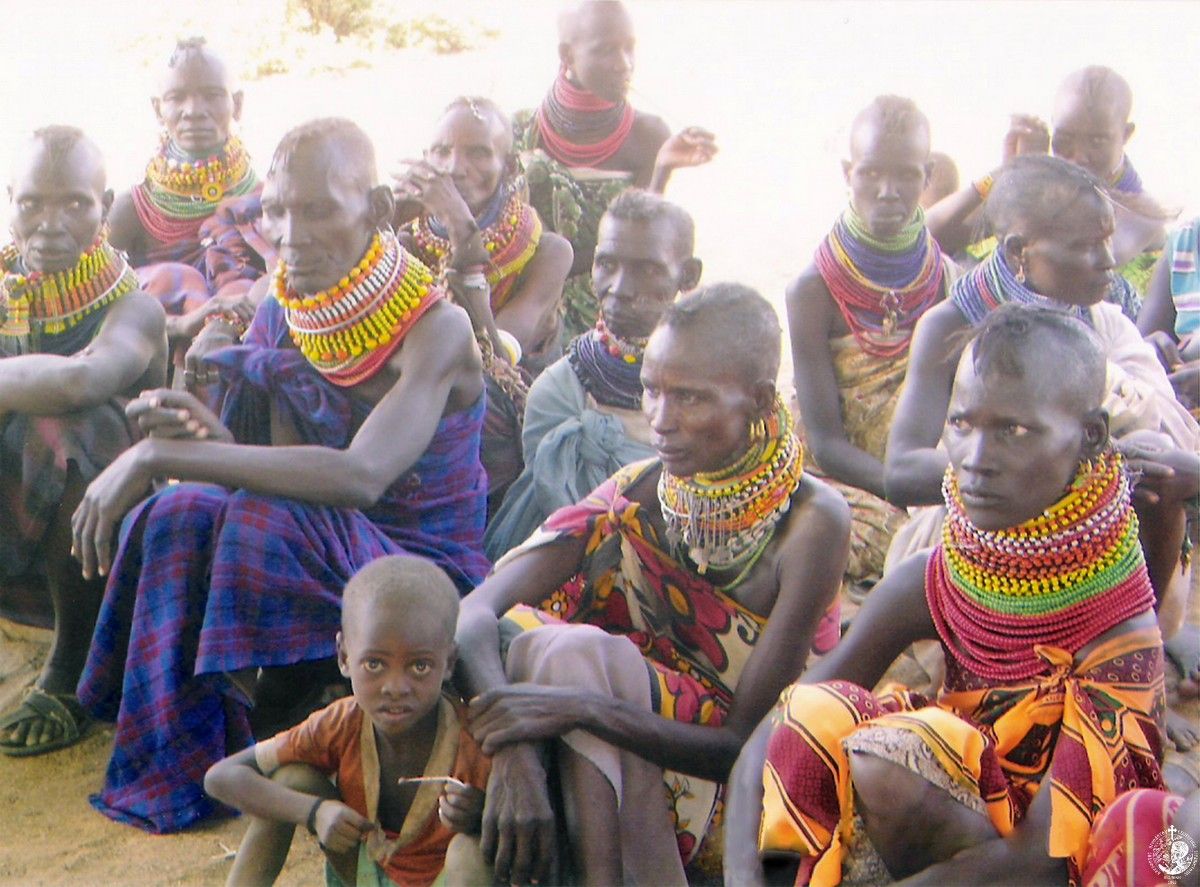
This tribe maintains a variety of colors regarding their emblems and clothing. The men dye their hair with a special colored soil, while the women are adorned with traditional jewelry and bead necklaces. The social status of a woman determines the quantity and style of the jewelry she wears. When setting eyes on a woman, a man can immediately discern her social status.


Art and Handicraft

Some of their most beautiful creations are the bangles and necklaces for women. The craftsmen of the tribe also make a large number of other handicrafts, such as spears, clubs and knives. They are characterized by their skillfulness in metal work, wood carving and stone carving.
 

Faith and Religion

Unfortunately, the majority of the Turkana are committed to their traditional African religion. They believe in a “god of the heavens”, whom they call “Akuj” or “Kuj”.They pray to him either directly or through the spirits of their ancestors. They usually invoke their god in periods of crisis or during natural disasters, like extreme drought. In the 1970’s, the first Orthodox missionary, who visited them, catechized and baptized them, was His Eminence the current Most Reverend Metropolitan Amphilochios Tsoukos of New Zealand.


Photo from here

Life today

Cattle still remains the main source of livelihood, especially in rural areas. Livestock provides food and can often be sold for money. Fishing in the lake is another important source of income for those who live nearby. Even though illiteracy rates are still high in the tribe, there are a small number of very well educated Turkana people who have joined other fields of the Kenyan economy.
 

Marriage

For women, marriage takes place in the first and main phase of their adulthood. Girls get married between 15 and 20 years old. They usually have a say in the choice of their husband. A wedding can last two days and is probably the most important event in the social life of the Turkana, with big ceremonies, dancing and merriment.


An Orthodox Turkana narrates

One quiet afternoon, I was walking to our church. Suddenly I saw a car moving towards the same direction. I realized it was the Metropolitan of Kenya and his entourage. His first question was to check out whether there was land available for the Orthodox Church to start its missionary work in that region. We showed him the land, and immediately his reaction was positive, saying that one day a beautiful Holy Church would be built there in the heart of that barren area of the Turkana, maybe a school and a medical center as well, in order to help the local people. And he added: I feel that God will open more doors here so that Orthodoxy can be established in this region.

Now we had to find a place for our guests to eat and sleep. This was a traditional local lodging, plain, humble and yet so privileged, for there was at least a bed and clean water for one to rest. His Eminence seemed to be pleased because he had managed to reach the most remote part of our country. 


Photo from here
 
The next day, the Divine Liturgy was conducted in a makeshift place. At least two hundred catechumens came to see and live firsthand the grandeur of our Orthodox worship. In the end, he announced enthusiastically that he would take with him the first catechumen, that is me, so that I would attend the Orthodox Teachers College and next the Patriarchal School. He finished his sermon explaining how important that day was to the whole of Orthodoxy since its message had reached the ends of the world.

Next he distributed food as the region is constantly struck by drought and my people suffers from hunger. He also wanted to perform the first christenings there but that was not possible due to the fact that the rivers and lakes had no water because of the big drought.

It is a great thrill for me that the true Church has arrived in our region, at last. Our bishop saw with his own eyes how our tribe lives, how thirsty it is and also how it sleeps. He became aware of the drought which plagues the area, the epidemics, the rough by dust and sand roads, the illiteracy and so many other problems and sufferings. We pray to God for help and ask Him to grant us the chance to see eventually a new Church rise and flourish through your love, patience, endurance and His miraculous intervention.


See also

An Orthodox Christian parish in Turkana desert
The Orthodox Church in Kenya & the Orthodox Patriarchal Ecclesiastical School of Makarios III 
Orthodox Kenya (tag)