The Orthodox Metropolitan of Kambala & all Uganda Jeronymos delivering the Pascal (Easter) message of Pope and Patriarch Theodoros II of Alexandria and all Africa.
Uganda Orthodox Church - Holy Metropolis of Kampala (ελληνικά εδώ)


The Orthodox Metropolitan of Kambala & all Uganda Jeronymos delivering the Pascal (Easter) message of Pope and Patriarch Theodoros II of Alexandria and all Africa.
Uganda Orthodox Church - Holy Metropolis of Kampala (ελληνικά εδώ)

By Fr. Stephen Freeman
Source: https://blogs.ancientfaith.com/
script of the homily by the reposed Elder Athanasios Mytilineos (1927 - 2006)
The Church is the Cross through History.
St. Paul wrote that he had determined to restrict his preaching to the Cross. (1 Cor. 2:2)
This was not an effort to diminish the gospel. Rather, it was an effort to rightly understand the gospel. One of the great temptations of Christianity is to allow itself to become a “religion,” that is, to serve whatever role that religions of any sort play within a culture and the life of an individual. Despite every atheist protestation, religion abides – and if there is not one that is inherited, then a culture will invent new ones.
St. Paul’s concentration on the Cross – Jesus Christ crucified – was a direct affront to religion itself. To understand this, though, requires that we see the Cross for what it is. Christianity as religion reduces the Cross to a moment in time, a historical moment that is celebrated for its importance. On the Cross, Christ died for our sins. This simple statement, however, can itself be reductionist. “Christ died, I’m forgiven, now I can get on with my life.” St. Paul has something very different in mind. He says:
“I am crucified with Christ, nevertheless, I live. Yet not I, but Christ, lives in me. And the life that I now live in the flesh, I live by the faith of the Son of God, who loved me and gave Himself for me.” (Gal. 2:20)
The Cross is more than the single event in the life of Christ. It is the single event for every believer, lived moment by moment, at all times and all places. It is the very center of our being.
In Holy Baptism, we are not merely “joining the Church,” nor are we merely “washing away our sins.” Holy Baptism is not a rite of membership. Rather, Holy Baptism is being plunged into the death of Christ (Romans 6:3) and raised into the likeness of Christ’s resurrection. Believers are given a Cross to wear as part of their Baptism – a token to remind us that our new life is nothing other than living in union with the Crucified Christ.
That reality informs the commandments of Christ. We forgive our enemies because Christ forgave His enemies on the Cross (“Father, forgive them. They know not what they do.”) We share what we have with others (in the Cross we can live as though we own nothing). It represents the definition of love: “Husbands love your wives even as Christ loved the Church and gave Himself for her.” (Eph. 5:25).
It is the abandonment of the Cross (or its redefinition as “religious” event) that betrays the Church and its primary identity. It was inevitable, it seems, that the Church would eventually become the “religion of the empire.” It is a position that Christianity, in nearly every form, has endured since the 4th century. There is, of course, a critique of Orthodox Christianity that its very essence was betrayed in the tolerance given by Constantine and his successors. I do not agree that the Church’s essence changed – but it would be dishonest to think that its essence was not tempted and tested. Some failed the test.
Power is an ever-present temptation in this world. It offers the notion that we can, by force (of arms or law), achieve our desired ends. That was true under emperors and tsars, and remains true within modern democracies. When Pilate questioned Jesus regarding the nature of His kingdom, Christ was very clear that His kingdom “is not of this world.” He adds that were His kingdom of this world – then His disciples would arm themselves and fight. That many Christians through the ages have imagined armed struggle to be an important element of the Christian life is a testament to our confidence in the weapons of this world and our lip-service to the Kingdom of God.
The Church is the Cross through history. The reality of the crucified life has never disappeared from among us. Before Constantine, God brought forth the movements of monasticism. While Bishops were facing the temptations of imperial blandishments, the monks and nuns were refuting every worldly option. At times, the presence of monastics created a tension within the Church. The crucified life is seen most clearly when it stands out against a background of worldliness.
I think that times of turmoil, such as we endure at present, have their own form of imperial temptation. We long for order, for normalcy, for stability. That longing can make us easy prey for the various solutions offered by the world. There is an interesting phrase in the Liturgy of St. Basil. The priest prays for God to “make the evil be good by Thy goodness.” The temptation within our hearts would likely rephrase that prayer – simply saying, “Make the evil be good.”
God has never offered us any solution other than the Cross. St. Paul readily admitted that the Cross appears to be “weakness” and “foolishness.” The Cross is a clown in a world of scholars. He nevertheless declares it to be the “wisdom and power of God.”
As we gather to recall Christ’s death on the Cross we should rightly recall the Cross within us. We should recall that the weakness and foolishness of God is the path we have been commanded to walk. If we tremble at the thought, even saying, “Let this Cup pass away from me,” then, it would seem, we will have gotten it about right.
The Church is the Cross through History. It is the only gate to Pascha’s paradise.

Orthodox Monastery atop rugged Meteora clff, Greece.


My Rafiki

Η γυναίκα της Αφρικής
φροντίζει για όλους και για όλα...
Λόγω του κόστους της εκπαίδευσης στην Αφρική και της δυσκολίας να ανταποκριθούν οι γονείς, σπάνια πληρώνουν για τη μόρφωση των κοριτσιών (κυρίως στα χωριά), προτιμώντας να πληρώνουν για τη μόρφωση των αγοριών... με αποτέλεσμα οι περισσότερες γυναίκες να μένουν αναλφάβητες.
Συνήθως παντρεύονται από την ηλικία των 14 ετών και μετά.
Η μέρα της ξεκινάει πολύ πολύ νωρίς το πρωί, πριν την ανατολή του ηλίου.
Ξεκινάει μια καθημερινή διαδρομή στο ποτάμι ή στο πηγάδι για τη μεταφορά του νερού σε ασήκωτα μπιτόνια, τα οποία αρκετές φορές κουβαλούν στο κεφάλι..
Μια διαδικασία επίπονη που πολλές φορές απαιτεί ώρες περπάτημα..
Αναζητάνε ξύλα για ν' ανάψουν φωτιά για την προετοιμασία του φαγητού.
Σε κάποιες χώρες όπως στο Κονγκό, πολλές γυναίκες δουλεύουν σε φυτείες... το αντάλλαγμα?? λίγα ξερά ξύλα ή τροφή...
Φροντίζουν τα παιδιά τους και μετά ξεκινάνε τη διαδρομή για τα χωράφια όπου δουλεύουν σκληρά... τα οποία πολλές φορές βρίσκονται σε μεγάλη απόσταση από το χωριό.
Επιστρέφοντας στο σπίτι, μετά από μια πολύ κουραστική μέρα στα χωράφια, μαγειρεύουν για όλη την οικογένεια και κάνουν τις δουλειές με τη βοήθεια των κοριτσιών τους... αν έχουν.
Η καθημερινότητα τους είναι ιδιαίτερα δύσκολη, επωμίζονται το βάρος της οικογενειακής φροντίδας, της οικιακής και αυτό της εργασίας.
Η γυναίκα της Αφρικής συνήθως μένει στο περιθώριο και έξω από τα κέντρα λήψης αποφάσεων... (είτε μέσα στην οικογένεια, είτε στον κοινωνικό και πολιτικό χώρο).
Στερούνται στοιχειώδη δικαιώματα..
Σε κάποια αφρικανικά κράτη όμως όπως η Ζιμπάμπουε, η Αγκόλα έχουν ιδρυθεί υπουργεία για τη "θέση της γυναίκας".
Η Ρουάντα επίσης έχει τον μεγαλύτερο αριθμό γυναικών βουλευτών παγκοσμίως.
Το μερίδιο των γυναικών εκπροσώπων στην βουλή της ήταν 61,3% τον Ιανουάριο του 2022.
**κάποιες πληροφορίες από το "demain le monde"
(Οι φωτογραφίες είναι από αποστολές μας στην Ουγκάντα, Ρουάντα και Μπουρούντι).
Περισσότερα...
https://www.facebook.com/myrafikigr
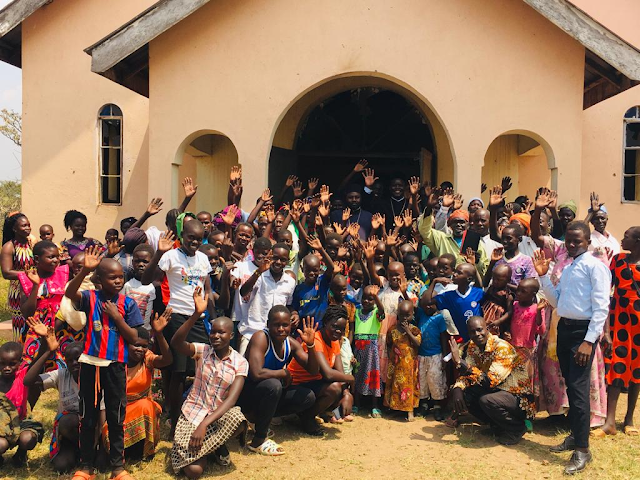
Forgiveness Sunday, also called Cheesefare Sunday, is the final day of pre-Lent. It is the Sunday after Meatfare Sunday and the Sunday before the Sunday of Orthodoxy.
On this last Sunday before Great Lent, the last day that traditionally Orthodox Christians eat dairy products until Easter, the Church remembers the expulsion of Adam and Eve from Paradise. God commanded them to fast from the fruit of a tree (Gen. 2:16), but they did not obey. In this way Adam and Eve and their descendants became heirs of death and corruption.
On Forgiveness Sunday many attend Forgiveness Vespers on the eve of Great Lent. They hear on the Lord's teaching about fasting and forgiveness and enter the season of the fast forgiving one another so that God will forgive them. If you forgive men their trespasses, your heavenly Father will forgive you; but if you do not forgive men their trespasses, neither will your heavenly Father forgive you your trespasses (Matthew 6:14).
The Gospel reading of the day also gives advice on fasting. Moreover, when you fast, do not be like the hypocrites, with a sad countenance. For they disfigure their faces that they may appear to men to be fasting. Assuredly, I say to you, they have their reward. But you, when you fast, anoint your head and wash your face, so that you do not appear to men to be fasting, but to your Father who is in the secret place; and your Father who sees in secret will reward you openly. (Matthew 6:16-18).
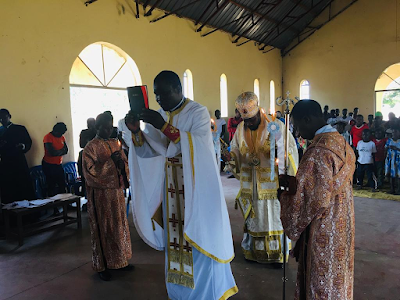
The Rite of Forgiveness
After the dismissal at Vespers, the priest stands beside the analogion, or before the ambon, and the faithful come up one by one and venerate the icon, after which each makes a prostration before the priest, saying, "Forgive me, a sinner." The priest also makes a prostration before each, saying, "God forgives. Forgive me." The person responds, "God forgives," and receives a blessing from the priest. Meanwhile the choir sings quietly the irmoi of the Paschal Canon, or else the Paschal Stichera. After receiving the priest's blessing, the faithful also ask forgiveness of each other.
Sunday of Cheesefare: Expulsion of Adam from Paradise

As we begin the Great Fast, the Church reminds us of Adam’s expulsion from Paradise. God commanded Adam to fast (Gen. 2:16), but he did not obey. Because of their disobedience, Adam and Eve were cast out of Eden and lost the life of blessedness, knowledge of God, and communion with Him, for which they were created. Both they and their descendents became heirs of death and corruption.
Let us consider the benefits of fasting, the consequences of disobedience, and recall our fallen state. Today we are invited to cleanse ourselves of evil through fasting and obedience to God. Our fasting should not be a negative thing, a mere abstention from certain foods. It is an opportunity to free ourselves from the sinful desires and urges of our fallen nature, and to nourish our souls with prayer, repentance, to participate in church services, and partake of the life-giving Mysteries of Christ.
At Forgiveness Vespers we sing: “Let us begin the time of fasting in light, preparing ourselves for spiritual efforts. Let us purify our soul, let us purify our body. As we abstain from food, let us abstain from all passion and enjoy the virtues of the spirit....”
O Master, Guide to wisdom, / Bestower of prudence, / Instructor of the foolish, and Defender of the poor: / make firm my heart and grant it understanding. / O Word of the Father, / give me speech, for behold, I shall not restrain my lips from crying out to Thee: / "Have mercy, have mercy on me who have fallen."
Please read more about the meaning of this storytelling below.
1. The dogma regarding Creation
3. Existential consequences of the dogma on Creation
4. The consequences of man’s downfall
5. Christology
6. Salvation
7. Ecclesiology

Α. ON DOGMATICS AND DOGMAS
1. Definition – Sources – Content and Method of Dogmatics:
1a. Form and character of Dogmatics
1b. Dogmatics as Hermeneutics (Interpretational)
1c. The Dogmatics method
2. The term: «Dogma» and its significance
3. The affiliation of dogmas to the Holy Scriptures
4. The work of the Holy Spirit in the phrasing of the dogmas
Β. ON COGNIZANCE AND FAITH
I. On cognizance:
1c. Cognizance through the Son and Logos
II. On faith
C. ON GOD
2. Basic principles of Patristic teaching:
2a. Up to the Cappadocian Fathers
2b. The contribution of the Cappadocians
D. SUPPLEMENT
1. Discernments of the Cappadocians on the “being” of God:
1a. The “whatever”, the “what” and the “how” of God
1b. “Essence”, “energy” and “person”
2. The transferral of the terms “essence”, “Energy” and “Person” into Theology (The problem of freedom)
2a. The prerequisites of the Patristic Synthesis
2b. The contribution of the Cappadocian Fathers – The patristic notion of the person
2c. Augustin’s theology and the problem of the Filioque
2d. The theological problem of the Filioque
2e. The Filioque in Theology and in Providence
2f. The dogma of creation - the problem of Gnosticism
2f2. The correction of Platonic ideas by the Christian faith
Ε. ON CREATION, SALVATION, CHRISTOLOGY AND ECCLESIOLOGY
1. The dogma regarding Creation
3. Existential consequences of the dogma on Creation
4. The consequences of man’s downfall
5. Christology
6. Salvation
7. Ecclesiology
F. ECCLESIOLOGICAL TOPICS
2. Orthodox Ecclesiology topics:
2a. The eschatological identity of the Church
2b. “Therapeutic” or “Liturgical” Ecclesiology: the synthesis of Saint Maximus the Confessor - Questions
2c. The Trinitarian basis of Ecclesiology
2d. Imagery in ontology - Questions
2e. Formation and structure of the Church
2f. The Local and worldwide Church – The Synodic institution
3. Commentary on Western Ecclesiology
3a. The dialectics of “the one” and “the many”. The priority of a universal Church
3b. The problem of priority between Christology and Pneumatology (of the Spirit)
3c. History and Eschatology – Questions
G. ORTHODOXY AND WESTERN THEOLOGY
Texts by Rev. John Zizioulas (Addendum)
(Dogmatics – Therapy - Theology – Filioque – Ecclesiology – Christology – Pneumatology)
1 Introductory, basic characteristics of Western thought 1b. Western Ethicism and Dostoevsky 2. Theology and Providence (Oekonomia) in Western thought 2b. Sickness and healing in Orthodox Theology 3. The problem of the Filioque 4. The existential repercussions of the Filioque - Questions 5. Ecclesiology, Christology, Pneumatology
END
Lessons on Christian Dogmatics |
|
|
These are the notes that were taken from the lectures of Professor I. Zizioulas (current Metropolitan of Pergamus and Chairman of the Athens Academy) at the Poemantic Division of the Thessaloniki University’s School of Theology, during the academic year 1984-1985. They are published with the blessing and the permission of the reverend Metropolitan. The notes were published with the caring and the responsibility of the students, for use during their examinations. Aristotelian University of Thessaloniki Published by : Publication Services Because of its size, this series of Dogmatics will be presented by us in segments, in the hope that the entire text that we have in hand will be made available very soon. |
It is with immense joy, that we are hosts to this significant piece of work in our website. We consider this presentation an honor, and acknowledge the extremely significant opus of the reverend Metropolitan of Pergamus.
We are referring to the hand-typed notes of the reverend Metropolitan’s lessons at the University of Thessaloniki, which benefited us so much, that we wished to make them more broadly accessible.
It is our fervent desire that you study these notes, which exude the fragrance of the Orthodox faith and are delivered with scientific precision, in a simple and comprehensible manner.
We wish to thank with all our heart those who toiled and participated in the acquisition of these notes for us.
May the blessing of God and Father of our Lord Jesus Christ be with every person who seeks Him. |

