Κυριακή 26 Φεβρουαρίου 2023

Forgiveness Sunday, also called Cheesefare Sunday, the final day of pre-Lent in the Orthodox Church


Orthodoxwiki.org

Forgiveness Sunday, also called Cheesefare Sunday, is the final day of pre-Lent. It is the Sunday after Meatfare Sunday and the Sunday before the Sunday of Orthodoxy.

Significance of the day

On this last Sunday before Great Lent, the last day that traditionally Orthodox Christians eat dairy products until Easter, the Church remembers the expulsion of Adam and Eve from Paradise. God commanded them to fast from the fruit of a tree (Gen. 2:16), but they did not obey. In this way Adam and Eve and their descendants became heirs of death and corruption.

On Forgiveness Sunday many attend Forgiveness Vespers on the eve of Great Lent. They hear on the Lord's teaching about fasting and forgiveness and enter the season of the fast forgiving one another so that God will forgive them. If you forgive men their trespasses, your heavenly Father will forgive you; but if you do not forgive men their trespasses, neither will your heavenly Father forgive you your trespasses (Matthew 6:14).

The Gospel reading of the day also gives advice on fasting. Moreover, when you fast, do not be like the hypocrites, with a sad countenance. For they disfigure their faces that they may appear to men to be fasting. Assuredly, I say to you, they have their reward. But you, when you fast, anoint your head and wash your face, so that you do not appear to men to be fasting, but to your Father who is in the secret place; and your Father who sees in secret will reward you openly. (Matthew 6:16-18).
The Rite of Forgiveness

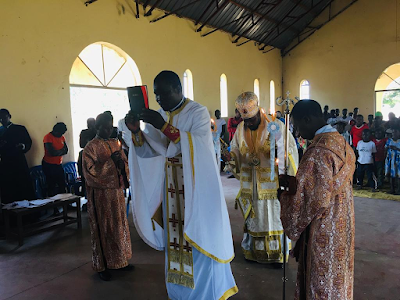
After the dismissal at Vespers, the priest stands beside the analogion, or before the ambon, and the faithful come up one by one and venerate the icon, after which each makes a prostration before the priest, saying, "Forgive me, a sinner." The priest also makes a prostration before each, saying, "God forgives. Forgive me." The person responds, "God forgives," and receives a blessing from the priest. Meanwhile the choir sings quietly the irmoi of the Paschal Canon, or else the Paschal Stichera. After receiving the priest's blessing, the faithful also ask forgiveness of each other. 

Sunday of Cheesefare: Expulsion of Adam from Paradise


Orthodox Church in America

As we begin the Great Fast, the Church reminds us of Adam’s expulsion from Paradise. God commanded Adam to fast (Gen. 2:16), but he did not obey. Because of their disobedience, Adam and Eve were cast out of Eden and lost the life of blessedness, knowledge of God, and communion with Him, for which they were created. Both they and their descendents became heirs of death and corruption.

Let us consider the benefits of fasting, the consequences of disobedience, and recall our fallen state. Today we are invited to cleanse ourselves of evil through fasting and obedience to God. Our fasting should not be a negative thing, a mere abstention from certain foods. It is an opportunity to free ourselves from the sinful desires and urges of our fallen nature, and to nourish our souls with prayer, repentance, to participate in church services, and partake of the life-giving Mysteries of Christ.

At Forgiveness Vespers we sing: “Let us begin the time of fasting in light, preparing ourselves for spiritual efforts. Let us purify our soul, let us purify our body. As we abstain from food, let us abstain from all passion and enjoy the virtues of the spirit....” 

O Master, Guide to wisdom, / Bestower of prudence, / Instructor of the foolish, and Defender of the poor: / make firm my heart and grant it understanding. / O Word of the Father, / give me speech, for behold, I shall not restrain my lips from crying out to Thee: / "Have mercy, have mercy on me who have fallen."

Please read more about the meaning of this storytelling below.

1.  The dogma regarding Creation  

2.  Creation from nil  

3.  Existential consequences of the dogma on Creation  

4.  The consequences of man’s downfall  

5.  Christology 

6.  Salvation

7.  Ecclesiology


Δευτέρα 6 Φεβρουαρίου 2023

Professor Metropolitan of Pergamus & Chairman of the Athens Academy John (Ioannis) Zizioulas (1931 - 2023), Lessons on Christian Dogmatics


Contents

Α. ON DOGMATICS AND DOGMAS

1. Definition – Sources – Content and Method of Dogmatics:

1a. Form and character of Dogmatics

1b. Dogmatics as Hermeneutics (Interpretational)

1c. The Dogmatics method

2. The term: «Dogma» and its significance

3. The affiliation of dogmas to the Holy Scriptures

4. The work of the Holy Spirit in the phrasing of the dogmas

5. The work of the Church in the phrasing of the dogmas

6. The prestige and the authority of the dogmas


 Β. ON COGNIZANCE AND FAITH

I. On cognizance:


          1a.    Cognizance of things

          1b.   Cognizance of God

          1c.    Cognizance through the Son and Logos 

          1d1. Cognizance in person  part 1: The element of Freedom

          1d2. Cognizance in person  part 2: The element of Love

II. On faith


C. ON GOD 

1. The biblical premises

2. Basic principles of Patristic teaching:


          2a. Up to the Cappadocian Fathers

          2b. The contribution of the Cappadocians

          2c. Augustine’s views

          2d. Discerning between "Theology" and "Providence"

          2e. Existential interpretation


D. SUPPLEMENT

1. Discernments of the Cappadocians on the “being” of God:


          1a.  The “whatever”, the “what” and the “how” of God

          1b.  “Essence”, “energy” and “person”


2. The transferral of the terms “essence”, “Energy” and “Person” into Theology (The problem of freedom)


          2a.   The prerequisites of the Patristic Synthesis

          2b.   The contribution of the Cappadocian Fathers – The patristic notion of the person

          2c.    Augustin’s theology and the problem of the Filioque

          2d.   The theological problem of the Filioque

          2e.   The Filioque in Theology and in Providence

          2f.    The dogma of creation - the problem of Gnosticism

          2f2.  The correction of Platonic ideas by the Christian faith

Ε. ON CREATION, SALVATION, CHRISTOLOGY AND ECCLESIOLOGY

1.  The dogma regarding Creation  

2.  Creation from nil  

3.  Existential consequences of the dogma on Creation  

4.  The consequences of man’s downfall  

5.  Christology 

6.  Salvation

7.  Ecclesiology


F. ECCLESIOLOGICAL TOPICS

Introduction

Questions

2.  Orthodox Ecclesiology topics:


      2a.   The eschatological identity of the Church

      2b.  “Therapeutic” or “Liturgical”  Ecclesiology: the synthesis of Saint Maximus the Confessor - Questions

      2c.   The Trinitarian basis of Ecclesiology

      2d.   Imagery in ontology - Questions

      2e.   Formation and structure of the Church

      2f.    The Local and worldwide Church – The Synodic institution  

      2g.   The functions of the Church Questions

         3.   Commentary on Western Ecclesiology


                3a.  The dialectics of “the one” and “the many”. The priority of a universal Church

                3b.  The problem of priority between Christology and Pneumatology (of the Spirit)

                        Ecclesiological consequences

                3c.   History and Eschatology Questions


G. ORTHODOXY AND WESTERN THEOLOGY

Texts by Rev. John Zizioulas (Addendum)

(Dogmatics – Therapy - Theology – Filioque – Ecclesiology – Christology – Pneumatology)

1    Introductory, basic characteristics of Western thought
1b. Western Ethicism and Dostoevsky
2.   Theology and Providence (Oekonomia) in Western thought
2b. Sickness and healing in Orthodox Theology
3.   The problem of the Filioque
4.   The existential repercussions of the Filioque  -  Questions  
5.   Ecclesiology, Christology, Pneumatology  


END

Lessons on Christian Dogmatics

These are the notes that were taken from the lectures of Professor I. Zizioulas (current Metropolitan of Pergamus and Chairman of the Athens Academy) at the Poemantic Division of the Thessaloniki University’s School of Theology, during the academic year 1984-1985.

They are published with the blessing and the permission of the reverend Metropolitan.

The notes were published with the caring and the responsibility of the students, for use during their examinations.

Aristotelian University of Thessaloniki

Published by :  Publication Services

Because of its size, this series of Dogmatics will be presented by us in segments, in the hope that the entire text that we have in hand will be made available very soon.

It is with immense joy, that we are hosts to this significant piece of work in our website.

We consider this presentation an honor, and acknowledge the extremely significant opus of the reverend Metropolitan of Pergamus.


We are referring to the hand-typed notes of the reverend Metropolitan’s lessons at the University of Thessaloniki, which benefited us so much, that we wished to make them more broadly accessible.


It is our fervent desire that you study these notes, which exude the fragrance of the Orthodox faith and are delivered with scientific precision, in a simple and comprehensible manner.


We wish to thank with all our heart those who toiled and participated in the acquisition of these notes for us.


May the blessing of God and Father of our Lord Jesus Christ be with every person who seeks Him.

Παρασκευή 13 Ιανουαρίου 2023

Επείγουσα ανακοίνωση για βοήθεια προς τον διάκονο της Ορθόδοξης Εκκλησίας στη Σιέρα Λεόνε. Emergency Call for the Deacon Emmanuel Coomber of Orthodox Church in Sierra Leone.

Ορθόδοξη Ιεραποστολή

SOS. Appel d’urgence pour le diacre Emmanuel Coomber de l’Église orthodoxe de Sierra Leone. Imejɛnsi Kɔl fɔ di Dikon Ɛmanuɛl Kumba fɔ di Ɔtodɔks Chɔch na Siera Liɔn.სასწრაფო მოწოდება სიერა ლეონეს მართლმადიდებლური ეკლესიის დიაკონ ემანუელ კუმბერს. Спешно обаждане за дякон Еманюел Кумбър от православната църква в Сиера Леоне.Хитан позив за ђакона Емануела Кумбера из Православне цркве у Сијера Леонеу. Apel de urgență pentru diaconul Emmanuel Coomber al Bisericii Ortodoxe din Sierra Leone. Екстрений виклик для диякона Еммануеля Кумбера Православної Церкви в Сьєрра-Леоне

Deacon Emmanuel Coomber (45) a clergyman of the Holy Orthodox Mission in Sierra Leone is seriously ill in hospital suffering from a heart and kidney condition. His treatment is extremely expensive. For example over the past week and the coming week we have to pay $ (AUD) 375 $ (US) 270 per day for his medicines. If he stabilises he will need to travel to Ghana for surgery ($ 26,000) in addition to travel costs. We need help!!

Είναι τεράστιες οι δαπάνες για τα φάρμακα, το ταξίδι και την εγχείρηση στη Γκάνα.

https://www.facebook.com/realRevThemi

DONATE NOW for Orthodox Christian Church in Sierra Leone, for Deacon Emmanuel. Μπείτε στον παρακάτω σύνδεσμο και κάνετε μια γενναιόδωρη δωρεά για την αποκατάσταση της υγείας του διακόνου Εμμανουήλ. Πρέπει να προσφέρουν Ορθόδοξες Μητροπόλεις, ενορίες, μοναστήρια και απλοί πιστοί.

( https://paradise4kids.org/donate/ )

Προσθήκη της 27.1.23: Ο π. Εμμανουήλ κοιμήθηκε: 

DEACON EMMANUEL PASSED AWAY. ETERNAL BE HIS MEMORY

You can see also

Sierra Leone - Poverty, diamonds, war & the Orthodox Church
Fr. Themi: The Atheist Rocker Who Became an Orthodox Priest and Missionary In Africa
Interview With Father Themi Adamopoulo on Orthodox Missionary Work in Africa Videos from Sierra Leone – There the Orthodox Christians fighting for a better world...
Fr Themi Adamopoulo, talk al little about his trip from Atheist to Christianity...
Orthodox Sierra Leone

Η εφιαλτική πραγματικότητα του Κρού Μπέι και το νέο σχολείο της Ιεραποστολής (Σιέρρα Λεόνε)
π. Θεμιστοκλής Αδαμόπουλος από Σιέρρα Λεόνε, ομιλία στην Αθήνα (βίντεο)
Από άθεος ροκάς - > ιεραπόστολος με μεγάλο κοινωνικό έργο (αναλυτικά η ιστορία του π. Θεμιστοκλή)
Επίσκεψη στη Μητρόπολη των ηρώων (Σιέρρα Λεόνε)
Άρθρα για την ιεραποστολή στη Σιέρρα Λεόνε
2020 - Documentary on the Orthodox Church & Fr Themi in Sierra Leone

Κυριακή 25 Δεκεμβρίου 2022

The Child Who Came Among Us

Few things seem as confusing to our culture as the feast of Christmas. For many, it is the great feast of sentimentality. As such, it is our culture’s feast of feeling. We want to have the “spirit of Christmas.” It is identified with snow, with trees, with family, with giving and receiving of gifts. It is a remembrance, for many, of a magical point within childhood, likely out of reach but still there. It is associated with movies – some of which (like Die Hard) – seem at an odd remove from the feast itself. Gather all of the Christmas movies together and consider them. What are they trying to say? What is this thing that haunts our culture?

The vast majority of these Christmas movies have nothing whatsoever to do with the events described in the gospels. Christmas is thus a reference to itself (as a culture moment) rather than a reference to Christ or the Christian faith. Witness the popularity of Christmas in Japan, a country with only a 1 percent Christian population. Just a peek:

The popular fast-food restaurant, Kentucky Fried Chicken (KFC), is a national favorite in Japan at Christmas. According to the BBC, an estimated 3.6 million Japanese families celebrate with KFC on Christmas. During the Christmas period, the average KFC will increase their daily sales by 10 times their usual take. Often, families will have to order weeks in advance, or risk standing in line for hours.

In 1970, the manager of the first KFC in Japan, Takeshi Okawara, dreamt about a new promotional campaign called the “party barrel” to sell on Christmas. After overhearing two out of the country travelers in his store talk about missing turkey on Christmas, he hoped that chicken would suffice, and began marketing his Party Barrel as a way to celebrate Christmas.

In 1974, KFC took the marketing plan national and it became widely popular. Even the company mascot, Colonel Sanders, dresses up as Santa for the occasion. Many families in Japan view KFC on Christmas as a symbol of a family reunion. [This article is found here.]

Of course, the baby Jesus, is nowhere to be found in these cultural appropriations.

The Christmas story, on the level of history, is almost commonplace. Women have given birth to children in difficult circumstances from time immemorial. As poignant as its details might be (“no room in the inn”) they are still somewhat prosaic. Only theology can take us into the depths of that birth.

The mystery of Christ’s birth (just as the mystery of His conception) is the mystery of God’s union of Himself with His creation: God became man. Some reduce this mystery to a necessary step towards the crucifixion, in which Christ “paid for our sins.” This is a thought that says too little, and so diminishes the event itself.

In that the Child born at Christmas is God-made-man, His birth is also the birth into our world of the very meaning of the world itself. The meaning and purpose of everything and everyone, from human beings to the least sub-atomic particle, was already present in God from before creation. In Christ, the whole of that is born and comes among us. To honor Christ is to honor all.

Jesus Christ, the "Immanuel", from the prophecy of Isaiah, "Behold, a virgin shall conceive, and bear a son, and shall call His name Immanuel" (Is. 7:14) which means, "God is with us.". Orthodox holy icon from here

Back in the 50s, the British theologian, J.B. Phillips wrote the book, Your God is too Small. It is a fault of Christians that our Christmas is too small. Sentimentality (some of which is inescapable) essentially reduces Christmas to a set of feelings associated with a particular day. This makes of Christmas a very shallow holiday (rather than one of the greatest Holy Days).

Standing before the Child in that manger, our questions should turn towards what His coming means for all things. Orthodoxy sees in the manager an image of the tomb. Christ in swaddling cloths is an icon of Christ in the burial shroud. Christ in the burial shroud is the image of the whole of suffering: all suffering, everywhere, for all time. It is for us not only to help and comfort those who suffer, but to hold them in true veneration, for they bear in themselves the suffering of Christ.

The Child in the manger is also the self-emptying, self-sacrificial love of God, the love that does not hold the world at arms length, but enfolds it within His very being. It is well-spoken when we call Christmas the “Winter Pascha.”

I do not begrudge the sentiments of the world, nor the enjoyment of the feelings that accompany this feast. God Himself did not begrudge us our sins and refuse to come among us. I simply lament the fact that I myself too often settle for a little Christmas in place of the full feast. May God warm our hearts in the cold dead of winter as He warmed the universe, taking our flesh upon Himself.


Παρασκευή 9 Δεκεμβρίου 2022

News from the Orthodox Church in Africa

230 Africans, many former Muslims, baptized in Tanzania (+VIDEO)

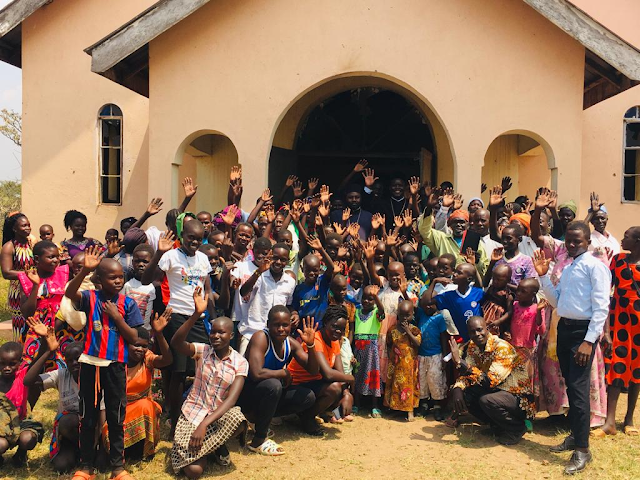
75 souls united to Christ in Baptism in Uganda  

81 baptized in African Metropolis of Kananga  

13 children baptized into Christ at Kenyan orphanage (+ VIDEO)

First Orthodox monastery in Tanzania celebrates its first Divine Liturgy

Παρέμβαση του Επισκόπου Μπουκόμπας στην “Σπιναλόγκα” του AIDS στην Τανζανία

Φίλοι Ιεραποστολής Μπουκόμπα Τανζανίας

Στον Ορθόδοξο Αμπελώνα της Αφρικής

Σοβαρή παρέμβαση από την Επισκοπή Μπουκόμπας και Δυτικής Τανζανίας, έγινε στην “Σπιναλόγκα” του AIDS στην Τανζανία, στο παραλιακό χωριό Καλομπέρα της Μπουκόμπας, με αφορμή την Παγκόσμια Ημέρα κατά του AIDS.
Η προσπάθεια βοήθειας προς την κλειστή αυτή κοινότητα ξεκίνησε πριν δύο χρόνια, όταν οι αδελφές από το Μοναστήρι της Αγίας Μακρίνας (*) έκαναν ιεραποστολή και βαπτίσθηκαν 50 νέοι χριστιανοί. 
Πριν δύο μήνες ξεκίνησαν δύο Κατηχητές συστηματική κατήχηση και λειτουργικές συνάξεις, για την συγκέντρωση των βαπτισμένων και την προετοιμασία των νέων κατηχουμένων.
Κτίσθηκε πρόχειρος Ναός προς τιμήν του Αγίου Μηνά και η Ορθοδοξία μπήκε για τα καλά στην κοινότητα αυτή. Με αφορμή τον ερχομό των επισκεπτών από την Ελλάδα, σε συνεργασία με τον πρόεδρο του χωριού και μετά από άδεια από το Κράτος, την Πέμπτη 1 Δεκεμβρίου, ο Επίσκοπος Μπουκόμπας κ. Χρυσόστομος με γιατρούς και κατηχητές επισκέφθηκε την Καλομπέρα.
 
Οι ιθαγενείς αφού υποδέχθηκαν με πολύ χαρά τους επισκέπτες, συγκεντρώθηκαν στην πλατεία κοντά στη λίμνη Βικτώρια και παρακολούθησαν την ενημέρωση που έγινε για την μεγάλη απειλή του AIDS, τις αιτίες εξάπλωσης και τους τρόπους αντιμετώπισης. Η εκδήλωση ξεκίνησε με την υποδοχή από τον πρόεδρο του χωριού κ. Ησαΐα και τον εφημέριο π. Σπυρίδωνα.
Μίλησαν η κ. Βαρβάρα Κορωναίου, γιατρός από την Φλώρινα, και ο Διευθυντής του Νοσοκομείου της Επισκοπής “ΑΝΑΣΤΑΣΙΣ” κ. Ηλίας Habuhabu.
Τις ενημερωτικές ομιλίες έκλεισε ο Θεοφιλέστατος κ. Χρυσόστομος προτρέποντας τους κατοίκους να προσέλθουν στις δωρεάν εξετάσεις, που θα γίνονται από τους γιατρούς του Νοσοκομείου της Επισκοπής. 
Κάλεσε, ακόμη, τους κατοίκους να βάλουν ένα τέλος στους θανάτους από AIDS και να σταματήσουν την εξάπλωση της επιδημίας στην κοινότητά τους.
Η Ορθόδοξη Εκκλησία θα τους βοηθήσει αποτελεσματικά, όπως είπε ο Θεοφιλέστατος.
Η συνάντηση ολοκληρώθηκε με δώρα, τραγούδια και παιχνίδια για τα παιδιά από τους επισκέπτες από την Ελλάδα με επικεφαλής...

https://www.facebook.com/profile.php?id=100055952163170
 
(*) Πρόκειται για την Ιερά Μονή Αγίας Μακρίνας Κιμπούγιε, για την οποία διαβάζουμε στην ανάρτηση Το μοναστήρι της Αγίας Μακρίνας φροντίζει την «Σπιναλόγκα» της Τανζανίας:

... Αξίζει να σημειωθεί πως το Μοναστήρι της Αγίας Μακρίνας βρίσκεται πάνω από την «Σπιναλόγκα» της Τανζανίας, τρία χωριά τα οποία κατοικούνται αποκλειστικά από ασθενείς του AIDS, την φροντίδα και την μόρφωση των οποίων έχει αναλάβει Ιεραποστολικό κλιμάκιο της Επισκοπής, αποτελούμενο από ιατρούς και εκπαιδευτικούς.