Εμφάνιση αναρτήσεων με ετικέτα Orthodox Niger. Εμφάνιση όλων των αναρτήσεων

Κυριακή 29 Σεπτεμβρίου 2019

The sacred Icon of Saint Simeon the Niger has been dedicated to the Holy Metropolis of Nigeria // Η αφιέρωση της ιεράς εικόνος του αγίου Συμεώνος Νίγερος στην Ιερά Μητρόπολη Νιγηρίας

Translated by A.N. 

Saint Simeon the Niger is mentioned in chapter 13 verse 1 of The Acts of the Apostles, as one of the prophets of Antioch, by whom the Apostles Paul and Barnabas had been ordained for their first missionary itinerary. The descriptive “Niger” of his name is indicative that he originated from Africa and, perhaps, from the land of Niger. Also mentioned among the prophets of the Church of Antioch is Lucius the Cyrenaean, who it appears, was also of African origin, from the area of Cyrene in Libya [like st Simon the Cyrenaean]. 

Saint Simeon the Niger has been allocated by Saint Epiphanius of Salamis (PG 41, 1232) to the Holy Seventy Apostles. This signifies that it is proper that he also be commemorated on the feast day of their Synaxis, on the 4th of January. 

Thus, in 2018 the Pan-Cretan Union of Theologians dedicated an Icon of Saint Simeon the Niger to the Holy Metropolis of Nigeria. The icon was the work of art of a young hagiographer, Peter Constantakis, a 3rd year High School student at the time, currently studying at the University of Crete. The inscription on the Icon was alsoo rendered in the Igbo language, with the help of the Orthodox Nigerian Priest, Fr. Cornelius, a student in Athens. 

The Saint has been portrayed with the attire of a Bishop, because along with the other holy prophets of Antioch, he had ordained the Apostles Paul and Barnabas, which means that he had to have the rank of Bishop to perform ordinations. Besides, it is a known fact that – according to the ecclesiastic historians, as drawn from the ancient sources (for example, the “Didache” of the Apostles), the proto-Christian order of “Prophets” is the precursor to the order of Bishops. Just as the early Saints Titus and Timothy are depicted in icons wearing the “omophorion” – the liturgical stole worn around the shoulders to denote a bishop – even though it was not worn during their time, likewise Saint Simeon has been depicted wearing a bishop’s omophorion. His temporal placing in the proto-Christian era is denoted by the Christian ΙΧΘΥΣ (fish) symbol appearing on his omophorion. 

In the letter to the Orthodox Church of Nigeria the Union of Theologians made the following dedication: 

“With love, and the sentiment of humility in the presence of the Orthodox Mission, especially in areas that are in serious trouble and dangerous - such as the ones that the Holy Metropolis of Nigeria ministers to – we would like to present this Icon as a very small contribution to your in-Christ labours. We pray to our Most Benevolent God that the honouring of Saint Simeon the Niger will move our Orthodox Christian brethren of Nigeria, of Niger, of Togo and of Benin, who will hopefully find in him a familiar Christian role model, and one more patron Saint, along with the others, of their homelands.” 
 
See also

 
Η αφιέρωση της ιεράς εικόνος του αγίου Συμεώνος Νίγερος στην Ιερά Μητρόπολη Νιγηρίας
 
From the Official Website of the Holy Orthodox Metropolis of Nigeria
 
Ο άγιος Συμεών Νίγερ αναφέρεται στις Πράξεις των αποστόλων, κεφ. 13, στίχ. 1, μεταξύ των προφητών της Αντιοχείας, από τους οποίους χειροτονήθηκαν οι απόστολοι Παύλος και Βαρνάβας για την 1η περιοδεία τους. Η επωνυμία «Νίγερ» σημαίνει μαύρος, γι’ αυτό ο άγιος θεωρείται αφρικανικής καταγωγής. 

Ο μακαριστός καθηγητής Ηλίας Βουλγαράκης αναφέρει: 
«Στο μεταξύ χρονικό διάστημα μεταστράφηκε ο Σαύλος (Πράξ. 9, 4), ο οποίος τελικά βρέθηκε στην Αντιόχεια. Ανάμεσα στους πέντε προϊσταμένους της Εκκλησίας και δεύτερος στην τάξη μετά τον Βαρνάβα, ήταν ο «Συμεών ο καλούμενος Νίγερ» (Πραξ. 13,1) δηλαδή με το παρόνομα ο Μαύρος. Αυτός και ο Αιθίοπας που μετέστρεψε ο Απ. Φίλιππος (Πραξ. 8,26) είναι οι πρώτοι γνωστοί μαύροι Χριστιανοί» (Βουλγαράκης, «Φυλετικές διακρίσεις και Ορθοδοξία», κεφ. «Η πρώτη Εκκλησία», περιοδικό Πάντα τα έθνη 32, Δ΄ τρίμηνο, 1989, σελ. 6-8, αναδημοσίευση στην ιστοσελίδα της Αποστολικής Διακονίας της Εκκλησίας της Ελλάδος). 

Μεταξύ των προφητών της Εκκλησίας Αντιοχείας αναφέρεται επίσης ο Λούκιος ο Κυρηναίος, επίσης, ως φαίνεται, αφρικανικής καταγωγής, από την περιοχή της Κυρηναϊκής της Λιβύης [όπως ο Σίμων ο Κυρηναίος]. 

Ο άγιος Συμεών Νίγερ από τον άγιο Επιφάνιο Σαλαμίνος κατατάσσεται στους αγίους εβδομήκοντα αποστόλους (PG 41, 1232). Αυτό σημαίνει ότι αρμόζει να τιμάται στην εορτή της Σύναξής τους, 4 Ιανουαρίου. Συγκεκριμένα, ο άγιος Επιφάνιος γράφει: «ἀπέστειλεν δὲ καὶ ἄλλους ἑβδομήκοντα δύο κηρύττειν, ἐξ ὧν ἦσαν οἱ ἑπτὰ οἱ ἐπὶ τῶν χηρῶν τεταγμένοι, Στέφανος Φίλιππος Πρόχορος Νικάνωρ Τίμων Παρμενᾶς καὶ Νικόλαος, πρὸ τούτων δὲ Ματθίας ὁ ἀντὶ Ἰούδα συμψηφισθεὶς μετὰ τῶν ἀποστόλων· μετὰ τούτους δὲ τοὺς ἑπτὰ καὶ Ματθίαν τὸν πρὸ αὐτῶν Μάρκον καὶ Λουκᾶν, Ἰοῦστον, Βαρνάβαν καὶ Ἀπελλῆν, Ῥοῦφον, Νίγερα καὶ τοὺς λοιποὺς τῶν ἑβδομήκοντα δύο». 

Έτσι, το 2018 ο Παγκρήτιος Σύνδεσμος Θεολόγων αφιέρωσε μια εικόνα του αγίου Συμεώνος Νίγερος στην Ιερά Μητρόπολη Νιγηρίας. Η εικόνα φιλοτεχνήθηκε από τον νεαρό Ρεθεμνιώτη αγιογράφο Πέτρο Κωνσταντάκη, τότε μαθητή της Γ΄ Λυκείου και σήμερα φοιτητή του Πανεπιστημίου Κρήτης. Η επιγραφή της εικόνας αποδόθηκε στη γλώσσα Igbo με τη βοήθεια του ορθοδόξου Νιγηριανού κληρικού π. Κορνηλίου, φοιτητή στην Αθήνα. 

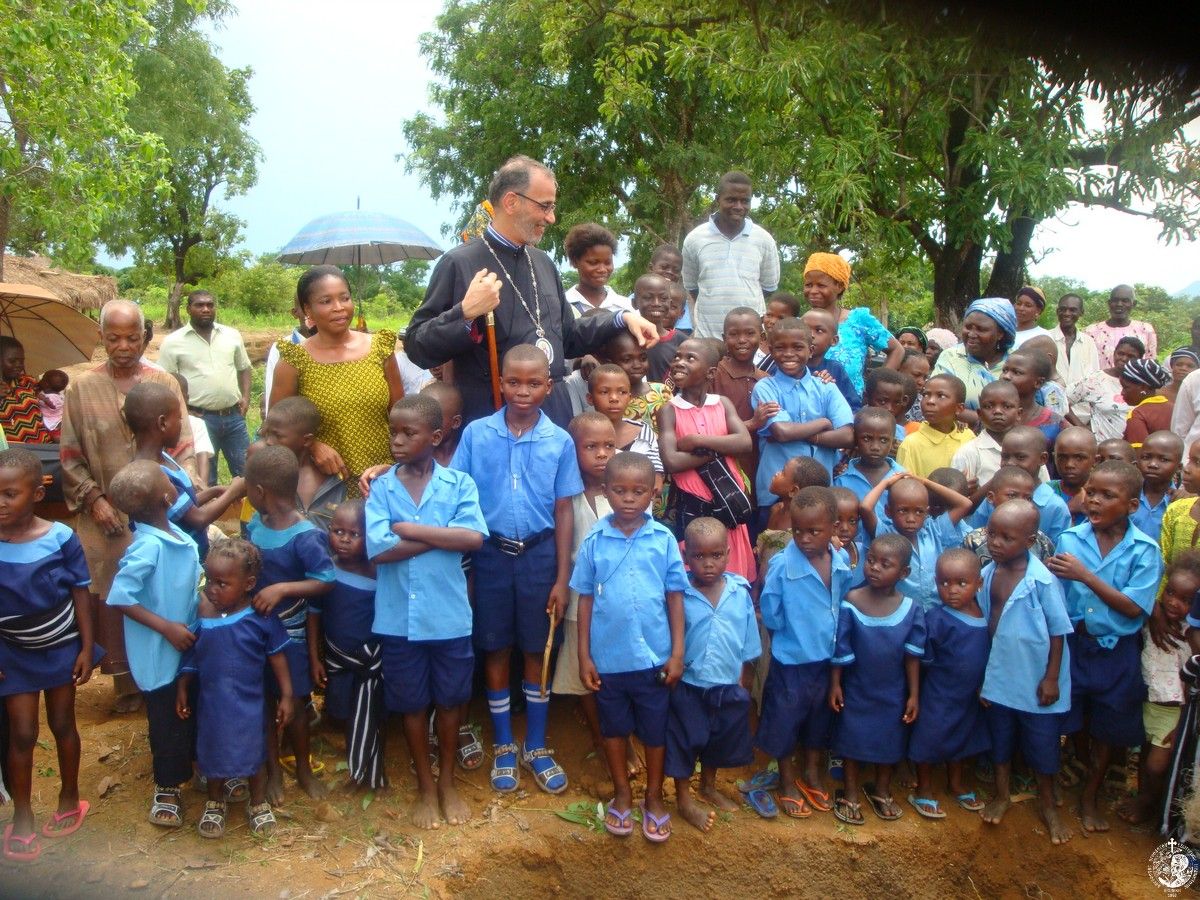
Ο μητροπολίτης Νιγηρίας Αλέξανδρος με Ορθόδοξες Νιγηριανές. Metropolitan Alexander with Orthodox people, from the article Pray for the peace in Nigeria & all Africa...

Ο άγιος απεικονίσθηκε ως επίσκοπος, επειδή, μαζί με τους λοιπούς αγίους προφήτες της Αντιοχείας, χειροτόνησε τους αποστόλους Παύλο και Βαρνάβα, συνεπώς έφερε επισκοπικό βαθμό. Είναι γνωστό εξάλλου ότι, κατά τους εκκλησιαστικούς ιστορικούς, όπως αντλείται από αρχαίες πηγές (π.χ. την Διδαχή των αποστόλων), η πρωτοχριστιανική τάξη των «προφητών» είναι ο προπομπός της τάξης των επισκόπων. Όπως απεικονίζονται ως επίσκοποι και οι άγιοι Τίτος και Τιμόθεος, φορώντας ωμοφόριο, καίτοι τότε δεν το φορούσαν, ομοίως απεικονίσθηκε και ο άγιος Συμεών. Η χρονική τοποθέτησή του στην πρωτοχριστιανική εποχή υποδηλώνεται με τους ιχθείς. 

Στην επιστολή του προς την Ορθόδοξη Εκκλησία της Νιγηρίας ο Σύνδεσμος αναφέρει: «Με αγάπη και αίσθημα ταπεινώσεως προ του άθλου της Ορθοδόξου Ιεραποστολής, ιδιαίτερα σε περιοχές εμπερίστατες και επικίνδυνες, όπως οι χώρες που διακονεί η Ιερά Μητρόπολις Νιγηρίας, καταθέτομε το παρόν ως ελάχιστη συμβολή στον εν Χριστώ αγώνα σας. Ευχόμεθα στον Πανάγιο Θεό, η τιμή του αγίου Συμεώνος Νίγερος να συγκινήσει τους αδελφούς μας ορθοδόξους χριστιανούς της Νιγηρίας, του Νίγηρος, του Τόγκο και του Μπενίν, οι οποίοι στο πρόσωπό του ίσως βρουν ένα οικείο χριστιανικό πρότυπο και έναν ακόμη, πλην των υπολοίπων, προστάτη άγιο της πατρίδας τους». 


Three contemporary Orthodox Saints & the African peoples: Saints Porphyrios of Kafsokalyvia (an area, whose name means "the hut burner", on Holy Mount Athos), Paisios the Hagiorite and Jacob of Evia...
 

Σάββατο 5 Σεπτεμβρίου 2015

The Orthodox Church in Nigeria : Archdiocese of Nigeria, Niger, Benin & Togo


Umuho-Okabia village, Imo State. Photo from here.

Orthodoxwiki

The Holy Archdiocese of Nigeria is a diocese under the jurisdiction of the Greek Orthodox Patriarchate of Alexandria and All Africa. Its territory includes the parishes and missions located in the nations of Nigeria, Niger, Benin and Togo.
The see of Nigeria was established as a diocese in 1997 by a Patriarchal and Synodal Decree. Subsequently, the see was raised to the dignity of an archdiocese in October 2004. 
The Nigerian people formed a union of churches called “Calvary Grace Church” in search of the “original Christian Church.”  By 1985, this collective of Nigerian churches was brought into the full canonical beauty of the Orthodox Church (from here).
The map from here
 
"...It is worth emphasizing that the appeal of the native inhabitants of the country to Orthodoxy itself began not because of the activity of missionaries but as a result of spiritual searches of the Nigerians themselves. African Protestantism is characterized by fragmentation, the emergence of new groups and currents. In the 1980s, in Eastern Nigeria, the ‘Church of Calvary Mercy’ was formed among the Igbo people. It united several communities. The members of this organization set out to find the ‘original Church of Christ’. Serious study and search led them to the conclusion that this church is the Orthodox Church, and in 1985 they all accepted Orthodoxy. Later, a lot of other Nigerians followed their example...." (from here).
 
Metropolitan Alexandros of Nigeria

His Eminence, the Most Reverend Alexandros (Gianniris) of Nigeria is Metropolitan of the Archdiocese of Nigeria, part of the Greek Orthodox Patriarchate of Alexandria and All Africa.

Life
George Gianniris was born in Athens in 1960 and gained his collegiate education at the Faculty of Pastoral and Social Theology of the University of Thessalonica from which he graduated. He entered the clergy through the Patriarchate of Alexandria and was ordained a deacon on October 1, 1988. He was ordained a priest on the following day, October 2. Following his ordination Fr. George served as the Superior at the Patriarchal Church of the Holy Unmercenaries in the Archdiocese of Johannesburg and Pretoria as well as secretary of the Archdiocese. He was appointed Director of the Private Patriarchal Office in April 1997.
On September 23, 1997, Fr. George was elected Bishop of the newly formed see of Nigeria. His consecration took place on November 24, 1997. He was elevated to the rank of Metropolitan on October 27, 2004. 

Missionary walk through the hills of Central Nigeria


Country: | Diocese:
 
NG2

A Mission team from the Metropolis of Nigeria visited the green hills of central Nigeria, Benue State, the Tiv tribe after Easter. The team consisted of Metropolitan Alexander, archimandrite Cornelius and the indigenous priest-monks f. Nephon and f. Andrew as well as presbyter f. Christian.
The Orthodox presence here started 7 years ago with the strange ways of God, which reveal His wish to unveil the fullness of His Truth, wherever, whenever and however He pleases and thinks fit. Then two young men, being well-educated and having special spiritual and social concerns, joined our Orthodox family and became heralds of its message, initially to their own people, their families.
It took big efforts and plenty of time for them to face all the challenges, but their zeal was fervent, their faith, patience and perseverance big, and their prayer ardent. Those benevolent young men of yesterday are our priests today, f. Christian and f. Nephon. It is them that later on f. Andrew joined.
The region is tough and problematic with a large percentage of illiteracy, lack of basic infrastructure in education and health, tragic shortage of drinkable water, absence of road network, polygamy, paganism, unemployment and of course, absence of hope and vision for the majority of youth.
On Saturday morning 18th May in Adikpo village was the inauguration of the Holy Church of Saint Charalambos, the first Orthodox Church in the region, while on the noon of the same day was the christening of about 50 children and adults. On Sunday 19th May, the first Divine Liturgy was celebrated with the participation of a few dozens of faithful as well as local rulers. At the end of the Divine Liturgy the Bishop honored several laypersons, men and women, for their contribution to the work of the local church. The first permanent parish priest of the region, priest-monk f. Andrew, received a very warm welcome by the flock, as he was called to undertake a particularly difficult task.

NG1

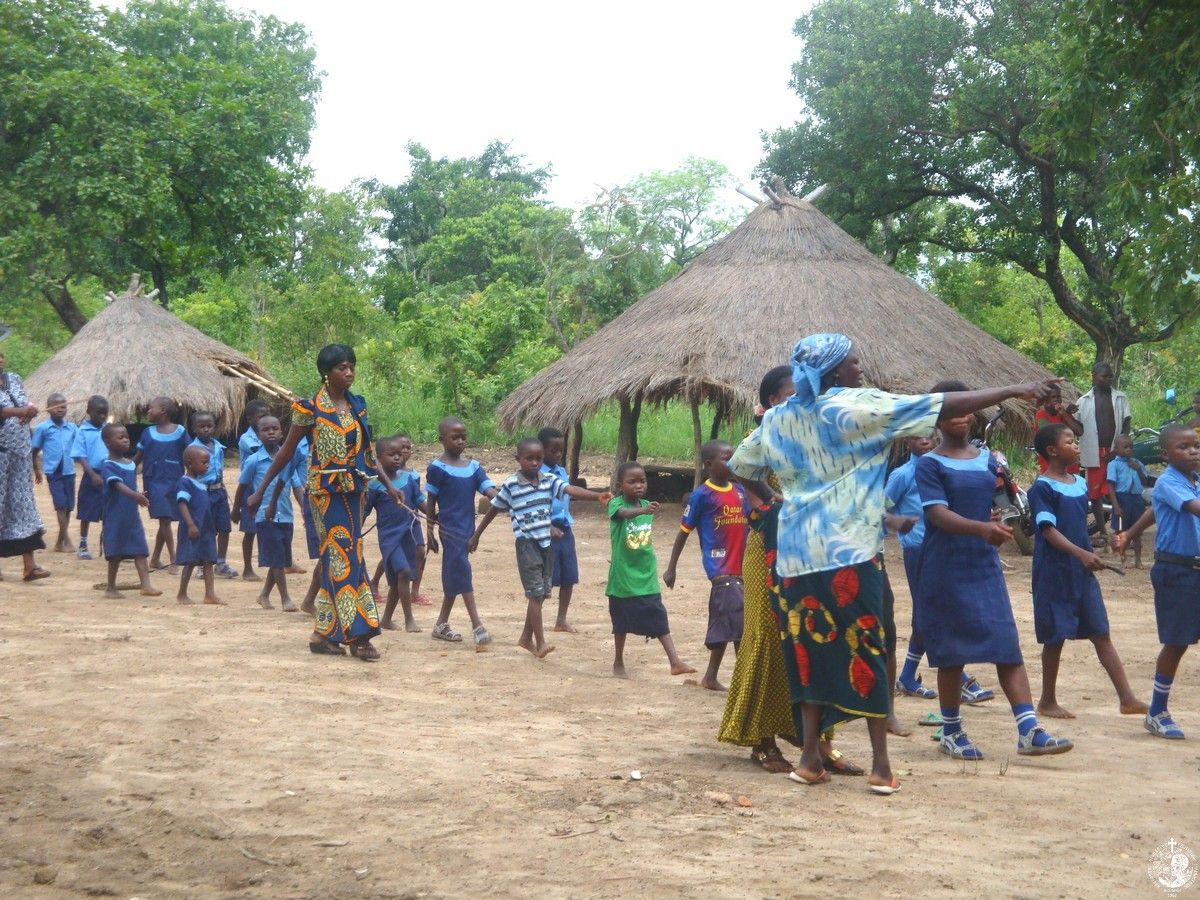
The next day and after a tiring and eventful journey, the team reached the village of Karmek, at the parish of Christ. Absolute poverty!! The residents’ houses, huts made from mud and straw. The Holy Church was only wooden poles with a thatched roof. So was the school. The pupils were hungry, barefoot children in torn, shabby clothes. Lots of them with serious bowel diseases and typhus due to lack of drinkable water. It was in an emotionally atmosphere that the foundation stone for the school was laid -God only knows how and when it will be built. What followed was a gathering in the Church, where words of hope and consolation were said, an icon of Christ in their hands and a cross around their neck, their Bishop’s blessing. Present were lots of the village people as well, elders, women, men and children, who left behind their work in the fields in order to come, see and listen.
After a long stay there, the Mission moved to another place of absolute, abject poverty and wretchedness, the newly established community of the Holy Cross. Underneath some huge trees that lovingly offer their shadow to the faithful, assembled a few dozens of people, especially young ones, in order to listen to their priests, receive their blessing and pray with them. Faces furrowed by the sun, tired from hardships and privation, hardened hands, calloused by the daily toil on the land. The hard work for a single plate of food that has to be shared by the family, the life in the mud huts, without drinkable water or electricity, without medication. There in the most fertile part of the country, with a huge food production, these people are victims of unacceptable economic systems and social structures.
Two more days full of reverence were spent in that region with gatherings of catechists and parish councils, followed by a march to east Nigeria, where most of our Orthodox parishes are.
Everyone’s prayer in the Orthodox Church of Nigeria is that the Grace of God may cover and protect the new charismatic priest-monk of the region, f. Andrew, support and strengthen our brothers in the distress and hardships they go through daily.

May His Grace give strength and courage to all of us in order to walk forward “even when the doors are shut” and carry the message of the Resurrection, the hope for the new world of the Kingdom of God.
With a grateful heart and blessings

Metropolitan Alexander of Nigeria


Orthodox Archdiocese of Nigeria Celebrates Ten Year Anniversary

Antiochian Orthodox Christian Archdioceseof North America


clip_image001In a recent letter to OCMC, Metropolitan Alexander, of the Orthodox Archdiocese of Nigeria, greeted all who have supported the work of this church:  “You all have left a green leaf in our hearts.”  His Eminence’s comments followed the recent celebration of the tenth anniversary of the Orthodox Archdiocese of Nigeria.
The Nigerian people formed a union of churches called “Calvary Grace Church” in search of the “original Christian Church.”  By 1985, this collective of Nigerian churches was brought into the full canonical beauty of the Orthodox Church.
In his letter, Archbishop Alexander encouraged the Nigerian faithful toward “a deep reflection and concentration on our vocation, our ministry…for greater spiritual pursuits, for more intensive and warm prayer life, so as to be able with ‘naked intuition’ to listen every moment to ‘what the Spirit says to the Churches’ (Rev. 2:29).” 
His Eminence also shared what wonderful opportunities there are within the Archdiocese to “perceive the certainty of the love, mercy, and the grace of God; His inexorable providence and divine intervention.”  Metropolitan Alexander praised those who, seizing these opportunities, are brought by God to carry the cross, to reveal the Gospel in Nigeria.
His Eminence also expressed his deep thanks for the support that the Orthodox Churches in North America have given to the Nigerian faithful through OCMC.  There are currently 11 Nigerian priests being supported through the Support A Mission Priest (SAMP) program, and many American faithful have also directly supported the Orthodox Archdiocese of Nigeria both financially and in prayer.
Through the “men and women of deep faith and piety” who have contributed to the Nigerian church, the soil has been enriched, the Light of Christ has shown forth, and the water of Life has continued to be poured out upon this country and its beautiful people.  The result has been growth, a “green leaf” in the hearts of all, both in Nigeria and in North America.
May this important work continue, and may the Orthodox Archdiocese of Nigeria flourish and enjoy many years!

From www.ocmc.org


See also

Orthodox Churches in Nigeria – A result of spiritual searches of the Nigerians themselves! (& 10 Orthodox Churches in Nigeria)
L’Eglise orthodoxe : Archidiocèse du Nigéria
Orthodox Missionary Fraternity - Nigeria
Orthodox Church in Nigeria, “Support Education – Combat Poverty” : Nursery / Primary School in Karmem, Benue, Nigeria
HOLY COMMUNION AT THE ORTHODOX CHURCH OF LAGOS
Momentous statements by the Metropolitan Alexander of Nigeria, in the cadre of the Holy and Great Synod of the Orthodox Church
L’Eglise orthodoxe : Archidiocèse du Nigéria

Orthodox Nigeria
Orthodox Benin
Orthodox Togo
Orthodox Niger
Nigeria: seeking Christ amid increased dangers...
Orthodox Missionary Fraternity - Nigeria

"THE WAY" - An Introduction to the Orthodox Faith
In Search of Orthodoxy
Orthodox Mission in Tropical Africa (& the Decolonization of Africa)
The Orthodox Church in Uganda, an outgrowth of indigenous self discovery
How “White” is the Orthodox Church?
Patriarchate of Alexandria Archdiocese website
In the Orthodox Vineyard of Africa
Theosis (deification): The True Purpose of Human Life

Παρασκευή 4 Σεπτεμβρίου 2015

L’Eglise orthodoxe : Archidiocèse du Nigéria


Eglise orthodoxe du Togo

L’Eglise orthodoxe du Togo fait partie de l’Archidiocèse du Nigéria et est placée sous l’omophore de Monseigneur Alexandros, Métropolite du Saint Synode du Patriarcat grec d’Alexandrie et de toute l’Afrique. Le territoire juridictionnel de l’Archidiocèse couvre quatre pays de l’Afrique subsaharienne : le Nigéria, le Niger, le Bénin et le Togo. Son siège est installé à Lagos.

La création de l’Archidiocèse du Nigéria

Dans les années 1970, une communauté de l’Église Baptiste du Calvaire au Nigéria, choisit d’entrer dans la tradition de l’Eglise orthodoxe. Cette communauté se mit en contact avec une Église orthodoxe non-canonique des États-Unis d’Amérique qui ne donna pas satisfaction à leur désir d’intégrer une juridiction canonique. Les membres se mirent en rapport avec le Patriarcat grec orthodoxe d’Alexandrie et de toute l’Afrique en 1983. Ils furent accueillis par le Patriarche, Sa Béatitude, Nicholas VI Varelopoulos à Alexandrie. Un accord fut trouvé avec le Saint Synode pour leur réception dans la Juridiction du Patriarcat d’Alexandrie. Le Métropolite Irenaeus se rendit, dans la même année au Nigéria, pour une visite pastorale, en vue d’une organisation de leur Église. Il les édifia, durant deux années consécutives dans la tradition, la foi et la doctrine orthodoxe en vue de les préparer à leur pleine intégration au sein du Patriarcat. En 1985, plusieurs prêtres furent ordonnés au Nigéria, pour desservir les paroisse de la communauté. Par un décret synodale, Sa Béatitude, le Patriarche Petros VII, en accord avec le saint Synode, décida en 1997, la création des deux et les deux diocèses du Ghana et du Nigeria, ainsi que des diocèses de Bukoba en Tanzanie, et de Madagascar,
Les diocèses du Ghana et du Nigeria furent confiés en 1998 à son Éminence Mgr Alexandros qui reçut alors l’ordination épiscopale avec l’installation de son siège à Lagos. Il y créa, en 1999, un séminaire pour la formation des catéchistes et des futurs prêtres. Le diocèse du Nigéria fut ensuite détaché de celui du Ghana. A l’origine dénommé Saint Diocèse du Nigéria, il fut élevé au rang d’Archidiocèse en octobre 2004 avec l’intégration dans sa juridiction en plus du Nigéria les pays suivants : le Niger, le Bénin et le Togo.

Le Métropolite de l’Archidiocèse du Nigéria


Monseigneur Alexandros, Métropolite du Nigeria (connu dans le monde sous le nom de Georges Gianniris) est né à Athènes en 1960. Il est diplômé de la Faculté de théologie pastorale et sociale de l’Université de Thessalonique. Il a reçu l’ordination diaconale dans le Patriarcat d’Alexandrie, le 1er octobre 1988 et a été ordonné à la prêtrise le 2 octobre 1988. Il a servi, après son ordination dans l’Archidiocèse de Saint Johannesburg et Pretoria comme recteur de l’Eglise patriarcale des Saints Anargyres et comme secrétaire de l’archevêché. Il a assuré l’édition d’un magazine bilingue consacré à une meilleure connaissance de la tradition orthodoxe et assuré la responsabilité des programmes radio de l’archidiocèse. En Avril 1997, il a été nommé Directeur du Synode patriarcal et le 23 septembre 1997, élu évêque du Nigeria. Il reçut la consécration épiscopale de Sa Béatitude le 24 novembre 1997. Son élévation au rang de métropolite du Nigéria eut lieu le 27 Octobre 2004.

Metropolite Alexandros
Monseigneur Alexandros, Métropolite de l’Archidiocèse


Le Patriarche Théodoros II, entouré du Métropolite Alexandros et des membres du clergé du Nigéria

 
Les Eglises et les communautés de l’Archidiocèse


L’Église orthodoxe du Nigéria 

En l’année 2012, l’Église orthodoxe du Nigéria, la plus importante au sein de la Métropole du Nigéria, du Bénin, du Togo et du Niger compte : 35 paroisses,
9 communautés, 26 membres du clergé, 30 catéchistes et 20 lecteurs.

L’Église orthodoxe du Bénin dispose de cinq paroisses :
 
- la paroisse « Sainte Catherine d’Alexandrie à Porto Novo, et un petit Monastère dans la même ville : « la Protection de la Mère de Dieu ».
- la paroisse « Saint Jean Chrysostome » à Cotonou,
- la paroisse « Sainte Trinité » à Calavi,
- la paroisse « Saint Moïse l’Éthiopien » à Abomey,
- la paroisse « Saint Georges » à Sékou

Fidèles à Porto Novo1_Benin
Fidèles et prêtres orthodoxes à Porto-Novo, au Bénin

http://muguetb.free.fr/benin/


Le Patriarche Théodoros II avec des fidèles orthodoxes du Togo,
lors de sa visite pastorale au Nigéria, en janvier 2012

Voir aussi