Εμφάνιση αναρτήσεων με ετικέτα Corruption. Εμφάνιση όλων των αναρτήσεων

Τρίτη 21 Ιουνίου 2016

Life in Africa: The Good and the Bad


Africaw.com

life africaWhether good or bad, Africa is my home and there is no place like home. I love Africa because there is no place like Africa. Even in my second life if God should give me the opportunity (to choose where to live), I would choose Africa why because I love Africa and there is no doubt Africa loves me. Some people don't understand. Some people think they know but they do not know. Some people think they know all about Africa but the truth is that, none of them knows Africa the way I do. I know Africa and Africa knows me.
I was born in Africa, I grew up in Africa and Africa is my home so you must believe me if I tell you there is no place like Africa. If it is true there is a God up there beyond the clouds then I am very sure that God is an African why because Africa is the rhythm of life.
Africa is that mighty tree of ancient origin rooted in mountains of gold and silver. Africa is that mighty stream. Africa is that stream of life. Africa is that mighty stream full of untold number of souls. Africa is that bird. Africa is that quiet but mighty bird. Africa is that quiet bird with the voice of thunder. Africa is that mighty bird with the wings of gold and diamond feathers. Anytime Africa spreads her precious wings of different colors, even the beasts below the surface of the earth smile. Africa is my home and there is no place like Africa.
It is very true my great great grandfather did not build an airplane but what people do not understand is that, my great great grandfather did not need an airplane to fly.
It is very true my great great grandmother could not write her story in a book but what people do not understand is that, my great great grandmother was able to carve her story on a mountain that does not move. If you see my uncle walking on the Kalahari desert with no shirt and no shoes on, don't just conclude he is dumb because my uncle chases away wild beasts with his bare hands and it takes great courage and wisdom to do that. If you live in New York City, don't just conclude my uncle in the jungle is a fool because no fool survives in a jungle full of wild animals.

Some people think Mama Africa is an illiterate but what Mama Africa knows the world can never know even half. If you steal from Mama Africa's backyard and she doesn't chase you away with a gun, don't just conclude Mama Africa is blind because the eyes of Mama Africa shines like the Sun and she sees all things. Mama Africa doesn't judge instead she leaves everything to He who knows how to judge. Once again, I love Africa because Africa is my home and there is no place like Africa.
Anywhere you hear "poverty", you hear "Africa". There is poverty in Africa today. There is no doubt about it. My great great grandfather had food in abundance and he had enough to drink. My great great grandmother had enough to give her grandchildren anytime they asked for something to eat. My great great grandfather had enough gold and precious minerals to decorate his throne. There was plenty in Africa but plenty has been taken away leaving Mama Africa with very little to give her beloved children anytime they ask for something to eat. The only problem with Mama Africa is that, she opens her arms all the time. Mama Africa opens her arms and welcomes every stranger thinking all men are the same not knowing some men are worse than death.They come with sweet tongues and friendly faces but wicked minds and charcoal hearts. Some do not understand but instead of taking time to understand, they rush into conclusions.

There is poverty in Africa but why is there poverty in Africa? There is hunger in Africa but why is there hunger in Africa? You took away the piece of bread I had in my hands by force and now you are trying to feed me with expired biscuit and diluted fanta why because I have nothing left to eat knowing very well that expired biscuit does me no good. Is it fair? You break my home into pieces then come back later on to teach me "Unity is Strength". Do you expect me to love you? If unity is strength as your good book says then why break my home into pieces? You take away my eyes and come back later on with a walking stick for me. Do you expect me to thank you for the walking stick? Some people think they know but they do not know. Some people think they understand but they do not understand. Some people are very bad but they don't even know the fact that they are bad which is very sad.
Many Issues need to be addressed. Many problems need to be solved. It is time we come together as one people with a common destiny.

POOR EDUCATION:

Education and by Education I mean good education is the key to solving most of our problems. Why should I worry myself learning about Abraham Lincoln and Thomas Jefferson when I don't even know about Kwame Nkrumah and Nelson Mandela?. Education in some parts of Africa is very poor not just because of poverty but because of the unnecessary things they teach us. My teacher was busy teaching me how to draw an American map when I didn't even know how to draw an African map. It is time we start learning the most important things first. Instead of wasting precious time learning American history, we could be learning about agriculture and proper ways of growing crops and rearing animals. Agriculture unlike American history benefits Africa directly and that is what we need to be studying not American history in Africa. There are many important things in this world but some are more important than others and we must do the most important things first. We learn so many unnecessary things in school instead of concentrating on the most important things.

FOREIGN INTERFERENCE: 

The western world pretends to help but in reality, the western world only knows how to destroy Africa. The western world only helps destroy Africa and I have my reasons. The western world has done nothing but great harm to Africa. Our sorrows serve as melodies for their Amazing grace. They benefit from our pains. They benefit from our tears and sorrows. They pretend to help but that is just one of the ways the wicked one deceives people. It is time we start thinking for ourselves instead of allowing the west to think for us all the time. The west has nothing good to think about Africa besides "lets go there and make more profit". They encourage the planting of trees in their countries but come in record numbers to Africa to cut down all our trees for timber. The gold belongs to me but the west determines the market price of my gold. Is it fair? The diamond belongs to us yet the west determines the price of our diamond. This should tell you a lot about the west and how they benefit from our sweats. It is time we start depending on ourselves instead of depending on the west because the western world has nothing good to offer Africa.
They know "Unity is strength" and that is why they keep dividing Africa so they can control and manipulate us all the time.
The West destroys and then pretends to help rebuild very similar to the way the devil steals and destroys. They ensure that only wicked people win elections in Africa. The west benefits from our wicked and greedy leaders so they always use money and influence to help the wicked ones win elections in Africa that is why most of our leaders in Africa today are very corrupt and greedy. The west cannot benefit from Africa if Africa had great leaders who do not depend on the west but on Africa. I am not saying we should do away with the west completely but we should do away with their interference. We shouldn't allow the west to decide for us all the time because the west has nothing good to offer Africa.

POOR LEADERSHIP AND CORRUPTION:

There is no doubt our leaders are very greedy, corrupt, and wicked-minded people. We do not elect bad leaders in Africa. Instead, the west elects these corrupt people to rule Africa so the west can benefit from our sweats. When the west elects these greedy leaders for us, sometimes my people revolt and then the west sends NATO troops, etc. to intervene as if they are helping. That is why you often hear political violence in Africa. The west referred to Mandela as a monster but as we all know, Mandela was a freedom fighter who did not give in to the western influence. They offered Mandela money but he rejected it. They offered Mandela paradise but he rejected it why because Mandela loves Africa.
I cannot say the same about the other leaders in Africa because they are all corrupt and wicked-minded. More than 500,000 innocent people were murdered in Darfur and Omar Al-Bashir of North Sudan sponsored most of the killings yet remains president. Some people loved Gaddafi so much even in death why because Gaddafi was anti-west. However, some people forget the fact that being an anti-west is not always good enough. Some people consider Gaddafi one of the best head of states in Africa just because Gaddafi was anti-west forgetting the fact that being an anti-west sometimes benefits only the leader in power and not the poor African. Gaddafi was anti-west but also a snake under grass. Mugabe is an anti-west but also a "shinning" monster. 

Not so many people know the fact that Gaddafi was their (the west) friend initially. They offered Gaddafi paradise initially and he accepted it. Gaddafi trusted the west more than Africa initially but later on turned against the west. His turn against the west was not to protect Africa but rather his own interest. Gaddafi's turn against the west was not because he loved Africa so much as he preached but because he loved his power and did not want to let go power. If Gaddafi loved Africa so much as he preached, he would do anything possible to protect Africa. Instead what did we see? Gaddafi killed his own countrymen all in the name of protecting his country. Does it make sense to kill your children just because a monster is in your house? Gaddafi's family (especially his sons) and immediate friends had the right to kill without anyone questioning them why because they considered Libya part of their inheritance. 
We all know NATO and friends (including America) are the "holy" demons of the world who go about destroying precious innocent lives all for financial gains and I would support Gaddafi fight NATO anytime if Gaddafi's main aim was to protect Libya and not his power. It is true Gaddafi fought NATO like a man but what people do not understand is the fact that he fought NATO just to keep his power and not to protect Africa. It doesn't make much sense to fight and kill your beloved children just because a monster is in your house. After 42 years in power, any "loving" leader at all would leave in peace to avoid further bloodshed if not for anything at all. Gaddafi was not ready to go why because he considered power a family property.
Mugabe is also an anti-west. Mugabe accepted all that the west could offer him initially and then turned against the west. Mugabe's turn against the west was not to protect Africa but his own interest just like Gaddafi. Mugabe took away all the lands from the white settlers but what did he do with those lands? he gave those lands to his immediate relatives and friends while the poor farmer had no land at all to farm on.

Poverty in Africa: The Stats and Facts


Africaw.com
 
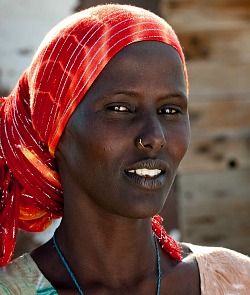
Djibouti-womanSome westerners are often surprised when they visit Africa for the first time and see happy faces all around them. They are often surprised why because the Africa they see and hear about in the news is quite different from the Africa they find when they come to visit the continent. Some expect nothing but pain and misery just like the Africa they see on CNN, BBC and the rest. Some expect nothing but poor starving children lying on the streets half-dead with flies all over their miserable tiny little faces. Some westerners expect nothing but teary faces of poor grandparents praying to death to come take them. Some westerners expect nothing but the worst among the worst in Africa why because the western media where they learn from, always paint Africa a "death hole" full of nothing but poverty, hunger, and deaths which is not true at all.
Is there poverty in Africa? The answer is yes there is poverty in Africa. However, not everybody in Africa is poor. Is there hunger in Africa? The answer once again is yes there is hunger in Africa but once again, not everybody in Africa is starving to death as some people especially westerners think. When it comes to poverty and hunger, the western world always paints Africa "hell in a cell" with no way out. The western world always paints the picture as if everybody in Africa is starving to death. The western world always paints the picture as if all the children in Africa have swollen bellies with flies all over their faces. The western world often forgets the fact that Africa is home to some of the world's happiest people. The western world often judge Africa based on western standards forgetting the fact that Africa is a different continent with its own sets of dos and donts.
Africa is poor and there is no doubt Africa is poor but the question is, WHY IS AFRICA POOR? It may surprise you to know that Africa is not the poorest continent on earth as some people generally put it. In fact, Asia is far poorer than Africa. The Indian sub-continent alone contains more poor people than the entire continent of Africa combined. According to recent statistics, Asia contains about 60-65% of the world's poor population. Africa on the other hand contains just about 20% of the total population of poor people in the world today. According to recent statistics, Asia is not just poorer than Africa in terms of numbers but also worse than Africa in the intensity of poverty. In other words, Asia is far poorer than Africa not just in number but also in levels (how extremely poor the poor people are) of poverty. The poor people in Asia live under worse conditions than the poor people in Africa but that is not to say Africa is far better off why because there is no 'good' poverty and there is no 'better' hunger. Poverty kills and hunger kills and the only way out is having nothing to do with poverty and hunger. It may surprise you to know but to give you a rough idea, about 20% of people in highest-income countries consume about 86% of the world's resources while the bottom 20% consume just around 1.3%. Almost one person in five (about 1.2 billion men, women and children) are currently living in a situation of extreme poverty and hunger, surviving on less than $1 a day. Not just that, about half the people in the world today are trying very hard to manage below the poverty level of just $2 a day.
When it comes to Africa, statistics are often a "tragedy" in the sense that, statistical figures reveal almost nothing at all about the reality of the situation. Westerners often fail miserably when it comes to evaluating Africa as a continent why because they (westerners) often judge Africa based on their (western) standards which is quite wrong why because Africa is a different continent with own standards.
The UN, the IMF, the World Bank, etc. often evaluate countries in Africa and Africa as a whole based on GDP figures alone which is very wrong taking all things else into consideration. GDP figures may reveal a lot about western countries but not Africa because once again, Africa is a different continent with different standards. Ghana was often considered one of the poorest countries in the world not that Ghana was that poor. Ghana was considered extremely poor by westerners and the reason was that, Ghana had a low GDP. Ghana had a low GDP figure not because Ghana was that poor. The painfull truth is that, the UN and co were using a very "flawed" system in evaluating Ghana. Ghana just like several other African countries today was still using the extremely "flawed" 1960s UN system of evaluation which reduced Ghana's GDP by about 62%. Ghana decided to upgrade its UN system of evaluation to the 1993 system just a few years ago and it was then that western and local economists discovered the great error. It was discovered that Ghana's actual GDP figure was 62% higher than previously thought. Ghana is now a middle income country. When it comes to Africa, the proximate causes of the problem with statistics are: weak capacity in countries to collect, manage and disseminate data; inadequate funding; diffuse responsibilities; and fragmentation, with many diffuse data collection efforts. So in the end, statistics often reveal not the reality but the "official truth" which is nothing but lies. Another major problem with the western way of evaluating Africa is that, statistics are often political in Africa. In other words, statistical figures often glorify some corrupt governments in power and not the reality of the situation. Here is an example. According to the World Bank and the IMF, Equatorial Guinea has a higher GDP income than any other country in Africa. However, as we all know, Equatorial Guinea remains one of the poorest countries in Africa today with about 70% of its population living in extreme poverty and hunger. The president of Equatorial Guinea Teodoro Obiang Guema Mbasogo is one of the worst leaders in the world today. He is a dictator and has been in office since 1979 using deception and brutal force as the main tools in oppressing the poor and the weak. He and his extremely spoilt and corrupt Son Teodorin continue to enjoy while their poor but innocent countrymen continue to die in extreme poverty and hunger.
Once again, I am not saying Africa is not poor. Africa is poor and there is no doubt about it. All I am trying to say is that, Africa is not that poor as the western media often portray the continent to be. Africa is not one country as some westerners think. Africa is a continent of about 56 different countries. Some countries are poorer than others and it doesn't make much sense to generalize the entire continent based on a selected few. Countries like Somalia, Burkina Faso, Liberia, etc. are extremely poor. However, judging the entire continent of 56 countries based on the conditions of the poorest 10 is something very unfair. Unfortunately, this is how western economists evaluate Africa as a continent.
Once again, Africa is poor and there is no doubt about it. However, the question remains, why is Africa poor? Africa is poor because we Africans are not ready to get out of poverty. Our leaders are extremely corrupt and unreliable yet we continue to bow down to them. We have the resources and all it takes to be the richest continent on earth yet millions continue to die in extreme poverty and hunger. The answer to our problem is quite simple. No outsider can come fix Africa for us. Unless we take the blames and start thinking for ourselves, we shall forever remain in poverty. Some people especially westerners often blame population explosion as the root cause of poverty in Africa forgetting the fact that Africa is the second largest continent in the world but with a population of just a little over 1 billion people. Population explosion isn't a "major" reason why Africa remains poor. The major reason here is poor leadership and corruption. Why should we allow some greedy bastards to enjoy why we continue to suffer? We work and sweat all day and night yet continue to die in extreme poverty and hunger why because we have given those greedy leaders the chance to manipulate our lives like robots. It is time we wake up and start thinking.

Παρασκευή 17 Ιουνίου 2016

África: corrupção, poder e pobreza


Alem Mar

Por: CARLOS REIS, Jornalista, 2012

Os países africanos são considerados dos mais corruptos do mundo, um factor que contribui para o empobrecimento do continente. Os esforços anticorrupção têm mostrado resultados mistos nos últimos anos, mas são essenciais para o desenvolvimento. Os governos precisam de combater a corrupção em vez de depender da ajuda externa.

Dos dez países considerados mais corruptos do mundo, seis estão na África Subsariana. O suborno, extorsão, troca de favores, clientelismo, apropriação e desvio de bens ou valores têm um custo anual de 150 mil milhões de dólares para os Estados de África, segundo estimativas da União Africana. Para comparar, os países desenvolvidos doaram 22,5 mil milhões de dólares em ajuda à África Subsariana em 2008, segundo a OCDE, o que leva a argumentos de que os governos africanos precisam de combater a corrupção em vez de depender da ajuda externa.
«A corrupção em África varia entre o alto nível político, numa escala de milhões de dólares, e o baixo nível, com subornos a autoridades e funcionários públicos. No primeiro caso, impõe um maior custo financeiro directo ao país, no segundo caso tem um efeito corrosivo sobre as instituições básicas e mina a confiança dos cidadãos no governo», refere a jornalista Stephanie Hanson na publicação Council on Foreign Relations.
Mais de metade dos cidadãos da África Oriental pagam subornos para ter acesso a serviços públicos que deveriam estar livremente disponíveis, relata a organização Transparency International, o que também aumenta os custos de fazer negócios, uma vez que há uma correlação entre a eficácia no combate à corrupção e o aumento de produtividade de um país. «Atacar a corrupção é a melhor maneira de atacar a pobreza», sintetiza Nuhu Ribadu, ex-presidente da EFCC, comissão anticorrupção nigeriana.
A abundância de recursos naturais, uma longa história de governos autocráticos, o não prestar de contas aos cidadãos e os conflitos e crises no continente têm criado grandes desafios à boa governação e à luta contra a corrupção em África, apesar dos progressos recentes em termos de democracia e direitos humanos em vários países. «Os recursos naturais são cada vez mais tentadores para algumas elites africanas e empresas multinacionais. Também a assistência oficial ao desenvolvimento fornecida por agências nacionais e internacionais não está livre de abusos e corrupção. A prestação de serviços públicos é precária e os funcionários são frequentemente tão mal pagos, que recorrem à corrupção “insignificante” para sobreviver. Instituições que deveriam garantir o equilíbrio de poder dentro do sistema são muitas vezes limitadas pela falta de recursos e independência», resume a TI.

Negócios e política

Na maioria dos países africanos, os governos não têm capacidade ou vontade em lidar eficazmente com a corrupção. Além disso, o nível de desenvolvimento e organização da sociedade civil também varia consideravelmente, embora tenda a tornar-se mais activa e preocupada com as questões de corrupção e boa governação. «A sociedade civil e os meios de comunicação social livres podem levar a uma maior responsabilidade dos governos e à adopção de reformas nas áreas da governação e gestão dos recursos públicos, tornando-se os pilares da integridade nacional dos países», preconiza a TI.
Um exemplo dessas iniciativas é o da rede Corruption Hunter Network, que combate a corrupção em todo o mundo através de reuniões de apoio aos seus membros. Em África esta rede de promotores públicos deu ajuda directa e protecção a activistas como o nigeriano Nuhu Ribadu e o zambiano Maxwell Nkole na luta contra a corrupção nos seus países, embora este apoio nem sempre seja eficaz.
A corrupção endémica nos Estados africanos leva à revolta das populações. Rebeliões no Delta do Níger, na Nigéria, foram provocadas por reivindicações da comunidade local de 30 milhões de pessoas por não beneficiarem com a extracção petrolífera nas suas terras, cuja receita é desviada para funcionários governamentais.
A corrupção também corrói o processo político, com muitos políticos a interessarem-se por cargos e reeleição em função do acesso a dinheiros públicos e imunidade. A compra de votos e a fraude eleitoral «são formas mais fiáveis e fáceis de ganhar uma eleição do que tentar ganhar a aprovação dos eleitores pela boa governação», comprova Paul Collier, director do Centro de Estudos das Economias Africanas (CSAE).
Na última década, países como a Libéria, Ruanda e Tanzânia fizeram progressos na redução da corrupção e o Gana registou melhorias nas normas de boa governação e na transparência em actos governativos. Apesar de terem criado agências anticorrupção, a Nigéria, Quénia e África do Sul registaram escassos avanços. A ECA, comissão económica das Nações Unidas para a África, afirma que as comissões anticorrupção nacionais têm sido «muito ineficientes e ineficazes», em grande parte por causa do seu financiamento e supervisionamento pelo poder executivo. Sempre que incomodam o poder instalado estas agências são eliminadas, como aconteceu em 2009 com a Scorpions na África do Sul, ou os seus responsáveis são depostos ou forçados a sair do país, como se registou na Nigéria e Quénia.
Por outro lado, chefes de Estado africanos apoiam o financiamento oculto de líderes políticos de antigos países colonizadores. Robert Bourgi, ex-consultor do Governo francês para assuntos africanos, acusa o ex-chefe de Estado Jacques Chirac e o ex-primeiro-ministro Dominique de Villepin de terem recebido ilegalmente dinheiro e obras de arte dos presidentes do Senegal, Burkina Fasso, Costa do Marfim, Congo e Gabão. «Avalio em cerca de 20 milhões de dólares o valor total entregue», diz Robert Bourgi. Países europeus ignoram as actividades ilícitas e abusos de poder em África em troca de financiamentos partidários e acesso a matérias-primas.

Custos silenciosos

As estimativas dos custos da corrupção no continente africano não podem ser muito rigorosas, uma vez que a avaliação não é composta apenas pela soma de dinheiro perdido, mas também de desenvolvimento adiado e crescimento das desigualdades, que são menos fáceis de quantificar. Os 150 mil milhões de dólares anuais que os relatórios da União Africana estimam incluem custos directos e indirectos, o que representa 25 por cento do produto interno bruto dos Estados de África e um aumento dos custos dos bens transaccionáveis em 20 por cento.
Quanto à eficácia da ajuda externa, o estudo «The Cost of Corruption», publicado na revista Euromoney, estima que 30 mil milhões de dólares acabaram em contas bancárias no exterior. Pelo lado da arrecadação de receitas fiscais, o Banco Africano de Desenvolvimento calcula que a corrupção leva a uma perda de aproximadamente 50 por cento e estima que as famílias de baixo rendimento gastam de 2 a 3 por cento dos seus rendimentos no pagamento de subornos, enquanto as famílias de maiores rendimentos gastam em média 0,9 por cento. Estas avaliações demonstram que a corrupção em África está disseminada e é dispendiosa para os cidadãos de mais fracos recursos.
A corrupção silenciosa pode ser tão prejudicial ao crescimento económico geral e ao desenvolvimento de um país como a grande corrupção e os escândalos de subornos que recebem maior atenção mediática. No relatório «Africa Development Indicators 2010», o Banco Mundial define corrupção silenciosa como «o não fornecimento pelos funcionários públicos de bens ou serviços para que são pagos pelos governos». Esta corrupção passiva acontece quando professores e profissionais de saúde que, segundo os orçamentos do governo deviam trabalhar a tempo inteiro, são absentistas porque os salários para lhes pagar foram desviados por funcionários corruptos.
«A corrupção silenciosa não faz os títulos dos jornais da mesma forma que os escândalos de subornos, mas é igualmente corrosiva para as sociedades», alerta Shanta Devarajan, economista principal para a Região África do Banco Mundial. A corrupção silenciosa permitiu fracos controlos aos produtores e grossistas de fertilizantes que tiveram como resultado que 43 por cento dos adubos vendidos na África Ocidental não tivessem nutrientes e que mais de metade dos medicamentos vendidos nas farmácias na Nigéria fossem falsificados. A corrupção diminui o bem público e cresce onde há poder autocrático e pobreza.


Percepção de corrupção
Lugar
País
Índice
1
Somália
1,1
2
Sudão
1,6
3
Chade
1,7
4
Burundi
1,8
5
Guiné Equatorial
1,9
6
Angola
1,9
7
Guiné
2,0
8
RD Congo
2,0
Fonte: TI – Corruption Perceptions Index 2010

                       
Fluxos financeiros ilícitos
Lugar
País
Valor
1
Angola
34,0
2
Lesoto
16,8
3
Chade
15,4
4
Uganda
8,7
5
Etiópia
8,3
6
Zâmbia
6,8
7
Sudão
6,7
8
Guiné Equatorial
6,5
Fonte: GFI – Illicit Financial Flows 1990-2008
Valor: Mil milhões de dólares


Erradicação de uma vez por todas

Bento XVI apela para que as autoridades políticas africanas tudo façam para que seja «erradicada de uma vez por todas a corrupção». Em 2009, falando em Luanda perante o presidente Eduardo dos Santos, o papa pediu que África se liberte do «flagelo da avidez, da violência e da desordem». Respeito pelos direitos humanos, governação transparente, magistratura independente, comunicação social livre e funcionalismo público eficaz foram factores referidos por Bento XVI, para quem combater a pobreza é «um imenso empreendimento que requer o maior civismo por parte de todos». Angola lidera o índice IFF de fluxos financeiros ilícitos em África, promovido pelo programa Global Financial Integrity.
A Associação das Conferências Episcopais da África Central (ACERAC) vem denunciando a corrupção como uma das causas da pobreza no continente. Os bispos revelam o aumento da corrupção na exploração de fontes energéticas como o petróleo, que «exigem a necessidade de maior transparência nas actividades económicas». Se as riquezas procedentes do solo e do subsolo contrastam com a miséria da população, «isso acontece por causa da corrupção, que obstrui o funcionamento da administração e da economia, dos investimentos, do sistema educativo e de saúde», alertam.

Κυριακή 22 Μαΐου 2016

Africa Hunger and Poverty Facts


World Hunger


The UN Food and Agriculture Organization estimates that 239 million people in sub-Saharan Africa were hungry/undernourished in 2010 (its most recent estimate). 925 million people were hungry worldwide. Africa was the continent with the second largest number of hungry people, as Asia and the Pacific had 578 million, principally due to the much larger population of Asia when compared to sub-Saharan Africa. Sub-Saharan Africa actually had the largest proportion of its population undernourished, an estimated 30 percent in 2010, compared to 16 percent in Asia and the Pacific (FAO 2010). Thus almost one in three people who live in sub-Saharan Africa were hungry, far higher than any other region of the world, with the exception of South Asia.
In 2008, 47 percent of the population of sub-Saharan Africa lived on $1.25 a day or less. (United Nations 2012).
 
What are the causes of hunger and poverty in Africa?
 
In general, the principal causes of poverty are harmful economic systems, conflict, environmental factors such as drought and climate change, and population growth (WHES 2012). Poverty itself is a major cause of hunger. All are very important as causes of poverty and hunger in sub-Saharan Africa.
 
Poverty 
 
Poverty is the principal cause of hunger in Africa and elsewhere. Simply put, people do not have sufficient income to purchase enough food. Conflict and drought, for example, are certainly important causes of hunger, but the most typical situation is that people just do not have enough income to purchase the food that they need—they could be starving in some slum somewhere, for example. As noted above, in 2008, 47 percent of the population of sub-Saharan Africa lived on $1.25 a day or less, a principal factor in causing widespread hunger.
 
Harmful economic systems
 
Hunger Notes believes that the principal underlying cause of poverty and thus hunger in Africa and elsewhere is the ordinary operation of the world’s economic and political systems. Essentially control over resources and income is based on military, political and economic power that typically ends up in the hands of a minority, who live well, while those at the bottom barely survive. We have described the operation of this system in more detail in our special section on Harmful economic systems. The role that harmful economic systems play cannot be demonstrated briefly and should not be taken as confirmed truth by students, who should nevertheless consider it seriously. Controlling the government and other sources of power and income is a fundamental way of obtaining income. Freedom in the World is an annual index that measures the degree that people have political rights and civil liberties. See its (mainly low) freedom rankings for sub-Saharan African countries http://www.freedomhouse.org/report-types/freedom-world. One way that those in positions of power obtain income is through corruption. The 2011 map of perceived corruption worldwide done by Transparency International (2011) shows that many sub-Saharan African nations are viewed as corrupt.
 
Conflict
 
2011 saw suffering on an epic scale. For so many lives to have been thrown into turmoil over so short a space of time means enormous personal cost for all who were affected. We can be grateful only that the international system for protecting such people held firm for the most part and that borders were kept open. –Antonio Guterres, UN High Commissioner for Refugees (UNHCR 2012)
Conflict is a principal source of human misery, including poverty and hunger. Poverty rates are 20 percentage points higher in countries affected by repeated cycles of violence over the last three decades. Every year of violence in a country is associated with lagging poverty reduction of nearly one percentage point. People living in countries currently affected by violence are twice as likely to be undernourished and 50 percent more likely to be impoverished. Their children are three times as likely to be out of school . Countries with serious human rights abuses or weak government effectiveness, rule of law, and control of corruption have a 30 – 45 percent higher risk of civil war, and significantly higher risk of extreme criminal violence than other developing countries (World Bank 2011b).

The threat of death and serious injury resulting from conflict can result in such a desperate situation that people leave their homes. This is in spite of the fact that this requires leaving nearly everything behind: house and land, sources of income, and most possessions, becoming uprooted from the place where you have lived (which was home and loved), to go–typically a journey of great danger–in search of a better alternative, which is usually a very bare bones refugee camp or other marginal situation. Africa had an estimated 13.5 million refugees and internally displaced persons in 2011, as Table 1 indicates. While not all refugees are caused by conflict/violence, most of them are.
Table 1. African refugees, internally displaced persons (IDPs), returnees (refugees and IDPs, and others of concern to UNHCR (end-2011) 


Type Number (millions)
Refugees   3.5
Internally displaced people (IDPs)   7.0
Returned refugees and IDPs   2.6 
Other   0.4
Africa total 13.5
World total 35.4
Africa as % of world   38%

Environment
 
Africa faces serious environmental challenges, including erosion, desertification, deforestation, and most importantly drought and water shortages, which have increased poverty and hunger by reducing agricultural production and people’s incomes. Many of these challenges have been caused by humans; the environment can be said to be overexploited. Deforestation, for example, has been caused by humans seeking new places to live, farm, or obtain firewood. Drought, water shortage and desertification in Africa have been caused to some extent by global warming, which has mostly been caused by the effects of human energy use outside of Africa.
 
 The dry climates of Africa is a factor that increases hunger (here).
 
Population growth
 
Africa’s population has been increasing rapidly, growing from 221 million in 1950 to 1 billion in 2009. Africa, the world’s poorest continent, has the highest population growth rate. A woman in sub-Saharan Africa will give birth to an average of 5.2 children in her lifetime (Guardian 2011). This rapid growth, along with other negative factors such as harmful economic systems, conflict and deterioration in the environment, has limited growth in per capita income, causing poverty and hunger.

Bibliography

Freedom House. 2012. Freedom in the World 2012 https://freedomhouse.org/report-types/freedom-world
Food and Agriculture Organization. 2010. The State of Food Insecurity in the World 2010 http://www.fao.org/docrep/013/i1683e/i1683e.pdf
Guardian, The. October 22, 2011. “Global population growth fears put to the test in Africa’s expanding cities.” http://www.guardian.co.uk/world/2011/oct/22/global-population-growth-africa-cities
Transparency International. 2011. Corruption Perceptions Index 2011 http://cpi.transparency.org/cpi2011/results/
United Nations. 2012. “Millenium Development Goals Report 2012” http://www.un.org/millenniumgoals/pdf/MDG%20Report%202012.pdf
United Nations High Commissioner for Refugees. 2012. “Global Trends 2011.” (41 page PDF file) http://www.unhcr.org/4fd6f87f9.html
World Bank. 2011a. World Development Report 2011: Conflict, Security, and Development. http://wdr2011.worldbank.org/fulltext
World Bank. 2011b. “WDR 2011 Facts and Figures.” http://wdr2011.worldbank.org/sites/default/files/ENGLISH_WDR2011_FACTS_FIGURES.pdf
World Hunger Education Service. 2012. “World Hunger and Poverty Facts and Statistics”

Παρασκευή 4 Σεπτεμβρίου 2015

Dossier «Diplomatie, Business et Dictatures» - L’Afrique prise au piège françafricain


Survie

Pourquoi un dossier « Diplomatie, Business et Dictatures » ?


La politique de la France en Afrique, depuis les années 1960, a notamment pour objectif le maintien de l’influence française sur ses anciennes colonies et d’assurer aux entreprises hexagonales un accès privilégié aux ressources naturelles du continent, telles le pétrole, l’uranium, les minerais, le bois, etc. De nombreuses entreprises françaises ont ainsi construit leur fortune en Afrique.

Cette politique a été menée par tous les présidents de la Vème République du Général de Gaulle à Jacques Chirac en passant par François Mitterrand ou Valéry Giscard d’Estaing. Sous couvert de l’aide publique au développement (APD) et d’un discours de la France « meilleure amie de l’Afrique », la France a maintenu les régimes en place sous perfusion permettant le pillage de leurs ressources naturelles.

- Nicolas Sarkozy : VRP des entreprises françaises en Afrique

Avec l’arrivée à la présidence française de Nicolas Sarkozy (qui avait promis une rupture avec la Françafrique et les pratiques de ses prédécesseurs), nous assistons non seulement à une perpétuation de cette politique mais également à son regain, caractérisé par une défense affichée et revendiquée des intérêts français en Afrique : ventes d’armes, prolifération irresponsable du nucléaire, conquête de nouveaux marchés par Total, Bolloré, Areva, Bouygues (et bien d’autres) en Angola, au Soudan, au Congo, etc.
Le secrétaire d’État à la Coopération, Alain Joyandet, a d’ailleurs pris les attributs de son homologue du Commerce extérieur en se faisant le porte-voix des seuls intérêts français : « L’implantation des entreprises françaises en Afrique est l’une de mes priorités » (lejdd.fr, 20 mai 2008) ; ou encore : « On veut aider les Africains, mais il faut que cela nous rapporte  » (Libération, 24 juin 2008).
S’il paraît légitime que des entreprises privées défendent leurs intérêts dans le monde, le fait que la diplomatie française, mais aussi la Coopération, se donnent quasi essentiellement comme mission de défendre et promouvoir des intérêts particuliers, pose un véritable problème éthique et révèle un renoncement des autorités françaises à la promotion des droits de l’Homme, de la démocratie et à la lutte contre la corruption. Nous assistons ici à un véritable retour en arrière et à une négation des réflexions des économistes du développement.
C’est cette « Coopération business » que Survie entend dénoncer dans le présent dossier en proposant des éclairages sur le rôle de quelques entreprises phares de la Françafrique, fortement implantées sur le continent et qui portent une responsabilité importante dans la situation politique et économique de l’Afrique d’aujourd’hui.
Pour Survie, les responsables politiques français (au niveau de l’exécutif mais aussi du Parlement) doivent au contraire impérativement s’engager à cesser de soutenir les dictateurs et les régimes autoritaires, à promouvoir la démocratie, la bonne gouvernance, et le respect des droits de l’Homme. Ils doivent s’engager plus en avant dans la lutte contre la corruption (par les entreprises ou hommes politiques français), rendre contraignant le principe de responsabilité sociale et environnementale (RSE) des entreprises françaises en Afrique (y compris de leurs filiales) et enfin cesser de sacrifier le développement des populations africaines sur l’autel des intérêts économiques d’une minorité.
Au lieu de se lancer, dans le cadre d’une compétition mondiale (avec les États-unis, la Chine, le Canada, etc.), dans une conquête effrénée des marchés africains, la France doit au contraire donner l’exemple et être moteur pour faire changer le droit international et promouvoir un ordre international plus juste, respectueux du droit des peuples à se développer.

- Pillage et dictatures au Sud. Profits du Nord

En effet, le plus souvent, l’implantation de grandes entreprises françaises (et étrangères) en Afrique a un impact négatif sur le développement économique et social : pollution (lorsqu’il s’agit d’entreprises comme Areva ou Total), corruption, pillage des ressources naturelles. Or, compte tenu de la faiblesse des États africains et surtout de l’incurie de la plupart des leurs régimes, il n’existe pas de système de contrôle des activités de ces entreprises, tant au niveau environnemental que social (conditions de travail, niveau de rémunération, etc.).
D’autre part, l’implantation d’entreprises françaises empêche l’émergence d’un entreprenariat local solide, par substitution aux entreprises locales. Les entreprises qui s’implantent sont tournées vers la satisfaction des besoins des pays du nord et non des pays africains. Elles contribuent ainsi à l’extraversion des économies africaines, alors qu’au contraire, les pays africains doivent d’une part subvenir à leurs besoins et d’autre part renforcer leurs marchés intérieurs déjà fragilisés par les inégalités Nord-Sud (inégalité des termes de l’échange, prix des matières premières fixés par le nord, déficit commercial, subvention des agricultures du nord, etc.). Aussi, les bénéfices des entreprises sont rapatriés au nord, dans les banques et parfois les paradis fiscaux. Le solde des flux financiers entre l’Europe et l’Afrique est en fait largement en faveur du nord et non l’inverse.
Il existe également de graves problèmes en terme de transparence, notamment dans l’exploitation des ressources naturelles. En effet, celle-ci donne généralement lieu, avec la connivence des entreprises françaises, à de vastes détournements d’argent par les dirigeants au pouvoir qui ne redistribuent par les richesses aux populations qui ne voient pas de retombées en terme de politiques publiques, de services sociaux, sanitaires, d’éducation ou d’aides aux producteurs, etc. C’est le paradoxe entre richesse naturelle et pauvreté endémique. D’ailleurs, l’implantation d’entreprises françaises dans des secteurs dits de « service public  » (eau, transport, électricité, etc.) contribue à fragiliser les États et à la destruction du bien public.
En outre, la corruption et les détournements qui accompagnent les activités des entreprises françaises permettent le financement de régimes répressifs et dictatoriaux et renforcent ainsi leur pouvoir, repoussant vers un avenir incertain les espoirs démocratiques des populations. Entreprises françaises et pouvoir politique s’allient ainsi afin de financer des régimes dictatoriaux à même d’assurer la stabilité dont les entreprises françaises ont besoin pour opérer.

- Une « Coopération business » inacceptable

Basée sur les principes de croissance et de commerce (qui ne profitent qu’à une minorité), la conception française de la coopération défendue par Nicolas Sarkozy et relayée par Alain Joyandet, va à l’encontre des principes même du développement socio-économique et humain. Or, ce paradigme a été depuis longtemps déjà remis en cause par les experts du développement. Ce qui n’empêche pas l’Agence française de développement (AFD) de financer certaines entreprises françaises : au lieu d’oeuvrer pour le développement, la Coopération en revient au principe de l’aide liée.

Au sommaire du dossier :

- Introduction : Pourquoi un dossier « Diplomatie, Business et Dictatures » ?
- Fiche 1 : Histoire de la politique économique de la France en Afrique
- Fiche 2 : Total[itaire] : que serait TOTAL sans le pétrole africain ?
- Fiche 3 : Quand les Rougier « massacrent à la tronçonneuse »
- Fiche 4 : BNP-Paribas : « Pour parler franchement… votre argent m’intéresse »
- Fiche 5 : Angolagate « Quand la politique entre dans le prétoire, la justice en sort »
- Fiche 6 : Le Cameroun de toutes les incertitudes


De nouvelles fiches seront ajoutées prochainement (Dagris, Bolloré, Areva, Congo Brazzaville, Gabon...)

Dossier complet à télécharger en pdf

Τετάρτη 2 Σεπτεμβρίου 2015

La mauvaise gouvernance et la corruption en Afrique


Jeuness Africaine
 
La mauvaise gouvernance et la corruption sont deux fléaux qui nuisent à l’émergence de l'Afrique sur le plan économique, politique et social. Qu’es ce que la mauvaise gouvernance? Qu’es ce que la corruption? Comment ces deux fléaux évoluent ils? Et comment y remédier? Voila les grandes questions auxquelles nous sommes appelés à en débattre avec toute la jeunesse africaine qui se trouve être la première victime dans un système ou ceux sont ces deux fléaux qui dominent. Pour définir la mauvaise gouvernance il faut noter que cette expression renvoi a beaucoup de domaine, par exemple la mauvaise gouvernance peut toucher le fonctionnement de l'appareil étatique dans son volet économique (non prélèvement régulier des impôts, et taxes, et non utilisation de ces revenues dans des projets de développent..., mauvais contrôle de l’État sur les marchés, non régularisation de la concurrence des marchés et mauvais investissement dans les secteurs visant la satisfaction des besoins fondamentaux des populations pauvres ), mais aussi dans son volet politique (aucune garantie pour la liberté d'expression, non respect des droits des partis d'oppositions, le partage des postes en fonction du mérite et de la compétence est une chose qui n’est pas d’actualité, le respect des lois et régalements que le peuple s'est fixé n’est pas garantie, création des conditions d'une bonne alternance aussi pas garantie, respect du libre jeu de la démocratie, l’organisation d'élections libres et transparentes non plus...) et en fin dans son volet social (création d'école avec le matériel nécessaire et des enseignants qualifiés, garantie des soins médicaux aux citoyens, sensibilisation des populations sur les problèmes de la vie en société, développement des secteurs éducatifs, sportifs et culturelles ne pas garanties lorsqu’il y a mauvaise gouvernance).Quand a la corruption qui se définit aussi sur plusieurs volets c'est d'abord le fait d'accepter un bien illicite pour favoriser quelqu'un au détriment d'un autre ,c'est aussi un incitation a agir dans le faux et le pour le faux.

La corruption c’est aussi l'utilisation abusive d'un pouvoir reçu par délégation à des fins privées comme l'enrichissement personnel ou d'un tiers (famille, ami...). Elle consiste, pour un agent public, un élu, un médecin, un arbitre sportif, un salarié d'entreprise privée..., de s'abstenir de faire, de faire, de faciliter quelque chose, du fait de sa fonction, en échange d'une promesse, d'un cadeau, d'une somme d'argent, …il faut aussi distinguer les deux formes de corruptions ,l’une est active (le corrompu) et l’autre est active (le corrupteur).

L’évolution de ses deux facteurs de sous développement s’observe surtout au niveau de l’appareil de l’Etat (dans les administrations, entreprises publique, ..) et au niveau du secteur privé ou cela est de plus en plus inquiétant pour la jeunesse africaine. Ceux sont des agents de l’Etat dans l’exercice d’un service public qui favorisent très souvent cette corruption qui entraine la mauvaise gouvernance. Et ces deux fléaux prennent de plus en plus de l’ampleur en Afrique car les autorités étant impliquées aussi engagent peut d’action pour lutter contre cela. Et plus grave c’est que même certains secteurs sensibles comme la justice sont atteint .Le coupable est celui qui circule librement et l’innocent est celui qui est en prison, le voleur de poule passe sa vie en prison et le ministre ou président voleur des biens du peuple et qui a trahis la nation fini sa vie dans son château .Ces deux facteurs sont pour l’essentiel responsable des inégalités, des injustices et des frustrations de nos populations.il évoluent comme une maladie qui gagne tout le corps d’un malade, plus on ne fait rien plus ces maux tuent la société africaine ,de tel sorte chacun se dit contrains de corrompre pour aussi avoir satisfaction .Les policiers dans la circulation ne veillent plus a la sécurité des usagers mais a la sécurité de leur poches, les commerçants préfèrent mettre les sous dans la poche du douanier que dans les caisses de l’Etat ,pour une simple signature il faut débourser beaucoup d’argent,…et face a tous cela le pauvre qui n’a même pas de quoi corrompre se résume a son triste sort car les conséquences se font toujours ressenties dans l’économie générale de l’Etat qui manque de fonds pour lutter contre la pauvreté du fait de ces mauvaises pratiques.

Pour remédier d’abord à la mauvaise gouvernance le peuple doit apprendre à sanctionner ses leaders politiques par « un vote sanction »,le peuple doit sortir manifester contre toutes les politiques politiciennes menées par les gouvernements .Il faudrait qu’ils sentent une menace pour changer les choses, on doit se doter d’un mécanisme de contrôle de l’action gouvernementale autre que celui du parlement car au parlement c’est toujours la même majorité entre gouvernement et l’Assemblée nationale et de ce fait les élus d’un même parti politique ne sanctionneront jamais leurs camarades au gouvernement, c’est qu’on appel souvent la dictature des partis politiques qui sont les vrais acteurs de la mauvaise gouvernance.il faudrait aussi que le peuple exige de ses autorités un code de bonne gouvernance contrôler par les acteurs de la société civil ,par des associations autonomes et des institutions internationales. Ensuite pour lutter contre la corruption ,au niveau des autorités il faut renforcer les mesures de sanction contre le corrompu et le corrupteur, donner les moyens matériels et financiers nécessaires aux agent du pouvoir exécutif, législatif, et judiciaire de tel sorte qu’ils ne soit pas corruptibles pour de l’argent, sensibiliser les populations sur ces mauvaises pratiques qui nuisent a la société, mettre en place un mécanisme de dénonciation de tous cas de corruption ou tentative de corruption. Et au niveau des populations africaines c’est de ne plus s’adonner a cette pratique, c’est suivre et dénoncer a son niveau les cas de corruptions, que chaque jeune en discute avec ses amis, que chaque père de famille en discute aussi avec sa famille ,que chaque chef de tribu, province,…en discute avec ses populations, de cette façon l’on pourra en fin éradiquer ce fléaux et cela dans l’intérêt de toutes les populations africaines.