Εμφάνιση αναρτήσεων με ετικέτα Nandi. Εμφάνιση όλων των αναρτήσεων

Κυριακή 9 Οκτωβρίου 2022

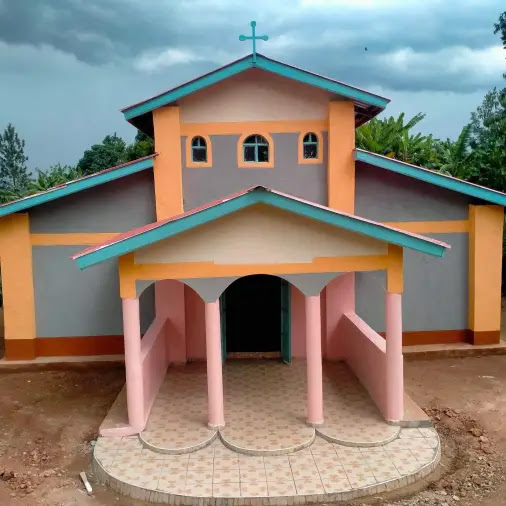
SAINT PAISIOS ORTHODOX CHURCH, NANDI - ELDORET DIOCESE, KENYA

IT’S DONE! SAINT PAISIOS ORTHODOX CHURCH, NANDI - ELDORET DIOCESE.

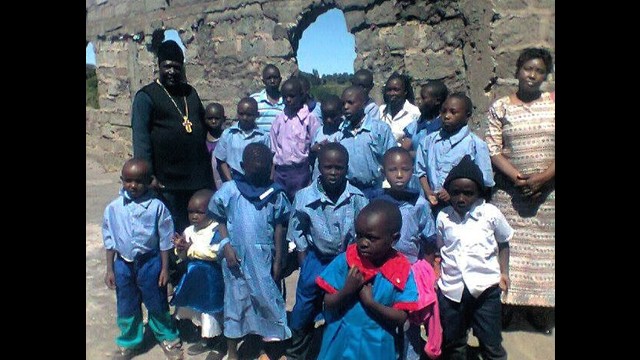
What starts well ends up well. We thank God for the donors toward the construction of this beautiful church. May St. Paisios bless all of you wherever you are. Many thanks to Fr. Leontios the director of constructions. This church is done because he worked tirelessly to make sure its not a disappointment. Indeed he has delivered.

Thanks to the parish priest Fr. Sergius and the faithful for their effort in providing some materials needed, and cooperation at work place. You prayed, the lord answered. God bless you all.

( https://www.facebook.com/profile.php?id=576264025 )


Orthodox Mission

Eldoret is a principal town in the Rift Valley region of Kenya and serves as the capital of Uasin Gishu County. The town is colloquially known as 'Sisibo'. As per the 2019 Kenya Population and Housing Census, Eldoret is the fifth most populated urban area in the country after Nairobi, Mombasa, Nakuru and Ruiru. Lying south of the Cherangani Hills, the local elevation varies from about 2100 meters at the airport to more than 2700 meters in nearby areas (7000–9000 feet). The population was 289,380 in the 2009 Census, and it is currently the fastest growing town in Kenya with 475,716 people according to 2019 National Census. Eldoret was on course to be named Kenya's fourth city, but was edged out by Nakuru in 2021.

More here

About the Orthodox Church in Kenya 

About Nandi tribe

Saint Paisios of Mount Athos (1924-1994), Feast day: July 12  
Saint Paisios of Athos in the Youth Culture of Greece

St. Paisios brings comfort to war-torn Congolese city

Three contemporary Orthodox Saints & the African peoples 

Τετάρτη 29 Ιουνίου 2016

2016 Kenya Youth Work Team


Orthodox Christian Mission Center

Traveling From: 8/20/2016 to 8/30/2016; Team Cost: $1315*

KISUMU, KENYA – Participate in a youth leader retreat in Nandi, Kenya this summer and be inspired by and encourage the dynamic youth leaders. One thousand youth have been invited from over 500 parishes for this Archdiocese national event, which will be held in the newly established Diocese of Kisumu and Western Kenya.


The 2016 Kenya Mission Team has been invited by His Grace ATHANASIOS Bishop of Kisumu and West Kenya [photo, from here] to participate in a four-day youth leader retreat. The retreat will focus on providing a deeper understanding of youth ministry, teachings on the Faith and evangelism. The Team will offer encouragement to youth leaders who come from large cities and rural villages.

At the end of 2015, Fr. Athanasios was elevated to Bishop by His Beatitude THEODOROS II, the Patriarch of Alexandria and All Africa. In his speech at his enthronement, the Patriarch said: “The hour of missions in the vast and great country of Kenya “has indeed come”. The fullness of time has arrived; the time of sowing has come as has the time of reaping. Teach them to love Christ’s name above all.” The Diocese of Kisumu and Western Kenya includes over 18,000 faithful, 200 parishes and 100 clergy. It is made up of four different tribes: Luhya, Luo,
Nandi and Turkana. About 9% of Kenya’s population belongs to peoples only marginally impacted by the Gospel, but a large number of people have been exposed to the Gospel.

 
Orthodoxy arose in East Africa without the influence of foreign missionaries. The Church was founded by two charismatic African men searching for truth and ‘orthodoxia’ in the 1920’s. The Orthodox Church in Kenya was received into canonical Orthodoxy in 1946, and the Makarios III Patriarchal Seminary was opened in the 1980’s to train indigenous priests from Africa. OCMC has supported the work of the Orthodox Church in Kenya for over 30 years and continues to provide support for theological and catechetical training, and works with church leaders to address issues of self-sufficiency for the church. Presently, the Church in Kenya has three hierarchs, His Eminence Archbishop MAKARIOS of Kenya, Bishop NEOPHYTOS of Nyeri and Mount Kenya Mount Kenya, and Bishop ATHANASIOS of Kisumu and Western Kenya.

Share the teachings of the Orthodox faith and be a part of laying the foundation of the Faith for many. Be a part of this dynamic youth outreach of the Church in Kenya. Participants should be well-grounded in the basic teachings of the Church and prepared to offer basic Orthodox catechism, religious education and youth outreach.

Dates: August 20 - 30, 2016, Cost: $1,315 (+ airfares)

Travel – Members make flight arrangements: a one-way domestic flight to Jacksonville, FL (JAX) Saturday, August 20 (by 4 pm for orientation). Team Members are to fly on the itinerary schedule that OCMC provides for the international flights: depart from JAX for Kisumu, Kenya on Monday, August 22; and depart Kisumu, Monday August 29. Airfares and visa are not included in participation cost.

Fund raising - Each Team member is responsible for the participant cost and airfares. Team members raise funds to cover the cost of their participation. Participants are encouraged to let others know that they will be sharing in the work of missions through their tax-deductible donations, and invite others to participate through prayer and financial support. The cost includes room and board, local transportation, orientation costs, ministry expenses, excursion and materials.

Share in a journey of faith… Orthodox Mission Team members are challenged to view the world with God's eyes and seek how He wants to use them to fulfill His plans. This cross-cultural experience, combined with outreach, offers participants a life-changing learning experience. This experience is about people, culture and missions. It is also about prayer, for you and others; it is about God, those you serve, and about yourself, as you serve Him.

Δευτέρα 11 Ιανουαρίου 2016

Spiritual and Social Education & help to the weak in the Orthodox Church of Kenya


Orthodox Missionary Fraternity

Spiritual and Social Education

Last week, with God’s help we had the great blessing to declare the beginning of the new academic year at the Orthodox Patriarchal School “Archbishop Makarios the 3rd”,which has been operating since1982.Thirty years of continuous offer and strong presence of the Lord among us.
During the Divine liturgy the choir of the Patriarchal School sang melodiously in Greek, English, Swahili, and in other local dialects. This year the School has 50 seminarists coming from Kenya and other African countries: Madagascar, Zambia, Malawi, Tanzania, Mozambique, Zimbabwe.

The Kenyan seminarists belong to the following tribes: Kikuyu, Nandi, Luo, Luyia, Maasai, Turkana, Kamba. Among the various activities of the School there is one of utmost importance, the translation project of the liturgical books, services, and mysteries into the local dialects, not only of Kenya, but also of the other African countries, too. So far over 250 different books have been released in more than thirty dialects.
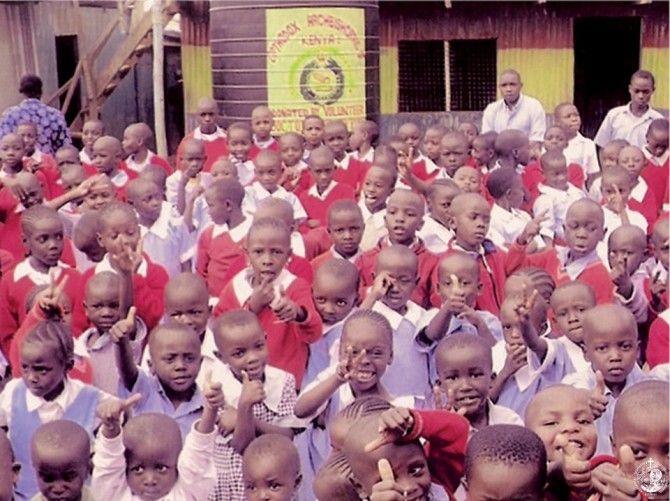
In the same place which hosts the Patriarchal school, there are also the Technical School with 700 students (male and female), the Orthodox College of Africa with 400 students (male and female), the Schools of Sewing, Computer Science, Social Studies, the Kindergarten and the Primary school of Saint Clement, with 450 poor children who are offered free of charge studies and on a daily basis breakfast and lunch, stationery, uniform and medical treatment.
Our Primary School was characterized the best and most perfect among thirty other primary schools of the district. All the teachers there are graduates of our local Orthodox Pedagogical School. The six best students who graduated last year are now in the first grade of one of the 15 junior high schools at the Diocese of Kenya.
In addition, there are 30 kindergartens and primary schools and 15 junior high schools. In most primary schools, there is free breakfast and meal on a daily basis.
It is worth mentioning- that in our school the services of matins and vespers are conducted daily, while every Friday there is Divine Liturgy. Especially at the Patriarchal School there is Divine Liturgy, vespers and compline after dinner on a daily basis. This way, the children and the young are spiritually reborn and reformed.


Outdoor catechism

Giving a helping hand to the weak

Equally important is the contribution of the Church as regards the field of orphans. Thanks to it, nowadays there are 3 orphanages operating in different regions, offering board and lodging, education etc. Here as well the daily schedule includes the Orthodox Christian Faith, since our priests participate actively in the children’s daily life through the services and also through teaching.
As regards the field of health, the participation of the local Church is intense. For this purpose, there are medical centers operating in most of the parishes, especially in the remote regions, where there is free medical treatment thanks to the frequent visits of the volunteer doctors who come from Greece, Cyprus, America, Finland, Netherlands, or even from far-off Australia. Quite often, for serious cases that require operation, the Diocese undertakes all the necessary expenses on credit and after a special agreement with the Coptic Hospital of Nairobi.
His Grace often tours in the country and gives out clothes, shoes, stationery and books as well as food to the destitute, irrespective of race or religion. There are also areas which have been plagued by the civil war and keep asking for continuous support and help. In this case there is bed and blanket distribution.
The Diocese, in cooperation with local and international organizations, is fighting at the front for stifling the plague of AIDS. There are special seminars particularly illuminating for the young held by speakers who are experts on this subject.
Among the various programs, it is important that we mention the way the catechists are trained, which has been operating like that for 25 years. Every Saturday young men and women gather from the parishes of Nairobi and the outskirts and are taught for two years lessons for teachers-catechists from the professors of the Patriarchal School. The same program is operating in other regions of Kenya as well.
A considerable part of the inhabitants, especially those from the schools in remote areas, lack clean, drinkable water and electric power. For this reason, the Diocese is pretty active in both these fields by undertaking the drilling of wells in barren areas so that the inhabitants and the school children are no longer deprived of water.


Welcoming Archbishop Makarios

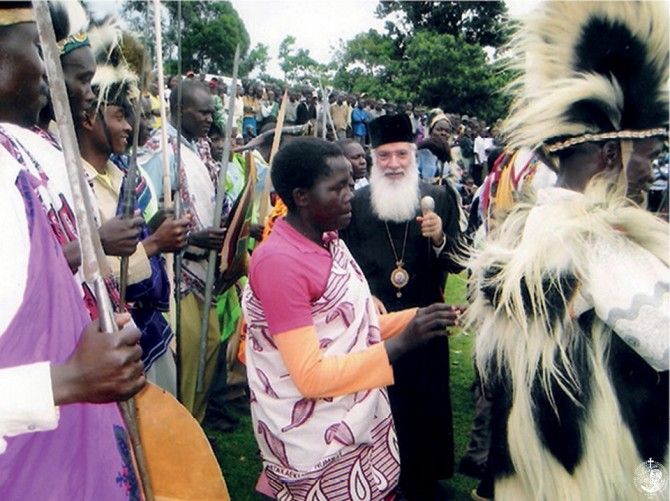
There are also organized teams of young men and women, mothers and fathers who hold regular gatherings with educational classes, seminars of orthodox spirituality, music performances, song festivals, traditional dances and athletic events.
These are the most important happenings that are taking place within the vicinity of our Diocese.
Asking for your prayers and your good thinking.

From the Holy Diocese

See also

Some child-advocacy ministries of Orthodox Church in Kenya, Uganda & Sierra Leone...
African Orthodox Church of Kenya
 
The three orthodox christians hierarchs of Kenya 
3 Orthodox Dioceses in Kenya...

Κυριακή 10 Ιανουαρίου 2016

Some child-advocacy ministries of Orthodox Church in Kenya, Uganda & Sierra Leone...


"...In order to provide educational opportunities to Kenyan children, the Orthodox Mission admits to its schools every child regardless of their religious affiliation. In this way, she is able to cultivate the spirit of selfless love in their hearts. In Nandi county, an Orthodox church is built next to the primary school. Every week, according to the curriculum of the Kenyan Ministry of Education, the Divine Liturgy is conducted and attended by all children, Christians and non-Christians..." (from here)

Click on the titles 

St Barnabas Orthodox Mission, Kenya


St Barnabas Orthodox Missions Kenya is a child-advocacy ministry that pairs able people with those who are suffering from poverty. The organization helps the needy from spiritual, economic, social, and physical poverty. The goal is for the needy to become responsible and fulfilled Kenyan citizen. We have worked since the year 2008 and have grown from modest beginnings when a local Priest. Kenyan Priest. JM Kariuki felt compelled to help 13 kids orphaned in Njabini Kenya. Today we have well over 300 children who have benefited from the project and are now reaping the benefits of one man’s clear, God-given vision.

Orthodox Kenya: Father Mwangi’s Orphanage


"Dear Family & Friends,

We credit Ekaterina Zagulyaeva, Christian Orthodox journalist from Moscow, Russia for exposing the needs of the Kenyan orphans & the unselfish work performed by Father Mark Mwangi & his wife Presbytera Alice Mwangi, in identifying & assisting orphaned children in obtaining shelter, healthcare needs, nutrition, education & fulfilling their spiritual needs..."
 
St. Nickolas Uganda Children's Fund


The St. Nicholas Uganda Children's Fund was founded in 2005 by Peter and Sharon Georges. They began paying school tuition for three orphans while they were working as Orthodox missionaries in 2003 and within two years the number of children they were assisting had grown to more than fifty. Now in its eleventh year, the Children's Fund is supporting over 240 children in school and provides additional assistance to needy families.
As the number of sponsored children increased and Sharon and Peter became more involved with the children's education, they realized that the need was greater than school fees, uniforms, lunches and books. Miserable living conditions seriously affect a child's ability to learn as well as jeopardize his or her general health. In response, their assistance to struggling families became more extensive: improved living quarters, beds, mattresses, sheets, blankets, mosquito nets, shoes, food staples, and health care.
Today, students are being sponsored in primary and secondary school, vocational and professional training, and university. Peter and Sharon are assisted by their Ugandan staff, Frank and Agnes, and together the four of them nurture the children with love, advice, and discipline. Young people who once had no hope, now have the opportunity to become honest and productive citizens, breaking the cycle of poverty and dependence that they were born into.
The St. Nicholas Uganda Children's Fund was incorporated as a non-profit organization in the U.S. in 2007 and as an NGO in Uganda in 2008. Peter and Sharon devote themselves full-time to this ministry without financial compensation. 


Paradise 4 kids (for Sierra Leone)


Christian missions involve sending individuals or groups, who termed “missionaries,” across borders and geographical boundaries, for the purpose of proselytism (conversion to Christianity) and catechism. This involves evangelism and humanitarian work,especially among the poor and disadvantaged.
Fr Themi’s Orthodox mission is such a mission, simply for helping people in need.
Once a rock star, atheist, marxist, an intellectual & scholar; religion to him, was for the uneducated and old ladies, a superstition to keep the masses under control; yet when the Son of God, Jesus Christ called, nothing could stop him following the words “Sell everything you have, give it to the poor and come and follow me”.
Today Fr Themi has dedicated his whole latter life to missionary work with the authority to preach the Christian faith and administer the Orthodox sacraments: to provide humanitarian work, to improve economic development, literacy, εκπαίδευση, health care, and orphanages:
His Orthodox Church doctrine is Christ’s own, a “Doctrine of Love & Forgiveness” giving aid without requiring conversion or anything in return.
Without any income except from a few hundred individuals; from a few small charity organisations; he treads where others fear to go, lives without luxury or excess and cares only to help the poor.


See also

Orthodox Kenya
Orthodox Uganda
Orthodox Sierra Leone

International Orthodox Christian Charities
Orthodox Christian Mission Center
Orthodox Missionary Fraternity

Κυριακή 13 Σεπτεμβρίου 2015

Eglise orthodoxe au Kenya: «Le message de l’orthodoxie est intemporel et dépasse les tribus et les langues»


 Turkana orthodoxe (voir ici)
L’Orthodoxie est parvenue jusqu’ ici à l'initiative de la population locale. Ils étaient à la recherche de la véritable Église. De retour en 1932, les Kenyans orthodoxes ont écrit une lettre au patriarche Meletios pour être reçus dans le Patriarcat d'Alexandrie, le patriarche leur a donné une réponse positive, mais il est décédé peu après. Les Kenyans ont de nouveau écrit une lettre, cette fois au Patriarche Christophe. En 1942, le métropolite Nicolas d'Axoum est venu à nous, supervisa tout, et en 1946, l'Eglise du Kenya a été reçue dans la communion avec le Patriarcat d'Alexandrie.
Peu après, le mouvement de libération contre le régime colonial au Kenya, a commencé. C’était en 1952. Il y avait beaucoup de paroisses orthodoxes du côté des rebelles, et les pasteurs protestants comme les prêtres catholiques ont qualifié le soulèvement de rébellion de païens et de sauvages. Ils ont emprisonné les prêtres orthodoxes. Par exemple, le père George Arthur Kaduna, le premier évêque "noir" au Kenya, a passé dix ans en prison en même temps que le futur président du pays et chef de la tribu Kikuyu, Jomo Kenyatta.
Le président a légué après sa mort, une parcelle de terrain pour la construction d'un séminaire orthodoxe, qui a ouvert ses portes en 1982. L'archevêque actuel de l'Albanie, Anastasios, a ouvert ce séminaire. Nous avons commencé avec des cours particuliers, le week-end, par l'étude de la Liturgie seulement, et maintenant le séminaire a atteint un niveau sérieux, nous pouvons attribuer des diplômes à des étudiants. Donc, cela fait maintenant partie de notre histoire.


Père Phillip Gatari, prêtre orthodoxe du Kenya (voir ici)

Metropolitan Makarios (Tillyrides) of Kenya, «Adventures in the Unseen III: The Mission Continues»
Jean-Claude Larchet, Orthodoxie.com

Adventures in the Unseen Metropolitan Makarios (Tillyrides) of Kenya, «Adventures in the Unseen III: The Mission Continues», Orthodox Research Institute, Rolligsford, 2011, 364 p.
« Aventures dans l'invisible: La Mission continue » est le troisième volume de la série « Aventures dans l’Invisible » consacrée à la Mission orthodoxe en Afrique. La manière dont l’Orthodoxie a été introduite en Afrique orientale au cours du XXe siècle, et la façon dont elle a pris racine et s’est développée relève du miracle. De l’Ouganda, elle s’est répandue au Kenya, en Tanzanie et dans toute l’Afrique. Ces dernières années, les Églises orthodoxes de Finlande, Grèce, Chypre et d’Amérique ont soutenu financièrement leur Eglise sœur en Afrique orientale, mais il faut cependant souligner que, hormis la première impulsion, l’implantation de l'Orthodoxie en Afrique de l'Est a été réalisée par les africains eux-mêmes sans aucune aide missionnaire extérieure.
Ce volume rassemble quatre-vingt-un sermons et discours prononcés de 2006 à 2009 par l’archevêque Macaire, métropolite du Kenya. Il donne un aperçu de l’énorme travail qui a été accompli sous son impulsion au cours des dernières décennies. Il y a soixante-dix ans, l’Orthodoxie n’existait pas en Afrique orientale ; aujourd’hui, un réseau de centaines de paroisses, ayant à leur tête un clergé autochtone, s’étend sur toute la longueur et la largeur de cette vaste région du continent africain. Ces écrits fournissent un témoignage de ce phénomène d’expansion remarquable et constituent une belle leçon pour les Églises orthodoxes présentes en Europe occidentale qui, bien que vivant dans un monde déchristianisé et en quête de spiritualité, sont totalement paralysées dans leurs activités missionnaires par un repli sur leurs identités nationales, culturelles et linguistiques.


L’archevêque Macaire du Kenya (dans le monde A. Tillyridès) est né en 1945 à Limassol (Chypre), où il a accompli ses études primaires et secondaires. Il a ensuite étudié la théologie à l’Institut théologique orthodoxe Saint-Serge de Paris (1968-1972) et a suivi parallèlement les cours des professeurs Jean Gouillard  à École Pratique des Hautes Etudes et Paul Lemerle au Collège de France. En septembre 1972, il a commencé des études de troisième cylce à l’Université d’Oxford sous la direction de Mgr Kallistos Ware, couronnées en 1976 par le titre de docteur en philosophie de l'Université d'Oxford. Il a mené ensuite pendant trois ans une recherche post-doctorale à l'Université de Louvain (Belgique). Les années suivantes, il a enseigné en tant que théologien laïc au Séminaire Saint-Barnabé de Nicosie et dans des écoles secondaires à Chypre, mais fut chargé, dès 1977, de fonder un séminaire à Nairobi au Kenya, dont il a été par la suite le directeur et où il a enseigné pendant quinze ans. Ordonné diacre, prêtre et évêque de Riruta en 1992, il a été élu, par le Saint-Synode du patriarcat d’Alexandrie, métropolite du Zimbabwe en 1993 et métropolite du Kenya en février 2002. En dehors du grec, qui est sa langue maternelle, il parle anglais, français, russe et italien, et peut également parler et lire de nombreuses langues africaines. Il est l’auteur de centaines d’articles théologiques et scientifiques, consacrés surtout à l’histoire des anciens Patriarcats et des Églises de Chypre et de Russie.

Le métropolite du Kenya Macaire est allé visiter une église orthodoxe en construction aux pieds du Mont Kilimandjaro 
on 20 September 2014

Après un voyage laborieux et pénible depuis le Kenya occidental, le métropolite du Kenya Macaire est arrivé dans la région du Kilimandjaro. Avec deux prêtres de la région, il a visité l’église en construction située exactement au pied de la montagne. Le métropolite avait consacré, en 2004, la première église dans le village d’Ilasit, dédiée à saint Jean Baptiste. La nouvelle église se trouve à la frontière de la Tanzanie. Le métropolite a remercié tous ceux qui travaillent dans la région, particulièrement les prêtres, anciens étudiants de l’École patriarcale. Peu avant de revenir à Nairobi, le métropolite a posé la première pierre d’une nouvelle église dédiée à saint Jean Chrysostome. 
S’adressant aux fidèles des deux tribus, Kikuyu et Maasaï, le métropolite a souligné que le message de l’orthodoxie est intemporel et dépasse les tribus et les langues. Le métropolite, lors de sa visite aux trois églises, a rappelé sa première visite, il y a trente ans, lorsqu’il était venu en tant que laïc faire connaissance des fidèles et les catéchiser. À cette époque, il n’existait même pas de route, que des sentiers, et il fallait un jour entier pour arriver au village, ce qui n’est plus le cas maintenant, lorsque l’on peut venir depuis l’École patriarcale jusqu’à Kilimandjaro en trois heures sur une route asphaltée. Il rappela aussi la première nuit dans la région où il avait dormi à même le sol, sur la terre et l’herbe. 
Le soir, les éléphants allaient et venaient et émettaient des bruits curieux. «Pour moi, inexpérimenté, leur présence, près de moi, m’effrayait et je ne pouvais dormir le soir» a-t-il rappelé. Avant de partir, le métropolite a rendu visite, dans sa maison, le vieux prêtre Romain, malade depuis des années. Le métropolite, après avoir prié, lui souhaita un prompt rétablissement. 
 
Interview de Père Phillip Gatari, prêtre orthodoxe du Kenya

Du coeur de l'Afrique Une entrevue avec le Père Phillip Gatari, et prêtre orthodoxe du Kenya P.Phillip Gatari récemment visité Moscou. Il était l'invité du monastère de Sretensky pendant deux jours, et a célébré la liturgie avec les frères et d’autres moines du Mont Athos en visite. Après les offices, ce pasteur joyeux nous a parlé de l'Orthodoxie au Kenya et de son travail en tant que directeur d'une école rurale.
P.Phillip Gatari. Divine Liturgie au monastère Sretensky. Photo: P.Ignace (Shestakov)

 Le Kenya n'est pas un pays riche, et les gens vivent une vie très simple ici, surtout dans les provinces. P.Phillip, le recteur de l'église de Saint-Antoine dans le village de Ishamara dans le centre du Kenya, ne fait pas exception. Il est très occupé, l'Orthodoxie est la confession dont la croissance est la plus dynamique au Kenya, et les baptêmes de masse dans les villages ne sont pas rares, avec au moins 50 à 70 personnes à la fois. 

 –  P.Phillip, parlez-nous de votre église. À quelle juridiction ecclésiastique appartient-elle? 

 – Notre église est dédiée à saint Antoine le Grand, qui a vécu en Egypte et est la tête du monachisme pour le monde entier. Nous appartenons à la juridiction du Patriarcat d'Alexandrie, et notre foi est l'Orthodoxie. Ma paroisse est située dans le diocèse du Kenya, et nous essayons de l'élargir et de l'augmenter. Nous n'avons pas une grande paroisse, autour de 300 personnes, parmi lesquelles environ 100 d'entre elles sont des paroissiens actifs.


Mgr Jonas, archevêque orthodoxe de l'Ouganda
 – Comment les Kenyans sont-ils venus à l'Orthodoxie?

 – L’Orthodoxie est parvenue jusqu’ ici à l'initiative de la population locale. Ils étaient à la recherche de la véritable Église. De retour en 1932, les Kenyans orthodoxes ont écrit une lettre au patriarche Meletios pour être reçus dans le Patriarcat d'Alexandrie, le patriarche leur a donné une réponse positive, mais il est décédé peu après. Les Kenyans ont de nouveau écrit une lettre, cette fois au Patriarche Christophe. En 1942, le métropolite Nicolas d'Axoum est venu à nous, supervisa tout, et en 1946, l'Eglise du Kenya a été reçue dans la communion avec le Patriarcat d'Alexandrie. Peu après, le mouvement de libération contre le régime colonial au Kenya, a commencé. C’était en 1952. Il y avait beaucoup de paroisses orthodoxes du côté des rebelles, et les pasteurs protestants comme les prêtres catholiques ont qualifié le soulèvement de rébellion de païens et de sauvages. Ils ont emprisonné les prêtres orthodoxes. Par exemple, le père George Arthur Kaduna, le premier évêque "noir" au Kenya, a passé dix ans en prison en même temps que le futur président du pays et chef de la tribu Kikuyu, Jomo Kenyatta. Le président a légué après sa mort, une parcelle de terrain pour la construction d'un séminaire orthodoxe, qui a ouvert ses portes en 1982. L'archevêque actuel de l'Albanie, Anastasios, a ouvert ce séminaire. Nous avons commencé avec des cours particuliers, le week-end, par l'étude de la Liturgie seulement, et maintenant le séminaire a atteint un niveau sérieux, nous pouvons attribuer des diplômes à des étudiants. Donc, cela fait maintenant partie de notre histoire. 

Cérémonie de remise des diplômes au «Séminaire III Makarios, Kenya» École ecclésiastique orthodoxe (ici)

– Comment êtes-vous personnellement devenu orthodoxe?

– Je ne suis devenu orthodoxe dans mon enfance qu’à neuf ans. Je n'avais pas été baptisé auparavant.

– Vos parents sont-ils aussi orthodoxes ?  

Ils n'étaient pas croyants, mais plus tard, ils ont suivi les traces de leur fils et sont devenus orthodoxes. 

Bénédcition des fidèles, au monastère Sretensky. Photo: P.Ignace (Shestakov)
  – Qu'est-ce qui a été le plus important dans votre cheminement vers l'Orthodoxie, une personne, une école ou autre chose? 

–  Notre prêtre de paroisse. Il m'a influencé, dans mon village, dans notre église. J'étais un enfant alors. J'ai continué à aller à l'église aussi après avoir grandi. 

–  Parlez-nous de votre église. En quoi a-t-elle été construite ? 

–  Au départ, notre église a été faite d'argile, et c’est seulement plus tard qu’il y a eu un bâtiment en pierre. Mais nous n'avons pas d'iconographes pour peindre les fresques, et il est très coûteux d'embaucher des artistes de l'Europe. Par conséquent, nous avons uniquement les icônes que nous accrochons au mur, mais pas de peintures murales. Nous avons également eu une cloche, mais elle a été volée dans le clocher même.

–  J’aimerais en savoir plus sur la vie spirituelle dans votre paroisse : Les gens viennent-ils souvent se confesser et communier?

 –  Ceux qui en ressentent le besoin et se sont préparés eux-mêmes reçoivent généralement la communion chaque fois qu'il y a une liturgie. Mais bien sûr, si quelque chose les en empêche, ils ne communient pas. En général, nous essayons de parler avec ces personnes et de savoir quel est le problème. La confession avant la communion n'est généralement pas obligatoire. Cela dépend des personnes en particulier. Si quelqu'un vient et dit: «Je dois me confesser" , alors bien sûr nous prenons sa confession. Mais dans de nombreux cas, j'essaie d'envoyer la personne à un prêtre plus expérimenté pour se confesser. 

–  Quel genre de travail missionnaire se fait au Kenya, dans votre paroisse, et dans votre diocèse?

 –  Nous avons beaucoup de différentes sortes de travail missionnaire. Il existe des programmes pour la jeunesse, des programmes pour les femmes, des programmes pour des confréries masculines. Nous avons des classes d'école du dimanche. Il existe également des programmes éducatifs destinés au travail à l'école secondaire et les classes élémentaires. Dans les écoles laïques, nous essayons aussi de garder une orientation chrétienne. Je suis très fier du fait qu'il y a une école secondaire orthodoxe dans notre paroisse qui a été fondée par l'Église, mais nous y acceptons tous les enfants, peu importe leur confession. Nous travaillons selon un programme d'enseignement public qui est appliqué dans toutes les écoles au Kenya. Ce programme est utilisé partout, même dans les écoles privées : le cours est de quarante minutes, il doit y avoir huit cours par jour, ce sont des enseignants qualifiés qui y œuvrent, et tout à l’avenant. L'éducation est sous contrôle gouvernemental. À ce jour, nous avons 65 élèves, c’est en partie le résultat de notre travail missionnaire de même le directeur de notre école, et les élèves. Lorsque j'ai été affecté à cette paroisse il y avait une parcelle de cinq acres ( un peu plus de 2 ha) de terre prévus pour une école. Cela avait été abandonné et depuis dix ans, il n'y avait rien, aucun bâtiment, rien. Maintenant, avec l'aide de Dieu il y a une école, avec des salles de classe et desbureaux. Dans l'église, nous essayons d'utiliser les langues locales. Les sermons sont également en langue locale. Mais dans les écoles on utilise l'anglais dans tout le Kenya. L'ensemble de la population parle anglais.


 P.Phillip Gatari et hiérodiacre Séraphins, Monastère Sretensky. Photo: hiéromoine Ignace (Shestakov)

–  A votre avis, est-ce que l'Orthodoxie a un plus grand avenir encore au Kenya? 

–  Si nous avons une gouvernance sage et que nous nous fondons sur les populations locales, en suivant leurs besoins, et en étant leurs partenaires, alors nous avons un grand potentiel. Notre mission doit englober de nouveaux groupes ethniques.


Metropolite Jeronymos de Mwanza

Vasily Tomachinsky spoke with Fr. Phillip Gatari
Photos: Hieromonk Ignaty (Shestakov)

Sources :
Pravoslavie.ru
Icone des saints africains de La Fraternité de St. Moîse Le Noir

Bénédiction de la première église orthodoxe dédiée à saint Germain d’Alaska au Kenya


Orthodoxie.com

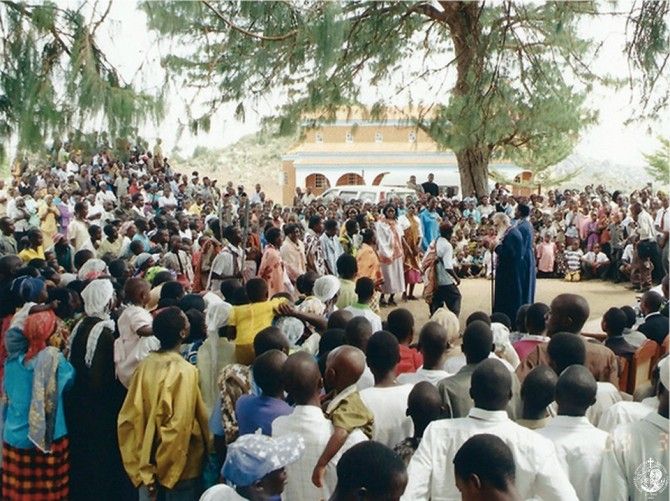
Le 15 février 2015, le métropolite du Kenya Macaire, accompagné par l’évêque de Nitrie Néophyte et encore trente prêtres de la tribu des Nandi, a procédé à la dédicace de la première église orthodoxe en Afrique, dédiée à saint Germain d’Alaska. La nouvelle église est située près du lycée orthodoxe dans un village de la région des Nandi. Des milliers de fidèles orthodoxes ont assisté à la cérémonie et ont participé activement tant à celle-ci qu’à la Liturgie elle-même, en chantant tous les hymnes liturgiques. Était également présent le donateur de l’édifice, qui est prêtre et professeur en Alaska. Celui-ci a offert à la paroisse une icône de saint Germain avec un fragment des reliques du saint. À cette occasion, le métropolite a également ordonné quinze lecteurs originaires de la région. 

Epitaph orthodoxe à Kibera, le Vendredi Saint 2015 (photo ici).
 

Nouvelles et articles de l'Église orthodoxe & Mission
  
Orthodoxie.com / Kenya
Orthodoxie.com / Afrique