Δευτέρα 17 Ιανουαρίου 2022

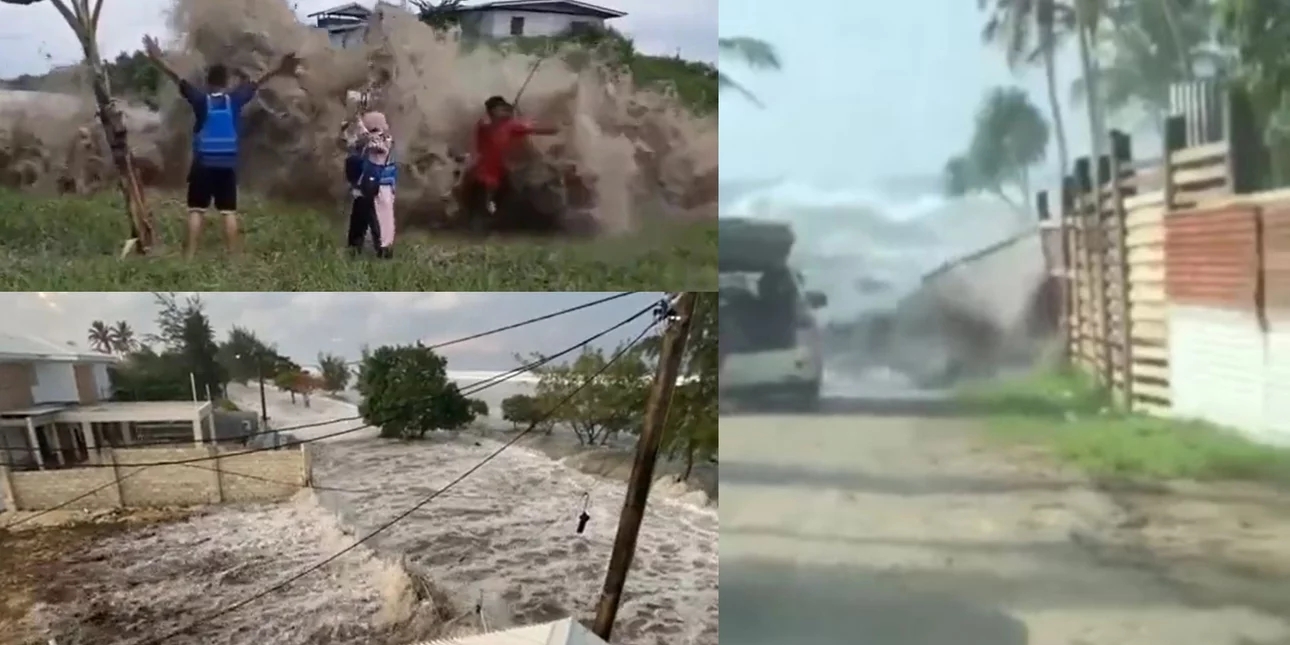
We ask for prayers from all for the people of Tonga, Fiji, Samoa! (Pacific Islands Orthodox Christian Church)


Σας παρακαλούμε να προσευχηθείτε για όλους τους κατοίκους των νησιών Τόνγκα, Σαμόα και Φίτζι, καθώς και για τους Ορθόδοξους Χριστιανούς των νησιών αυτών.

Πηγή φωτογραφιών : iefimerida.gr

See here:

https://www.facebook.com/OrthodoxPacifika

Ka inoi matou ki te katoa mo te iwi o Tonga, Whīti, Hāmoa! ( Hahi Karaitiana Orthodox Moutere o te Moananui-a-Kiwa ). 

Matou te ole atu mo tatalo mai tagata uma mo tagata o Toga, Fiti, Samoa! ( Ekalesia Kerisiano Orthodox a Atumotu o le Pasefika ). 

Keitou kerea na masu mai vei ira kece na kai Toga, Viti, Samoa! ( Lotu Vakarisito ni Yatu Pasifika ).

ʻOku mau kolea ha ngaahi lotu mei he kakai kotoa pē ʻo Tonga, Fisi, Haʻamoá! ( ʻOtu Motu Pasifiki ʻEvangelioo Siasi Faka-Kalisitiane ). 

हम टोंगा, फिजी, समोआ के लोगों के लिए सभी से प्रार्थना के लिए पूछते हैं! (प्रशांत द्वीप ों रूढ़िवादी क्रिश्चियन चर्च)

Κυριακή 16 Ιανουαρίου 2022

Great ancients Africans saints of January!...


The Patriarchate of Alexandria elected new Metropolitans and Bishops


"The Holy Synod of the Patriarchate of Alexandria has now completed its three-day session, January 10-12, and has issued a communique. (link) (official communique in Greek)  The communique announced the election of one new metropolitan and five new bishops. The new metropolitan and one of the new bishops are native Africans.  The important vacancy left by the death of Metropolitan Jonah of Kampala and All Uganda, a native African, was filled by Metropolitan Ieronymos of Mwanza (Tanzania), another native African. Archimandrite Chariton Musungai, a native African, was elected Metropolitan of Kananga (Democratic Republic of Congo). 

Archimandrite Nektarios Kabouye, who I believe is also a native African, was elected Bishop of Gulu (Uganda).  There are now a total of six native Africans (3 metropolitans and 3 bishops) in the hierarchy of the Patriarchate of Alexandria.  It was planned that the second day of the Synod would be devoted to the pay of the clergy.  This issue was to be presented by Metropolitan Seraphim of Zimbabwe and Angola. The communique states that because of the non-attendance of Metropolitan Seraphim at the Synod, this subject was postponed.  At the present time, I understand that some of the clergy in Africa serve with little or no pay" (il sismografo). 

***

Orthodox times

The Holy Synod of the Patriarchate of Alexandria elected new Metropolitans and Bishops today, January 12, 2022.

Read below the announcement of the Patriarchate of Alexandria:

Through the intercessions of the Holy glorious all-praised Apostle Mark, the deliberations of the Extraordinary Holy Synod of the Hierarchy of the ancient Patriarchate of Alexandria and All Africa was completed, under the presidency of His Beatitude Theodoros II, Pope and Patriarch of Alexandria and All Africa and which took place in the Great City of Alexandria, from 10th to 12th January 2022.

The Hierarchy of the Alexandrian Throne, during its three-day session, dealt with the issues of the pre-announced Agenda, as follows:

a) The Activity Report of His Beatitude was heard.

b) In connection with the meeting, the Patriarch announced the founding of the newly established Diocese of Jinja and Eastern Uganda by detachment from the Holy Diocese of Gulu and Northern Uganda, signed by the relevant Patriarchal Tome.

Thereafter, the following presentations were given by the commissioned Metropolitans and Bishops:

1. His Eminence Cameroon on the topic: “Facing the Introduction of Orthodox Churches on the African Continent”.

2. His Eminence Arusha on the topic: “The Course and Work of Missions in the Midst of a Pandemic”.

After each presentation, there was a long discussion and commentary.

Due to his non-attendance, it was decided that it was better to postpone the informative Presentation by His Eminence Seraphim, Metropolitan of Zimbabwe and Angola.

Then, in order of seniority, the Metropolitan and Bishop Hierarchs of the Throne read the relevant activity reports of their Provinces.

Thereafter, by Venerable proposal of the Primate of Alexandria, the Holy Synod proceeded to the election of Hierarchs, transfers and elevations, as follows:

His Eminence Metropolitan Narcissus of Naucratis to Metropolitan of Pilousion.

His Eminence Metropolitan Panteleimon of Brazzaville and Gabon to Metropolitan of Naucratis.

His Eminence Metropolitan Ieronymos of Bukoba [photo] to Metropolitan of Kampala.


His Eminence Metropolitan Theodosius of Kananga to Metropolitan of Kinshasa.

His Grace Provincial Bishop Sylvester of Gulu [photo] to Provincial Bishop of Jinja and Eastern Uganda.

The Very Reverend Archimandrite Chrysostomos Maidonis to Provincial Bishop of Bukoba.

The Very Reverend Archimandrite Nektarios Kabouye to Provincial Bishop of Gulu and Northern Uganda. The Very Reverend Archimandrite Chariton Mousoungayi to Metropolitan of Kananga.

The Very Reverend Archimandrite Themistocles Adamopoulos to Auxiliary Bishop of Nilopolis (transferred to the Holy Metropolis of Guinea).

The Very Reverend Archimandrite Kosmas Thasitis to Auxiliary Bishop of Konstantianis (transferred to the Holy Metropolis of Katanga).

The Very Reverend Archimandrite Nicodemus Totkas to Auxiliary Bishop of Nilopolis (Auxiliary Bishop of His Beatitude).

The deliberations of the Holy Synod ended with the Services of the Great Messages of the newly elected bishops of the Throne.

The Holy Synod of the Hierarchy of the ancient Alexandrian Throne, glorifying the glorious Name of the Holy God in Trinity, prays together with His Beatitude for the success of all efforts in the Vineyard of Africa and for the grace of the Holy Spirit to come upon all those who work for the spread of the Word of our Lord Jesus Christ “to whom be the glory and the power for ever and ever. Amen!”

 

Σάββατο 15 Ιανουαρίου 2022

Veneration of the Precious Chains of the Holy and All-Glorious Apostle Peter

 Commemorated on January 16

Orthodox Church in America

The Veneration of the Honorable Chains of the Holy and All-Praised Apostle Peter: In about the year 42, on the orders of Herod Agrippa, the Apostle Peter was thrown into prison for preaching about Christ the Savior. In prison he was held secure by two iron chains. During the night before his trial, an angel of the Lord removed these chains from the Apostle Peter and led him out from the prison (Acts 12:1-11).

Christians who learned of the miracle took the chains and kept them as precious keepsakes. For three centuries the chains were kept in Jerusalem, and those who were afflicted with illness and approached them with faith received healing. Patriarch Juvenal (July 2) presented the chains to Eudokia, wife of the emperor Theodosius the Younger, and she in turn transferred them from Jerusalem to Constantinople in either the year 437 or 439.

Eudokia sent one chain to Rome to her daughter Eudoxia (the wife of Valentinian), who built a church on the Esquiline hill dedicated to the Apostle Peter and placed the chain in it. There were other chains in Rome, with which the Apostle Peter was shackled before his martyrdom under the emperor Nero. These were also placed in the church.

On January 16, the chains of Saint Peter are brought out for public veneration. 

You can see more here.


Κυριακή 9 Ιανουαρίου 2022

Μια παγκόσμια διατροφική κρίση (& η "κουλτούρα του κρέατος")


ΚΑΘΗΜΕΡΙΝΗ, 16.6.2002 (δυστυχώς, δε νομίζουμε να έχει αλλάξει κάτι 20 χρόνια μετά). Φωτο από το διαδίκτυο.

Στη διάσκεψη του Παγκόσμιου Οργανισμού Τροφίμων αυτή την εβδομάδα στη Ρώμη, το μενού των επίσημων γευμάτων ήταν πιο ενδιαφέρον από το ίδιο το περιεχόμενο των συνεδριάσεων. Στα διαλείμματα των συζητήσεων περί πείνας και υποσιτισμού, οι υπουργοί Γεωργίας απόλαυσαν το κρέας τους, που σε πολλές περιπτώσεις ήταν βοδινό. Κι εδώ βρίσκεται το παράδοξο.

Καθημερινά, εκατοντάδες εκατομμύρια άνθρωποι στον κόσμο πεινούν διότι όλο και μεγαλύτερο τμήμα της καλλιεργήσιμης γης φυτεύεται με σπόρους που χρησιμοποιούνται ως ζωοτροφές, όχι για τη διατροφή ανθρώπων. Και βέβαια, τα ζώα που τρέφονται με αυτές τις καλλιέργειες καταναλώνονται από τους πλουσιότερους κατοίκους του πλανήτη, ενώ οι υπόλοιποι υποσιτίζονται ή πεθαίνουν της πείνας. Η μετάβαση της παγκόσμιας γεωργίας από την καλλιέργεια τροφής στην καλλιέργεια ζωοτροφής είναι μία νέα διεστραμμένη πρακτική, με συνέπειες που θα μπορούσαν να είναι σοβαρότερες από οποιοδήποτε άλλο κακό έχει κάνει ποτέ άνθρωπος σε άνθρωπο.

Αυτή τη στιγμή, πάνω από το 70% της αγροτικής παραγωγής των ΗΠΑ προορίζεται για τη διατροφή ζώων, κυρίως βοοειδών. Τα βοοειδή είναι τα πλέον αδηφάγα, οι «Κάντιλακ» των ζώων. Για να κερδίσει ένα μοσχάρι μισό κιλό βάρος, χρειάζεται να καταναλώσει πάνω από τέσσερα κιλά τροφής, εκ των οποίων τα 2,7 πρέπει να είναι δημητριακά ή υποκατάστατα δημητριακών. Συνολικά, μόνο το 11% της τροφής των βοοειδών γίνεται κρέας, ενώ τα υπόλοιπα χάνονται στη μετατροπή, χρησιμοποιούνται για τις φυσιολογικές λειτουργίες του οργανισμού τους, συντηρούν μέρη του ζώου που δεν τρώγονται, ή αποβάλλονται ως περιττώματα.

Τεχνητή διατροφική αλυσίδα

Το γεγονός ότι τα ζώα που καταλήγουν στο πιάτο μας καταναλώνουν μεγάλο μέρος των δημητριακών του πλανήτη είναι ένα εξαιρετικά πρόσφατο φαινόμενο στην παγκόσμια γεωργία. Η σταδιακή μετάβαση στο μοντέλο αυτό τα τελευταία πενήντα χρόνια έγινε χωρίς συζήτηση -παρ’ όλ’ αυτά έχει πολύ μεγαλύτερη επίδραση στην κατανομή των τροφίμων από οποιοδήποτε άλλο παράγοντα της σύγχρονης ιστορίας. Είναι μια τεχνητή διατροφική αλυσίδα, η πλέον άνιση τής ιστορίας.

Στις αναπτυσσόμενες χώρες, ο αγροτικός πληθυσμός εξεγείρεται κατά καιρούς, ζητώντας αναδασμό της γης. Ετσι, το ζήτημα της ιδιοκτησίας της γης αποτελεί αντικείμενο πολιτικής αντιπαράθεσης, όμως το θέμα των χρήσεων τής καλλιεργήσιμης γης παραμένει εκτός συζήτησης.

Παραδεχόμαστε σχεδόν αξιωματικά ότι για να θρέψουμε τον κόσμο με περισσότερες πρωτεΐνες πρέπει να τον ταΐσουμε περισσότερο κρέας. Όμως, ένα εκτάριο φυτεμένο με δημητριακά παράγει πέντε φορές περισσότερες πρωτεΐνες από ένα εκτάριο που προορίζεται για τη διατροφή ζώων. Αν μάλιστα φυτέψουμε την ίδια έκταση με όσπρια (φασόλια, αρακά, φακές) παράγουμε δέκα φορές περισσότερες πρωτεΐνες, ενώ αν τη φυτέψουμε λαχανικά, η πρωτεϊνική παραγωγή μπορεί ως και να δεκαπενταπλασιαστεί.

Οι εταιρείες, που παράγουν τους σπόρους και τα χημικά λιπάσματα, εκτρέφουν τα ζώα και ελέγχουν τα σφαγεία και τη διανομή του κρέατος προσπαθούν να μας πείσουν ότι το καλύτερο κρέας προέρχεται από ζώα που έχουν τραφεί με δημητριακά. Αυτό είναι «το ανώτατο σκαλί της κλίμακας των πρωτεϊνών» και, σύμφωνα με τη λογική αυτή, το κύρος μιας χώρας αυξάνεται όσο πλησιάζει σ’ αυτό το στάδιο. Το αμερικανικό περιοδικό Farm Journal απηχεί τις προκαταλήψεις αυτές. «Οι αναπτυσσόμενες χώρες πρέπει να παράγουν περισσότερο κρέας (…) Αρχίζουν προωθώντας την παραγωγή αυγών και πουλερικών, γιατί αυτή είναι η γρηγορότερη και φθηνότερη πηγή μη φυτικών πρωτεϊνών. Μετά, αν η οικονομία τους το επιτρέπει, ανεβαίνουν την κλίμακα των πρωτεϊνών και φθάνουν στο χοιρινό, στο γάλα, στα βοοειδή ελευθέρας βοσκής και, τελικά, αν μπορούν, στα βοοειδή που τρέφονται με δημητριακά». Προτρέποντας άλλες χώρες να «ανεβούν την κλίμακα», οι Αμερικανοί αγρότες εξυπηρετούν τα συμφέροντά τους. Πάνω από τα δύο τρίτα των δημητριακών που εξάγουν οι ΗΠΑ προορίζονται για τη διατροφή ζώων.

Το παράδειγμα της Αιθιοπίας

Πολλές χώρες ακολούθησαν αυτή τη συμβουλή. Ένα από τα χαρακτηριστικότερα και πλέον τραγικά παραδείγματα είναι αυτό της Αιθιοπίας.

Την περίοδο του μεγάλου λιμού του 1984, καθώς χιλιάδες άτομα πέθαιναν καθημερινά από την πείνα, η Αιθιοπία καλλιεργούσε λιναρόσπορο και ελαιοκράμβη, που εξάγονταν ως ζωοτροφές στη Βρετανία και άλλες ευρωπαϊκές χώρες. Είναι τρομερό το ότι το 80% των παιδιών που υποσιτίζονται ζουν σε χώρες που έχουν πλεόνασμα γεωργικών προϊόντων, το οποίο συχνά αποτελείται από ζωοτροφές. Στις αναπτυσσόμενες χώρες, η παραγωγή δημητριακών για τη διατροφή ζώων έχει τριπλασιαστεί από το 1950 και σήμερα ξεπερνά το 21% της συνολικής παραγωγής δημητριακών. Στο Μεξικό, το ποσοστό της παραγωγής δημητριακών που καταναλώνεται από ζώα αυξήθηκε από το 5% το 1960 στο 45% σήμερα, στην Ταϊλάνδη από το 1% στο 30% σήμερα και στην Αίγυπτο από το 3% στο 31% σήμερα. Συνολικά στον πλανήτη το 36% της παραγωγής δημητριακών προορίζεται για τη διατροφή ζώων.

Τα τελευταία 50 χρόνια, η παγκόσμια παραγωγή κρέατος έχει πενταπλασιαστεί. Έτσι, ενώ ένα δισεκατομμύριο άτομα υποσιτίζονται, στο δυτικό κόσμο οι άνθρωποι πεθαίνουν από ασθένειες, που σχετίζονται με την υπερβολική κατανάλωση λιπαρών κρεάτων (πχ καρδιαγγειακά νοσήματα).

Παρ’ όλ’ αυτά, πολλοί θεωρούν ότι η κατανάλωση μεγάλων ποσοτήτων βοδινού και άλλων κρεάτων, που έχουν τραφεί με δημητριακά, είναι βασικό δικαίωμα. Το γεγονός ότι για τον υποσιτισμό ενός τμήματος της ανθρωπότητας ευθύνεται η κουλτούρα του κρέατος δεν απασχολεί καθόλου την κοινή γνώμη. Μήπως είναι καιρός να το συζητήσουμε;

Διαβάστε και:

Η υπερκατανάλωση κρέατος απειλεί το οικοσύστημα
 
Ο Κόσμος Ακόμη Δεν Έχει Κατανοήσει Τη Σύνδεση Μεταξύ Κατανάλωσης Κρέατος Και Κλιματικής Αλλαγής
 
Κρέας: Τι παθαίνουμε από την υπερκατανάλωση

Η υπερκατανάλωση κρέατος και οι περιβαλλοντικές της επιπτώσεις


Υπογονιμότητα; ίσως φταίει η υπερκατανάλωση κρέατος
 
Οι αιτίες των λιμών  

Ενώ ζούμε στον 21ο αιώνα, χιλιάδες παιδιά δυσκολεύονται να έχουν τα άκρως απαραίτητα!... 

Κάθε μέρα πεθαίνουν 15.000 παιδιά κάτω των 5 ετών αλλά η πείνα δεν είναι μεταδοτική και έτσι δεν μας αφορά... 

Μαδαγασκάρη: Ο επίγειος παράδεισος που δεν μπορεί να θρέψει τα παιδιά του 

Μαδαγασκάρη: "Το ρύζι είναι άχρηστο τρόφιμο, δεν υπάρχει νερό για να βράσει!"

Η Φιλοθέη και το σχοινί (της αυτοκτονίας)

COP26 – Το ήμισυ των εδαφών των αυτοχθόνων πληθυσμών δεν ανήκει σε αυτούς

Nairobi Orthodox Youth Association of Kenya (NOYA)

Pemptousia.com

Παρασκευή 7 Ιανουαρίου 2022

The Final Destruction of Demons – Holy Baptism


Icon from here

“Final” is not a word you often hear in Christian teaching. Most Christians leave the final things until, well, the End. But this is not the language of the fathers nor of the Church. A good illustration can be found in the Orthodox service of Holy Baptism. During the blessing of the waters the priest prays:

And grant to [this water] the grace of redemption, the blessing of Jordan. Make it the fountain of incorruption, the gift of sanctification, the remission of sins, the remedy of infirmities; the final destruction of demons, unassailable by hostile powers, filled with angelic might. Let those who would ensnare Your creature flee far from it. For we have called upon Your Name, O Lord, and it is wonderful, and glorious, and awesome even to adversaries.
What can it possibly mean to ask that the waters be made “the final destruction of demons”?
The nature of the waters of Baptism reveals the Orthodox understanding of the world. These waters, now in a font, are none other than the waters of the Jordan. They are an incorruptible fountain and all the things we ask for. They are the final destruction of demons because they are nothing other than Christ’s Pascha. The waters of the font are Christ’s death on the Cross and His destruction of Hades. They are the resurrection of the dead.
For this reason St. Paul can say:
Do you not know that as many of us as were baptized into Christ Jesus were baptized into His death? Therefore we were buried with Him through baptism into death, that just as Christ was raised from the dead by the glory of the Father, even so we should walk in newness of life (Rom. 6:3-4).
The realism of St. Paul’s teaching on Baptism is mystical realism (to coin a phrase). These waters become those waters. This event becomes that event. This time is now that time. Christ’s death now becomes my death. Christ’s resurrection now becomes my resurrection.
How utterly and uselessly weak is the thought that Baptism is merely an obedience to a command given by Christ! The idea that nothing happens in Baptism is both contrary to Scripture and a denial of the very nature of our salvation.
The anti-sacramentalism (and non-sacramentalism) of some Christian groups is among the most unwittingly pernicious of all modern errors. Thought to be an argument about a minor point of doctrine, it is, instead, the collapse of the world into the empty literalism of secularity. In the literalism of the modern world (where a thing is a thing is a thing), nothing is ever more than what is seen. Thus every spiritual reality, every mystery, must be referred elsewhere – generally to the mind of God and the believer. Christianity becomes an ideology and a fantasy. It turns religious believing into a two-storey universe.

The reality of in the Incarnate God was not obvious to those around Him: no surgery would have revealed His Godhood. The proclamation of the Gospel, from its most primitive beginnings (“the Kingdom of God is at hand”), announces the in-breaking of a mystical reality. Many modern theologians misunderstand Christ’s (and St. John the Baptist’s) preaching on the Kingdom to refer to an imminent end of the age. They hear, “The Kingdom of heaven is at hand,” to mean, “the End of the world is near.” Thus we have protestant theologians creating an “interim ethic” to cover Christian activity in the “in-between” period – between Christ’s first coming and His second. If the coming of the incarnate God into the world did not fundamentally alter something, then the preaching of Jesus was in vain and radically misunderstood by His disciples.
The Gospels presume and proclaim at every turn that in Christ, the Kingdom of God is present

Christ says, “But if I cast out demons with the finger of God, surely the kingdom of God has come upon you” (Lk 11:20). There is a mystery at work in the presence of the Kingdom. Christ makes statements such as that just quoted, but also frequently says that the Kingdom of God has come near. The Kingdom is a reality and a presence that has both come near us, and come upon us. But in neither case does it simply refer to a later “someday.” The urgency of the proclamation of the Kingdom is not caused by the soon approach of an expected apocalypse. Its preaching is urgent because its coming has already begun!
The sacraments of the Church (indeed the Church itself) should never be reduced to “holy moments” or “instances of miracles” in the life of an otherwise spiritually inert world. If bread and wine become the Body and Blood of Christ, then the Kingdom of God has come upon us! And nothing less.
The sacramental life of the Church is not an aspect of the Church’s life – it is a manifestation of the whole life of the Church. It is, indeed, the very character and nature of the Church’s life. The Church does not have sacraments – the Church is a sacrament. We do not eat sacraments or just participate in the sacraments – we are sacraments. The sacraments reveal the true character of our life in Christ. This is why St. Paul can say:
I am crucified with Christ, nevertheless I live, yet not I but Christ liveth in me, etc. (Galatians 2:20)

I am…nevertheless I…yet not I…but Christ….  This is the language of the mystical reality birthed into the world in the Incarnation of Christ. Thus we can say: This is the Body of Christ…nevertheless you see bread…but it is not bread…but Christ’s Body sacrificed for you. This is the Hades of Christ’s death and the Paradise of His resurrection…nevertheless it is the water of Baptism…but it is not water…but Christ’s death and resurrection into which you are baptized.
And so we see the whole world – for the “whole world is sacrament” – in the words of Patriarch Bartholomew. We struggle with language to find a way to say “is…nevertheless…yet not…but is.” This is always the difficulty in expressing the mystery. It is difficult, not because it is less than real, but because of the character and nature of its reality. Modern Christian thought and language that simply dismiss the mystery and postpone its coming, or  deny the character of its reality, change the most essential elements of the Christian faith and inadvertently create a new religion.
But we have been taught something different. We have been given the Final Destruction of Demons, the Mystical Supper, the Kingdom of God. Why should we look for something less?

See also

"The Holy Epiphany. The day that Light defeated Erebus!"

 Theophany, The Baptism of Jesus Christ - When the Holy Trinity appeared clearly for the first time  

Theophany – The Waters Were Afraid
 

“Theophany”, a manifestation of God to the world

God the Holy Trinity: ‘The Lover of Mankind’ (& the "depiction of God" in Orthodox Church)
 
God in Trinity - A Communion of Persons

Saint Syncletika of Alexandria, the First Great Holy Mother of the Egyprian Desert (Feast Day January 5) 

The Mystery of the Forerunner


Oxford Historians Find The Bones of St John the Baptist