Δευτέρα 3 Αυγούστου 2015

The Orthodox Church of Alexandria & the Patriarchate of Alexandria


St. Athanasius the Great of Alexandria

The Church of Alexandria is one of the autocephalous Orthodox Churches. Its primate is the Pope and Patriarch of Alexandria and All Africa, the successor to the Apostle Mark the Evangelist, who founded the Church of Alexandria in the 1st century. It is one of the five ancient patriarchates of the early Church, called the Pentarchy. 


History

When Alexander the Great conquered Egypt about 332-331 BC he established the city of Alexandria, named after him, from which his Greek-speaking successors, the Ptolemy dynasty, ruled Egypt. Alexandria also had many Greek-speaking Jewish inhabitants, and it was here that the Old Testament scriptures were translated into Greek, the Septuagint version. During the first century BC the city, and Egypt generally passed under Roman rule.

St Mark, a disciple of St Peter evangelised Egypt in the middle of the first century. He probably arrived about AD 40, and met a martyr's death around AD 63. Little is known of the early history of the Church in Alexandria and Egypt, beyond a bare list of names of bishops. By the end of the second century, however, the church had begun to spread among the indigenous population, and the Scriptures and Liturgical texts were being translated into local languages.
Since the schism occurring as a result of the political and Christological controversies at the Council of Chalcedon (451 A.D.), the portion of the Church of Alexandria loyal to Chalcedonian Christology has liturgically been Greek-speaking, the majority of its native (i.e., Coptic) population and their modern descendents becoming a part of the Coptic Orthodox Church (i.e., non-Chalcedonian).

The Church today

In recent years, a considerable missionary effort was enacted by Pope Petros VII. During his seven years as patriarch (1997-2004), he worked tirelessly to spread the Orthodox Christian faith in Arab nations and throughout Africa, raising up native clergy and encouraging the use of local languages in the liturgical life of the Church. Missions spread and thrived in Kenya, Uganda, Madagascar, Cameroon, and elsewhere across the African continent.
Particularly sensitive to the nature of Christian expansion into Muslim countries, His Beatitude worked to promote mutual understanding and respect between Orthodox Christians and Muslims. His efforts were ended as the result of a helicopter crash on September 11, 2004, in the Aegean Sea near Greece, killing him and several other clergy, including Bishop Nektarios of Madagascar, another bishop with a profound missionary vision.
Today, some 300,000 Orthodox Christians comprise the Patriarchate of Alexandria, the highest number since the Roman Empire. The current primate of the Church of Alexandria is His Beatitude Theodoros II, Pope and Patriarch of Alexandria and All Africa.
Patriarch of Alexandria Theodoros II

The Episcopacy
 
The Holy Synod

Diocesan Bishops


Auxiliary Bishops

  • His Grace Athanasios of Cyrene
  • His Grace Gabriel of Mareotis
  • His Grace Spyridon of Kanopou
  • His Grace Nikodemos of Nitria
  • His Grace Niphon of Babylon

Titular Archbishops

  • His Excellency Theoklitos of Helioupolis
  • His Excellency Philemon of Karvasos
  • His Excellency Ioakeim of Tamiathus
  • His Excellency Porfyrios of Thivais
  • His Excellency Kyrillos of Nafkratis

Retired Bishops
His Eminence Panteleimon of Antinoe
 
 Holy Archdioceses and Bishoprics

Archdiocese Established See Jurisdiction
Archdiocese of Memphis ?? Heliopolis, Cairo - Egypt
Archdiocese of Leontopolis ?? Ismailia - Egypt Ismailia, Suez, Zagzik
Archdiocese of Pilousion ?? Port Said - Egypt Port Said, Mansoura, Damiette, Kantara
Archdiocese of Ptolemais ?? Minia - Egypt Upper Egypt, Luxor, Aswan, Minia, Fayum, Asiut, Beni Suef
Archdiocese of Ermoupolis ?? Tanta – Egypt
Archdiocese of Tripolis 1866,
1959,
2004
Tripoli - Libya 'Libya'
Archdiocese of Carthage 1931 Tunis - Tunisia Tunisia, Algeria, Mauritania, Morocco
Archdiocese of Cyrene 2009
Marsa Matrouh in Egypt
Archdiocese of Khartoum ?? Khartoum - Sudan Sudan
Archdiocese of Aksum ?? Addis-Abeba - Ethiopia Ethiopia, Eritrea, Djibouti, Somalia
Archdiocese of Kenya ?? Nairobi - Kenya Kenya
Archdiocese of Kampala and All Uganda 1959 Kampala - Uganda Uganda
Archdiocese of Accra 1997,
2009
Accra - Ghana Ghana, Ivory Coast, Liberia, Sierra Leone, Senegal, Mali, Burkina Faso, Guinea, Guinea Bissau, Gambia
Archdiocese of Nigeria 1997,
2004
Lagos - Nigeria Nigeria, Niger, Benin, Togo
Archdiocese of Cameroon ?? Yaounde - Cameroon Cameroon, Chad, Central African Republic, Gabon, Equatorial Guinea, Islands of St Thomas and Principe
Archdiocese of Central Africa ?? Kinshasa - Democratic Republic of Congo Democratic Republic of Congo, Congo-Brazaville (Republic of the Congo)
Diocese of Katanga 2006,
2009
Lubumbasi - Congo Katanga Province in the Congo
Diocese of Burundi and Rwanda 2009 Bujumbura in Burundi Burundi, Rwanda, a great area of the Eastern Congo
Archdiocese of Mwanza ?? Bukoba - Tanzania Tanzania
Archdiocese of Irinoupolis 1959 Dar-es-Salaam - Tanzania Tanzania, Seychelle Islands
Archdiocese of Zambia 2001,
2009
Lusaka - Zambia Zambia, Malawi
Archdiocese of Zimbabwe ?? Harare - Zimbabwe Zimbabwe, Angola, Malawi, Botswana
Archdiocese of Johannesburg and Pretoria 1927 Johannesburg - South Africa (The areas from East Africa, the Equator down to the Cape of Good Hope)
Archdiocese of the Cape of Good Hope 1968 Cape Town - South Africa Namibia, Swaziland, Lesotho, and the following areas of the Cape (West and East): Port Elizabeth, East London, Bloemfontein, Welkom, George, Knysna, Kimberley, Pietermaritzburg, all Natal
Diocese of Mozambique 2006 Maputo - Mozambique Mozambique
Diocese of Madagascar 1997 Antananarivo - Madagascar Madagascar, Islands of Mauritius, Reunion, Comores, Maillot
Diocese of Brazzaville and Gabon 2010 Brazzaville Congo, Brazzaville, Gabon

The Orthodox Archdiocese of Conakry and Guinea. Its territory includes the parishes and missions located in the countries of Sierra Leone, Liberia, Guinea, Guinea Bissau, Gambia, Senegal, and Cape Verde.
 
See also

External links


From our blog

Theosis (deification): The True Purpose of Human Life
The holy anarchists... in the Egyptian Desert
The Orthodox Church in Uganda, an outgrowth of indigenous self discovery

Κυριακή 2 Αυγούστου 2015

The holy anarchists... in the Egyptian Desert


The repose of St. Ephrem the Syrian in the “ultra-desert” society

O NEKROS


As of the 4th century A.D., the desert lands of Egypt saw the beginning of the longest-living anarchic society of all time: that of the Christian anachorites. These were people who had chosen to live there, in order to find the tranquility that was necessary for their praying. Comparatively speaking: when we want to listen very attentively to some very subtle music, we usually shut doors and windows and isolate ourselves in our quietest corner (according to fr. Sophrony of Essex).The same applies when you want to hear the voice of God – you isolate yourself in the quietest place you can find. You don’t do it out of spite or aversion to the world, or to your body or to the joys of life etc.. This has been made clear innumerable times in the history of Christianity; quite simply, the quietest place on earth that enables one to hear is the desert.
 

Saint Macarius the Great of Egypt
This amazing “ultra-desert” society -as it was called- albeit host to several monasteries (which were organized societies complete with a hierarchy), was basically an “anarchic” society overall, because it did not possess any authoritative structure whatsoever, except for the informal (but most essential) relationship between teacher and pupil, i.e. that of a “Geron” (Elder) and a “subject” (pupil). Every new addition to the denizens of the desert would be initiated through this form of relationship to the spiritual sciences, for example to humility and discernment (the ability to evaluate spiritual experiences). This form of relationship was liberal: you had to be absolutely obedient to your Elder (to trust him with your very life, in order to release yourself from your dependence on your personal desires), but you could also leave him to go to another Elder, or even to live without an Elder. No-one would force you to do anything.

In this society -which was replete with more love than our secular, conventional societies- many lost the path; however, thousands did attain sainthood. The “Gerontikon” (a collection of narrations about the desert Elders) mentions how saint Joseph of Panepho, when asked by a certain wavering monk to what spiritual heights a denizen of the ultra-desert can reach, the saint lifted up his arms in prayer and flames sprang from his fingertips. “If you want to, make your whole become a fire” he replied.
 

Naturally the ultra-desert society was not cut off from the worldwide Church, nor was it hostile towards the other expressions of Christian living. Even more so, it did not deny priesthood and the holy sacraments, which were given to us by God to help us in our union with Him as well as between us. This is why monasteries and anachorites coexisted harmoniously, while some anachorites even ended up as Bishops and Fathers of the Church, without regarding that this conflicted with “their special way” of approaching God. Anachorites would visit (or have among them) priests canonically ordained by a Bishop; they would officiate and they would partake of the Body and the Precious Blood of Christ. But in the ancient and the Orthodox Church, priesthood was not an “institution of power”; it was seen as a gift of the Holy Spirit, and the priest was not some kind of “representative of God”, but was the bearer of that gift (and of the responsibility) of performing the Divine Liturgy, of confessional and the other fundamental ecclesiastic practices and of bringing the immaculate sacraments to other Christians. As a person, that same priest could well be subject (as a pupil) to a holy teacher, who could quite easily not be a priest.

The fact that even the most “spiritually advanced” anachorites received Holy Communion is evident in cases like saint Mary the Egyptian, who, although withdrawn into the depths of the Palestinian desert for decades and herself a major teacher of holiness, God nevertheless sent her saint Zosimas to give her Holy Communion, prior to her repose.


St. Zosimas & st. Mary the Egyptian


Is the ultra-desert now extinct?

I would say that this society was preserved intact up until the Muslim conquest of northern Africa, although I cannot say for certain that it has ceased to exist altogether. What is important is that soon afterwards, other, similar “ultra-desert” societies sprang up in the desert of Palestine, on the Athos peninsula, in the forests of Russia, but also in the forests of France, the islands around Britain and in many other parts of Europe, at a time when all of Europe knew of only one Christianity: the Orthodox one.
 

St. Anthony the Great
It should be noted that for every anarchic society to survive successfully, a spiritual cultivation of very high standards is imperative for its members. This was the cultivation that the Christian anachorites strove to attain: the spiritual cultivation, whose first stage consisted of the catharsis (cleansing) of the heart and whose last stage (of a lengthy and arduous course) was their union with the Triadic God through Christ (theosis-deification), which relates to the loving union with all the creations of the world. This last point also reveals that the ultra-desert society was not a “strange” kind, or one that was “mortality-oriented”, even though all its denizens were celibate. They were indeed celibate, but they were not barren: their spiritual state surpassed marriage, because marriage begins as a union with one person, whereas they strove (and succeeded, depending on the degree of their spiritual progress) for a union with everyone and everything. A monk is one who is “apart from everyone and united with everyone” (ο πάντων κεχωρισμένος και πάσι συνηρμοσμένος), according to the 4th century ascetic author, Evagrios of Pontus. Of course the word “monk” implied people of both sexes.

One more clarification: anachorites did not live entirely isolated from others, except only those who had reached the highest stage of spiritual progress (sanctity) and were able to be perfectly united with everyone without even seeing anyone (even a dedicated scientist can live entirely isolated, because he desires to apply himself without distractions to his science). These great teachers (who identified with their fellow-man to such a degree that they would even feel the other’s joy or pain as though it were their own), had even surpassed certain natural human needs: sleep, food, warmth… Actually, they were so replete with the Grace of the Triadic God (by having surrendered their whole being into His hands) that they were already savoring the heights of Paradise and therefore those needs had been overcome on their own. Their strict ascetic labours (fasting, night-vigils, sleeping on the ground, etc.) had also contributed to this union with God but these labours did not achieve that status automatically, as “there can be extreme ascesis of a suspicious nature” (to recall the words of the great Mother of the desert, saint Syncletike). The ascetic struggle in ancient –and Orthodox– Christianity aspires to the unconditional opening of our heart to God. It is not a “spiritual and physical exercise” that will activate “powers within us”, thus making us “conscientious and strong”, as is the case in the religions of central and eastern Asia.
 

As a rule, these hermits used to live in clusters of huts, with a short distance between them (enough for a marginal human association that would allow them to exercise that spiritual love in practice); this proximity of their abodes was also a solace in the loneliness of the desert and a guard against temptations – especially the biggest temptation of all: the illusion of having attained holiness, which in the language of the desert is called “delusion”. This is why we find so many wise dialogues between anachorites in their bios, but also so many instances of a warm and profound behaviour. The desert is not an absolute isolation.


St. Seraphim of Sarov (Russia)

Secular anarchy and the desert


Modern-day, rebel thinkers who have removed God from their hearts without ever having discovered Him have instead discovered anarchism; and yet, they never learnt of the existence of this anarchic society, despite the fact that during the time they were struggling or writing about it in their own various ways, at least the Russian and the Athonite ultra-deserts were already flourishing. The latter (the Holy Mountain Athos) continues to prosper to this day, albeit confronting the various difficulties and adventures of human history.Saints have been produced and continue to be produced, even in bustling cities, unobtrusively and humbly, in the way that befits our humble God (which is nothing like the bogey-man that others acknowledge, known as ‘morality’). Most certainly, every saint – man or woman – regardless whether they live in a condominium or a wooden shack, possibly even raising ten children, also has a piece of desert in his/her heart. They need it, in order to withdraw there and to hearken to the subtlest music in the world: prayer.


See also:
 
The Spiritual Father in Orthodox Christianity
God in Trinity - A Communion of Persons

Theosis (deification): The True Purpose of Human Life

Conflict Diamonds - Did Someone Die for That Diamond?


amnestyusa.org


A diamond merchant shows his wares June 15, 2001
in Kenema, Sierra Leone.
© Chris Hondros/Getty Images.

 
Some diamonds have helped fund devastating civil wars in Africa, destroying the lives of millions. Conflict diamonds are those sold in order to fund armed conflict and civil war. Profits from the trade in conflict diamonds, worth billions of dollars, were used by warlords and rebels to buy arms during the devastating wars in Angola, the Democratic Republic of Congo (DRC) and Sierra Leone. Wars that have cost an estimated 3.7 million lives.

While the wars in Angola and Sierra Leone are now over, and fighting in the DRC has decreased, the problem of conflict diamonds hasn't gone away. Diamonds mined in rebel-held areas in Côte d'Ivoire, a West African country in the midst of a volatile conflict, are reaching the international diamond market. Conflict diamonds from Liberia are also being smuggled into neighboring countries and exported as part of the legitimate diamond trade.
What's being done to stop conflict diamonds?

A major milestone occurred in 2003, when a government-run initiative known as the Kimberley Process was introduced to stem the flow of conflict diamonds. The Kimberley Process Certification Scheme (KPCS) imposes requirements on participants to certify that shipments of rough diamonds are conflict-free.


Blood Diamond

Amnesty International USA is proud to announce its support of the film Blood Diamond, starring Leonardo DiCaprio and directed by Edward Zwick. Set against the backdrop of the chaos and civil war that enveloped 1990s Sierra Leone, it tells the story of two African men whose fates become intertwined in a quest to recover a rare pink diamond that can transform their lives. Blood Diamond Curriculum Guide (PDF)


Help us survey diamond retailers

Despite its pledge to support the Kimberley Process and Clean Diamond Trade Act, the Diamond Industry has fallen short of implementing the necessary policies for self-regulation. The retail sector in particular fails to provide sufficient assurance to consumers that the diamonds they sell are conflict-free. That is why we need your help to find out how policies are being communicated at the shop level, and what actions, if any, are being taken to ensure that policies are more than just rhetoric. At the same time, you’ll be sending a strong message to your local jewelers that their role in diamond-fueled conflict must end. Download our action guide to find out how (PDF)


See also:
 
Blood Diamonds: Torture and Corruption in Angola (& here)
 
Video from Melissa Thompson.

Σάββατο 1 Αυγούστου 2015

Tiffany & Co backs investigative reporter in Angola blood diamonds case


Diamond retailer signs open letter to Angolan president over Rafael Marques de Morais, known for his groundbreaking investigation into blood diamonds


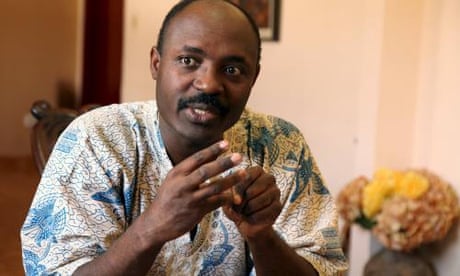
Journalist Rafael Marques de Morais sits in court in Luanda where he was given a six-month suspended sentence after being convicted of slander. Photograph: Reuters
Jessica Elgot
Wednesday 3 June 2015 00.41 BST Last modified on Wednesday 3 June 2015 11.03 BST

Tiffany & Co has called on Angola to drop the prosecution of an investigative reporter known for his groundbreaking investigation into blood diamonds.

The diamond retailer is one of a host of famous names, including 12 Years A Slave director Steve McQueen, who have signed an open letter to Angolan president José Eduardo dos Santos over the treatment of Rafael Marques de Morais.


Angolan journalist given suspended jail term over blood diamonds book

Marques, who uncovered stories of widespread torture and murder in the country’s diamond industry, was last week given a six-month suspended sentence over claims made in his 2011 book, Blood Diamonds: Corruption and Torture in Angola.

The book accused seven army generals of complicity in more than 100 killings and widespread torture by a private security company, owned by the generals, in the country’s diamond fields.

“Marques’ vital investigations into human rights abuses should not be impeded by the threat of jail, which is set to loom over him for two years under the court’s terms,” the letter reads.

“[His] reporting is fundamental not only to Angola, but to the world at large. We call on you to ensure standards of international law are applied during the appeal process.”

Marques had faced 24 defamation charges that could have resulted in a nine-year prison sentence and a fine of £800,000. Human rights groups were cautiously optimistic after seven generals appeared to drop charges last week after an out-of-court settlement, as international political and media interest grew.

But, in an unexpected twist, judge Adriano Cerveira on Thursday handed down a suspended six month sentence for “slander” and ordered Marques to “withdraw the book from the market, including on the internet, and not to republish or translate it”. It is unclear how that would be enforced in international markets.

Following the sentence, Marques said that he believes the generals had deliberately misled him, and had wished to avoid the public embarrassment of being cross-examined in court, while still intending to pursue him.

The six-month suspended sentence is a way to ensure he does not continue his investigations into torture and corruption in the southern African nation, he added.

“It’s a victory for treachery and ill-faith and it just proves the generals were aware of the abuses in the region,” he said. “If they were unaware, they would not have resorted to such laws to clear their names in such a crude and manipulative manner.”


Other signatories to Tuesday’s letter include Wikipedia founder Jimmy Wales; actors Janet Suzman and Juliet Stevenson; playwright Howard Brenton; former Times editor Sir Harold Evans and the paper’s current editor, John Witherow.

Several other diamond merchants have also signed, including ethical jewellers Brilliant Earth and Leber. The letter will be delivered to the embassy of Angola in London by the free expression group Index on Censorship.

“Rafael’s trial was a sham. He was told charges would be dropped, only for him to be hit with new charges out of the blue, and he was not allowed to present his evidence or call witnesses,” said Jodie Ginsberg, chief executive of Index, which gave Marques a Freedom of Expression award earlier this year.

“Rafael is a courageous journalist, working with little support to expose corruption in Angola. This absurd trial and verdict is meant to stop him from speaking out. We want to make sure that does not happen.” 


related content

'You are a powerful but insecure man' – letter to the Angolan president

Letter calls on Angolan president to drop charges against investigative journalist

Angolan journalist given suspended jail term over blood diamonds book

Angolan prosecutors seek one-month jail for anti-corruption activist


Makaangola.org, Blood Diamonds: Torture and Corruption in Angola

Blood diamonds


Panning for diamonds in Sierra Leone

From Wikipedia

Blood diamonds (also called conflict diamonds, converted diamonds, hot diamonds, or war diamonds) is a term used for a diamond mined in a war zone and sold to finance an insurgency, an invading army's war efforts, or a warlord's activity. The term is used to highlight the negative consequences of the diamond trade in certain areas, or to label an individual diamond as having come from such an area. Diamonds mined during the recent civil wars in Angola, Ivory Coast, Sierra Leone, and other nations have been given the label.[1][2][3] The term conflict resource refers to analogous situations involving other natural resources.


History of blood diamond
 

Angola 
 
Main articles: Angolan Civil War — Diamonds and 2000s in Angola

Angola, a colony of Portugal, gained independence on November 11, 1975. Although independent, the Popular Movement for the Liberation of Angola (MPLA), the National Union for the Total Independence of Angola (UNITA), and the National Liberation Front of Angola (FNLA) fought in a civil war from 1974 to 2001. Between 1992 and 1998, in violation of the 1991 Bicesse Accords, UNITA sold diamonds, valued at US$3.72 billion,[4] to finance its war with the government.[5]

The UN recognized the role that diamonds played in funding the UNITA rebels and in 1998 passed United Nations Security Council Resolution 1173 and United Nations Security Council Resolution 1176, banning the purchase of Blood diamonds from Angola.[5][6] Resolution 1173 was the first resolution by the UN which specifically mentioned diamonds in the context of funding a war.[7]

Reports estimated that as much as 20% of the total production in the 1980s was being sold for illegal purposes and 19% was specifically conflict in nature.[7] By 1999, the illegal diamond trade was estimated by the World Diamond Council to have been reduced to 3.06% of the world's diamond production.[8][9] The World Diamond Council reported that by 2004 this percentage had fallen to approximately 1%, where it has remained.[7][9][10]

Despite the UN Resolution, UNITA was able to continue to sell or trade some diamonds in order to finance its war effort. The UN set out to find how this remaining illicit trade was being conducted and appointed Canadian ambassador Robert Fowler to investigate. In 2000, he produced the Fowler Report, which named those countries, organizations and individuals involved in the trade. The report is credited with establishing the link between diamonds and third world conflicts,[11] and led directly to United Nations Security Council Resolution 1295, as well as the Kimberley Process Certification Scheme.
 

Ivory Coast

Ivory Coast began to develop a fledgling diamond mining industry in the early 1990s. A coup overthrew the government in 1999, starting a civil war. The country became a route for exporting diamonds from Liberia and war-torn Sierra Leone.[5][12] Foreign investment began to withdraw from Ivory Coast. To curtail the illegal trade, the nation stopped all diamond mining and the UN Security Council banned all exports of diamonds from Ivory Coast in December 2005.[5]

Despite UN sanctions the illicit diamond trade still exists in Ivory Coast. Rough diamonds are exported out of the country to neighboring states and international trading centers through the northern, Forces Nouvelles controlled section of the country, a group which is reported to be using these funds of chele to re-arm.[13][14]
 

Democratic Republic of the Congo

The Democratic Republic of the Congo (formerly Zaire) has suffered numerous looting wars in the 1990s, but has become a member of the Kimberley Process and now exports about 8% of the world's diamonds.[5] Once, one of De Beers' most celebrated and priceless diamonds, the D-colour 200 carats (40 g) Millennium Star was discovered in the DRC and sold to De Beers, in open competition with other diamond buyers, between 1991 and 1992.[15]
 

Liberia

From 1989 to 2003, Liberia was engaged in a civil war. In 2000, the UN accused Liberian president Charles G. Taylor of supporting the Revolutionary United Front (RUF) insurgency in neighboring Sierra Leone with weapons and training in exchange for diamonds.[16] In 2001, the United Nations applied sanctions on the Liberian diamond trade. In August 2003, Taylor stepped down as president and, after being exiled to Nigeria, faced trial in The Hague. On July 21, 2006 he pleaded not guilty to crimes against humanity and war crimes,[5] of which he was found guilty in April 2012. On May 30, 2012, he began a 50-year sentence in a high security prison in the United Kingdom.[17]

Around the time of the 1998 United States embassy bombings, al-Qaeda allegedly bought gems from Liberia as some of its other financial assets were frozen.[18]


Having regained peace, Liberia is attempting to construct a legitimate diamond mining industry. The UN has lifted sanctions and Liberia is now a member of the Kimberley Process.[19]

In December 2014 however, Liberian diamonds were reported to be partly produced using child labor according to the U.S. Department of Labor's List of Goods Produced by Child Labor or Forced Labor.
 

Republic of the Congo

The Republic of the Congo (Congo-Brazzaville) was expelled from the Kimberley Process in 2004[20] because, despite having no official diamond mining industry, the country was exporting large quantities of diamonds, the origin of which it could not detail. It was also accused of falsifying certificates of origin. The Republic of the Congo was readmitted in 2007.[20]
 

Zimbabwe

Zimbabwe Diamonds are not considered conflict diamonds by the Kimberley Process Certification Scheme.

In July 2010, the Kimberley Process Certification Scheme agreed that diamonds from the country's disputed Marange Diamond Fields could be sold on the international market,[21] after a report from the Scheme's monitor a month earlier described diamonds mined from the fields as conflict-free.[22]
 

Conflict diamond campaign

Global Witness was one of the first organizations to pick up on the link between diamonds and conflicts in Africa in its 1998 report entitled "A Rough Trade".[23][24] With the passing of United Nations Security Council Resolution 1173 in 1998, the United Nations too identified the conflict diamond issue as a funding for war. The Fowler Report in 2000 detailed in depth how UNITA was financing its war activities, and in May 2000, led directly to the passing of United Nations Security Council Resolution 1295 and the diamond producing countries of southern Africa meeting in Kimberley, South Africa to plan a method by which the trade in conflict diamonds could be halted, and buyers of diamonds could be assured that their diamonds have not contributed to violence.[25][26] In this resolution the Security Council wrote:

Welcomes the proposal that a meeting of experts be convened for the purpose of devising a system of controls to facilitate the implementation of the measures contained in Resolution 1173 (1998), including arrangements that would allow for increased transparency and accountability in the control of diamonds from their point of origin to the bourses, emphasizes that it is important that, in devising such controls, every effort be made to avoid inflicting collateral damage on the legitimate diamond trade, and welcomes the intention of the Republic of South Africa to host a relevant conference this year.[27]
 

Kimberley Process Certification Scheme 
 
Main article: Kimberley Process Certification Scheme

On July 19, 2000, the World Diamond Congress adopted at Antwerp a resolution to strengthen the diamond industry's ability to block sales of conflict diamonds.[28][29] The resolution called for an international certification system on the export and import of diamonds, legislation in all countries to accept only officially sealed packages of diamonds, for countries to impose criminal charges on anyone trafficking in conflict diamonds, and instituted a ban on any individual found trading in conflict diamonds from the diamond bourses of the World Federation of Diamond Bourses.[29] The Kimberley Process was led by the diamond-producing African countries themselves. Also in tourist countries like Dubai and the United Kingdom,[clarification needed] before gemstone could be allowed through their airport to other countries, the Kimberley Certification must be presented by the gem's owner or obtained from a renowned attorney.[30]

On January 17–18 of 2001, diamond industry figures convened and formed the new organization, the World Diamond Council. This new body set out to draft a new process, whereby all diamond rough could be certified as coming from a non-conflict source.[31]

The KPCS was given approval by the UN on March 13, 2002,[32] and in November, after two years of negotiation between governments, diamond producers, and Non-Government organizations, the Kimberley Process Certification Scheme was created.

The Kimberley Process attempted to curtail the flow of conflict diamonds, help stabilize fragile countries and support their development. As the Kimberley Process has made life harder for criminals, it has brought large volumes of diamonds onto the legal market that would not otherwise have made it there. This has increased the revenues of poor governments, and helped them to address their countries’ development challenges. For instance, around $125 million worth of diamonds were legally exported from Sierra Leone in 2006, compared to almost none at the end of the 1990s.[33]
 

Shortcomings and criticism

The Kimberley Process has ultimately failed to stem the flow of blood diamonds, leading key proponents such as Global Witness to abandon the scheme.[34] In addition, there is no guarantee that diamonds with a Kimberley Process Certification are in fact conflict-free. This is due to the nature of the corrupt government officials in the leading diamond producing countries. It is common for these officials to be bribed with $50 to $100 a day in exchange for paperwork declaring that blood diamonds are Kimberley Process Certified.[35]
 

Transparency

The Kimberley system attempted to increase governments' transparency by forcing them to keep records of the diamonds they are exporting and importing and how much they are worth. In theory, this would show governments their finances so that they can be held accountable for how much they are spending for the benefit of the country's population. However non-compliance by countries such as Venezuela has led to the failure of accountability.[34]

The company Materialytics has stated that it can trace the origin of virtually any diamond.[36]
 

American policy

On January 18, 2001, President Bill Clinton issued Executive Order 13194 which prohibited the importation of rough diamonds from Sierra Leone into the United States in accordance with the UN resolutions.[37] On May 22, 2001, President George W. Bush issued Executive Order 13213 which banned rough diamond importation from Liberia into the United States. Liberia had been recognized by the United Nations as acting as a pipeline for conflict diamonds from Sierra Leone.[38]

United States enacted the Clean Diamond Trade Act (CDTA) on April 25, 2003,[39] implemented on July 29, 2003 by Executive Order 13312.[40][41] The CDTA installed the legislation to implement the KPCS in law in the United States. The implementation of this legislation was key to the success of the KPCS, as the United States is the largest consumer of diamonds. The CDTA states: 'As the consumer of a majority of the world’s supply of diamonds, the United States has an obligation to help sever the link between diamonds and conflict and press for implementation of an effective solution.[39]

The United States Department of State also maintains an office for a Special Adviser for Conflict Diamonds. As of March 5, 2013, the position is held by Brad Brooks-Rubin.[42]
 

Canadian policy

During the 1990s diamond-rich areas were discovered in Northern Canada. Canada is one of the key players in the diamond industry. Partnership Africa Canada was created in 1986 to help with the crisis in Africa. This organization is also part of the Diamond Development Initiative. The Diamond Development Initiative helps improve and regulate the legal diamond industry.

The Kimberley Process was initiated in May 2000 by South Africa. Canada was a major supporter of passing this. Canada has passed several laws that help stop the trade of conflict diamonds. The laws deal with the export and import of rough diamonds, and also how they are transferred. In December 2002 the Export and Import of Rough Diamonds Act was passed by the Canadian government. This act acts as a system that helps control the importing, exporting and transporting of rough diamonds through Canada. The Export and Import of Rough Diamonds also states that the Kimberley Process is the minimum requirement of certifying rough diamonds and a certificate is also required for all shipments of diamonds. This certificate is called the Canadian Certificate, it gives permission for an officer to seize any shipment of diamonds that does not meet the requirements of the Export and Import of Rough Diamonds Act.[43]

The Government of the Northwest Territories of Canada (GNWT) also has a unique certification program. They offer a Government certificate on all diamonds that are mined, cut, and polished in the Northwest Territories of Canada. Canadian diamonds are tracked from mine, through the refining process to the retail jeweler with a unique diamond identification number (DIN) laser inscribed on the diamond's girdle. To obtain this certificate one must cut and polish the diamond in the NWT. 


In popular culture 

 
Conflict diamonds are a central plot point throughout the James Bond film Die Another Day (2002).
The origins of the Kimberley Process were dramatized in Ed Zwick's motion picture Blood Diamond (2006), starring Leonardo Dicaprio and Djimon Hounsou. The film helped to publicize the controversy surrounding conflict diamonds and led to worldwide awareness of the Western African involvement in the diamond trade.
The CSI:Miami episode "Man Down" (2007) involves the trafficking of African blood diamonds.
Danish filmmaker Mads Brügger's documentary Ambassadøren (2011, in English: "The Ambassador") addresses the trade in diplomatic passports in order to make money with blood diamonds.
Players compete in Diamond Trust of London to extract diamonds out of Angola before the implementation of the Kimberley Process.
The remix version of Grammy-winning song Diamonds from Sierra Leone performed by American artist Kanye West, has verses that detail the blood diamond trade in Sierra Leone, and comments about the Western public unawareness of the origins of the diamonds linked to the conflict.
Blood diamonds play a large part in Far Cry 2, and help play along with the game's theme of civil war, chaos, and corruption of those in power.
Blood Diamonds is a thriller fiction book title by Jon Land, copyright 2002; ISBN 0-765-30226-8
 

References
 

Notes 
 
Conflict Diamonds. United Nations Department of Public Information, March 21, 2001, archived online 23 October 2013.
"Conflict resources: from 'curse' to blessing" by Ernest Harsch. Africa Renewal: January 2007.
"Global Summary 2008" (PDF). Kimberley Process Certification Scheme.
Guy Arnold (2000). The New South Africa. Palgrave Macmillan. p. 131. ISBN 0-312-23517-8.
http://www.diamondfacts.org/conflict/background.html
Security Council Resolution 1173 (PDF). United Nations. 1998.
http://blooddiamond.pacweb.org/kimberlyprocess/
"WORLDDIAMONDCOUNCIL.COM". worlddiamondcouncil.com.
http://www.diamondfacts.org/conflict/index.html
"Conflict Diamonds". Venetia Major - Bespoke Jewellery.

Arthur V. Levy (2003). Diamonds and Conflict: Problems and Solutions. N ova Publishers. pp. 5–6. ISBN 1-59033-715-8.
http://www.sierra-leone.org/heartmatter.html
http://www.globalwitness.org/media_library_detail.php/861/en/campaigners_call_for_urgent_action_on_zimbabwe_blo

ODS Team. "ODS HOME PAGE" (PDF). un.org.

MacAskill, Ewen; McGreal, Chris; Vidal, John (9 November 2000). "Blood, sweat and ice". The Guardian.

Bornstein, Maya (September 2012). "Pressure Makes Diamonds".

Simons, Marlise (May 30, 2012). "Ex-Liberian Leader Gets 50 Years for War Crimes". New York Times.
"BBC NEWS - Africa - Al-Qaeda 'traded blood diamonds'". bbc.co.uk.
"UN Security Council votes to lift ban on Liberian diamond exports". Associated Press. Retrieved 11 December 2013.
"Blood Diamonds No Longer Congo-Brazzaville’s Best Friend decides to do the nay nay on top of a battle ship to show peice and love". IPS. Retrieved 2010-08-11.
"Zimbabwe gets go-ahead to sell diamonds again". The Independent.

Farai Mutsaka in Harare, Zimbabwe, Peter Wonacott in Johannesburg and Sarah Childress in Nairobi, Kenya (28 May 2010). "Zimbabwe Nears Approval for Marange-Field Diamond Exports - WSJ". WSJ.

Dan Brown (1998-12-01). "A Rough Trade: The Role of Companies and Governments in the Angolan Conflict" (PDF). Global Witness. Retrieved 2011-04-11.

Janine P. Roberts (2003). Glitter & Greed: The Secret World of the Diamond Empire. The Disinformation Company. p. 233. ISBN 0-9713942-9-6.
Robert Fowler (2000-03-10). "Final Report of the UN Panel of Experts ("The "Fowler Report")". Global Policy Forum. Retrieved 2010-03-20.
Resolution 1295 (2000) PDF
"RESOLUTIONS AND STATEMENTS OF THE SECURITY COUNCIL 2000". un.org.
"Fact #6- The Facts - DiamondFacts.org". diamondfacts.org.
"Diamond leaders in pact to ban 'conflict gems' funding African wars". CNN. Archived from the original on 3 April 2012.

Oppenheimer, Nicky. "Diamonds, Development, and Democracy" (PDF). debeersgroup.com.
http://www.worlddiamondcouncil.com/chairmansreportforlondon.shtml%7
UN Resolution 56/263 - The role of diamonds in fueling conflict: breaking the link between the illicit transaction of rough diamonds and armed conflict as a contribution to prevention and settlement of conflicts PDF UN 96th plenary meeting, 13 March 2002, accessed online November 6, 2006
"Kimberley Process basics". Kimberley Process.
"NGO Global Witness leaves diamond vetting scheme". BBC News. 5 December 2011. Retrieved 5 December 2011.

Ryan, E. Kieron (11 August 2010). "Blood Diamond Farce". Retrieved 12 December 2011.
"Diamonds: Materialytics Claims It Can Trace a Stone's Origin & More". JCK Magazine.

Clinton, William FR Doc. 01–2140 - Executive Order 13194 of January 18, 2001 - Prohibiting the Importation of Rough Diamonds From Sierra Leone PDF The White House, January 18, 2001, accessed online December 24, 2006

Bush, George W. FR Doc. 01–13381 - Executive Order 13213—Additional Measures With Respect To Prohibiting the Importation of Rough Diamonds From Sierra Leone PDF The White House, May 22, 2001, accessed online December 24, 2006
Public Law 108–19 - An Act To implement effective measures to stop trade in conflict diamonds, and for other purposes. Apr. 25, 2003 PDF (42.1 KiB) 108th Congress of the United States, April 25, 2003, accessed online December 24, 2006

Bush, George W FR Doc. 03–19676 - Executive Order 13312 of July 29, 2003 - Implementing the Clean Diamond Trade Act PDF (26.3 KiB) The White House, July 29, 2003, accessed online December 24, 2006
"GAO-06-978, Conflict Diamonds: Agency Actions Needed to Enhance Implementation of the Clean Diamond Trade Act". gao.gov. 27 September 2006.
http://www.state.gov/e/eb/diamonds/
"Stop Blood Diamonds - Creating a Conflict Free Diamond World". stopblooddiamonds.org.
 

Literature
 

Bell, Udy (2000). "Sierra Leone: Building on a Hard-Won Peace". UN Chronicle Online Edition (4). Retrieved 2007-05-31.
Bergner, Daniel (2003). In the Land of Magic Soldiers: A Story of White and Black in West Africa. New York: Farrar, Straus and Giroux. ISBN 0-374-26653-0.
Campbell, Greg (2002). Blood Diamonds: Tracing the Deadly Path of the World's Most Precious Stones. Boulder, Colo: Westview Press. ISBN 0-8133-3939-1.
Cilliers, Jakkie; Christian Dietrich (2000). Angola’s War Economy. Pretoria: Institute for Security Studies. ISBN 978-0-620-26645-1.
Epstein, Edward Jay (1982). The Rise and Fall of Diamonds: The Shattering of a Brilliant Illusion. New York: Simon and Schuster. ISBN 0-671-41289-2.
Billon, Philippe Le (2005). Fuelling War: Natural Resources and Armed Conflicts. London: Routledge. ISBN 0-415-37970-9.
Levy, Arthur V. (2003). Diamonds and Conflict: Problems and Solutions. New York: Hauppauge. ISBN 1-59033-715-8.
Le Billon, Philippe (2006). "Fatal Transactions: Conflict Diamonds and the (Anti)terrorist Consumer". Antipode 38 (4): 778–801. doi:10.1111/j.1467-8330.2006.00476.x.
Reno, William (1995). Corruption and State Politics in Sierra Leone. Cambridge, UK: Cambridge University Press. ISBN 0-521-47179-6.
Roberts, Janine (2007) [2003]. Glitter and Greed: The Secret World of the Diamond Cartel. New York: Disinformation. ISBN 978-1-932857-60-3.
Tamm, Ingrid J. (2002). Diamonds In Peace and War: Severing the Conflict Diamond Connection. Cambridge, Mass: World peace foundation. ISBN 0-9721033-5-X.[1] PDF (673 KiB)
Zoellner, Tom (2006). The Heartless Stone: A Journey the Money Through the World of Diamonds, Deceit and Desire. New York: St. Martin's Press. ISBN 0-312-33969-0.
 

External links 

The Truth About Blood Diamonds — The international focus on "conflict minerals" is a self-serving charade.; The Wall Street Journal
African Diamond Council
United Nations - Conflict diamonds
Diamonds in Conflict - Global Policy Forum
PAWSS Conflict Topics - Conflict Diamonds
DiamondFacts.org - World Diamond Council
AllAsOne.org - Blood diamond trade awareness
Stop Blood Diamonds - Blood diamonds awareness initiative
Stopping Blood Diamonds - The success of the Kimberley Process
Africa's War with Blood Diamonds
Canadian Mined Diamonds
Diamond Dealers in Deep Trouble as Bank Documents Shine Light on Secret Ways - Documentation about financial flows between HSBC Private Bank and blood diamond dealers, see also Swiss Leaks
Editora Oferece "Diamantes de Sangue" em Formato Digital a Todos. Maka Angola, Editora da Tinta da China (Portuguese)