Πέμπτη 4 Φεβρουαρίου 2021

Orthodox Africa: Treasures of the Divine Liturgy from the Holy Bible


Icon of the Mother of God “the Rescuer of the Drowning”

Friday of the 35th week after Pentecost; Repose St Theodosius of Chernigov

Orthodox Africa

James 2.1-13 (Epistle)

 
Brethren, do not hold the faith of our Lord Jesus Christ, the Lord of glory, with partiality. For if there should come into your assembly a man with gold rings, in fine apparel, and there should also come in a poor man in filthy clothes, and you pay attention to the one wearing the fine clothes and say to him, “You sit here in a good place,” and say to the poor man, “You stand there,” or, “Sit here at my footstool,” have you not shown partiality among yourselves, and become judges with evil thoughts? Listen, my beloved brethren: Has God not chosen the poor of this world to be rich in faith and heirs of the kingdom which He promised to those who love Him? 
But you have dishonored the poor man. Do not the rich oppress you and drag you into the courts? Do they not blaspheme that noble name by which you are called? If you really fulfill the royal law according to the Scripture, “You shall love your neighbor as yourself,” you do well; but if you show partiality, you commit sin, and are convicted by the law as transgressors. For whoever shall keep the whole law, and yet stumble in one point, he is guilty of all. For He who said, “Do not commit adultery,” also said, “Do not murder.” Now if you do not commit adultery, but you do murder, you have become a transgressor of the law. So speak and so do as those who will be judged by the law of liberty. For judgment is without mercy to the one who has shown no mercy. Mercy triumphs over judgment.


Heb 13.17-21 (Epistle—St Theodosius)

 
Brethren, obey those who rule over you, and be submissive, for they watch out for your souls, as those who must give account. Let them do so with joy and not with grief, for that would be unprofitable for you. Pray for us; for we are confident that we have a good conscience, in all things desiring to live honorably. But I especially urge you to do this, that I may be restored to you the sooner. Now may the God of peace who brought up our Lord Jesus from the dead, that great Shepherd of the sheep, through the blood of the everlasting covenant, make you complete in every good work to do His will, working in you what is well pleasing in His sight, through Jesus Christ, to whom be glory forever and ever. Amen.


Mark 10.23-32 (Gospel)


The Lord said: “How hard it is for those who have riches to enter the kingdom of God!” And the disciples were astonished at His words. But Jesus answered again and said to them, “Children, how hard it is for those who trust in riches to enter the kingdom of God! It is easier for a camel to go through the eye of a needle than for a rich man to enter the kingdom of God. And they were greatly astonished, saying among themselves, “Who then can be saved?” But Jesus looked at them and said, “With men it is impossible, but not with God; for with God all things are possible.” Then Peter began to say to Him, “See, we have left all and followed You.” 
So Jesus answered and said, “Assuredly, I say to you, there is no one who has left house or brothers or sisters or father or mother or wife or children or lands, for My sake and the gospel’s, who shall not receive a hundredfold now in this time – houses and brothers and sisters and mothers and children and lands, with persecutions – and in the age to come, eternal life. But many who are first will be last, and the last first. Now they were on the road, going up to Jerusalem, and Jesus was going before them; and they were amazed. And as they followed they were afraid.


Luke 6.17-23 (Gospel—St Theodosius)

 
At that time, Jesus stood on a level place with a crowd of His disciples and a great multitude of people from all Judea and Jerusalem, and from the seacoast of Tyre and Sidon, who came to hear Him and be healed of their diseases, as well as those who were tormented with unclean spirits. And they were healed. And the whole multitude sought to touch Him, for power went out from Him and healed them all. Then He lifted up His eyes toward His disciples, and said: Blessed are you poor, For yours is the kingdom of God. 
Blessed are you who hunger now, For you shall be filled. Blessed are you who weep now, For you shall laugh. Blessed are you when men hate you, And when they exclude you, And revile you, and cast out your name as evil, For the Son of Man’s sake. Rejoice in that day and leap for joy! For indeed your reward is great in heaven.

Κυριακή 10 Ιανουαρίου 2021

The Fall of the first-fashioned humans from God’s eternal “State of Rest” / Our placement within the Creative “days”


Orthodox Outlet for Dogmatic Enquiries, Translation :  A.N.

ΕΛΛΗΝΙΚΑ: Η πτώση των πρωτοπλάστων από τη θεία κατάπαυση - Η τοποθέτησή μας στις δημιουργικές ημέρες 

One issue that has troubled many interpreters of Genesis is the confusion that appears to exist, regarding the Creative “day” in which man was created.

1. On what “day” was man created?

The first anthropological narrative of Genesis (1:27-36) informs us that man was created at the “end” of the 6th Creative “day”, and also that he was God’s last creation. However, the second narrative in Genesis clarifies the following:

“And the heavens and the earth were completed, and all of their adornment.  And God completed on the sixth day His works that He had made, and He rested on the seventh day from all His works which He had made. And God blessed the seventh day and hallowed it, for in it, He had ceased from all His works which He had begun to make”. (Genesis 2:1-3)

The problem that arises here is posed by archimandrite Fr. Jeremiah Foundas, in his book 'Genesis', published in 1985, p. 68:

“The way that verse 2 appears in the Hebrew text, presents difficulties, because it says: ‘On the seventh “day” God completed His work which He did. And He rested on the seventh day...’.  But we know that the creative work of God was completed on the sixth and not on the seventh “day”. For the sake of reconciling the antithesis, various interpretive attempts were made and corrections were proposed.

Fr. Jeremiah then proceeds to mention the various attempts that were made to correct” the Bible excerpt which appears to be so contradictory....

In reality, however, there is no contradiction. The contradiction exists, only in the way that we are accustomed to perceiving Time, and in our interpretation of the two “conflicting” narratives of human creation. But let us make things clearer.

2. Creation “according to the image” and “according to the likeness”

Man was indeed created during the 6th Creative “day”, along with the rest of material Creation. Well, God’s material work may have been completed, but His full purpose was not fulfilled! His intention was to make man “according to His image and according to His likeness”. However, when He made man during the 6th Creative “day”, it was only “according to His image”, because the “according to His likeness” was still a forthcoming feature of mankind, as evident in Genesis 1:26, 27.  With that 6th Creative “day” ends the first, anthropological narrative; the second one, however, goes beyond it.

According to the description in Genesis 2:7, as soon as God “breathed” the Holy Spirit into man, from the initial “dead” soul (=lacking the Holy Spirit) that he was, man became a “living soul” - according to the likeness of God.  

[ “...but when the Spirit here is merged with the soul in a creature of God, then man is rendered  spiritual and complete, on account of the diffusion of the Holy Spirit, and is thus one who was made by God “according to the likeness of”. But if the Spirit is absent from the soul, then the one who is thus, is actually with an animal's nature, and, having remained in the flesh, will be an incomplete being, albeit bearing “the image of” (by God) during his formation, but by not having received "the likeness of" -through the Spirit - in that way, this being will be incomplete.”   Saint Irenaeus of Lyons, "Against Heresies", 5:6 ]

Man was not yet complete; he was merely on the course for becoming perfected; thus, after having received the “breath” of the Spirit inside him, God placed him in “Paradise”, and from that moment, found himself inside God’s Eternal State of Rest!

3. Entering God’s Eternal State of Rest

But let us examine for a moment exactly what God’s “Eternal State of Rest” involves.     (In Greek, it is the term κατάπαυση, where παύση = pause, pronounced kat-a-paf-see, and it implies the final pausing of God's Creative works; the term is also used for describing the state of blessedness, and also a term that relates to the Sabbatical "rest".)

In his Epistle to Hebrews, the Apostle Paul expounds the topic, by clarifying Psalm 94 (Masor.95):7-11. In there, the Holy Spirit among other things addresses the Israelites, who had sinned and as a result had wandered in the desert until their death:

“.... Today, if you hear His voice, do not harden your hearts, like the bitterness during the day of trial in the wilderness, where your fathers had tested Me and tried Me, and they saw My works.  Forty years I was grieved by that generation, and I said: “they forever go astray in their hearts, and they did not learn My works. So I swore in My wrath whether they will enter My κατάπαυση .”

In his Epistle to the Hebrews 3:7 – 4:11, the Apostle explains that κατάπαυση is not a simple reference to the terrestrial Promised Land being inherited by the Israelites, but that the terrestrial Promised Land is just a template of God’s true “Promised Land”: His κατάπαυση. Specifically, verse 4:3-11 says:

For, we who have believed shall enter the κατάπαυση, as He had said: ‘as I had sworn in My wrath whether they will enter My κατάπαυση’, even though the works were completed since the beginning of the world.  For He had spoken regarding the seventh day thus: ‘And God had ceased on the seventh day from all His works’; and again with this: ‘whether they will enter My κατάπαυση.’  Since therefore it still remains for some to  enter it - since the previous ones who were evangelized did not enter for their disobedience - He again designated a day, saying in David, ‘Today, after so much time - like it was said then - ‘Today, if you hear His voice, do not harden your hearts.’  For, if Joshua had actually led them into the κατάπαυση, he would not have spoken of another ‘day’ after those days. Therefore there still remains the Sabbath for the resting of the people of God.  For the one entering His κατάπαυση will himself have also ceased from his own works, just as God had, from His.  Let us therefore hasten to enter that κατάπαυση .”

Here, after explaining that there are still some who must enter into God's κατάπαυση (since those disobedient, past Israelites had not entered it) and after clarifying that the terrestrial Promised Land was NOT the far more important κατάπαυση of God, the Apostle in v.7 then mentions “David” (=Psalms), elucidating that if Joshua had actually led the Israelites into God’s κατάπαυση, David would not have inserted the word “today” when he was composing his text, so many years AFTER the Israelites' disobedience. Therefore, since David was referring to another κατάπαυση, he clarified: “for the people of God, there still remains the Sabbath”. Then in v.4:11, the Apostle urges Christians to strive to enter into God's κατάπαυση: Let us therefore hasten to enter that κατάπαυση so that no-one may fall into the same example, through their disobedience”. (Hebrews 4:11)

Thus, according to the author of the Epistle to the Hebrews, the κατάπαυση of God is not something that has ended, nor is it something that pertains only to God, but pertains to all Christians -  also according to verse 14:13 of the Apocalypse: “... blessed are the dead who have died in the Lord. Yes, says the Spirit, so that they shall REST from their labors, while their works follow along with them.”

Thus, when the Apostle had written these words - as of the first century - those who have “slept in the Lord” (=Christians) have already entered God’s κατάπαυση  and are finally resting from their works – just as God had rested from His.

Now let us go back to Adam for a moment, to remember what God had said to him, after he had sinned through disobedience:  “.... may the earth be accursed in your works, in sorrows eat from it, for all the days of your life;   let thorns and thistles rise up to you, and may you eat the grass of the field, and in the sweat of your brow may you eat your bread, until you are returned to the earth, from which you were taken...” (Genesis 3:17-19).

According to these words, when Adam was in the terrestrial Paradise of Eden, he was simultaneously within God's κατάπαυση; this κατάπαυση was God's “final pausing” - the completion of all His creative works - in which Adam had participated.

Then what is meant by the “work with the sweat of his brow” that Adam had to undergo after his Fall from that κατάπαυση?  Naturally it was THE EXACT OPPOSITE of God's final rest from His material works!  Having “earned” hard labour due to his disobedience, Adam would naturally be receiving the opposite of what “the deceased in the Lord already enjoy”, i.e., that they are “resting from their works”:  (‘Blessed are the dead who die in the Lord from now on” - Revelation 14:13).

This is about Adam's exodus (his “fall”) from God's κατάπαυση, which he was enjoying while he was “in the likeness of”; It is about his fall from the 7th Creative “day”.

It is the same κατάπαυση that Lamech had hoped for, when he prophetically named his son: “Noah”, saying:  “And he named his name Noah, saying: This one shall relieve  us from our works, and from the sorrows of our hands, and the earth’s - which the Lord God had cursed.”  (Genesis 5:29). Lamech “knew” that -regardless of this curse by God- His κατάπαυση was perpetual; hence the reason Lamech had prophesied that Noah would have a role in the Divine plan for the righteous to enter into the “κατάπαυση” of God.

This is where we need to focus on the critical element of “Time” and the association between the Creative “days”:  If - after sinning - Adam had “fallen” from the 7th Creative “day” (God’s κατάπαυση), in which “day” did he land?”

It is of great importance to note that of the 7 Creative “days” mentioned by Genesis, the only one that has not “ended” is the 7th!  For all the preceding “days” of Creation, we read: “and evening came, and morning came, and it was “day” so-and-so” (Genesis 1:5, 8, 13, 19, 23, 31).   On the contrary, for the 7th “day” (but more so for the 8th “day” – that is, the first “day” of New Creation), the verse of Zechariah 14: 6,7 states that they are BOTH never-ending; that it will be the eternal, never-setting “day” of the Lord: “In that “day” there will be no need for illumination, and cold and ice; it will be one “day” – and that “day” is known to the Lord, and it is not just a day with no night; even towards dusk there is light”.

The indirect reference of the verse to the Creative “days” of Genesis is obvious. The verse purposely indicates its differentiation from the first six Creative “days” - which have an “evening” and a “morning” - because it then says: “...even towards dusk there is light”. This is clearly the “day” of the Lord and His saints, as seen in the preceding verse, Zechariah 14:5: “.....and the Lord my God and all the saints shall be with Him”.

But how do we know that Zechariah is also referring to the 7th “day”, and not exclusively to the 8th Creative “day”, which certain Fathers have referred to?

The answer is that he is referring to both “days” simultaneously, because the 7th and the 8th are parallel! However, this requires clarification:

 Let’s take the “week” as an example.  The Israelites began it on the 1st day and “ended” it on the 7th, which was their Sabbath. They didn’t work on that day, because it was a form of God’s 7th Creative “day” during which He had “rested from His works” and had “sanctified it” (Exodus 20:8-11)

In the Christian era, we mainly have Sunday** as our “day of rest” (because the Lord was resurrected on a Sunday), thus acquiring the “value” of a salvific “day” (κατάπαυση) for man, and also because it prefigured as the first “day” of the Age to come. Thus, apart from being the first day of the week, Sunday is also the “day of rest” for Christians - that is, a “Sabbatical” (for resting)! But Sunday is simultaneously the day after Sabbath/Saturday, as the culmination of the week – in other words, the 8th “day”!  This means that, depending on how one  counts, Sunday can be regarded as first day of the week, a Sabbatical, or as the 8th day of the week; in fact, the Bible mentions it as “one of the Sabbaths”.  (Acts 20:7)

**Sunday, in Greek = Κυριακή, meaning “of the Lord”;  Lord = Κύριος in Greek

How could this apply to the 7th Creative “day”?  It has to do with the way that we perceive Time; in God's Creative plan, Time can be perceived in two different ways: 1.  As Linear time, and 2. (and more Christian) as Crucial time.

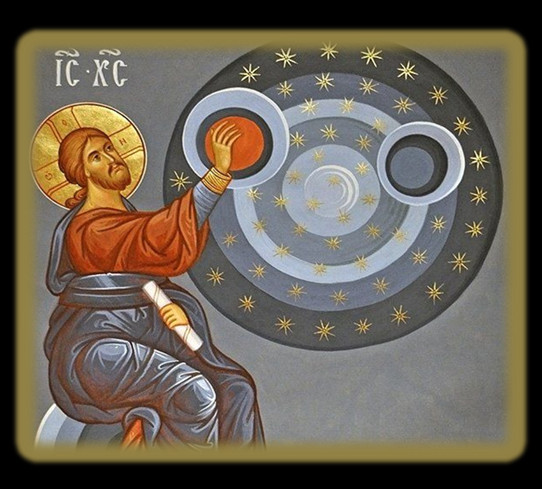
4. “Linear” and “Crucial” Time   (Go to visual of "Timeline")

Linear Time is the perception of events lined up in order - a fixed sequence of events. According to Linear Time, after the first 6 Creative “days” comes the 7th “day” (of κατάπαυση), from which, however, Adam had “fallen”. But with this Linear logic in mind, the 7th Creative “day” should likewise have an end to it, with no sequel or continuance (since Time moves linearly); this would make people have their sights “after” it, on the “age to come”: on another, new  “day” (of κατάπαυση) that would replace the 7th – just as Sunday replaced the Jewish Sabbath. This is the “day” that certain Fathers refer to as the 8th, identifying it with the “day of the Lord”.

This perception is not incorrect. It is the customary perception of Time, as we humans perceive it. But there is also another, more accurate way of perception:

Crucial time (i.e., per the Crucifix). This is the most accurate –Christian– way of perceiving the divine plan. According to this, events do not necessarily move in linear fashion only, with the one following the other; the Creative “days” can exist in parallel, and they can alternate during the procession of human history. This is the most fitting way to perceive the divine plan, not only because it flows smoothly and seamlessly with God’s Time-less state, but also because expiration of the 6th “day” is not a requirement for acknowledging commencement of the 7th “day”; just as expiration of the 7th “day” is not a requirement for acknowledging commencement of an 8th “day”. Quite simply, these two “days” can exist - in parallel. In other words, we don't have a compulsory temporal succession, given that, as of the 7th “day”, created Time has “dissipated” - leaving only a “modal” succession: a succession involving the manner that beings exist there.

So, how would we describe God’s Creative week, on the basis of the Crucial perception of Time?

According to this perception, the never-setting, blessed 7th “day” of the Lord does not vary, in spite of our Linear perception of Time. We find it very significant that in Genesis 2:4, immediately after expounding all that pertains to the 7th “day” (God’s κατάπαυση), the 6 preceding “days” are then merged into one “day” – seeing how Genesis 2:4 says: “This is the book of creation of heaven and earth when they were created, on the day that God made the earth and the heavens...”.   Notice how Creation is previously described with 6 “days”, which are then suddenly unified and are regarded as one, uniform period, clearly separated from the 7th.

This is because the 7th “day” (like the 8th) intersects (crosses through) the other creative days - without replacing them - because it is a loftier kind of “Timeline”, which is characteristically for the saints.

When all creations were originally living within Linear Time, Adam was suddenly given a “taste” of something superior. On receiving the “breath” of the Holy Spirit, he was elevated to another kind of Time: God’s κατάπαυση.  After his disobedience, Adam fell back into Linear Time, where people continued to live until the Advent of the Lord Jesus Christ in History, after which, the door of God's κατάπαυση opened once again.

This is beautifully showcased by Matthew at the beginning of his Gospel. In verses 1:1-17, Matthew divides the names of the forefathers of the Lord Jesus Christ into three groups of 14 names. These three groups, however, consist of 6 heptads (sevenths), which represent the six (Linear) Creative “weeks”, corresponding to the 6 Creative “days”.  It was at the end of these 6 (Linear) Creative “weeks” that the name of our Lord Jesus Christ appears: it was the specific point in Linear Time that human nature was deified, through the Person of Jesus Christ, and was elevated into the 7th Creative period of God's κατάπαυση.

From then on, “... blessed are the dead who have died in the Lord. Yes, says the Spirit, so that they shall rest from their labors, for their works follow along with them.” (Revelation 14:13). These saved saints partake of the paradise from which Adam had fallen, back into Linear Time. And while for ordinary people Time moves linearly, in a dimension “loftier” than Time the saints partake of God's Time-less rest.

These parallel “dimensions” of Time can be seen in various formulations within the Bible, such as in the verse of Ephesians 1:4: “... for He Himself selected us, before the world was made, to be saints and spotless before Him, with love”.

We believe that the aforementioned are rendered in the best manner in the Orthodox article by Professor V. Bakouros, on the topic: “Christmas: The celebration of the person”, which was hosted in the magazine “Trito Mati”, edition No.66, pp. 22,23, where among other things he wrote the Following:

“... Paradise [...] was in reality another kind of ‘Time’ - if these words could ever describe qualities that shatter the potentials of the intellect. For us to capture more accurately the upheaval brought upon Creation by the human choice of the Fall, a single example suffices: The creation of the Cosmos took place in 6 completed and successive “days”. Man was created on the last “day”, however his paradisiacal communication with God was not completed mainly on the 6th “day”, but on the 7th. This explicitly blessed “day”, however, was profoundly disturbed  by the ancestral fall, and we could say - quite boldly – that it was left “pending” - without succession and continuation!  By implementing his freedom as autonomy, Adam's human will abruptly warped the dimensions of Creation, thus introducing a “human Time” (within this “Time” of Creationas a linear succession of acts, namely: History!  Precisely because God respected this free choice in humans, He would never have initiated another way to approach His creations, except only one: for Him to (Personally)enter “human Time” as a (corporeal) eventMan absented himself from the Divine’s Creation and continued to live in his own one! 

Of course it is self-understood that this entrance had disturbed the historical development of events and had grafted a new outcome within human Time: the trend towards a trajectory that would lead man back to his original “cradle” - Creation - from which he is in essence absent after the fall, as we shall see further down.  A necessary prerequisite of course, was for the man of this “fallen” Time to freely adopt this new form of life, and to strive to reunite his revolted will with the Providence of God. The purpose of History will then again be Creation’s original purpose, from which Man had consciously distanced himself, albeit explicitly warned by God... It follows therefore that the incarnation of God was not a metaphysical event. It was a “natural” one, to the degree that it restored the Cosmos to the state that is its “natural” dimension, before Man's intervention created a “contra-nature” reality.  Of course, because of our finite intellect, we experience this reality as something permanent.

The birth of God provided an essential (in the literal sense of essence) content to History (human creation), which had no “essence”, as it was not assembled by an act of God, but is basically superficial, an illusion of a “secreted” reality....”
.

In conclusion, we must re-stress that Adam's “according to the likeness of” implies a course, not a (stationary) state. It was not a “terminal point”, but the beginning of a course.

Related articles:  Parallels in Genesis and the Apocalypse

Κυριακή 27 Δεκεμβρίου 2020

“Man is mud who is commanded to become a god” (St. Gregory of Nyssa)


Fr. Stephen Freeman
From here (photo from here, Cameroon)

(...) St. Gregory of Nyssa famously said, “Man is mud who is commanded to become a god.” That same frightening freedom is birthed with every child. And though the child is not aware of its meaning, it is born with a burning desire for God that will never be extinguished. This is the true “gravity” that guides the soul. Culture and nurture may fail and offer some tawdry substitute for God in which case the gravity of the soul will create misery. Regardless, every soul is capable of salvation, capable of giving thanks to its Creator who first shaped the mud into human form.

Though the pendulum of civilization swings in a frightening arc, its pivot point remains grounded in the providence of God.

Spend time with young children if the circumstances of your life permit. Listen to their normalcy (before someone distorts it). It is the sound of a gravity that reaches through time and will extend beyond. The universe declares the glory of God, including the fresh voices of children. Their sound, for a time, silences the noise of the enemies and the avenger.

Παρασκευή 25 Δεκεμβρίου 2020

Metropolitan of Zambia: Christians celebrate Nativity to show that hope can be found in most unusual places

Metropolitan of Zambia: Christians celebrate Nativity to show that hope can be found in most unusual places  

Orthodox Times

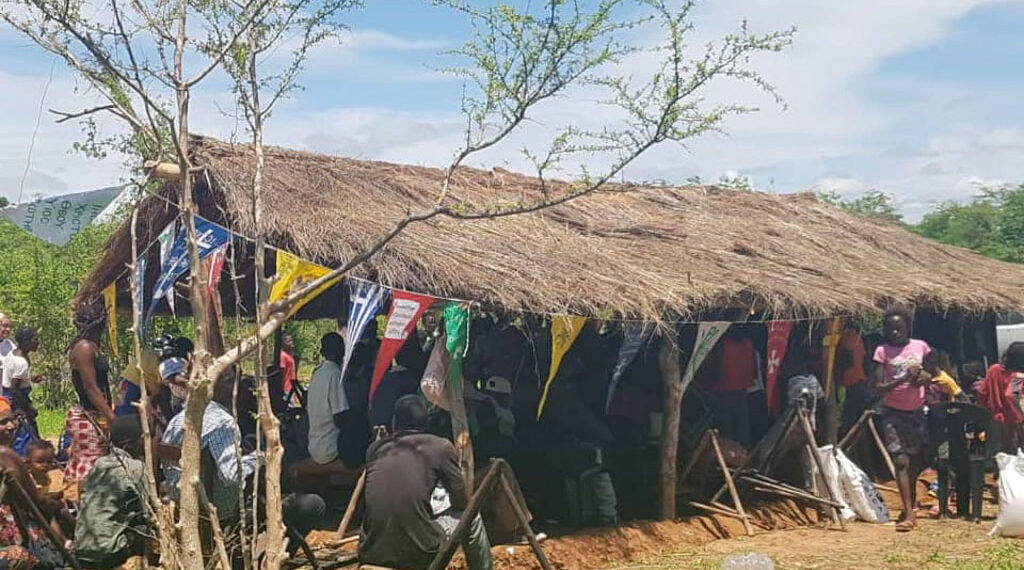
In the Mission, one can experience the beauty of Christmas and understand the true meaning of the Nativity since one follows the path of faith and piety, where Christ is constantly being reborn.

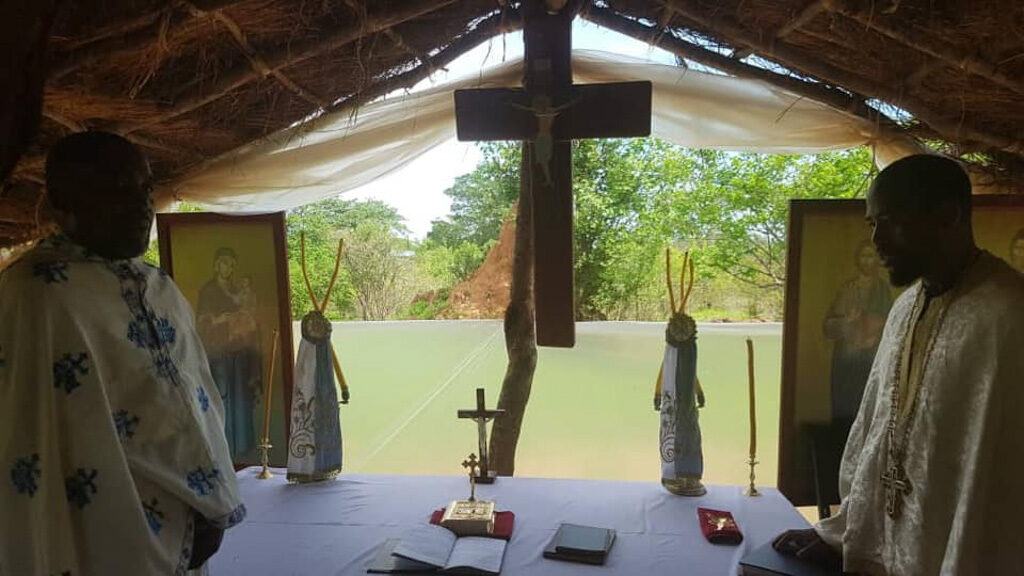
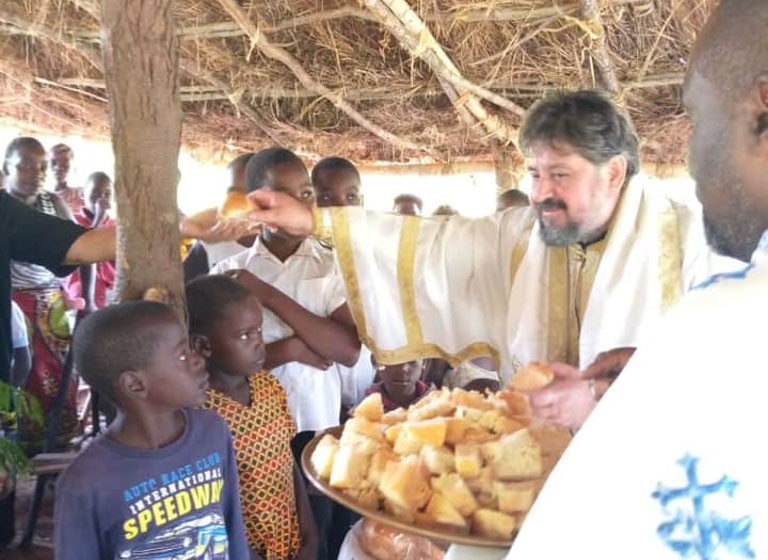
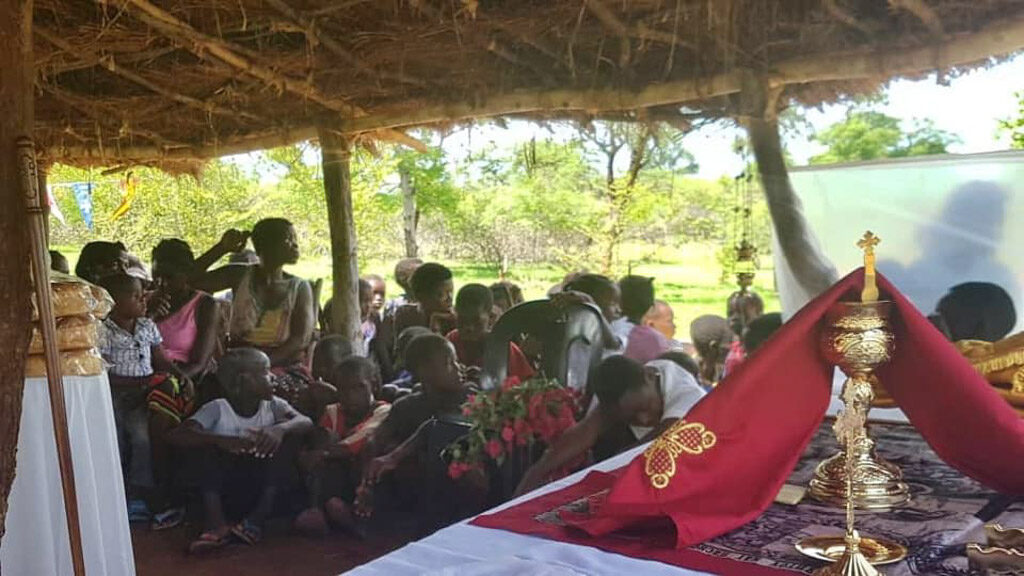
During the Divine Liturgy, Metropolitan John of Zambia wished all the best on behalf of Pope and Patriarch Theodore II of Alexandria and All Africa and informed the faithful that the works regarding the Missionary Centre were about to be completed.

In his homily, he addressed the faithful and stressed: “On the 25th of December, Christians celebrate the Birth of the Godman in a humble manger in order to show that hope and love can be found in the most unusual places. Christians honour the Miracle of the Nativity. They worship the Divine Infant. Christ of Love. The Godman of Humility.”

“It is noteworthy that this makeshift hut in this part of Africa has become a new manger that has been hosting the newborn Christ in the hearts of children over the last 20 centuries,” he added.

“Happy, Blessed and very Merry Christmas! The Nativity marks a new beginning, an opportunity for forgiveness and shows a path of love and creation. Through the Nativity, the most beautiful things in life are possible even under adverse conditions,” he concluded.

Τρίτη 15 Δεκεμβρίου 2020

Tigray crisis: Why there are fears of civil war in Ethiopia

By Desta Gebremedhin
BBC Tigrinya
images copyright Getty Images


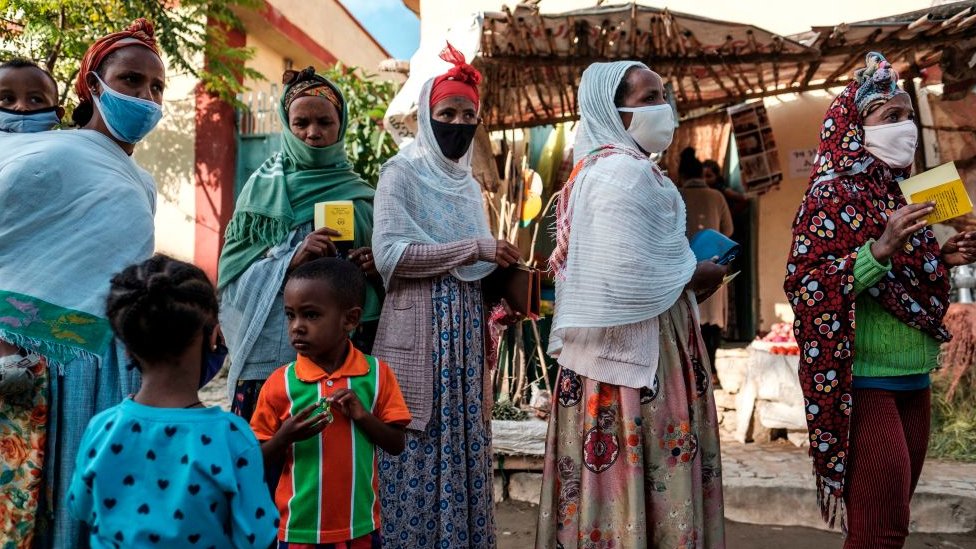
  • People queing to vote
    The election held in Tigray in September in defiance of the federal government heightened tensions

    Ongoing violence between the national army and forces loyal to the leaders of the northern Tigray region has prompted fears that Ethiopia is on the brink of a civil war.

    Hundreds of people have reportedly been killed since the fighting started on 4 November, and thousands have fled into neighbouring Sudan.

    What led to the fighting?

    September's election in Tigray, which the federal government had postponed nationwide because of coronavirus, is widely considered to be the cause of the recent rapid deterioration.

    Prime Minister Abiy Ahmed announced a military offensive after accusing Tigrayan forces of attacking and seizing a military base in the regional capital, Mekelle - a charge they deny.

    But the tension has been building for longer.

    The Tigray People's Liberation Front (TPLF), which was the dominant political party in Ethiopia for decades, has been feuding with Mr Abiy's government since shortly after he came to power in 2018.

    Elected as a "reformist leader", the prime minister accused officials in previous governments of corruption and human rights abuses, and removed key TPLF figures from the central government.

    This included the former intelligence chief and senior TPLF official, Getachew Asefa, who evaded arrest and fled to Tigray, where he remains as a fugitive.

    Mr Abiy's decision last year to merge the ethnically based parties that formed the governing EPRDF coalition and set up the Prosperity Party (PP) added fuel to the tensions. The TPLF opposed the decision, saying it would divide the country, and refused to join the PP.

    Earlier this year, the rift grew even wider after the federal government postponed nationwide elections.

    Tigray's decision to hold its own vote in September was an unprecedented act of defiance against the federal government. The federal parliament termed the process "illegal".

    Since then, both governments have designated each other as "illegitimate and unconstitutional".

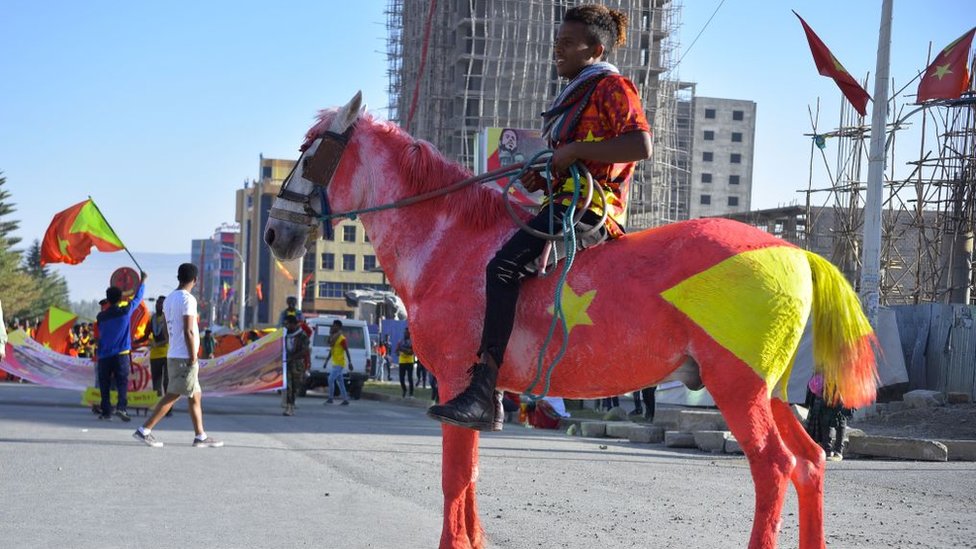
    A resident of Mekelle region rides a horse painted in the colours of the Tigray regional flag as they attend celebrations marking the 45th anniversary of the launching of the "Armed Struggle of the Peoples of Tigray", on February 19, 2020, in Mekelle
    A horse in Mekelle painted in the colours of the Tigray flag, which is proudly flown in the region

    The TPLF had previously made veiled threats of secession, citing an article in the federal constitution which allows the "unconditional right to self-determination, including the right to secession".

    "We will never back down for anyone who is intending to suppress our hard-won right to self-determination and self-rule," the region's leader, Debretsion Gebremichael said in August.

    Early in October, the federal government decided to cut ties with the Tigray region and the upper house of parliament voted to suspend budget aid to Tigray.

    Why was the TPLF so significant?

    Since the overthrow of Marxist leader Mengistu Haile Mariam in 1991 and up until 2018, the TPLF was the main partner in the governing coalition, as well as running Tigray itself.

    As a guerrilla army, the TPLF had played a pivotal role in Mengistu's demise and went on to dominate not just the country's politics but the economy as well.

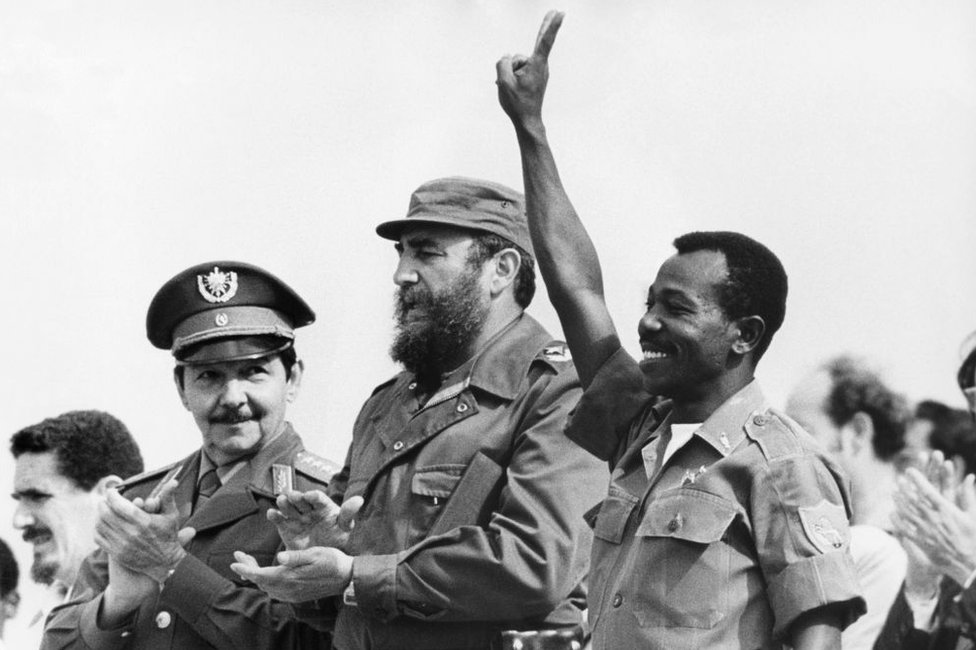
    Mengistu Haile Marian with Fidel Castro
    The TPLF was instrumental in the 1991 overthrow of Mengistu Haile Mariam (R), seen here in 1975 with Cuban leader Fidel Castro

    Its disagreement with Mr Abiy represents a deep fracture in the very core of power in the country.

    Most of the Tigray's regional leaders, including Mr Debretsion, had served in the central government for long periods of time.

    Mr Debretsion, who is a veteran fighter, was at one time the deputy prime minister. His comrades and advisers also held key positions in the country until Mr Abiy came to power.

    What does the TPLF want?

    The Tigray's administration sees Mr Abiy's reforms as an attempt to build a unitary system of government destroying the current federal arrangement.

    It also resents what it calls the prime minister's "unprincipled" friendship with Eritrean President Isaias Afwerki.

    Mr Abiy won the Nobel Peace Prize in 2019 for his efforts to bring peace with long-standing foe Eritrea. But the TPLF feels that Tigray's interests have been overlooked and it wants to have more say over future relations with Ethiopia's neighbour.

    On his part, the prime minister believes the TPLF officials are undermining his authority.

    Is Eritrea involved in the Tigray conflict?

    There is a long-standing rift between the TPLF and the government in Eritrea, which shares a long border with the Tigray region.

    The 1998-2000 Ethiopia-Eritrea war began over a dispute about territory along that border, particularly the area around the town of Badme.

    The status of Badme remains unresolved but Eritrea wants Ethiopia to abide by a UN-backed border commission ruling to hand over the town.

    But this cannot be achieved without the cooperation of the government in Tigray, as it administers the area.

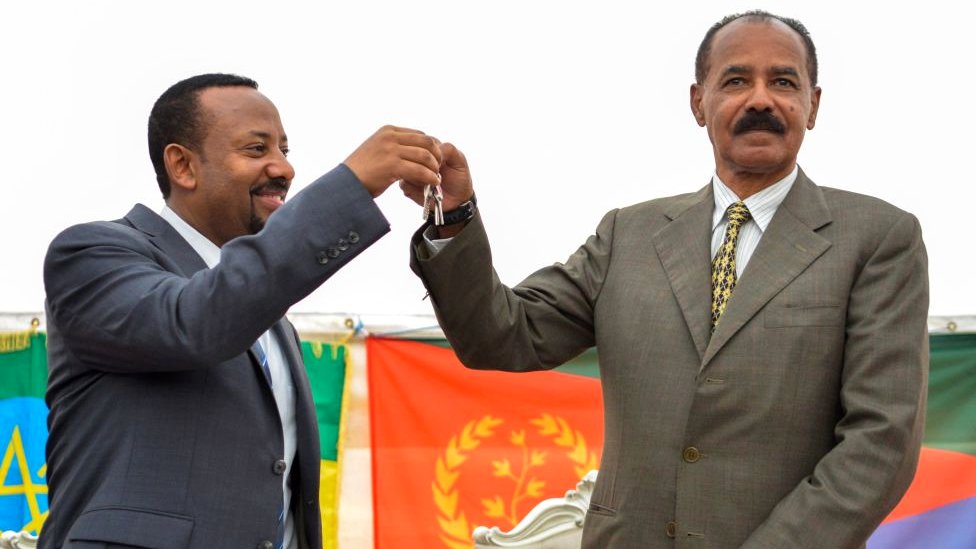
    Prime Minister Abiy and President Isaias
    There were celebrations when Prime Minister Abiy (l) agreed a deal with Eritrea's President Isaias Afwerki in 2018

    Speaking about the attack on the federal army base, Mr Abiy's office has accused the TPLF of dressing its soldiers in uniforms resembling those of the army of neighbouring Eritrea to "implicate the Eritrean government in false claims of aggression against the people of Tigray".

    Tigray's leader, Mr Debretsion, has accused Eritrean forces of joining the fight alongside Ethiopian forces against Tigray. Ethiopia and Eritrea have both denied this.

    How likely is a full-scale war?

    The Tigray regional leader has said his forces are ready to fight to defend the region, which would be "a burial place for the reactionaries", calling on Tigrayans to understand the situation and make all the necessary preparations. The TPLF has also issued a bond to raise money for its war effort.

    "We have prepared our army, our militia and our special force. Our preparation is aimed at averting war, but if we are to fight, we are ready to win," Mr Debretsion said.

    In justifying the military confrontation, Mr Abiy's office has accused the TPLF of "continued provocation and incitement of violence" and said "the last red line had been crossed".

    He has issued arrest warrants foe the TPLF leaders, appointed a new leader for the region and predicts that the war will soon be over but the TPLF forces are highly trained and experienced so some fear the conflict could drag on.

    There is also a concern that the conflict in Tigray, which accounts for about 6% of Ethiopia's population of over 100 million people, could exacerbate tensions in the rest of this ethnically divided country.

    Κυριακή 8 Νοεμβρίου 2020

    Patriarch Theodoros: “Archangels, The protectors of every human being” (November 8, Synaxis of the holy Archangels)


    On the evening of Thursday 7th November 2019, His Beatitude, Theodoros II, Pope and Patriarch of Alexandria and All Africa, officiated and preached the homily at the Great Festive Vespers, with great splendor and in a full church, in the imposing Holy Church of the Archangels in the Daher district of Cairo, which has the largest Arabic-speaking Greek Orthodox community in the Egyptian capital.

    A church that is always vibrant, particularly on the eve of its celebration, with the Alexandrian Primate presiding over the festive vespers of the Archangels, concelebrating with a multitude of Hierarchs: His Eminence Elder Metropolitan Makarios of Nairobi, as well as the Patriarchal Vicar of Cairo His Eminence Nicodemus Metropolitan od Memphis, His Eminence Niphon Metropolitan of Pilousion and the Abbot of the Patriarchal Monastery of St George Old Cairo, His Grace Theodoros Bishop of Babylonos, together with the Holy Clergy.

    “Today the largest Arabic-speaking Greek Orthodox Parish of the Patriarchate of Alexandria is celebrating, the Holy Archangels in the Daher district of Cairo. And I feel immense gratitude for their love and dedication to the Patriarchate of Alexandria and its Primate", the Patriarch of Alexandria emphasized.

    Speaking of the Archangels, the Primate of the Orthodox Church of Africa, emphasized that "the Archangels are the symbol of the protection of all human beings, as every person coming into the world is accompanied by his guardian angel right up until he/she faces Christ. Above all the angels though, are the patrons Michael, Gabriel, Raphael and Uriel, who as protectors of every human being are the light, hope and our approach to the Triune God”. 


    "Goodmorning have a blessed Feast Day!
    Synaxis of the Taxiarchs and Archangels Michael & Gabriel
    Chief Commanders of God; ministers of divine glory; guides for men and leadership of the Incorporeal; as Chief Commanders of the Incorporeal, plead for our welfare and for great mercy.
    * The Cathedral of the Archangels Michael and Gabriel is located in Mozambique ‘s capital, Maputo. It was founded on 23 March 1958 by the Hellenic Community that flourished in Maputo. It was completed in 1960. It was re-opened in 2010, in responsibility for your grace Bishop Ioannis."

    Orthodox Metropolis of Zambia

    In the Orthodox Vineyard of Africa

    See also


    THE DIVINE LITURGY OF ST MARK AT THE TOMBS OF SAINTS GABRIEL AND KYRMIDOLIS


    Patriarchate of Alexandria and All Africa (photos from here & here)

    On the 18th of October, the commemoration of the Holy Glorious new martyrs Gabriel and Kyrmidolis, His Beatitude Theodoros II, Pope and Patriarch of Alexandria and All Africa, performed the ancient Divine Liturgy of the Apostle and Evangelist Mark, at the place of martyrdom and burial of the Saints, which is located in the Holy Patriarchal Monastery of St. George in old Cairo.

    This Divine Liturgy belongs to the ancient Alexandrian tradition and is inextricably linked to the history of the second-throne Patriarchate, with important Byzantine influences over time and its writing is attributed to the Apostle Mark.

    Its connection with the name of the founder of the Alexandrian throne shows its origin and its reference to functional and cultural facts of Alexandria. It was written in Greek and is known from fragments of parchments and papyri of the 4th - 5th century, but the manuscripts that contain the entire text are of the 11th century onwards. Finally, from a theological point of view, studying the prayers, it should be mentioned that the Liturgy of the Apostle Mark fully reflects the Christology and Pneumatology of our Church, while the local cultural characteristics, such as the reference to the rural life of the Egyptians, the city of Alexandria and the waters of the Nile River, are of particular interest. It is worth mentioning that Saint Nektarios, Bishop of Pentapolis, was the one who saved from the ancient manuscripts the order of this really special Divine Liturgy.


    Deeply moved, His Beatitude mentioned the following in his address:

    "… Today you attended a different Divine Liturgy, our Divine Liturgy, the Liturgy written by our Apostle, Saint Mark. Cairo celebrates today. The Martyrs Gabriel and Kyrmidolis celebrate, the new martyrs from the Patriarchal tenure of Joachim Pany. Tradition says that the Liturgy was preserved by a great Patriarch, Meletios Pigas. This Liturgy was performed only here in Egypt, so you saw that I went to a place at the well and begged the waters, the waters of the Nile, to rise and irrigate the fields and orchards of Egypt. That is why we will make a procession to the Nile well".

    "... Your eyes will weep, since the prayer refers to the sick. I remembered all the sick from the pandemic and I prayed for the peace of God to come to the Land of the Nile. I bless you my children. Today I wore the chasuble as the first priests and hierarchs wore it. I hold this staff which is a copy of the shepherd’s staff when he was herding the sheep and only the pope of Alexandria could have his head covered with this cover. This is what the Great Cyril of Alexandria always wore. This solid-gold pectoral medallion is early Christian. This is what the first bishops wore as an amulet. My children, you have the blessing of Christ. I thank the Holy Hierarchs Nicholas and Nicodemus who prayed so many times with their Holy Flock for you, our young children, who will be the clergy of tomorrow. God bless you ".

    Finally, His Beatitude, after addressing words of edification to the young people, thanked holy hierarchs, His Eminence Nikolaos Metropolitan of Ermoupolis and His Eminence Nikodimos Metropolitan of Memphis, the Brotherhood of the Holy Monastery, as well as the Honorable Consul General of greece in Cairo, Mrs. Maria Zisi.

    After the end of the Divine Liturgy, the Litany of the Holy Icon and the relics of the Saints took place in the catacombs of the Monastery followed, by the blessing of the waters of the Nile.

    See also: