Εμφάνιση αναρτήσεων με ετικέτα Nigeria. Εμφάνιση όλων των αναρτήσεων

Πέμπτη 19 Ιουνίου 2025

Γιελουάτα (Νιγηρία): 200 άνθρωποι πυροβολήθηκαν, μαχαιρώθηκαν μέχρι θανάτου ή κάηκαν ζωντανοί!...

ΜΙΑ ΣΗΜΑΙΑ ΠΟΥ ΚΑΝΕΙΣ ΔΕΝ ΘΑ ΥΨΩΣΕΙ 


Του Κώστα Χατζηαντωνίου

ΠΕΡΑ ΑΠΟ ΤΟ ΑΤΟΜΟ 

Η Νιγηρία έγινε το θέατρο μιας νέας μαζικής σφαγής τη νύχτα της 13ης προς 14η Ιουνίου στη Γιελουάτα, στην πολιτεία Μπενούε. Οι δράστες επιτέθηκαν στην αγορά όπου είχαν καταφύγει εκατοντάδες εκτοπισμένες οικογένειες. Μπήκαν στο χωριό φωνάζοντας «Αλλάχ Άκμπαρ», σκοτώνοντας περισσότερους από 200 ανθρώπους, σύμφωνα με το Ίδρυμα Δικαιοσύνης, Ανάπτυξης και Ειρήνης της Επισκοπής Μακούρντι, το οποίο επικαλείται η οργάνωση Aid to the Church in Need (ACN). Τα θύματα πυροβολήθηκαν, μαχαιρώθηκαν μέχρι θανάτου ή κάηκαν ζωντανά. 
Ο πατήρ Ουκούμα Τζόναθαν Ανγκμπιανμπί, τοπικός ιερέας, κατέθεσε ότι είδε απανθρακωμένα σώματα, συμπεριλαμβανομένων παιδιών και βρεφών. Το χωριό, που κάποτε θεωρούνταν καταφύγιο, είναι πλέον σχεδόν άδειο. Η επίθεση στόχευε έναν χριστιανικό πληθυσμό που ήδη υποφέρει επί χρόνια παρόμοια γεγονότα βίας στην περιοχή. 
Η εκκωφαντική σιωπή των μέσων ενημέρωσης και της άρχουσας πολιτικής τάξης του σύγχρονου κόσμου στη Δύση και στην Ανατολή (και στην αντιιμπεριαλιστική Ελλάδα, βεβαίως βεβαίως), είναι αποκαλυπτική. Και δεν χρειάζονται σχόλια.


Σάββατο 19 Αυγούστου 2023

2023: Αδιανόητη η σφαγή των χριστιανών στη Νιγηρία!


Φωτο από εδώ, όπου σχετικό ρεπορτάζ

Ηλίας Καλλιώρας

newsbreak.gr

Σφαγιασμός χριστιανών 2023:
Περισσότεροι από 2.500 Χριστιανοί σφαγιάστηκαν από τους Φουλάνι Τζιχαντιστές και άλλους συμμάχους τους πρώτους έξι μήνες του 2023.
350 θάνατοι καταγράφηκαν σε 18 μόλις ημέρες μεταξύ 12 και 30 Ιουνίου.
Οι ισλαμιστές επίσης έκαψαν 1.400 σπίτια και συνέλαβαν 3.700 αμάχους.
Διαπιστώθηκε επίσης ότι τουλάχιστον 18.200 εκκλησίες, 1.000 παραδοσιακά θρησκευτικά ιερά και 800 συναγωγές και 2.200 χριστιανικά σχολεία έχουν καεί ή καταστραφεί άσκοπα.
Με 1100 χριστιανικές κοινότητες να έχουν ξεριζωθεί, εκατομμύρια χριστιανούς να αναγκάζονται να εγκαταλείψουν τα σπίτια τους και τους προγόνους τους.
Εκατοντάδες χιλιάδες Χριστιανοί έχουν ασπαστεί το Ισλάμ, ενώ δεκάδες χιλιάδες χριστιανές γυναίκες έχουν πέσει θύματα βιασμού ή σεξουαλικής κακοποίησης ή υποδούλωσης.
Τουλάχιστον 15 εκατομμύρια χριστιανοί είναι εσωτερικά εκτοπισμένοι ή πρόσφυγες.
Πρόκειται για μία γενοκτονία, για την οποία δεν μιλάει κανείς…
 

Τετάρτη 15 Δεκεμβρίου 2021

«Masu taimakon Saint Nicholas» a babban birnin Najeriya Abuja. // “Awọn oluranlọwọ ti Saint Nicholas” ni olu ilu Naijiria Abuja. // «Ndị enyemaka nke Saint Nicholas» na isi obodo Naijiria Abuja.// "The helpers of Saint Nicholas" in the capital of Nigeria Abuja // Οι "βοηθοί του αγίου Νικολάου": Μια Ορθόδοξη ενορία της Νιγηρίας κοντά σε ηλικιωμένους, παιδιά και θηλάζουσες μητέρες


Με ιδιαίτερη χαρά καλωσορίζουμε μια νέα πρωτοβουλία της μικρής ορθόδοξης κοινότητας του Αποστόλου Ανδρέα στην πρωτεύουσα Αμπούτζα την Νιγηρίας. Πρόκειται για «τους βοηθούς του Αγίου Νικολάου», υπό την καθοδήγηση του δραστήριου κατηχητού Nnamdi Umoh.

Σκοπός τους η προσέγγιση και ανακούφιση ανθρώπων με ανάγκες. Στην εξόρμηση αυτή συναντήθηκαν σε στρατόπεδο συγκέντρωσης εκτοπισμένων με 87 ηλικιωμένους, παιδιά και θηλάζουσες μητέρες.
Μοιράστηκαν μαζί τους την πίστη μας στον Χριστό, φάρμακα, πρώτες βοήθειες, δώρα κλπ. Γιατί εκείνους που έδειξαν ενδιαφέρον για την Ορθόδοξη παράδοση, θα ξεκινήσουν κατηχητικά μαθήματα δυο φορές την εβδομάδα. Το άνοιγμα αυτό αφορά κάθε ψυχή πέρα από συνθήκες και περιορισμούς.
Ο Άγιος των φτωχών Νικόλαος συνεχίζει και θα συνεχίζει να κινείται αθόρυβα ανάμεσα μας και να φροντίζει τα ξεχασμένα από εμάς παιδιά του Θεού .

We are glad to welcome a new initiative of the small orthodox community of st. Andrew in the capital of Nigeria Abuja. Is called "The helpers of Saint Nicholas" and is under the guidance of our active Catechist Nnamdi Umeh. Their aim is to come close and offer relief to people in need. In this their outreach they visited an initially displaced camp where they met with 87 elderly people children an nursing mothers.

They shared with them our faith to Christ, medication, first aid, gifts etc.For those who showed interest for the Church, will commence catechetical classes twice a week. This outreach embraces every soul in need beyond human conditions and restrictions.
Saint Nicholas, the saint of the poor and needy moves and will continue to move silently and descreetly among us and take care of the forgotten children of God.

*****

Muna farin cikin maraba da sabon yunƙuri na ƙaramar al’ummar Orthodox na St. Andrew a babban birnin Najeriya Abuja. Ana kiranta «Masu taimakon Saint Nicholas» kuma yana ƙarƙashin jagorancin Catechist Nnamdi Umeh. Manufar su ita ce su zo kusa su ba da agaji ga mabukata. A wannan taron nasu sun ziyarci sansanin da aka fara gudun hijira inda suka gana da tsofaffi 87 yara mata masu shayarwa.
Sun raba tare da su bangaskiyarmu ga Kristi, magani, taimakon farko, kyautai da dai sauransu. Ga wadanda suka nuna sha’awar ga Church, za su fara catechetical azuzuwan sau biyu a mako. Wannan isar da sako ya ƙunshi kowane rai mai buƙata fiye da yanayin ɗan adam da hani.

Saint Nicholas, mai tsarki na matalauta da mabukata yana motsawa kuma zai ci gaba da tafiya cikin shiru da rashin kunya a cikinmu kuma ya kula da ‘ya’yan God da aka manta.


St Nicholas, greek orthodox icon from here

A ni idunnu lati ṣe itẹwọgba ipilẹṣẹ tuntun ti agbegbe orthodox kekere ti St. Andrew ni olu ilu Naijiria Abuja. Ti a pe ni “Awọn oluranlọwọ ti Saint Nicholas” ati pe o wa labẹ itọsọna ti Catechist Nnamdi Umeh ti nṣiṣe lọwọ wa. Ero wọn ni lati sunmọ ati pese iderun si awọn eniyan ti o nilo. Ninu eyi ijade wọn wọn ṣabẹwo si ibudó akọkọ ti a ti nipo kuro nibi ti wọn ti pade pẹlu awọn agbalagba 87 awọn ọmọde ti awọn iya ntọju.
Wọn ṣe alabapin pẹlu wọn igbagbọ wa si Kristi, oogun, iranlọwọ akọkọ, awọn ẹbun ati bẹbẹ lọ.Fun awọn ti o ṣe afihan ifẹ fun Ile-ijọsin, yoo bẹrẹ awọn kilasi catechetical lẹmeji ni ọsẹ kan. Ifọrọranṣẹ yii gba gbogbo ẹmi ti o nilo ni ikọja awọn ipo eniyan ati awọn ihamọ.

Saint Nicholas, ẹni mimọ ti awọn talaka ati alaini n gbe ati pe yoo tẹsiwaju lati lọ ni idakẹjẹ ati lainidi laarin wa ati tọju awọn ọmọ Ọlọrun ti o gbagbe.

*****

Obi dị anyị ụtọ ịnabata atụmatụ ọhụrụ nke obere obodo Ọtọdọks nke St. Andrew na isi obodo Naijiria Abuja. A na-akpọ ya «Ndị enyemaka nke Saint Nicholas» ma nọ n’okpuru nduzi nke Catechist anyị nọ n’ọrụ Nnamdi Umeh. Ebumnobi ha bụ ịbịaru nso ma nyere ndị nọ ná mkpa aka. N’ime njem a ha gara n’ogige ndị a chụpụrụ na mbụ ebe ha zutere ndị agadi 87 bụ ụmụaka ndị nne na-enye nwa ara.
Ha na-ekerịta okwukwe anyị nye Kraịst, ọgwụ, enyemaka mbụ, onyinye wdg. Maka ndị gosipụtara mmasị maka Ụka, ga-amalite klas catechetical ugboro abụọ n’izu. Mgbasa ozi a na-anabata mkpụrụ obi ọ bụla nọ na mkpa karịa ọnọdụ mmadụ na mmachi.

Saint Nicholas, onye senti nke ndị ogbenye na ndị nọ ná mkpa na-akpali ma na-aga n’ihu na-agagharị na nzuzo na n’ụzọ aghụghọ n’etiti anyị ma na-elekọta ụmụ Chineke echefuru echefu.

( https://www.facebook.com/alexandergeorge.gianniris.3 )

Και:

Μητροπολίτης Νιγηρίας: «Αδυνατούμε να βοηθήσουμε ιερείς, δασκάλους, κατηχητές, σχολεία, φιλανθρωπικές δράσεις, κλπ σε Νιγηρία, Τόγκο, Μπενίν. Έκλεισαν 2 ιερατικά σεμινάρια !» Ακούνε οι Ορθόδοξοι Χριστιανοί ;

Holy Week and Easter in the Orthodox Archdiocese of Nigeria. Ιεραποστολικά νέα από την Ορθόδοξη Μητρόπολη της Νιγηρίας.

The Thanksgiving Service of the women ! (Orthodox Church of Nigeria ) . Ολοκληρώθηκαν οι εκδηλώσεις για τον Ευαγγελισμό της Θεοτόκου στην Μητρόπολη Νιγηρίας, που ήταν αφιερωμένες στις Ορθόδοξες γυναίκες και μητέρες !


Δευτέρα 14 Ιουνίου 2021

Το «Πράσινο Τείχος» της Αφρικής. Φιλοδοξεί να ενώσει τις δύο άκρες της Ηπείρου και να «σταματήσει» την ερημοποίηση και την Σαχάρα...


Η ΜΗΧΑΝΗ ΤΟΥ ΧΡΟΝΟΥ

Δημιουργήθηκε για να ανακόψει την ερημοποίηση της γης νότια της Σαχάρα, εκτείνεται από τη μία άκρη της Αφρικανικής ηπείρου στην άλλη και όταν ολοκληρωθεί θα αποτελεί το μεγαλύτερο οικοσύστημα χλωρίδας στον πλανήτη. Ο λόγος για το Μεγάλο Πράσινο Τείχος της Αφρικής. 

Πώς γεννήθηκε η ιδέα του Πράσινου Τείχους;

Τη δεκαετία του 1970, η στεπική λωρίδα γης νότια της ερήμου Σαχάρα στην Αφρική, το Σαχέλ, όπως ονομάζεται, άρχισε να απειλείται από την ξηρασία. Η κάποτε καταπράσινη και πλούσια σε βλάστηση περιοχή, που για χρόνια αποτελούσε τον «πνεύμονα» της Δυτικής Αφρικής και έπαιζε καθοριστικό ρόλο στη γεωργία και τις καλλιέργειες ολόκληρης της ηπείρου, ξεκίνησε να μετατρέπεται σε άγονη ζώνη. 


Το πράσινο τείχος της Αφρικής, όπως φαίνεται την περίοδο της άνοιξης (Πηγή:
Great Green Wall - ιστοσελίδα για το Μεγάλο Πράσινο Τείχος)

Τόσο η κλιματική αλλαγή όσο η δραματική αύξηση του πληθυσμού και οι κακές πρακτικές διαχείρισης του εδάφους, οδήγησαν σταδιακά σ’ αυτή την επικίνδυνη «μεταμόρφωση». Χωρίς επαρκή εύφορη γη για την καλλιέργεια τροφής και με διαρκή έλλειψη νερού, η επιβίωση του ντόπιου πληθυσμού κλονίστηκε. Η πείνα θέριζε, αφήνοντας ανά περιόδους εκατοντάδες νεκρούς, η ανεργία και η οικονομική ύφεση έγιναν καθημερινότητα και η μετανάστευση μονόδρομος. 

Έτσι, τις επόμενες δεκαετίες, γεννήθηκε η ιδέα του «Μεγάλου Πράσινου Τείχους» από μια ομάδα ηγετών της Αφρικανικής ηπείρου, στην προσπάθειά τους να βρουν μια μακροπρόθεσμη λύση στο πρόβλημα. Ενός τείχους ζωντανού, που θα εκτείνεται από τη μία άκρη της Αφρικής στην άλλη και, σε αντίθεση με τα προηγούμενα τείχη που γνώρισε η ανθρωπότητα, θα πρόσφερε ειρήνη και ζωή. 

Το «Μεγάλο Πράσινο Τείχος» 

Το «Μεγάλο Πράσινο Τείχος» θα αποτελούσαν εκατοντάδες χιλιάδες δέντρα ανθεκτικά στην ξηρασία, που θα εκτείνονταν από τις δυτικές παραλίες της Σενεγάλης στο ανατολικό Τζιμπουτί, σε μία γραμμή μήκους σχεδόν 8.000 χιλιομέτρων και πλάτους 15 χιλιομέτρων. Η φιλόδοξη πρωτοβουλία περιβαλλοντικής αποκατάστασης ξεκίνησε να παίρνει σάρκα και οστά το 2008, υπό την αιγίδα της Αφρικανικής Ένωσης, όταν υπογράφηκε και η αντίστοιχη συμφωνία μεταξύ 11 χωρών. 

Το Πράσινο Τείχος αναμένεται να ολοκληρωθεί το 2030, ωστόσο από τα πρώτα χρόνια δημιουργίας του, άρχισε να αποδίδει καρπούς. Στη Νιγηρία, 5 εκατομμύρια εκτάρια γης έχουν ήδη αποκατασταθεί και βρίθουν από πλούσια βλάστηση, ενώ στη Σενεγάλη, μία από τις φτωχότερες χώρες της Αφρικής, τα 120 εκατομμύρια στρέμματα δενδρυλλίων που φυτεύτηκαν, προσφέρουν πλέον γόνιμο έδαφος στην περιοχή. Στην Αιθιοπία αποκαταστάθηκαν 15 εκατ. εκτάρια γης. Η δενδροφύτευση και η συντήρηση δένδρων άνοιξαν χιλιάδες νέες θέσεις εργασίας, που βοήθησαν τους φτωχούς κατοίκους της έρημης περιοχής να βελτιώσουν το βιοτικό τους επίπεδο. Στον Νίγηρα, τα 5 εκατ. εκτάρια γης που αποκαταστάθηκαν, βοήθησαν στην καλλιέργεια πεντακοσίων χιλιάδων τόνων σιτηρών το χρόνο, ποσότητα ικανή να θρέψει τουλάχιστον 2,5 εκατομμύρια κόσμο. 

Μέχρι την ολοκλήρωσή του, το πρόγραμμα αναμένεται να κοστίσει γύρω στα 8 δισεκατομμύρια δολάρια. Για τη χρηματοδότησή του έχουν συνεισφέρει η Παγκόσμια Τράπεζα, η Αφρικανική Ένωση, τα Ηνωμένα Έθνη και οι Βοτανικοί Κήποι του Ηνωμένου Βασιλείου. Από τις αρχικές 11 χώρες που υπέγραψαν την πρωτοβουλία, σήμερα υπάρχει μια συνεχώς διευρυνόμενη ομάδα περισσότερων από 20 χωρών σε ολόκληρη την Αφρική που έχουν ενταχθεί σε αυτό το παναφρικανικό όραμα. 

Αρχική φωτογραφία: To «Μεγάλο Πράσινο Τείχος» της Αφρικής (Πηγή: Great Green Wall)

In English: The Great Green Wall in Africa – Growing a world wonder

Δημιουργήθηκε για να ανακόψει την ερημοποίηση της γης νότια της Σαχάρα, εκτείνεται από τη μία άκρη της Αφρικανικής ηπείρου στην άλλη και όταν ολοκληρωθεί θα αποτελεί το μεγαλύτερο οικοσύστημα χλωρίδας στον πλανήτη. powered by Rubicon Project Ο λόγος για το Μεγάλο Πράσινο Τείχος της Αφρικής. Πως γεννήθηκε η ιδέα του Πράσινου Τείχους Τη δεκαετία του 1970, η στεπική λωρίδα γης νότια της ερήμου Σαχάρα στην Αφρική, το Σαχέλ, όπως ονομάζεται, άρχισε να απειλείται από την ξηρασία. Η κάποτε καταπράσινη και πλούσια σε βλάστηση περιοχή, που για χρόνια αποτελούσε τον «πνεύμονα» της Δυτικής Αφρικής και έπαιζε καθοριστικό ρόλο στη γεωργία και τις καλλιέργειες ολόκληρης της ηπείρου, ξεκίνησε να μετατρέπεται σε άγονη ζώνη. Το πράσινο τείχος της Αφρικής, όπως φαίνεται την περίοδο της άνοιξης (Πηγή: GreatGreenWall) Τόσο η κλιματική αλλαγή όσο η δραματική αύξηση του πληθυσμού και οι κακές πρακτικές διαχείρισης του εδάφους, οδήγησαν σταδιακά σ’ αυτή την επικίνδυνη «μεταμόρφωση». Χωρίς επαρκή εύφορη γη για την καλλιέργεια τροφής και με διαρκή έλλειψη νερού, η επιβίωση του ντόπιου πληθυσμού κλονίστηκε. Η πείνα θέριζε, αφήνοντας ανά περιόδους εκατοντάδες νεκρούς, η ανεργία και η οικονομική ύφεση έγιναν καθημερινότητα και η μετανάστευση μονόδρομος. Διαβάστε ακόμα: Τα εκατομμύρια σκλάβων που πέθαναν κατά τη διάρκεια της μεταφοράς τους. Τους απήγαγαν από τα χωριά τους για να καλλιεργήσουν τις τεράστιες εκτάσεις των θεοσεβούμενων Ευρωπαίων αποικιοκρατών Έτσι, τις επόμενες δεκαετίες, γεννήθηκε η ιδέα του «Μεγάλου Πράσινου Τείχους» από μια ομάδα ηγετών της Αφρικανικής ηπείρου, στην προσπάθειά τους να βρουν μια μακροπρόθεσμη λύση στο πρόβλημα. Ενός τείχους ζωντανού, που θα εκτείνεται από τη μία άκρη της Αφρικής στην άλλη και, σε αντίθεση με τα προηγούμενα τείχη που γνώρισε η ανθρωπότητα, θα πρόσφερε ειρήνη και ζωή. Το «Μεγάλο Πράσινο Τείχος» Το «Μεγάλο Πράσινο Τείχος» θα αποτελούσαν εκατοντάδες χιλιάδες δέντρα ανθεκτικά στην ξηρασία, που θα εκτείνονταν από τις δυτικές παραλίες της Σενεγάλης στο ανατολικό Τζιμπουτί, σε μία γραμμή μήκους σχεδόν 8.000 χιλιομέτρων και πλάτους 15 χιλιομέτρων. Η φιλόδοξη πρωτοβουλία περιβαλλοντικής αποκατάστασης ξεκίνησε να παίρνει σάρκα και οστά το 2008, υπό την αιγίδα της Αφρικανικής Ένωσης, όταν υπογράφηκε και η αντίστοιχη συμφωνία μεταξύ 11 χωρών. Το Πράσινο Τείχος αναμένεται να ολοκληρωθεί το 2030, ωστόσο από τα πρώτα χρόνια δημιουργίας του, άρχισε να αποδίδει καρπούς. Στη Νιγηρία, 5 εκατομμύρια εκτάρια γης έχουν ήδη αποκατασταθεί και βρίθουν από πλούσια βλάστηση, ενώ στη Σενεγάλη, μία από τις φτωχότερες χώρες της Αφρικής, τα 120 εκατομμύρια στρέμματα δενδρυλλίων που φυτεύτηκαν, προσφέρουν πλέον γόνιμο έδαφος στην περιοχή. Στην Αιθιοπία αποκαταστάθηκαν 15 εκατ. εκτάρια γης. Η δενδροφύτευση και η συντήρηση δένδρων άνοιξαν χιλιάδες νέες θέσεις εργασίας, που βοήθησαν τους φτωχούς κατοίκους της έρημης περιοχής να βελτιώσουν το βιοτικό τους επίπεδο. Στον Νίγηρα, τα 5 εκατ. εκτάρια γης που αποκαταστάθηκαν, βοήθησαν στην καλλιέργεια πεντακοσίων χιλιάδων τόνων σιτηρών το χρόνο, ποσότητα ικανή να θρέψει τουλάχιστον 2,5 εκατομμύρια κόσμο. Μέχρι την ολοκλήρωσή του, το πρόγραμμα αναμένεται να κοστίσει γύρω στα 8 δισεκατομμύρια δολάρια. Για τη χρηματοδότησή του έχουν συνεισφέρει η Παγκόσμια Τράπεζα, η Αφρικανική Ένωση, τα Ηνωμένα Έθνη και οι Βοτανικοί Κήποι του Ηνωμένου Βασιλείου. Από τις αρχικές 11 χώρες που υπέγραψαν την πρωτοβουλία, σήμερα υπάρχει μια συνεχώς διευρυνόμενη ομάδα περισσότερων από 20 χωρών σε ολόκληρη την Αφρική που έχουν ενταχθεί σε αυτό το παναφρικανικό όραμα. Αρχική φωτογραφία: To «Μεγάλο Πράσινο Τείχος» της Αφρικής (Πηγή: GraetGreenWall)...

Διαβάστε όλο το άρθρο: http://www.mixanitouxronou.gr/to-quot-prasino-teichos-quot-tis-afrikis/
Δημιουργήθηκε για να ανακόψει την ερημοποίηση της γης νότια της Σαχάρα, εκτείνεται από τη μία άκρη της Αφρικανικής ηπείρου στην άλλη και όταν ολοκληρωθεί θα αποτελεί το μεγαλύτερο οικοσύστημα χλωρίδας στον πλανήτη. powered by Rubicon Project Ο λόγος για το Μεγάλο Πράσινο Τείχος της Αφρικής. Πως γεννήθηκε η ιδέα του Πράσινου Τείχους Τη δεκαετία του 1970, η στεπική λωρίδα γης νότια της ερήμου Σαχάρα στην Αφρική, το Σαχέλ, όπως ονομάζεται, άρχισε να απειλείται από την ξηρασία. Η κάποτε καταπράσινη και πλούσια σε βλάστηση περιοχή, που για χρόνια αποτελούσε τον «πνεύμονα» της Δυτικής Αφρικής και έπαιζε καθοριστικό ρόλο στη γεωργία και τις καλλιέργειες ολόκληρης της ηπείρου, ξεκίνησε να μετατρέπεται σε άγονη ζώνη. Το πράσινο τείχος της Αφρικής, όπως φαίνεται την περίοδο της άνοιξης (Πηγή: GreatGreenWall) Τόσο η κλιματική αλλαγή όσο η δραματική αύξηση του πληθυσμού και οι κακές πρακτικές διαχείρισης του εδάφους, οδήγησαν σταδιακά σ’ αυτή την επικίνδυνη «μεταμόρφωση». Χωρίς επαρκή εύφορη γη για την καλλιέργεια τροφής και με διαρκή έλλειψη νερού, η επιβίωση του ντόπιου πληθυσμού κλονίστηκε. Η πείνα θέριζε, αφήνοντας ανά περιόδους εκατοντάδες νεκρούς, η ανεργία και η οικονομική ύφεση έγιναν καθημερινότητα και η μετανάστευση μονόδρομος. Διαβάστε ακόμα: Τα εκατομμύρια σκλάβων που πέθαναν κατά τη διάρκεια της μεταφοράς τους. Τους απήγαγαν από τα χωριά τους για να καλλιεργήσουν τις τεράστιες εκτάσεις των θεοσεβούμενων Ευρωπαίων αποικιοκρατών Έτσι, τις επόμενες δεκαετίες, γεννήθηκε η ιδέα του «Μεγάλου Πράσινου Τείχους» από μια ομάδα ηγετών της Αφρικανικής ηπείρου, στην προσπάθειά τους να βρουν μια μακροπρόθεσμη λύση στο πρόβλημα. Ενός τείχους ζωντανού, που θα εκτείνεται από τη μία άκρη της Αφρικής στην άλλη και, σε αντίθεση με τα προηγούμενα τείχη που γνώρισε η ανθρωπότητα, θα πρόσφερε ειρήνη και ζωή. Το «Μεγάλο Πράσινο Τείχος» Το «Μεγάλο Πράσινο Τείχος» θα αποτελούσαν εκατοντάδες χιλιάδες δέντρα ανθεκτικά στην ξηρασία, που θα εκτείνονταν από τις δυτικές παραλίες της Σενεγάλης στο ανατολικό Τζιμπουτί, σε μία γραμμή μήκους σχεδόν 8.000 χιλιομέτρων και πλάτους 15 χιλιομέτρων. Η φιλόδοξη πρωτοβουλία περιβαλλοντικής αποκατάστασης ξεκίνησε να παίρνει σάρκα και οστά το 2008, υπό την αιγίδα της Αφρικανικής Ένωσης, όταν υπογράφηκε και η αντίστοιχη συμφωνία μεταξύ 11 χωρών. Το Πράσινο Τείχος αναμένεται να ολοκληρωθεί το 2030, ωστόσο από τα πρώτα χρόνια δημιουργίας του, άρχισε να αποδίδει καρπούς. Στη Νιγηρία, 5 εκατομμύρια εκτάρια γης έχουν ήδη αποκατασταθεί και βρίθουν από πλούσια βλάστηση, ενώ στη Σενεγάλη, μία από τις φτωχότερες χώρες της Αφρικής, τα 120 εκατομμύρια στρέμματα δενδρυλλίων που φυτεύτηκαν, προσφέρουν πλέον γόνιμο έδαφος στην περιοχή. Στην Αιθιοπία αποκαταστάθηκαν 15 εκατ. εκτάρια γης. Η δενδροφύτευση και η συντήρηση δένδρων άνοιξαν χιλιάδες νέες θέσεις εργασίας, που βοήθησαν τους φτωχούς κατοίκους της έρημης περιοχής να βελτιώσουν το βιοτικό τους επίπεδο. Στον Νίγηρα, τα 5 εκατ. εκτάρια γης που αποκαταστάθηκαν, βοήθησαν στην καλλιέργεια πεντακοσίων χιλιάδων τόνων σιτηρών το χρόνο, ποσότητα ικανή να θρέψει τουλάχιστον 2,5 εκατομμύρια κόσμο. Μέχρι την ολοκλήρωσή του, το πρόγραμμα αναμένεται να κοστίσει γύρω στα 8 δισεκατομμύρια δολάρια. Για τη χρηματοδότησή του έχουν συνεισφέρει η Παγκόσμια Τράπεζα, η Αφρικανική Ένωση, τα Ηνωμένα Έθνη και οι Βοτανικοί Κήποι του Ηνωμένου Βασιλείου. Από τις αρχικές 11 χώρες που υπέγραψαν την πρωτοβουλία, σήμερα υπάρχει μια συνεχώς διευρυνόμενη ομάδα περισσότερων από 20 χωρών σε ολόκληρη την Αφρική που έχουν ενταχθεί σε αυτό το παναφρικανικό όραμα. Αρχική φωτογραφία: To «Μεγάλο Πράσινο Τείχος» της Αφρικής (Πηγή: GraetGreenWall)...

Διαβάστε όλο το άρθρο: http://www.mixanitouxronou.gr/to-quot-prasino-teichos-quot-tis-afrikis/

Σάββατο 12 Ιουνίου 2021

The Great Green Wall in Africa – Growing a world wonder


Great Green Wall

The Great Green Wall is an African-led movement with an epic ambition to grow an 8,000km natural wonder of the world across the entire width of Africa.
A decade in and roughly 15% underway, the initiative is already bringing life back to Africa’s degraded landscapes at an unprecedented scale, providing food security, jobs and a reason to stay for the millions who live along its path.
The Wall promises to be a compelling solution to the many urgent threats not only facing the African Continent, but the global community as a whole – notably climate change, drought, famine, conflict and migration.
Once complete, the Great Green Wall will be the largest living structure on the planet, 3 times the size of the Great Barrier Reef.

Improving millions of lives

The Great Green Wall is taking root in Africa's Sahel region, at the southern edge of the Sahara desert - one of the poorest places on the planet.
More than anywhere else on Earth, the Sahel is on the frontline of climate change and millions of locals are already facing its devastating impact. Persistent droughts, lack of food, conflicts over dwindling natural resources, and mass migration to Europe are just some of the many consequences.
Yet, communities from Senegal in the West to Djibouti in the East are fighting back.
Since the birth of the initiative in 2007, life has started coming back to the land, bringing improved food security, jobs and stability to people’s lives.

A global symbol

The Great Green Wall isn’t just for the Sahel. It is a global symbol for humanity overcoming its biggest threat – our rapidly degrading environment. It shows that if we can work with nature, even in challenging places like the Sahel, we can overcome adversity, and build a better world for generations to come.
More than just growing trees and plants, the Great Green Wall is transforming the lives of millions of people in the Sahel region.


By 2030, the Wall aims to restore 100 million hectares of currently degraded land, sequester 250 million tonnes of carbon and create 10 million jobs in rural areas.
The Great Green Wall contributes directly to the 2030 UN Sustainable Development Goals. These 17 Goals adopted by world leaders aim to end poverty, promote prosperity and well-being for all, and protect the planet.
In 2015, world leaders agreed to 17 goals for a better world by 2030. These goals have the power to end poverty, fight inequality and stop climate change. Guided by these goals, it is now up to all of us, governments, businesses, civil society and the general public to work together to build a better future for everyone.
The Great Green Wall strikes right at the heart of the fight against poverty and contributes directly to the 2030 global agenda of the UN Sustainable Development Goals.
The Great Green Wall supports an astonishing 15 of the 17 Sustainable Development Goals. Growing a green wall across the Sahel does much more than just restore degraded land. This extraordinary initiative fights poverty and hunger, builds local resilience to climate change, improves health and well-being, creates jobs, boosts economic opportunities and much much more.
It’s up to us all to become leaders and support communities along the Wall in achieving this urgent and epic dream. Join a growing movement of people around the world who are working to help grow the Great Green Wall.


Το «Πράσινο Τείχος» της Αφρικής. Φιλοδοξεί να ενώσει τις δύο άκρες της Ηπείρου και να «σταματήσει» την ερημοποίηση και την Σαχάρα...

Διαβάστε όλο το άρθρο: http://www.mixanitouxronou.gr/to-quot-prasino-teichos-quot-tis-afrikis/
Το «Πράσινο Τείχος» της Αφρικής. Φιλοδοξεί να ενώσει τις δύο άκρες της Ηπείρου και να «σταματήσει» την ερημοποίηση και την Σαχάρα...

Διαβάστε όλο το άρθρο: http://www.mixanitouxronou.gr/to-quot-prasino-teichos-quot-tis-afrikis/

Πέμπτη 1 Απριλίου 2021

The angelic annunciation to the Theotokos, ‘the destiny of the woman’ & the month March, dedicated to the women in the Nigerian Orthodox Archdiocese

(see the page here)

ierapostoli.wordpress.com (a Greek blog for the Orthodox Mission). ΕΛΛΗΝΙΚΑ μετά το αγγλικό κείμενο.

The Thanksgiving Service of the women of our Parish in celebration of 2021 Mother’s Day within the Nigerian Archdiocese. The month of March is generally dedicated to celebrating the remarkable achievements of women and their exploits cross the globe. The angelic annunciation to the Theotokos of the Incarnation of Christ has occupied in the global Christian consciousness a towering remembrance of ‘the destiny of the woman’ in God’s redemptive plan for mankind. Virgin Mary is honoured by the Church not only because God chose her, or because she bore the Son of God in the flesh, but also because she herself chose to believe and obey God firmly. She became the highest model of obedience in her faithful response to the news of the angel. For this, every 25th of March is celebrated the solemnity of the Annunciation and our mothers have adopted to mark the Mother’s Day on this same day to remind themselves and us the humility, faith and love of the Theotokos to God and humanity.

This year’s event was initiated by a symbiotic ministerial outreach the Orthodox Christian Mission Center (OCMC) and the women of our Archdiocese via virtual conference. On the eve of the Feast the following presenters offered corresponding topics :-
Anna Kurian ----------------------- The Theotokos, the Woman Who bore Christ.
Presbytera Brittany Kearns --------------------- Imitating women Saints – Heroes for modern women.
Melissa Starnge ---------------------------- Women working together to raise up their Church and Families. 


In his remarks, our Father and Archbishop Alexander expressed blessed gratitude to: Fr. Martin Ritsi (President of OCMC), Presbytera Renee Ritsi, Andrew Lekos and the entire OCMC team for their kindness throughout the years and their unrelenting love and dedication to mission and evangelism across the world.

The Archbishop during the Divine Liturgy this morning prayed and invited all women to rise to the height of their potentials, becoming 'mothers' to the child Christ after the likeness of the Virgin Mary and bringing God and humanity in a divine synergy for the salvation of our souls.

We wish all women a joyous Mother’s Day celebration.

You can see video here

The Feast of Annunciation of Virgin Mary - 25th March

From the Orthodox Church in Nigeria (here)

Epistle: Hebrew 2:11-18
Gospel: Luke 1:24-38

The angle of God was sent from heaven to say to the Theotokos: "Rejoice, highly favored one, you will conceive in your womb and bring forth a Son and shall call His name JESUS."

This annunciation is the harbinger of the destruction of Satan's triumph in the garden of Eden when through annunciation he led Eve to disobedience and sin through it entered the world. Today, the seed of Satan is supplanted by the power of the Highest through the visitation of the Holy Spirit. In hearing of the Incarnation of Christ; Adam rejoiced, Eve marveled at the obedience of Mary in her acceptance of the good news - 'let it be to me according to your word.'

The Baby Christ already in Mary's womb sanctified it and through it creation's womb. No longer is He ashamed to call us brethren, saying: "Here am I and the children whom God has given Me." "Inasmuch then as the children have partaken of flesh and blood, He Himself likewise shared in the same, that through death He might destroy him who had the power of death, that is the devil." (Hebrew 2:13-14).

The mystery of the event we commemorate today can only be understood in total obedience to the word of God just like Virgin Mary. Our life received a new meaning during the announcement and acceptance of the Incarnation of Christ. In Mary, every woman acquired the potentiality to conceive and bear a 'child' of God. While in Christ every man obtained the likeness to become sons of God and together we all became 'children' of God. The vessel that the Mother of God became at annunciation is what we are called to become daily in our lives. Receivers and bearers of the Incarnate Word of God. And may all who through fear of death were all their lifetime subjected to bondage be released in the Name of Jesus Christ!

Happy feast dear brothers and sisters!

Ορθόδοξη Εκκλησία Νιγηρίας: ο Μάρτιος αφιερωμένος στη Γυναίκα & τη Μητέρα λόγω του Ευαγγελισμού της Θεοτόκου


Ολοκληρώθηκαν την Κυριακή 28 Μαρτίου σε όλες τις ενορίες της Μητρόπολης Νιγηρίας, οι εκδηλώσεις για την εορτή του Ευαγγελισμού της Θεοτόκου, που είναι αφιερωμένη στις Ορθόδοξες γυναίκες και μητέρες.Στο πλαίσιο αυτών των εκδηλώσεων πραγματοποιήθηκε στις 24 Μαρτίου, διαδικτυακή συνάντηση γυναικών από την Ενορία της Κοιμήσεως της Θεοτόκου αλλά και.από άλλες ενορίες με γυναίκες από τις ΗΠΑ, με τη φροντίδα και συνεργασία της Μητρόπολης και του ιεραποστολικού συνδέσμου OCMC.

Αυτή είναι η αρχή μιας σειράς διαδικτυακών συναντήσεων που διοργανώνει η Μητρόπολη για τις γυναίκες, τη νεολαία και τους κληρικούς.

Ο Μητροπολίτης Νιγηρίας κ. Αλέξανδρος εξέφρασε την ευγνωμοσύνη του στον π. Martin Ritsi (Πρόεδρος της OCMC), την Πρεσβυτέρα Renee Ritsi, τον Andrew Lekos και ολόκληρη την ομάδα του OCMC για την καλοσύνη τους όλα αυτά τα χρόνια και την αδιάκοπη αγάπη και αφοσίωσή τους στην αποστολή και τη διάδοση του Ευαγγελίου σε όλο τον κόσμο.

Κατά τη Θεία Λειτουργία, o Μητροπολίτης Νιγηρίας προσευχήθηκε και κάλεσε όλες τις γυναίκες να αξιοποιήσουν το μέγιστο των δυνατοτήτων τους, να γίνουν «μητέρες» στο νεογέννητο Χριστό καθ’ ομοίωση της Παναγίας και να οδηγήσουν την ανθρωπότητα στην ένωση με τον Θεό για τη σωτηρία των ψυχών.

orthodoxtimes.gr

Περισσότερα… https://www.facebook.com/orthodoxcathedralng/

( http://ampelonas-trygetes.blogspot.com/2021/03/the-thanksgiving-service-of-women.html )

Χειροτονία διακόνου στη Μητρόπολη Νιγηρίας

( https://www.orthodoxtimes.gr/cheirotonia-diakonou-sti-mitropoli-nigirias/ )

Νέος Γενικός Αρχιερατικός Επίτροπος στην Μητρόπολη Νιγηρίας

( https://www.orthodoxtimes.gr/neos-genikos-archieratikos-epitropos-sti-mitropoli-nigirias/ )

The Archbishop of Nigeria Alexander with Nigerian Orthodox Women on Sunday of Orthodoxy 2021 (from here).


Παρασκευή 31 Ιουλίου 2020

African women: asserting their rights


From Africa Renewal: 

Michelle Bachelet, executive director of UN Women, the world body’s new agency on gender equality issues. 
Michelle Bachelet, executive director of UN Women, the world body’s new agency on gender equality issues.
Photograph: UN Photo / Paulo Filgueiras

As elsewhere in the world, women in Africa are struggling for their fair share of political power and economic opportunity. In recent decades — thanks in great measure to their own organization and energetic efforts — they have made important strides. As Africa shakes off its legacies of autocratic rule, social marginalization and economic disarray, women are staking their claim to participate fully in their continent’s promising future.
But progress has been halting and uneven, and each step forward has been won against difficult obstacles and stubborn resistance. As in many parts of the world, gender inequalities remain deeply entrenched. Women suffer violence and discrimination across the continent. They lack access to decent work and face occupational segregation and wage gaps. They are still too often denied access to education and health care. Few women are represented in key political and economic decision-making positions.
Accelerating women’s empowerment is obviously critical for women themselves. But as the UN’s global agency for women, UN Women, emphasizes, gender equality is more than just a basic human right: “Its achievement has enormous socio-economic ramifications. Empowering women fuels thriving economies, spurring productivity and growth.” When UN Secretary-General Ban Ki-moon launched UN Women in 2010, he observed: “Where women are educated and empowered, economies are more productive and strong. Where women are fully represented, societies are more peaceful and stable.”
Over the years, Africa Renewal has frequently reported on and analyzed many different aspects of the struggles of African women for political, economic and social advancement. This special edition of the magazine – with the generous support of UN Women — brings together a number of those articles, most of them with new and updated material.


The Africa Renewal articles highlight important developments at the summit of political power, such as the adoption by the African Union (AU) of a legally binding protocol to the African Charter on Human and Peoples’ Rights on the rights of women. The AU has also declared the current decade, 2010-2020, as the “African Women’s Decade.” A few countries, such as Angola, Mozambique and South Africa have exceeded the 30 per cent benchmark for women legislators, while Rwanda has the highest percentage in the world. But in all African countries women still have a long way to go.
In some areas gender gaps have narrowed noticeably, as in primary schools, where nearly as many girls as boys are now enrolled. But completion rates remain low, and many girls still are unable to go on to secondary or tertiary education. Meanwhile, health care for women and girls has scarcely improved, while HIV/AIDS continues to exact a deadly toll on Africa’s women.
Repeatedly, the articles in Africa Renewal have noted that it is the hard work and commitment of women at the grassroots that can make the difference: the women farmers, traders, entrepreneurs and activists who struggle day-in and day-out to better their lives and improve the prospects for their families, communities and nations. If Africa is to have a brighter future, gender equality must be achieved. 

African women’s long walk to freedom

Across Africa, women’s movements are now putting more emphasis on decision-making power 
Across Africa, women’s movements are now putting more emphasis on decision-making power.
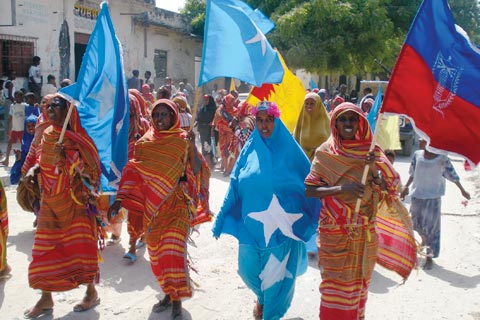
Photograph: Reuters / Mowliid Ibdi

Africa’s political independence was accompanied by a clarion call to eradicate poverty, illiteracy and disease. Fifty years after the end of colonialism, the question is: To what extent has the promise of that call been realized for African women? There is no doubt that African women’s long walk to freedom has yielded some results, however painfully and slowly.
The African Union (AU) now has a legally binding protocol to the African Charter on Human and Peoples’ Rights on the rights of women. The protocol spells out clearly women’s rights to equality and non-discrimination in a number of areas. It has been ratified by a growing number of African states, can be used in civil law proceedings and is being codified into domestic common law. The AU has also issued a Declaration on Gender Equality in Africa, under which member states are supposed to regularly report on progress.
The protocol and declaration both reflect and reinforce developments at the national level. Many African states have moved to enhance constitutional protections for African women — particularly in the area of women’s rights and equality. And the last two decades have seen the emergence of legislation to address violence against women, including sexual violence.
 
Political representation

These developments have been accompanied by improvements in African women’s political representation. The AU adopted, from its inception, a 50 per cent quota for women’s representation, which is reflected in the composition of the AU Commission.
Again, this standard reflects and reinforces efforts to enhance women’s representation at the national level. Angola, Mozambique and South Africa have exceeded the 30 per cent benchmark for their legislatures. Rwanda made history in 2008 when 56 per cent of legislators elected to parliament were women, the highest in the world. A few countries, including Nigeria, have seen women assume non-traditional ministerial portfolios, in defence and finance, for example. And Liberia also made history (“herstory”) by becoming the first African country to elect into office a female head of state, Ellen Johnson-Sirleaf.
Progress is evident, particularly in countries that have electoral systems based on or incorporating proportional representation. However, enhanced women’s representation has been harder to achieve in first-past-the-post electoral systems.
Even where there has been progress, the question is whether increased representation of women is catalyzing action by the executives and legislatures in favour of gender equality. That question arises because the battle for women’s representation is not only demographic (with political representation as an end) but also for gender equality (with political representation as a means).
Put another way, there has been a shift in the focus and strategy of the African women’s movement over the last two decades, from emphasizing capacity-building to improve African women’s access to resources to emphasizing decision making to enhance African women’s control over resources. This shift was made possible by real gains resulting from the capacity-building approach.
 
Education, poverty, health

These gains are most evident in African women’s education. Girls and boys are now at par with respect to primary school enrolment. Efforts to get girls into school have been accompanied by efforts to keep them in school and to promote role models by developing gender-responsive curricula. Gender gaps are also narrowing in secondary education. The real challenge now lies at the university level, both in the enrolment figures and in curricula to benefit young women. So much for the “illiteracy” element of the African independence clarion call.
Gains for women are harder to see in that call’s “poverty” element, however. It is true that since independence investments in micro-credit and micro-enterprises for women have improved their individual livelihoods — and therefore those of their families. Since African women have proved that they are good lending risks, micro-credit is now being offered not just by development and micro-finance institutions, but also by commercial financial institutions.
Yet there was a critique of such investments, especially in the decade of the 1980s when governments withdrew from social service delivery as a result of structural adjustment programmes. Under those circumstances, such investments essentially enabled redistribution among the impoverished, rather than at a larger level from the rich to the poor.
The end of that era thus saw a new focus on gender budgeting: looking at where national budget allocations and expenditures could enhance women’s status in the economy. Unsurprisingly, this approach has led African governments back towards public investments in social services.
It is now agreed, for example, that the benchmark for public investments in health in Africa is 15 per cent. The African women’s movement has called in particular for more to be directed towards reproductive and sexual health and rights. These areas are of critical concern to women, given the impact of HIV/AIDS, maternal mortality and violence against women, particularly in conflict areas. They are also of concern since African women’s continued lack of autonomy and choice over reproduction and sexuality lie at the heart of so much suffering. So much for the “disease” element of the independence call.
 
Where next?

Where to over the next 50 years, then? In light of the experience so far, the African women’s movement will be focusing not just on political representation, but also on the meaning of that representation for advancing gender equality and women’s human rights. And given recent retreats in Africa (such as the rise of the constitutional coup and “negotiated democracy”), the women’s movement will also be focusing on democracy, peace and security more broadly — that is, on the nature of the political system itself and not just on the means of getting into that system.
Economically, women will continue to focus on the macro-level, but in a deeper sense. What has emerged from gender budgeting efforts is the need to actually track budgetary expenditures, not just getting information about allocations.
It is also necessary to concentrate on the macro-economic framework for fiscal and monetary policies, especially in the context of stabilization programmes in response to the recent economic shocks. Previously that framework was assumed to be gender-neutral, but it clearly can have gendered consequences. This problem must be addressed to ensure that Africa’s growth will enhance women’s livelihoods.
Finally, the women’s movement will be focusing on reproductive and sexual health and rights. The battle over choice (including over gender identity and sexual orientation) is now an open one in many African countries. It is no longer couched politely in demographic or health terms.
The upsurge of conservative identity politics (in both ethnic and religious terms) is fuelling conflict on the continent. It constrains and dangerously limits women’s human rights, including reproductive and sexual rights. Such notions are not harmless — they have grave consequences for women’s autonomy, choice and bodily integrity. They therefore must be challenged.
African women’s long walk to freedom has only just begun.  

L. Muthoni Wanyeki is a former executive director of the Kenya Human Rights Commission.


Κυριακή 24 Μαΐου 2020

News from Africa


PanAfrikaniki